第 1 章
The Haunting Legacy of Stories: Where Fear Grows Roots
The Night Gardener has quietly cultivated a devoted following since its 2014 publication, becoming a modern classic in children's gothic literature. Jonathan Auxier's chilling Victorian ghost story earned the TD Canadian Children's Literature Award and has been embraced by educators nationwide for its rich themes of truth, storytelling, and confronting fear. Stephen King reportedly keeps it on his nightstand, praising its "perfect blend of childhood wonder and primordial dread." The book's exploration of how stories shape our reality resonates deeply in our current era of "fake news" and digital narratives. What begins as a seemingly simple tale of orphaned siblings seeking employment unfolds into a profound meditation on the stories we tell ourselves-and the dangerous comfort they can provide when we need them most.
第 2 章
Desperate Journeys: Irish Refugees in Victorian England
In the eerie sourwoods of rural England, two red-haired Irish children make their way toward the Windsor estate despite numerous warnings from locals. Fourteen-year-old Molly and her younger brother Kip, who walks with a crutch fashioned from blackthorn wood, have fled the Irish potato famine seeking employment. Their journey represents the plight of countless Irish refugees during the Great Hunger of the 1840s, when nearly a million people died and another million fled Ireland as families were torn apart by starvation, disease, and forced evictions from their ancestral homes.
The children's path through Victorian England is fraught with danger and prejudice. Local villagers eye them with suspicion, shopkeepers refuse them service, and workhouse threats loom at every turn. Their appearance marks them instantly as Irish - from their flame-red hair to their rough-spun clothes and distinctive accents. They travel with meager possessions: a stolen cart, carefully forged reference letters, and the desperate determination that drives so many refugees.
At a crucial crossroads, they encounter Hester Kettle, a mysterious storyteller who commands respect despite her raggedy appearance. She offers directions to Windsor Manor in exchange for future tales about what they find there - a bargain that introduces one of the book's central themes: stories as currency, both literal and metaphorical. Her cryptic warning that the sourwoods "changes folks" hangs ominously in the air as she mentions "the other thing" without elaboration, her knowing eyes suggesting dangers beyond mere mortal concerns.
Molly's protective instincts toward Kip manifest in elaborate tales about their parents traveling the world as healers and scholars - stories that blur the line between comforting fiction and outright deception. These stories serve multiple purposes: they shield Kip from harsh truths, maintain their dignity in the face of prejudice, and help them navigate a society deeply suspicious of Irish immigrants. Victorian England's anti-Irish sentiment was pervasive, with newspapers depicting the Irish as subhuman and "No Irish Need Apply" signs common in shop windows.
The siblings must navigate not only supernatural dangers but also the very real threats of poverty, discrimination, and abandonment. Their vulnerability is highlighted by close calls with authorities and hostile locals - experiences common to the estimated 100,000 Irish children who sought refuge in Britain during the famine years. Each step toward Windsor Manor takes them deeper into both physical and metaphorical darkness.
As they venture deeper into the hollow, an unnatural silence envelops them. No birds sing, no insects buzz - just waiting trees that seem to watch their progress with ancient malevolence. The twisted branches overhead block out most sunlight, creating a perpetual twilight that mirrors their transition from the natural world into something far more sinister. This atmospheric shift signals their crossing into a place where natural laws have been suspended, where something ancient and malevolent holds sway over the land itself, and where the boundaries between reality and nightmare begin to blur.
第 3 章
The Windsor Estate: A House Consumed by Darkness
The Windsor mansion looms before them like something from a nightmare-an old, neglected house with weeds and ivy consuming its walls. Most striking is an enormous ancient tree growing against and seemingly through the house itself. Unlike most trees that invite climbing or exploration, this one radiates an unsettling chill. The image of the house being literally consumed by the tree serves as a powerful metaphor for how the family inside is being similarly devoured.
Inside, the Windsors present a study in decay. Once-wealthy and vibrant, they now appear as pale, withered versions of themselves. Constance Windsor maintains a facade of aristocratic dignity despite her household's deterioration. Her husband Bertrand is a weak-chinned, stuttering shell of a man who smells of tobacco and ale. Their children-bullying Alistair and sweet young Penny-show signs of physical and spiritual malnourishment.
A family portrait reveals how dramatically they've changed in mere months-from plump, healthy individuals with chestnut curls to gaunt figures with dark hair and sallow complexions. Something is literally draining the life from them, yet they seem oblivious to their transformation. The house itself reflects this decline: filthy, neglected, with roots breaking through basement walls and mysterious muddy footprints appearing each night.
The mysterious green door at the top of the stairs becomes the focal point of mounting dread. What lies behind it? Why does Master Windsor emerge from it late at night with heavy, clinking sacks? Why does Mistress Windsor wear jewelry she supposedly just surrendered to pay debts? The locked door represents the family's secrets-the bargains they've made and the price they're paying.
Through Molly's perspective, we experience the unsettling sensation of entering a household under a curse. Her determination to maintain proper service despite increasingly bizarre circumstances highlights her resilience. Meanwhile, Kip's observations outside reveal equally disturbing phenomena: flowers that wither instantly near the tree, weapons embedded in its trunk like trophies, and a barren circle of earth where nothing grows.
第 4 章
The Night Gardener: Terror Takes Root
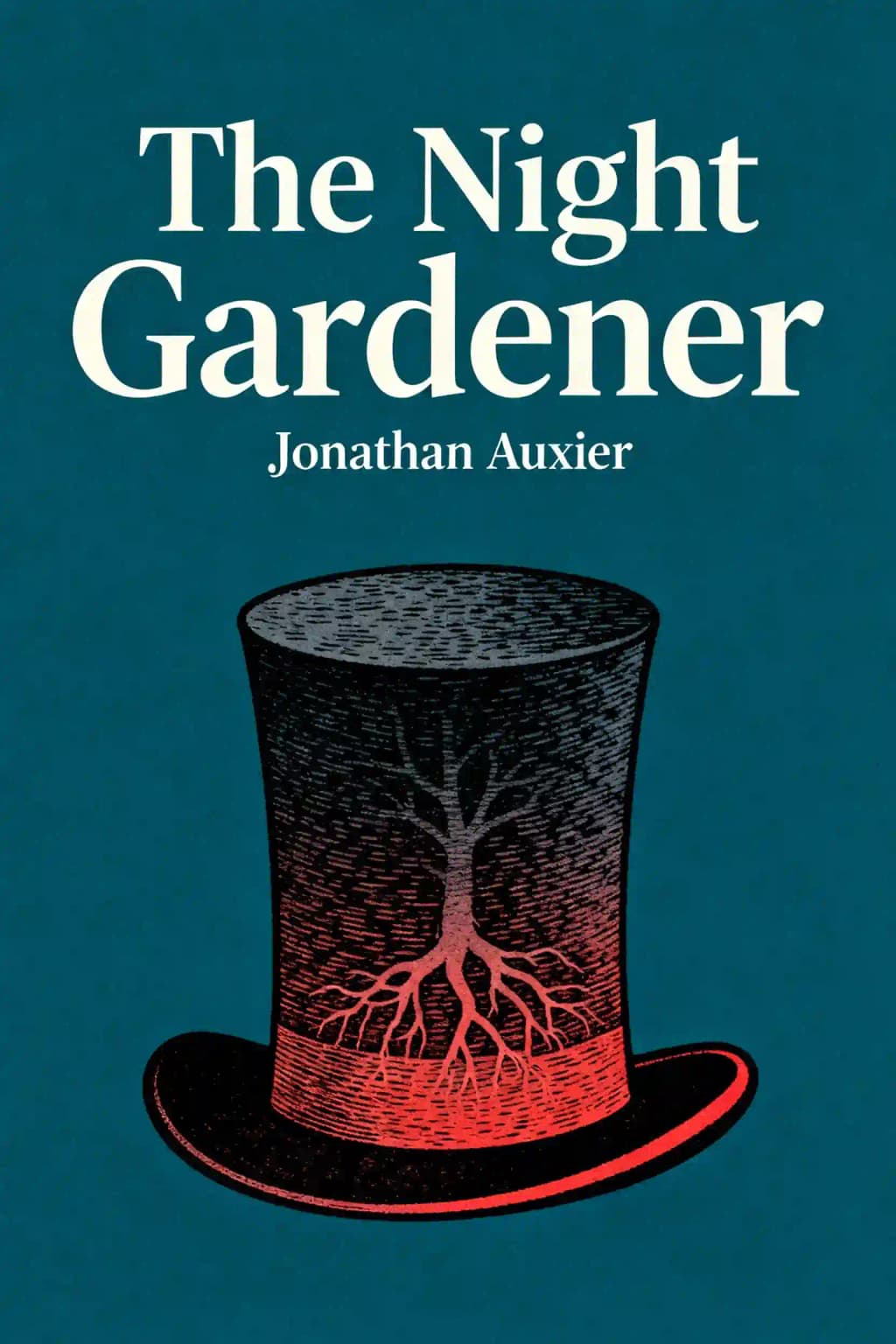
The supernatural heart of the story emerges when Molly and Kip witness a pale figure in a top hat tending to the great tree with ancient gardening tools. This is the Night Gardener-a spectral entity who waters the tree with silvery liquid while voices echo in the wind. His appearance marks the story's shift from gothic atmosphere to outright horror as the children realize they're trapped in a house haunted not by conventional ghosts but by something far more insidious.
The Night Gardener represents an ancient, patient evil. He doesn't attack violently or announce his presence with spectral wailing. Instead, he operates through subtle manipulation, offering each household member exactly what they most desire through the tree's magic. For Constance, it's jewelry and status symbols. For Bertrand, it's money to pay debts. For Alistair, it's sweets. For Penny, it's storybooks featuring herself as a princess. And for Molly, it becomes letters from her parents-letters she knows can't possibly be real.
The genius of this supernatural threat lies in its psychological dimension. The Night Gardener doesn't simply terrorize his victims; he addicts them to false comforts while slowly draining their life essence. Each night, the family suffers horrible nightmares-the psychic cost of their bargain with the tree. Yet they cannot bring themselves to leave, becoming increasingly dependent on the tree's offerings while growing paler and more withered.
This relationship between desire, addiction, and self-destruction forms the narrative's moral center. The tree offers what people want most, but these gifts are hollow reflections that ultimately consume rather than fulfill. When Molly discovers the room behind the green door contains a massive trunk with a knothole that produces whatever its victims most desire, she confronts the terrible bargain the Windsors have made-trading their literal lifeblood for material comforts and false consolations.
第 5 章
The Power of Stories: Truth Versus Comfort
Throughout the narrative, storytelling emerges as both salvation and danger, weaving a complex tapestry of truth, deception, and survival. Molly's remarkable talent for spinning tales initially appears as a sophisticated coping mechanism and a protective shield for Kip from harsh realities. Her elaborate fictional account of their parents traversing exotic locations rather than perishing at sea seems, on the surface, a merciful kindness. Yet as the story progresses, we witness how these protective lies crystallize into their own form of imprisonment, creating a web of deception that becomes increasingly difficult to escape.
The distinction between stories and lies becomes increasingly crucial as the narrative unfolds. When directly confronted about her pattern of dishonesty, Molly passionately defends herself by claiming she's merely telling stories - a storyteller rather than a liar. Kip's pointed question, "Does a story count as a lie if everyone knows it ain't true?" resonates throughout the text, suggesting that intent and reception matter more than factual accuracy. Through various encounters and experiences, we see how stories serve as tools to help us face and process the world, while lies function as barriers behind which we hide from uncomfortable truths.
Hester Kettle, the mysterious itinerant storyteller, emerges as the embodiment of narrative's positive power. She approaches storytelling as a sacred exchange, trading tales rather than selling them - understanding their true value lies in the sharing and transformation of experience rather than mere possession. Her wisdom comes wrapped in carefully chosen parables and folk wisdom rather than direct warnings, demonstrating how indirect truth can often penetrate deeper than blunt fact. When she later returns mortally wounded, having been viciously attacked by the Night Gardener for attempting to warn the children, her sacrifice powerfully underscores the potential cost of truth-telling in a world seduced by comfortable lies and easy answers.
The Windsor children serve as compelling illustrations of different relationships to stories and truth. Young Penny finds escape and solace in her beloved Princess Penny books, which literally rewrite her reality to cast her as the heroic protagonist of fairy tales - a coping mechanism that initially seems harmless but threatens to disconnect her from reality. Alistair, in stark contrast, has grown cynical and cruel, weaponizing stories solely to manipulate and control others for his own benefit. Their gradual transformation through the narrative - from pale, nightmare-plagued children to rosy-cheeked youngsters freely playing imaginary games in the sunshine - marks their journey from unhealthy fantasy and manipulation to wholesome imagination and authentic self-expression. This evolution demonstrates how stories, when properly understood and utilized, can serve as bridges to truth rather than escape routes from it.
第 6 章
The Tree's Temptation: Addiction and False Comfort
The ancient tree at the heart of Windsor Manor serves as a masterful metaphor for addiction, illustrating how destructive habits take root through seemingly innocent beginnings. Like any addictive substance, it presents itself as a solution, offering precisely calibrated comfort while gradually consuming its victims. Each family member receives exquisitely personalized temptations: Constance finds herself showered with status symbols - vintage jewelry, aristocratic connections, and social invitations that feed her desperate need for validation. Bertrand discovers financial opportunities that promise to restore his family's fortune, each deal more seductive than the last. Young Alistair's room fills with endless sweets and toys, while Penny loses herself in enchanted fairy tales that seem to come alive around her.
These gifts create an insidious form of dependency, extracting escalating costs: first come the nightmares, then physical deterioration - hair turning gray, skin becoming sallow, eyes developing a haunted cast. Finally, spiritual corruption sets in as recipients find themselves willing to sacrifice anything to maintain their connection to the tree's "gifts." The progression mirrors the stages of addiction: initial pleasure, growing dependency, and ultimately, complete surrender of one's moral compass.
When Molly succumbs to temptation and accepts letters supposedly from her deceased parents, she enters this same destructive cycle despite her better judgment. The letters capture her parents' voices perfectly - their handwriting, their intimate family jokes, even the subtle ways they expressed love. Though she recognizes they cannot possibly be genuine - the paper is too new, the ink too fresh - the comfort they provide proves irresistible. This mirrors how addiction works in the real world - even when we consciously recognize the artificial nature of the relief offered, we may still choose it over confronting painful reality.
Kip's steadfast resistance to using "Doctor Rootley's Wonder-Balm" represents the story's moral center. The magical balm promises to heal his injured leg completely, yet he refuses this easy solution, understanding intuitively that such miraculous gifts inevitably demand terrible prices. His physical disability evolves into a powerful metaphor for embracing life's imperfections rather than seeking magical solutions. The hand-carved crutch his father made - which Kip names "Courage" - becomes a symbol of finding strength through accepting our limitations rather than denying them.
The tree's history, revealed through Bertrand's childhood memories, demonstrates how addiction's cycle can span generations. His own parents' fierce arguments about the tree's influence ended in tragedy, with his mother sacrificing herself to help him escape its grasp. Yet despite witnessing this horror firsthand - the way the tree's roots had literally consumed his mother - Bertrand returned as an adult, unable to resist its siren song of easy solutions. This generational pattern perfectly mirrors how addiction often runs in families, with children unconsciously repeating their parents' destructive patterns despite having front-row seats to the devastation such choices cause.
第 7 章
Confronting Our Demons: Courage in the Face of Fear
The climactic confrontation with the Night Gardener brings the themes of courage and truth-telling to their powerful conclusion. When Fig and Stubbs - debt collectors who have been ruthlessly harassing the family throughout their struggles - discover the tree's magic, they embody the darkest aspects of greed: pure avarice without even the thinnest veneer of emotional justification. Their brutal decision to attack the tree with an axe triggers the Night Gardener's most violent and terrifying response, dramatically illustrating how directly challenging addiction often provokes its fiercest resistance. This moment serves as a metaphor for how addiction fights back most viciously when threatened at its root.
The children's desperate escape attempt becomes a crucible that forces each character to confront what they truly value when stripped of all pretense. Bertrand Windsor, previously portrayed as weak-willed and ineffectual, discovers reservoirs of strength he never knew he possessed when his family faces mortal danger. His transformation from a passive observer to an active protector demonstrates how crisis can awaken dormant courage. Constance's journey reaches its apex as she not only acknowledges her mistakes but expresses genuine gratitude - showing how true healing requires both accountability and appreciation. Even Alistair, the schoolyard bully who callously destroyed Kip's crucial crutch, finds a path to redemption by risking his own safety to help distract the Night Gardener while others flee to safety.
Molly's crucial realization that only the tree's own gifts can destroy it represents a profound insight about confronting addiction and destructive patterns. She must make the heart-wrenching choice to sacrifice the very letters that have brought her comfort throughout their ordeal - burning them and dropping them into the knothole - to ignite the tree from within. This powerful act symbolizes how recovery often requires surrendering our most treasured coping mechanisms, however painful that surrender might be. The letters, like many addictive comforts, had become both a solace and a chain.
The Night Gardener's gradual disintegration - crumbling piece by piece into dust - provides a visceral visualization of how confronting our demons isn't a single decisive moment but a progressive journey. First a foot crumbles away, then a leg, then his grasping fingers, until he finally collapses entirely into nothingness. This decomposition mirrors how recovery from addiction or trauma happens incrementally, with each small victory and setback contributing to the larger journey of healing. The process requires patience, persistence, and the understanding that lasting change comes through sustained effort rather than a single dramatic gesture.
The aftermath leaves physical and emotional scars on the landscape and the characters, yet also creates space for new growth and healing - much like the difficult but necessary process of recovering from trauma or breaking free from destructive patterns.
第 8 章
Redemption and New Beginnings
The aftermath of the fire brings both literal and metaphorical rebirth to the valley. Where destruction once reigned, nature stages a triumphant return - first with tentative shoots of green pushing through blackened earth, then with the gradual return of wildlife. Sparrows dart between newly sprouting branches, butterflies dance over fresh grass, and crickets resume their evening chorus. The Windsor children, once pale and listless under the tree's influence, now race through the recovering gardens with rosy cheeks and bright eyes, their laughter echoing across grounds that had been silent for so long.
The family's material losses - their fine furniture, elaborate clothing, and precious heirlooms - serve as a purifying force. Stripped of these superficial trappings, they discover their true wealth lies in restored relationships and renewed emotional bonds. Master Windsor's stern facade softens as he spends afternoons teaching his son to fish in the stream. Mrs. Windsor, freed from her obsession with appearances, finds joy in simple moments like braiding her daughter's hair or sharing tea with neighbors she'd long ignored.
Constance Windsor's transformation proves particularly profound. Her invitation for Molly and Kip to remain not as servants but as family members represents a complete reversal of her former rigid class consciousness. The woman who once demanded perfect formality now offers genuine warmth and inclusion. Though Molly gently declines - understanding that the Windsors need space to rebuild their family bonds - this moment marks a victory over the social barriers that once seemed insurmountable.
Hester Kettle's parting gift carries deep significance. The mysterious map she leaves for Molly doesn't just mark a potential destination - it represents the promise of belonging that the orphaned siblings have long sought. Each carefully drawn line suggests paths not just to shelter, but to a true home. Their decision to earn their way by sharing stories transforms their journey from mere survival to a meaningful quest, proving that tales can build bridges between hearts as surely as coins can purchase bread.
The narrative closes with an image of profound hope: Molly and Kip's wagon rolling toward dawn as they trade increasingly elaborate stories about the dragons they might encounter. This scene perfectly encapsulates their growth - they no longer use stories to hide from reality but to embrace life's possibilities. Their tales have evolved from shields against harsh truths to wings that lift their spirits toward adventure. The warm morning light that bathes their departure symbolizes not just a new day, but a new chapter where imagination serves not as escape but as companion to courage.
第 9 章
The Lasting Power of Gothic Storytelling
The Night Gardener stands as a masterful example of how gothic literature can address profound psychological and moral questions through supernatural metaphor. By setting his tale in Victorian England during the Irish potato famine, Auxier grounds his ghost story in historical realities of displacement, prejudice, and class division. The novel's atmospheric setting - with its creeping fog, ancient tree, and decrepit manor house - serves not merely as gothic window dressing but as a reflection of the social decay and moral corruption that plagued nineteenth-century British society.
The book's exploration of addiction through the metaphor of the parasitic tree offers readers of all ages a framework for understanding how we can become enslaved to false comforts. The tree's nightly gifts mirror the seductive nature of addictive behaviors - promising relief while slowly draining life from its victims. Through the Windsors' deteriorating condition, readers witness how dependency can transform vibrant individuals into hollow shells of their former selves, trading long-term wellbeing for momentary satisfaction. This metaphor extends beyond substance addiction to encompass modern dependencies on social media, consumer culture, and other forms of escapism.
The novel's distinction between stories that heal and lies that harm provides a nuanced perspective on truth-telling that acknowledges both the value of factual accuracy and the power of narrative to shape our understanding of reality. Molly's storytelling abilities demonstrate how tales can inspire hope and courage - as seen in her nightly stories to Penny - while her protective lies about her parents' fate reveal how even well-intentioned deception can prevent genuine healing and connection.
Most powerfully, The Night Gardener demonstrates how confronting our deepest fears - rather than hiding from them - ultimately leads to freedom. When Molly finally tells Kip the truth about their parents' death, it creates genuine closeness rather than the artificial connection maintained by her protective lies. The emotional authenticity of this revelation stands in stark contrast to the false comfort offered by the night gardener's gifts. When the Windsors face the reality of their situation instead of retreating into the tree's false promises, they reclaim their humanity and their future, illustrating how truth - however painful - provides the only solid foundation for genuine growth and healing.
In an era of "alternative facts" and digital escapism, this Victorian ghost story offers timely insights about the stories we tell ourselves and others. The novel's themes resonate particularly strongly in our current climate of social media filters, targeted algorithms, and increasingly sophisticated forms of virtual reality. It reminds us that the most dangerous lies are often the ones we want most desperately to believe, and that true courage means facing reality - however painful - rather than retreating into comfortable falsehood. Through its masterful blend of supernatural horror and psychological insight, The Night Gardener demonstrates the enduring power of gothic literature to illuminate contemporary moral challenges.