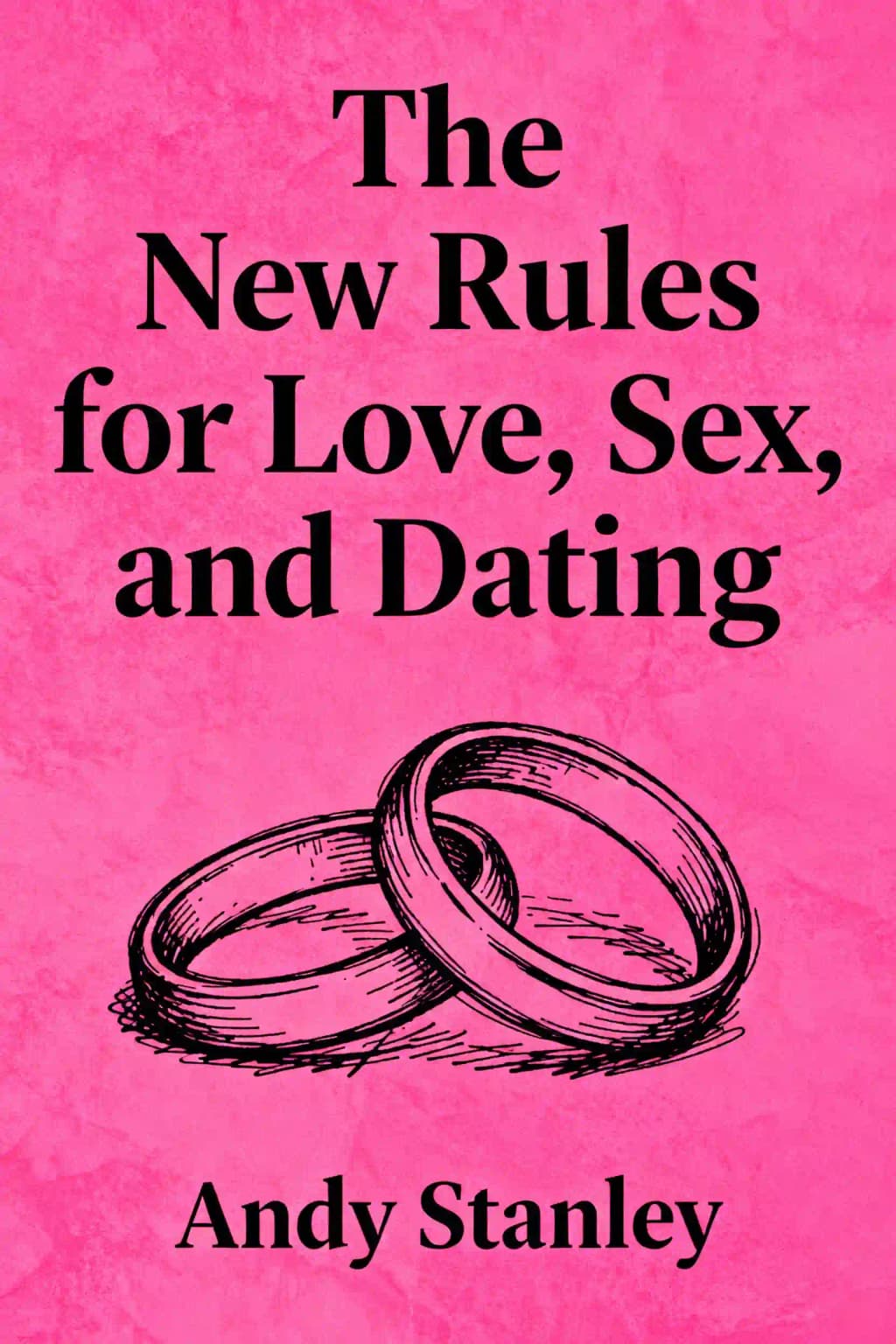
Andy Stanley's guide challenges conventional dating wisdom, focusing on becoming the right person rather than finding one. This practical, biblically-grounded approach has transformed relationships for countless readers - including educators who use its principles to mentor college students. Are you ready to rewrite your relationship rules?
Andy Stanley, New York Times bestselling author of The New Rules for Love, Sex & Dating, is a leading voice in Christian ministry and relationship guidance. As founder of North Point Ministries—a mult-campus evangelical church serving over 40,000 weekly attendees—Stanley draws on 30+ years of pastoral experience to address modern relational challenges through a faith-based lens.
His book combines biblical principles with practical advice, reflecting his seminary training at Dallas Theological Seminary and his reputation for making theology accessible to broad audiences.
Stanley has authored 20+ influential books, including Irresistible, Deep & Wide, and Better Decisions, Fewer Regrets, which explore themes of spiritual growth and leadership. His Andy Stanley Leadership Podcast ranks among Christianity Today’s top ministry resources, and his sermons reach millions monthly through North Point’s digital platforms.
Recognized by Outreach magazine as one of America’s 10 most influential pastors, Stanley’s work on relationships and faith has been featured on The Today Show and in TIME. The New Rules for Love, Sex & Dating has sold over 500,000 copies, cementing its status as a modern Christian living staple.
The New Rules for Love, Sex, and Dating offers a faith-based guide to navigating modern relationships, challenging cultural norms like casual hookups and the "soulmate" myth. Andy Stanley, a megachurch pastor, emphasizes personal responsibility, advocating behaviors like sexual purity and emotional maturity to build lasting marriages. The book addresses topics like avoiding regret, redefining sex’s purpose, and becoming "the right person" instead of endlessly seeking one.
This book targets singles, Christians exploring dating, and anyone disillusioned by modern relationship trends. It’s particularly relevant for those seeking practical, biblically aligned advice on avoiding common pitfalls like cohabitation or emotional baggage. Critics of Stanley’s pragmatic ministry style may also find it insightful.
Yes—the book blends relatable anecdotes, scripture, and psychological insights, making it a standout in Christian relationship guides. Its focus on self-improvement over partner-seeking resonates widely, though some critique its minimal direct Bible references.
Andy Stanley debunks the belief that finding a “perfect match” guarantees marital success. He argues this myth leads to passive dating and disappointment, urging readers to instead ask, “Am I the person the person I’m looking for is looking for?” The chapter emphasizes character development over compatibility checks.
Stanley frames sex as a bonding tool designed for marriage, not casual gratification. He warns against “designer sex”—treating intimacy as customizable—and highlights emotional risks like jealousy and attachment. The book advises setting clear boundaries to avoid regret.
Stanley outlines four habits for successful relationships:
The book critiques trends like ghosting, “situationships,” and prioritizing chemistry over character. Stanley advises readers to reject cultural scripts, advocate for their values, and prioritize long-term fulfillment over short-term satisfaction.
Some conservatives argue Stanley prioritizes pragmatism over biblical literalism, particularly his focus on outcomes rather than doctrinal rigor. Others note the book’s heteronormative assumptions and limited engagement with LGBTQ+ perspectives.
As the son of famed pastor Charles Stanley and founder of North Point Ministries, Andy blends evangelical theology with seeker-friendly communication. His journalism training (Georgia State University) and megachurch leadership inform the book’s accessible, storytelling-driven style.
Unlike secular guides focusing on communication hacks or compatibility quizzes, Stanley roots advice in spiritual growth and moral boundaries. However, his emphasis on personal accountability (e.g., “become the right person”) aligns with broader self-help principles.
With dating apps and shifting social norms, the book’s timeless themes—self-awareness, delayed gratification, and intentionality—remain vital. Its critique of hookup culture and “me-centered” relationships continues to resonate in post-#MeToo conversations.
通过作者的声音感受这本书
将知识转化为引人入胜、富含实例的见解
快速捕捉核心观点,高效学习
以有趣互动的方式享受这本书
Saying 'I do' makes someone accountable but not capable.
Nobody changed you-you changed you.
The simple believe anything, but the prudent give thought to their steps.
Sexual compatibility is often confused with relational compatibility, but they're not the same.
将《The New Rules for Love, Sex, & Dating》的核心观点拆解为易于理解的要点,了解创新团队如何创造、协作和成长。
通过生动的故事体验《The New Rules for Love, Sex, & Dating》,将创新经验转化为令人难忘且可应用的精彩时刻。
随时提问,选择你的学习方式,共创真正适合你的洞察。

"Instead of endless scrolling, I just hit play on BeFreed. It saves me so much time."
"I never knew where to start with nonfiction—BeFreed’s book lists turned into podcasts gave me a clear path."
"Perfect balance between learning and entertainment. Finished ‘Thinking, Fast and Slow’ on my commute this week."
"Crazy how much I learned while walking the dog. BeFreed = small habits → big gains."
"Reading used to feel like a chore. Now it’s just part of my lifestyle."
"Feels effortless compared to reading. I’ve finished 6 books this month already."
"BeFreed turned my guilty doomscrolling into something that feels productive and inspiring."
"BeFreed turned my commute into learning time. 20-min podcasts are perfect for finishing books I never had time for."
"BeFreed replaced my podcast queue. Imagine Spotify for books — that’s it. 🙌"
"It is great for me to learn something from the book without reading it."
"The themed book list podcasts help me connect ideas across authors—like a guided audio journey."
"Makes me feel smarter every time before going to work"

免费获取《The New Rules for Love, Sex, & Dating》摘要的 PDF 或 EPUB 版本。可打印或随时离线阅读。
Every divorced couple once believed they'd found "the one." They stood before witnesses, made solemn vows, and genuinely believed their attraction would sustain them through decades of life together. Yet here's the uncomfortable truth: nearly half of all marriages end in divorce, and countless others survive in quiet misery. What if the entire premise of modern dating-finding the right person-is fundamentally flawed? What if lasting love isn't about discovering your perfect match but becoming someone worth finding? This isn't just another self-help philosophy. Celebrities from Justin Bieber to Selena Gomez have credited these principles with transforming their relationships, and college psychology courses now teach this framework as essential curriculum. The reason is simple: it works. But it requires abandoning everything our culture has taught us about romance.
We've all watched a friend fall for someone completely wrong for them. That's focalism - the brain's tendency to magnify one thing while ignoring everything else. When strong physical attraction enters the picture, our carefully considered criteria evaporate. Here's the uncomfortable reality: you're sexually compatible with far more people than you're relationally compatible with. Sexual chemistry and relational compatibility are entirely different things, yet we constantly confuse them. Sex creates a fog that prevents clear-eyed evaluation of a relationship's actual health. Our sexual pasts don't simply become "just history" when we meet the right person. They surface during intimate moments with a spouse in ways we never anticipated. What seems manageable as a single person often becomes unmanageable in marriage. The present will eventually become your past, and your relational past has a way of resurfacing at inopportune times.
In academics, sports, business, and medicine, we understand that preparation determines success. Yet in relationships, we mistakenly believe promises can replace preparation. Every weekend, couples make sincere marriage vows they're unprepared to fulfill. Saying "I do" makes someone accountable but not capable. When you're accountable for something you're incapable of doing, misery follows. This explains why marriages starting with genuine love often end in bitter disappointment. The best predictor of someone's ability to commit isn't their promises - it's their prior commitments. Past behavior reliably indicates future performance. The paths people have chosen trump the promises they've made. Here's the sobering truth: you can't change another person. People only change when they decide to change themselves. When someone says "I can't live without you" or "I need you," these aren't romantic declarations - they're red flags signaling dysfunction-breeding dependence. The solution? Create space and wait. Nobody wishes they'd moved faster into commitment, but countless individuals wish they'd moved slower. Commit now to preparing yourself to keep commitments later, not to a person who isn't ready.
When Denise met Mitchel in Atlanta-"the total package" who was serious about his faith-she gushed to her mother about him. Her mom's response stung: "Sweetheart, the problem is, a guy like that is not looking for a girl like you." Devastated but determined, Denise made a transformative decision. She wouldn't try to trick Mitchel or compromise his values. Instead, she would become the type of person the person she was looking for was looking for. She changed her priorities, values, and friendships to align with who she wanted to be-not just to attract Mitchel, but to become her authentic self. This is the becoming principle: instead of focusing on finding the right person, become the right person. This dramatically increases your odds of sustained relational success and helps you identify and avoid the wrong people. When you commit to preparing before promising, you naturally become more sensitive to people who share your priorities. Those committed to becoming better naturally attract like-minded individuals.
Real relationships require abandoning storybook notions of love. The most transformational teaching treats love as something you do rather than feel. Love is patient - deliberately choosing to move at someone else's pace in conversation, decision-making, and commitment readiness. Love is kind - leveraging your strength on behalf of another, putting your abilities at someone else's disposal unconditionally. Love doesn't envy, boast, or act proudly. These expressions of insecurity undermine relationships through sarcasm, criticism, and public disrespect. Love doesn't dishonor - it brings your best self to the relationship. Love is not self-seeking - it puts others' interests first. Paradoxically, being self-seeking early in relationships is more dangerous, quickly revealing if your partner is selfish. Love is not easily angered - it responds thoughtfully rather than reacting impulsively. When someone's words stir something inside you, it's your issue to own and address. Love keeps no record of wrongs, choosing to see the best while overlooking the rest. These qualities don't sustain themselves naturally, but they're necessary to maintain the chemistry that makes early relationships exhilarating.
Take a year off all romantic and sexual pursuits. This challenge has transformed countless lives, saving relationships or leading people to their future spouse. The payoff? Clarity. When relationships turn physical, objectivity vanishes. During this year, focus on five areas: addressing your past, breaking harmful habits, setting standards, eliminating debt, and reconnecting with community. If your family was dysfunctional, understand how it affects your future - unresolved issues contaminate relationships. End relationships with substances and activities that own pieces of you: alcohol, drugs, gambling, overspending, or overeating. Pre-decide your boundaries regarding sexual involvement because without predetermined standards, someone else will decide for you. Money is the number one source of conflict among couples - use this year to eliminate debt while single. A warning: a week or two after making your commitment, you'll likely meet someone amazing. Don't break it. You need time to become the person the person you're looking for is looking for.
Every event in your past is part of your story. We all have chapters we'd rather forget - moments of poor judgment, relationships that left scars, decisions we'd reverse if we could. But today you're writing another entry. The question isn't whether you have regrets; it's what story you want to tell going forward. Is it ever too late to correct past mistakes? The answer depends on whether you believe in redemption. Restoration is available regardless of what you've done or what was done to you. The way back begins with your decision to become someone rather than merely meet someone - to write a story you'd be proud to tell your children. In a culture selling instant gratification and treating relationships as disposable, choosing to prepare before promising is revolutionary. It means recognizing that who you're becoming matters more than who you're seeking, and that love isn't a feeling to chase but a decision to make daily. Your next chapter begins with a choice: will you keep searching for someone to complete you, or will you become complete so you can truly share yourself? This difference determines whether your love story ends in disappointment or becomes the lasting connection you've always wanted.