第 1 章
When Safety Becomes the Ultimate Luxury
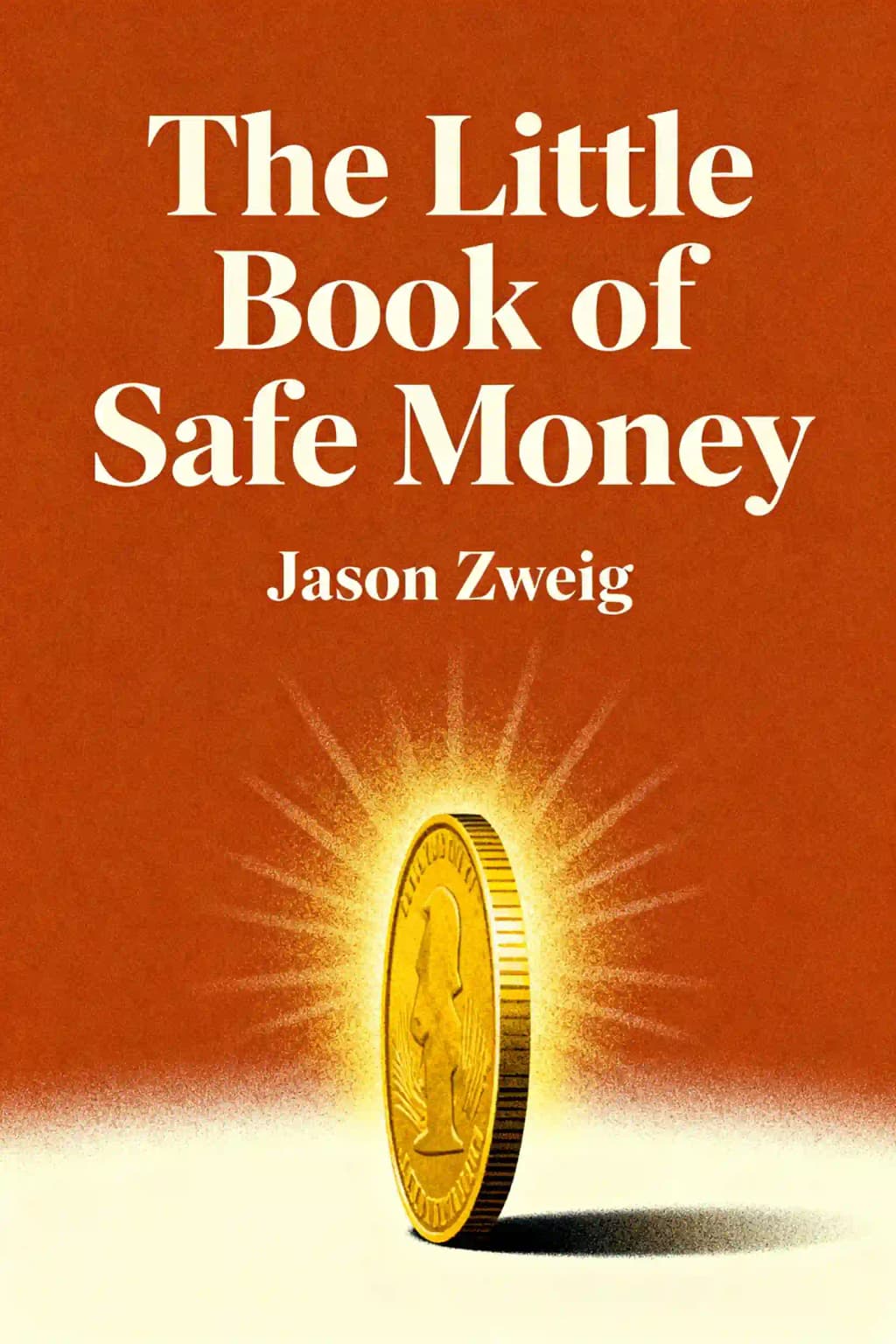
In the aftermath of the 2008 financial crisis, Jason Zweig's "The Little Book of Safe Money" emerged as a beacon of sanity in a world where $26 trillion of global market value had vanished in just 17 months. This compact masterpiece quickly became Warren Buffett's recommended reading for investors seeking to rebuild their shattered portfolios. What makes Zweig's approach unique is his rare combination of skills - deep understanding of financial theory, extensive knowledge of market history, mastery of behavioral psychology, and an insider's perspective on how Wall Street really operates. Unlike most financial writers who focus solely on getting rich, Zweig tackles the more fundamental question: how do we keep what we have? His book has become particularly relevant in today's volatile markets, with even celebrities like Taylor Swift citing it as inspiration for her notably conservative investment approach. The book's cultural impact extends beyond finance - its principles about risk management have influenced fields from healthcare to technology, making it one of the most quietly influential works of the post-crisis era.
第 2 章
The Three Commandments: A Framework for Financial Sanity
At the heart of keeping your money safe lie three deceptively simple rules - what Zweig calls the Three Commandments. These principles are powerful enough that following them will likely give you better results than many professional investment managers who constantly stray from the path of safety. While they may appear straightforward, their consistent application requires both discipline and honest self-reflection.
The First Commandment states: "Thou shalt take no risk that thou needst not take." This fundamental principle requires asking yourself before any investment: Is this risk necessary? Could I achieve my goals through safer alternatives? Have I thoroughly investigated all options? For example, if your goal is to save for retirement in 30 years, do you really need to invest in volatile cryptocurrency when a diversified portfolio of low-cost index funds might serve your purpose? This commandment forces you to question whether you're taking risks out of necessity or merely out of greed, impatience, or peer pressure. Consider how many investors jumped into tech stocks during the late 1990s bubble, not because they needed such aggressive growth but because everyone else was doing it.
The Second Commandment declares: "Thou shalt take no risk that is not most certain to reward thee for taking it." This requires evidence that the risk will likely pay off. What historical data suggests this approach will succeed? How severe were losses during previous downturns? For instance, while small-cap stocks are riskier than large-cap stocks, decades of market data show they've historically provided higher returns to compensate for that risk. The commandment doesn't demand guaranteed success (nothing can promise that), but it does require high probability of reward based on sound evidence rather than wishful thinking. Consider the difference between investing in a broad market index fund versus a speculative penny stock - the former has centuries of data supporting long-term growth, while the latter often relies on hope and hype.
The Third Commandment warns: "Thou shalt put no money at risk that thou canst not afford to lose." Before investing, ask yourself: Could I withstand losing 100% of this money? Have I analyzed not just potential gains but possible losses? Will my remaining assets and income sustain me if this investment fails? Can I recover financially and emotionally from a total loss? This is particularly crucial for retirees or those approaching retirement. For example, someone five years from retirement shouldn't risk their entire nest egg in aggressive growth stocks, no matter how promising they seem. Emergency funds should never be invested in anything volatile, and money needed for near-term expenses like college tuition should be kept in safe, liquid investments.
These commandments might seem obvious, yet they're violated constantly by both amateur and professional investors. Common violations include investing emergency funds in stocks, using excessive leverage to chase higher returns, or putting retirement savings into untested investment schemes. They force us to confront uncomfortable questions about our motivations, evidence, and true financial capacity. When applied consistently, they create a powerful filter that screens out most dangerous investments before they can damage your financial health. Consider them your personal investment constitution - simple rules that can prevent costly mistakes and keep you focused on sustainable, long-term financial success.
第 3 章
The Paradox of Solid Liquidity: Having Your Cake and Eating It
The ideal portfolio achieves something that defies normal physics - it's both solid and liquid simultaneously. This seemingly impossible combination is what keeps your money truly safe. An investment is solid if historical evidence suggests it won't lose most of its value, and liquid if you can convert it to cash anytime without significant loss. Some investments are solid without being liquid (like your house), while others appear liquid without being solid (like mortgage-backed securities before the 2008 crisis).
Leverage - using borrowed money - is typically the culprit in liquidity crises. As Zweig memorably puts it: "If you owe, you don't truly own." Leverage means giving someone else the right to take your ownership away at the worst possible time. When many entities leverage the same way, ripple effects become tidal waves, as seen when Lehman Brothers collapsed in 2008, freezing trillions in securities and even affecting supposedly safe money market funds.
The central insight here is profound: no matter how valuable an investment appears on paper, it has no practical value unless it's liquid when you need to cash out. Life's surprises (job loss, divorce, illness, disability, rising costs) can suddenly force you to liquidate investments immediately rather than at the optimal time. For safety, you must build your financial future on a reservoir of liquidity.
As a rule of thumb, keep enough highly liquid assets to cover a full year's living expenses. If you don't have this cushion, spend less and save more until your liquidity reservoir can withstand 12 months of drought. Don't repeat Harvard's $37 billion endowment mistake from 2008 - they had so many illiquid investments that they had to sell stocks at fire-sale prices to meet cash needs. In the ultimate investing paradox, your portfolio cannot be solid unless it is also liquid.
第 4 章
Human Capital: The Egg You Cannot Afford to Crack
Your biggest portfolio holding isn't in your brokerage account - it's you. The income your career will generate over your lifetime represents your "human capital," and it's at least as important as your financial capital. If you earn $50,000 annually with 3% yearly raises, you'll make about $1.4 million over 20 years. Though taxes and expenses will reduce this, and future dollars are worth less than present ones, the present value of your future earnings is still $500,000-$800,000. For most people, this human capital is worth more than their home or investment portfolio.
But like any asset, you are risky and must protect yourself. Beyond death and disability, your human capital faces three general risks: location (being tied to a potentially declining economy), inflation (eroding purchasing power despite growing skills), and alteration (limitations on your ability to change how you work).
More importantly, you face specific risks tied to your industry and employer. Imagine your company going bankrupt in five years - what caused it? Was it overreliance on a single customer? Too much debt when interest rates rose? Vulnerability to raw material price changes? Technological obsolescence? Some professions like funeral directors, tax agents, and military officers face relatively little specific risk to their human capital, while others like tech workers or real estate agents face enormous industry-specific risks.
To reduce these risks, never put your financial capital in the same basket as your human capital. Tech workers in 1999-2000, oil industry employees in 2006-2008, and real estate agents during the housing boom all made this fatal mistake, losing 80-90% of their wealth when their industries collapsed. Doctors investing heavily in healthcare stocks, bankers in financial funds, farmers in agricultural equipment - all risk shattering both eggs at once.
Limit company stock to 10% of your portfolio maximum. Consider Treasury Inflation-Protected Securities (TIPS) to hedge against inflation risks. Most importantly, invest in assets that might perform well when your industry suffers. Remember the First Commandment: take no unnecessary risks. Your human capital is your biggest egg - make sure your financial capital won't crack simultaneously.
第 5 章
The Cash Conundrum: When Safety Becomes Risky
In late 2008, panicked investors piled into Treasury bills, driving prices so high they earned negative yields - guaranteeing losses in pursuit of "safety." This demonstrates a fundamental truth: no investment is absolutely safe; safety depends on price. Paying too much turns safe havens into hazards.
Cash is money you can convert on demand - without cost, loss, or delay - into goods and services. Anything with fluctuating or uncertain value isn't cash. Short-term bond funds marketed as "safe as cash" are no such thing, as proven in 2008 when funds like Schwab YieldPlus lost 35.4% due to risky mortgage securities. Wall Street constantly invents new ways to promise "higher yield at low risk" - from government-plus funds in the 1980s to auction-rate securities in the 2000s - but these inevitably lead to investor losses.
The fundamental law of finance remains: you can have low risk or high yield, but never both in the same investment. Even money-market funds, with their 37-year history of never losing retail investors' money, proved vulnerable when the Reserve Primary Fund "broke the buck" after Lehman's collapse, valuing shares at only 97 cents instead of the standard $1.00.
This disaster highlighted six rules for cash safety: (1) good reputations don't ensure safety; (2) rapid yield increases are red flags; (3) add back expenses to see true risk levels; (4) avoid high-fee funds - expenses above 0.5% are too high; (5) beware of temporary fee waivers; and (6) invest in both tax-exempt and taxable funds to maximize after-tax yields through arbitrage.
Cash is the cornerstone of your portfolio, determining how risky everything built upon it becomes. A young investor fully invested in stocks in October 2007 would have lost 60% by March 2009. With 20% in cash, losses would have been limited to 48%; with 40% in cash, no more than 36%. The principle of managing cash sensibly is matching the horizon of your assets with your liabilities - use insured bank deposits for spending within a year, CDs for 1-5 years, and TIPS for needs beyond five years.
第 6 章
Bond Basics: Don't Reach for Yield
The essential wisdom about bonds can be distilled to four words: Don't reach for yield. This simple principle is the foundation of sound bond investing, yet it's violated constantly by investors desperate for income.
Yield is simply a bond's interest income divided by its price. Higher yield can come from larger interest payments or a lower bond price. Many investors fail to realize that higher current yield doesn't guarantee higher future returns - in fact, rising yield may signal brewing trouble if interest payments become unstable.
Why own bonds at all? Because they historically zig when stocks zag, providing crucial portfolio cushioning. During the 2007-2009 market crash, stock-only investors lost 60% of their money, while those with 30% in bonds lost only 37%, and those with 50% in bonds preserved 78 cents on the dollar. Bonds also excel during deflation - when prices fall, fixed bond income buys more goods and services. During the Great Depression's deflationary period (1929-1932), stocks lost 26.9% annually while Treasury bonds gained 4.3%.
The fundamental math of bond investing is critical: total return equals income plus or minus any change in principal value. Investors often fall for "higher yield without higher risk" by focusing solely on income while ignoring potential principal losses. A bond paying 6% that drops from $10,000 to $6,000 in value might now yield 10% on current price, but you've still lost 30%+ on total return.
Wall Street has a history of pumping yields full of steroids through risky strategies. In the late 1980s, "option-income" funds promised 10-12% yields when Treasuries yielded 8.5% by selling away future rights to bonds if rates fell. Similar disasters struck short-term world-income funds in 1992 when currency speculation backfired, and Schwab YieldPlus in 2008, which lost 35.4% by concentrating in mortgage-related securities while claiming diversification.
High annual expenses in bond funds are a warning sign that managers must reach for yield by taking extra risk. Protect yourself by refusing to buy bond funds with expenses above 0.75%, favoring low-cost index funds instead. The pattern is clear: more yield and less volatility are "incompossible" - they cannot exist together. Anyone promising higher yield without higher risk is either lying or foolish. Take what the bond market gives you and resist all urges to grab for more.
第 7 章
The Stock Market Myth: Not As Safe As You Think
Millions of investors have been seduced by the historical fiction that stocks become risk-free if held long enough, supposedly returning 7% annually after inflation over centuries. This myth led many to overinvest in stocks right before the 2008 crash, when investors lost 60% of their capital. By definition, risk means the chance of losing money - and U.S. stocks lost 89% between 1929-1932, while Japan's market remains down 75% since 1989. Many other national markets have experienced similar prolonged disappointments.
The myth of stocks' guaranteed long-term returns stems from flawed historical data. In 1935, economists Smith and Cole published an index based on just seven surviving banks from 1802-1820, later expanding to 27 railroad stocks by 1835. They admitted to "paucity of available data" with gaps filled by "extrapolation." In 1994, Jeremy Siegel's "Stocks for the Long Run" repurposed this limited dataset to argue stocks have always outperformed bonds. But this cherry-picked sample ignores the reality that by 1800, at least 300 "joint-stock companies" existed, most of which disappeared without trace - taking investors' money with them.
Popular but unprofitable early American investments in canals, wooden turnpikes, steamboats and the pony express are completely absent from historical stock indexes. Many shares were traded informally with no records kept, and dividend information has been lost to history. Entire stock exchanges disappeared without a trace, including $800 million in mining stocks from 1865 (worth $10 billion today).
Why should we care about stock returns from when people wrote with quill pens by whale oil light? It's unclear what lessons about Google or Exxon Mobil we can draw from 19th century markets. In fact, by early 2009, stocks had not outperformed bonds over the previous 30 years, despite widespread belief to the contrary before the 2007 crash.
History reveals a paradox: stocks seem least risky when they're actually most dangerous, and most risky when they're safest to buy. As Shelby Cullom Davis noted, "You make most of your money in a bear market; you just don't know it at the time." While late 2008 and early 2009 offered such bargains, the subsequent rebound means future returns will likely be lower than most investors expect.
第 8 章
Psychological Traps: Your Mind Against Your Money
Our investment decisions are often driven by unconscious biases - mental patterns operating beneath our awareness that can lead to regrettable choices. Even when we feel most rational, emotions may be steering our decisions.
Anchoring demonstrates how arbitrary numbers influence our judgments. When asked to estimate when Genghis Khan founded the Mongol Empire, people's guesses are influenced by unrelated numbers like digits from their phone number. The higher these arbitrary digits, the later the date they estimate, despite no logical connection between the numbers. Anchors have a magnetic effect - a $10 mutual fund share price seems cheap, and prices approaching round numbers like 10,000 on the Dow feel destined to cross that threshold.
How information is presented dramatically affects our perception, even when the facts are identical. A burger that's "90 percent lean" sounds appetizing while "10 percent fat" seems greasy, though they're the same meat. Similarly, an investment with a "90 percent chance of success" feels excellent, while "10 percent chance of failure" sounds risky. Combat framing by automatically flipping the presentation - ask about the failure rate when presented with success rates.
The "mere exposure" effect makes us prefer things we've previously encountered, even if we weren't consciously aware of them. This explains why investors worldwide overweight domestic stocks - Americans keep over 80% of their stock investments in U.S. companies despite the U.S. representing less than 50% of global markets. We're also drawn to companies with familiar products and logos, though these often become overpriced.
We judge risk not by actual probability but by how vivid and memorable events are. Airplane crashes terrify us despite their rarity because they're catastrophic and widely broadcast, while cigarettes kill far more people slowly and quietly. Investors obsess over market crashes but neglect inflation's gradual erosion of wealth.
Rating one aspect of something influences how we evaluate everything else about it - a "halo effect." A rising stock price makes CEOs seem smarter, successful product launches make executives look like geniuses, and well-dressed financial advisers appear more trustworthy.
The most dangerous bias is believing you're unbiased. We readily identify biases in others while remaining blind to the same flaws in ourselves. Acknowledging our own human frailty is the first step toward minimizing mental mistakes.
第 9 章
The Missing $10 Trillion: Why Investors Earn Less Than Investments
From 1982 to 2007, the U.S. stock market should have grown from $1.2 trillion to $28.2 trillion at its 13.3% average annual return, yet ended at only $18.7 trillion - with nearly $10 trillion missing. This staggering gap represents one of the most profound mysteries in investing. Similarly, while Kinetics Internet fund averaged 42.4% annual returns from 1998-2001, its average investor lost 15.8% annually. The technology bubble of the late 1990s provides a perfect case study: the fund soared during the boom but most investors joined late and sold in panic during the crash.
Investments don't make or lose money - investors do. Investment returns are hypothetical, calculated as if everyone bought at the beginning, reinvested all gains, and sold only at the end. In reality, investors often "buy high and fold" - entering at market peaks and panicking at bottoms. Consider 2008-2009: while the S&P 500 had recovered by 2011, studies show that investors who sold during the crash and waited to reinvest missed an average of 67% of the recovery gains. If you mistake a tolerance for profits as risk tolerance, you'll sell during downturns or refuse to buy when prices are cheapest.
As George J.W. Goodman said, "If you don't know who you are, the stock market is a very expensive place to find out." Studies consistently show investors earning 1.5-3.3 percentage points less than their investments, with some tragic cases showing 16% fund gains while investors lost 31.6% annually. DALBAR's 20-year study found that while the S&P 500 returned 9.9% annually, the average equity fund investor earned only 5.2%. The gap between theoretical and actual returns is the terrible tale of that missing $10 trillion.
To ensure you actually earn what your investments do, avoid chasing performance. Hot returns were likely earned by early investors, while latecomers get cold ashes. For example, cryptocurrency investors who bought Bitcoin at $60,000 in 2021 chased previous gains, only to see values drop by over 60%. Remember that big gains often come in short, sudden streaks that won't repeat, and what goes up dramatically tends to come down hard. Many stocks generate their best returns when small, before attracting attention - Amazon's greatest percentage gains came in its early years, not when it was a trillion-dollar company.
Safe bets include matching holding periods to your time horizons, committing to dollar-cost averaging, embracing funds with redemption fees, annual rebalancing, and tracking sold investments to learn from your decisions. For instance, investing $500 monthly in an S&P 500 index fund through 2008's crash would have outperformed trying to time the market by 23% over the following decade. Trading typically reduces returns by at least 1.5 percentage points annually - before taxes and costs! A study of 66,400 households found that the most active traders underperformed the least active by 6.5% annually.
第 10 章
The Gender Advantage: What Men Can Learn From Women Investors
The financial world, dominated by men, has repeatedly created booms and busts throughout history. Women's approach to investing - valuing safety, taking less risk, and focusing on avoiding losses - offers valuable counterbalance to male investors' tendencies toward overconfidence and competitive behavior.
Women make better investors than men because they're less afflicted by overconfidence, more likely to attribute success to external factors, and less driven by competitive trading. They rely more on expert advice, trade less frequently, hold less volatile portfolios, and have more realistic return expectations. Finance professors Barber and Odean found women's risk-adjusted returns beat men's by about one percentage point annually - a gap that might widen during market downturns.
Men and women process risk differently through distinct emotional responses. Negative events make men more angry than fearful, while women tend to feel more fearful than angry. Anger makes the world seem more certain and controllable, leading to approach behaviors; fear highlights uncertainty and risk, causing retreat. During the 2009 market bottom, women were twice as likely as men to feel fearful about the crisis, half as likely to make risky investments, and more pessimistic (or realistic) about future returns.
Women's greater caution is rational given their financial realities: lower average wages, less time in the workforce, greater caregiving responsibilities, less pension coverage, and longer life expectancy. Though the gap is narrowing, women typically must live longer on less money than men.
Couples can benefit from combining their complementary investment approaches. Women consider more alternatives and stick with decisions once made, balancing men's impulsiveness. Women show greater skepticism toward supposedly "safe" investments and better sensitivity to nonverbal cues of untrustworthiness. Men must ensure their wives participate in financial decisions, since women will likely outlive their husbands by about five years and eventually need to manage family finances independently.