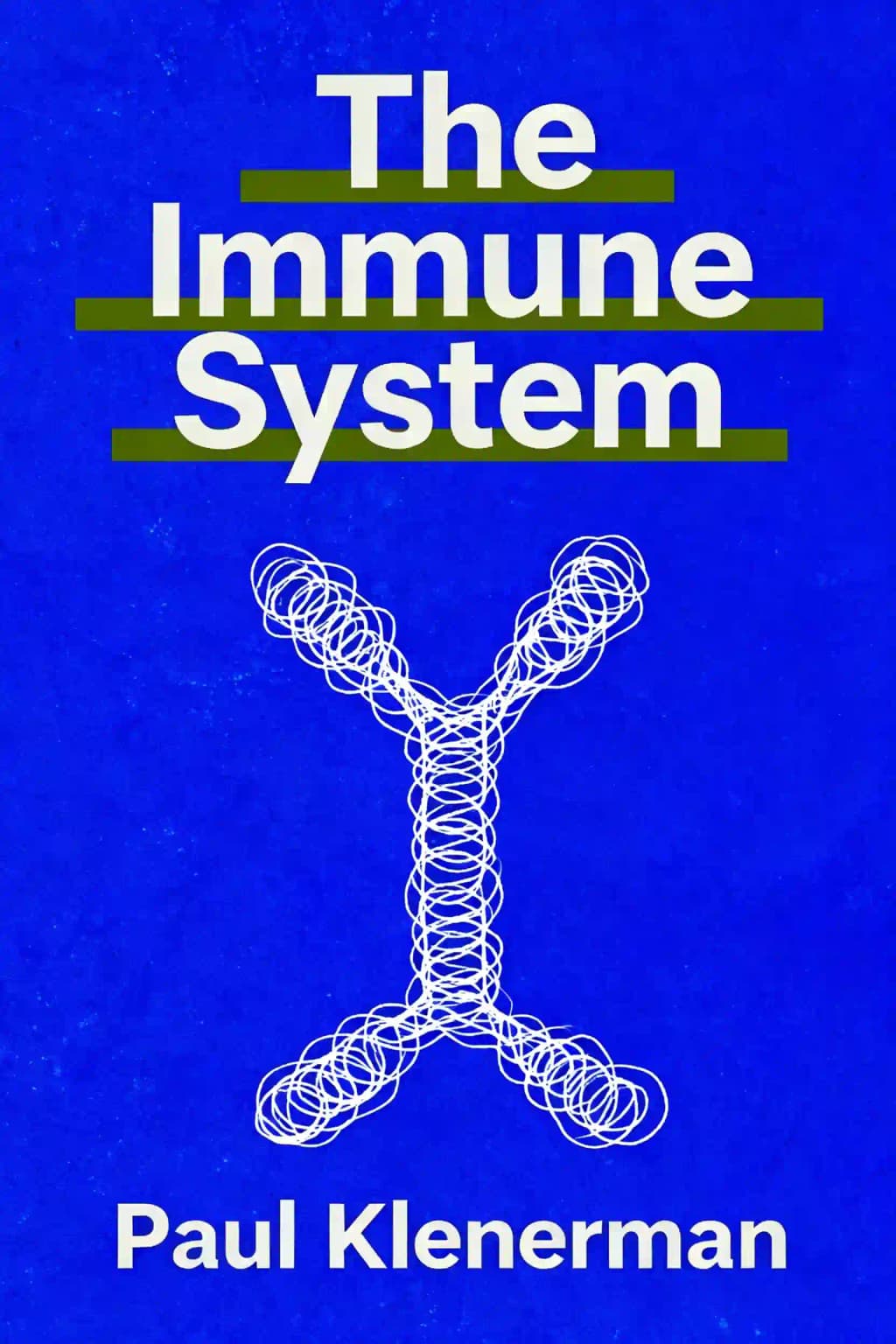
Discover how your body fights invisible battles daily in "The Immune System" by Oxford professor Paul Klenerman. Timely during COVID-19, this concise guide reveals why immunological memory is your superpower and how understanding "Immune System v2.0" could revolutionize cancer treatment.
Paul Klenerman, author of The Immune System, is a leading immunologist and professor at the University of Oxford’s Nuffield Department of Medicine. He is a clinician-scientist specializing in viral immunology and infectious diseases.
Klenerman’s work focuses on understanding immune responses to persistent infections like hepatitis C virus (HCV) and COVID-19. His groundbreaking research identified key cellular immune mechanisms in HCV, paving the way for novel vaccine development.
Trained at Cambridge and Oxford, he holds prestigious roles as a Wellcome Trust investigator and NIHR Senior Fellow, and was elected to the Academy of Medical Sciences in 2013. Klenerman co-authored Viruses: A Very Short Introduction and Pandemics: A Very Short Introduction, distilling complex scientific concepts for broad audiences.
His insights are shared through lectures, including talks at the Oxford Martin School, and his work underpins the UK Coronavirus Immunology Consortium. Recognized globally, Klenerman’s HCV vaccine trials marked the first successful induction of potent antiviral immunity in humans, advancing the fight against chronic infections.
Paul Klenerman’s book explains how the human immune system defends against pathogens through innate (rapid) and adaptive (targeted) responses. It covers immune failures like chronic infections and overreactions causing autoimmune diseases, while exploring future therapies and vaccine development. The text balances scientific depth with accessible explanations of complex immunological concepts.
This book suits biology students, healthcare professionals, and curious readers seeking foundational knowledge about immunology. Its concise format makes it ideal for those new to the topic or anyone interested in how vaccines work, why allergies occur, or how HIV compromises immunity.
Yes—it distills complex immunological processes into clear, engaging content without oversimplification. Klenerman uses real-world examples like HIV and rheumatoid arthritis to illustrate key principles, making it valuable for both academic and general audiences.
The book emphasizes their synergistic role in comprehensive protection.
Klenerman analyzes two extremes: underactivity (leading to infections or HIV progression) and overactivity (causing autoimmune diseases like multiple sclerosis or allergies). He ties these to real clinical challenges and evolving treatments.
This concept refers to cutting-edge therapies like monoclonal antibodies and mRNA vaccines that enhance natural immunity. The book highlights their potential to combat 21st-century diseases, including personalized cancer treatments and rapid pandemic responses.
As a professor at Oxford University, Klenerman specializes in chronic viral infections like hepatitis C and HIV. His research informs the book’s insights into immune memory and pathogen evasion strategies.
While praised for clarity, some readers may want deeper dives into topics like cytokine signaling or recent CRISPR-based therapies. The brevity inherent to the "Very Short Introduction" series limits technical detail.
It contextualizes breakthroughs like COVID-19 vaccines and checkpoint inhibitors for cancer within broader immunological principles. Klenerman’s focus on therapeutic innovation helps readers grasp current research trends.
Like other titles, it prioritizes accessibility but stands out for linking foundational biology to pressing global health issues. Its coverage of pandemics and immunotherapy aligns with post-2020 reader interests.
Yes—the book clarifies how vaccines work, why sleep affects immunity, and how autoimmune conditions develop. These insights empower informed decisions about health screenings, lifestyle choices, and medical treatments.
通过作者的声音感受这本书
将知识转化为引人入胜、富含实例的见解
快速捕捉核心观点,高效学习
以有趣互动的方式享受这本书
The immune system operates silently until it fails.
Each innovation built upon previous mechanisms.
The immune system extends far beyond specialized cells.
The skin provides crucial first-line defense.
The immune system integrates both rapid innate responses and sophisticated learned responses.
将《The Immune System》的核心观点拆解为易于理解的要点,了解创新团队如何创造、协作和成长。
将《The Immune System》提炼为快速记忆要点,突出坦诚、团队合作和创造力的关键原则。

通过生动的故事体验《The Immune System》,将创新经验转化为令人难忘且可应用的精彩时刻。
随心提问,选择声音,共同创造真正与你产生共鸣的见解。

"Instead of endless scrolling, I just hit play on BeFreed. It saves me so much time."
"I never knew where to start with nonfiction—BeFreed’s book lists turned into podcasts gave me a clear path."
"Perfect balance between learning and entertainment. Finished ‘Thinking, Fast and Slow’ on my commute this week."
"Crazy how much I learned while walking the dog. BeFreed = small habits → big gains."
"Reading used to feel like a chore. Now it’s just part of my lifestyle."
"Feels effortless compared to reading. I’ve finished 6 books this month already."
"BeFreed turned my guilty doomscrolling into something that feels productive and inspiring."
"BeFreed turned my commute into learning time. 20-min podcasts are perfect for finishing books I never had time for."
"BeFreed replaced my podcast queue. Imagine Spotify for books — that’s it. 🙌"
"It is great for me to learn something from the book without reading it."
"The themed book list podcasts help me connect ideas across authors—like a guided audio journey."
"Makes me feel smarter every time before going to work"

免费获取《The Immune System》摘要的 PDF 或 EPUB 版本。可打印或随时离线阅读。
Your body houses a remarkable defense network that operates silently until challenged. When immunologist Paul Klenerman contracted a rare viral infection while working with patients, his immune system eliminated it without medical intervention-a testament to this invisible guardian's power. This sophisticated system represents billions of years of evolutionary refinement, protecting us from countless external threats and internal dangers like cancer. The immune system's complexity rivals that of the brain, yet it operates throughout the entire body, coordinating responses across multiple organs and cell types. As immune therapies revolutionize cancer treatment and vaccine technologies continue advancing, understanding this remarkable system has never been more relevant to our collective health. The story of immunity isn't just about white blood cells-it's about an intricate network that includes every cell in your body, working in concert to distinguish friend from foe.