第 1 章
Behind Closed Doors: A Deadly Game of Secrets
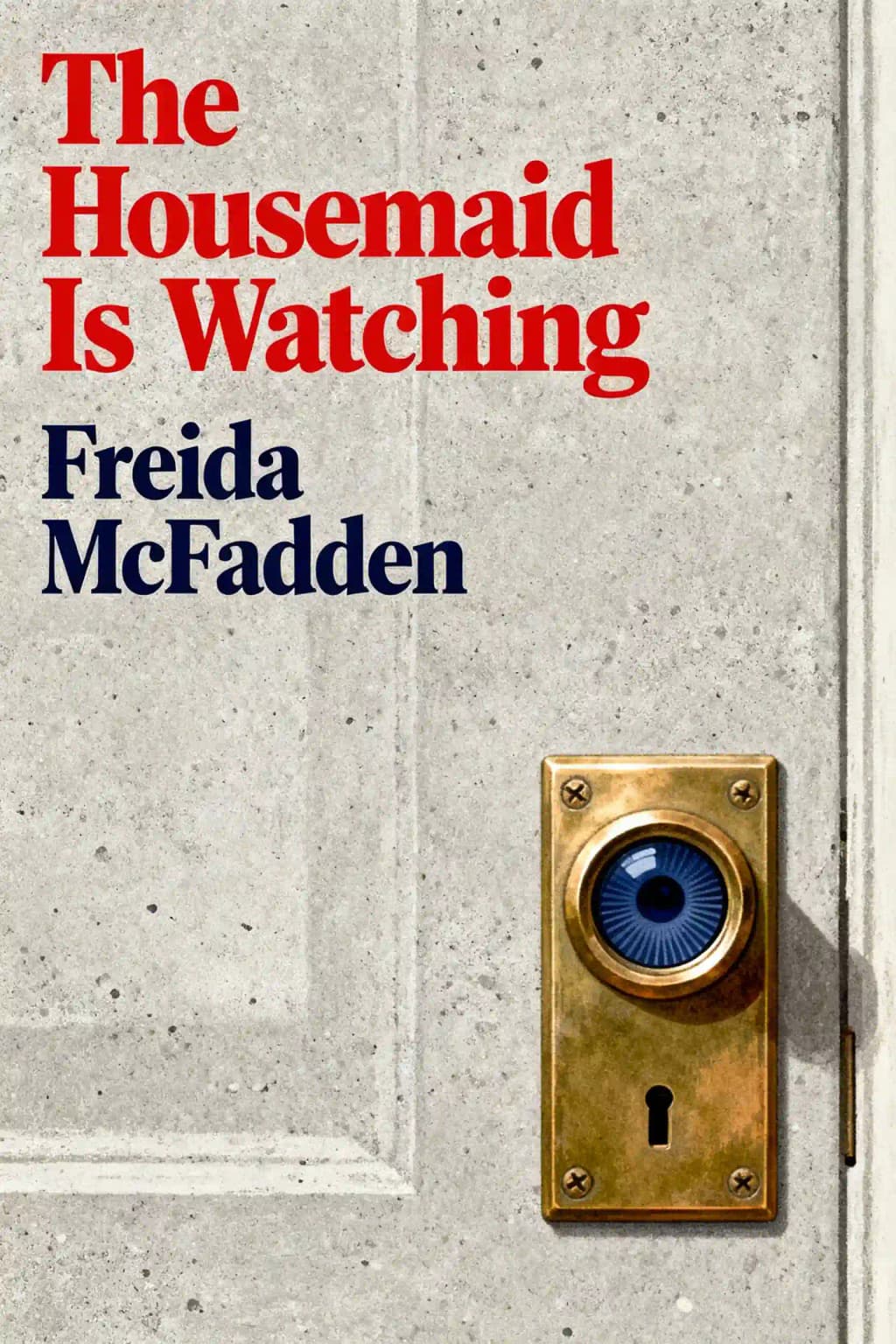
*The Housemaid Is Watching* has captivated millions of readers worldwide, cementing Freida McFadden's reputation as the queen of domestic thrillers. This third installment in her bestselling Housemaid series became an instant New York Times bestseller upon its release, with readers praising its shocking twists and psychological depth. Even celebrities like Reese Witherspoon have recommended McFadden's work through her book club, noting how these novels tap into our primal fears about what really happens behind the pristine facades of suburban homes. What makes this particular story so chilling is how it explores the dark undercurrents of seemingly perfect neighborhoods, where manicured lawns often hide the most disturbing secrets.
第 2 章
A Dream Home Turns Nightmare
Millie Accardi can't believe her luck when she and her husband Enzo secure a beautiful house at 14 Locust Street at ten percent below asking price. After losing multiple bidding wars elsewhere - including a devastating last-minute outbid on a colonial in Westchester - this spacious home in a neighborhood with highly-rated schools seems like the universe finally giving their family a break. Moving from a cramped 800-square-foot Bronx apartment with their two children - eleven-year-old Ada and nine-year-old Nico - this suburban dream represents everything they've worked for over their fifteen years of marriage.
But the warning signs appear almost immediately after closing. Their neighbor Suzette from number 12 introduces herself with backhanded compliments about their "small" and "rustic" house, despite its 2,800 square feet. She makes pointed comments about the previous owners' hasty departure and suggests they might want to "modernize" the perfectly functional kitchen. Across the cul-de-sac at number 13 lives Janice, who rarely leaves home but watches everyone from her second-story window, her silhouette visible at all hours. Most unsettling is the realization that none of their windows have blinds - not a single one in fourteen rooms - leaving them exposed to prying eyes. When Millie asks the realtor about this oddity, she receives only vague mentions of "neighborhood aesthetics" and historical preservation guidelines.
The dream quickly begins to unravel as autumn approaches. Strange scraping sounds wake Millie at night, seeming to travel through the walls like something - or someone - moving between them. Their neighbor Suzette's interest in Enzo becomes increasingly brazen, from bringing over homemade meals when Millie works late to "accidentally" bumping into him during his morning jogs. And then there's the hidden room they discover beneath their staircase - a small, dusty space with peculiar symbols etched into its walls that becomes both fascination and fear for their children, who whisper about voices they hear emanating from behind its locked door.
What should have been a fresh start instead becomes a descent into suspicion and danger. The Accardis' financial strain from stretching to afford this house - depleting their savings and taking on a mortgage that eats forty percent of their monthly income - creates additional pressure, making their "lucky" purchase feel increasingly like a trap closing around them. As Millie observes the houses surrounding them, she begins to wonder what secrets they all contain. The identical facades seem to mock her growing paranoia, and the neighbors' synchronized routines feel less like suburban harmony and more like choreographed surveillance. She can't shake the feeling that her family's presence has disturbed a delicate balance in this seemingly perfect neighborhood - one that the other residents seem determined to restore, no matter the cost.
第 3 章
The Neighbors Are Watching
The Accardis' neighbors form a disturbing backdrop to their new life, each one harboring secrets that gradually seep through their carefully maintained facades. Across the street lives Janice, an overprotective mother whose anxiety manifests in extreme measures - she keeps her small son Spencer on a literal leash during their rare ventures outside. Her paranoia stems from an incident involving a child named Braden Lundie who disappeared "a few towns away" three years ago. Despite extensive searches involving hundreds of volunteers, helicopters, and tracking dogs, no trace was ever found. Janice weaponizes this tragedy, using it to criticize Millie's parenting choices, particularly her decision to work and allow her children to walk the three blocks home from school alone.
Next door, the Lowells present an image of domestic perfection that seems almost artificially curated. Suzette Lowell commands attention with her ethereal beauty - butterscotch hair that catches the light just so, eyes that shift between green and blue depending on her designer outfit of the day. Their home looks like it belongs in Architectural Digest, with its perfectly manicured gardens and spotless white furniture that seems to repel dirt through sheer force of will. Her husband Jonathan provides a stark contrast - he wears worn jeans and speaks plainly, seeming almost rebelliously ordinary next to his wife's calculated perfection. During an uncomfortable dinner party, Suzette orchestrates the seating arrangement to place herself beside Enzo, her fingers finding excuses to brush his arm throughout the evening while Millie watches, her wine glass gripped increasingly tighter.
The neighborhood dynamics spiral into complex webs of surveillance and suspicion. Janice spends hours at her kitchen window, documenting Suzette's comings and goings in a small notebook she thinks no one notices. "She's the worst person I've ever met," Janice declares to anyone who'll listen, though she never explains why. Meanwhile, Suzette's flirtation with Enzo grows more brazen - she creates opportunities to visit when Millie isn't home, offering to connect him with wealthy clients for his landscaping business while suggesting he give her "private demonstrations" of his techniques in her backyard.
Perhaps most unsettling is Martha, the stern sixty-year-old housekeeper who moves between the houses like a shadow collecting secrets. Her weathered face and unblinking stare unnerve Millie from their first meeting, a discomfort that deepens when Martha begins working for them. She has an uncanny ability to appear silently in doorways, her dark eyes following Millie's movements. When Millie catches her pocketing a silver necklace - a family heirloom from Millie's grandmother - Martha simply places it back without explanation or apology, her expression unchanged as if the incident never occurred.
What initially appeared to be a peaceful suburban sanctuary increasingly reveals itself as an elaborate theater production. Every neighbor seems to be performing a carefully rehearsed role, and the Accardis find themselves unwitting players in a production where they don't know their lines or their parts - a situation that becomes increasingly dangerous as the masks begin to slip and the true nature of their community emerges.
第 4 章
Secrets and Lies
As summer fades into autumn, Millie's suspicions about her husband metastasize like a cancer. The first red flag appears on a Tuesday afternoon when she spots Enzo's familiar work boots leaving muddy prints across Suzette's pristinely maintained lawn. When confronted, he claims he was checking a sprinkler leak - but Suzette later mentions having no irrigation issues. These "coincidences" multiply: Millie wakes at three in the morning to an empty bed, only to witness his black F-150 creeping into their driveway with headlights off. When he slides into bed fully dressed, muttering excuses about insomnia and late-night drives, the unmistakable scent of jasmine perfume clings to his collar - a fragrance Millie has never worn.
The financial irregularities prove equally troubling. First, it's $1,000 vanishing from their joint account - money they'd earmarked for Ada's upcoming orthodontic work. Enzo's explanation about replacing his commercial leaf blower doesn't add up; Millie later finds the old one working perfectly in their garage. Then comes the mortifying incident with Romano's Plumbing, when a $300 check bounces spectacularly. Suzette swoops in to cover it, producing her Black American Express card with practiced casualness while commenting on the "challenging economy" - a thinly veiled reminder of the growing disparity between their households.
The children's behavior undergoes alarming transformations. Eleven-year-old Nico's descent starts with shoving matches at recess but escalates rapidly. He breaks Justin Chen's nose during lunch period, earning a week's suspension. Two weeks later, his Little League coach removes him from the team after he deliberately throws a fastball at a batter's head. More disturbing are the subtle signs that pediatric psychologist Dr. Martinez flags as potential conduct disorder: pathological lying, bedwetting that suddenly resurfaces, and the neighborhood's missing cats. When his praying mantis dies - a pet he'd previously doted on - he tosses it in the trash with a shrug, remarking that "everything dies eventually."
Nine-year-old Ada transforms from a carefree child into a miniature adult, shoulders hunched beneath invisible burdens. She starts checking the doors three times before bed, hoards snacks in her room, and develops mysterious stomach aches before school. During family dinner, she watches Nico with wary eyes, as if expecting him to explode. When Millie finds her crying in the laundry room, Ada only whispers, "I promised not to tell."
The situation with Nico's supposed afternoons at Suzette's house becomes the final straw. After shattering her expensive bay window with what appeared to be a deliberately aimed baseball, he's meant to be doing repair work under supervision. But Janice, walking her poodle, mentions not seeing Nico at Spencer's for weeks. When pressed, Nico spins elaborate tales about solitary baseball practice, yet his backpack contains no glove or ball - only muddy clothes and a small notebook he refuses to explain. His eyes dart away during questioning, a muscle twitching in his jaw - a tell Millie recognizes from when he lied about breaking his sister's tablet.
The Accardi family splinters like glass under pressure, each crack representing another concealed truth. Millie finds herself mapping their deceptions: Enzo's mysterious absences, Nico's disturbing secrets, Ada's heavy silence, and her own growing collection of uncertainties. Every morning brings fresh evidence that her once-solid family life is built on shifting sands of duplicity. As she applies more concealer to hide her sleepless nights, Millie can't silence the voice warning her that these aren't merely growing pains or marital hiccups - something malevolent has taken root in her family's foundation.
第 5 章
The Hidden Room
The discovery of a hidden room beneath the staircase becomes the physical manifestation of the secrets infecting the Accardi home. Millie first notices mysterious scraping sounds late at night - faint but persistent scratches that seem to emanate from within the walls themselves. When Enzo dismisses these noises as "the house settling," Millie can't shake the feeling that something more sinister is at work. The sounds intensify during thunderstorms, creating an eerie symphony that keeps her awake, staring at the shadows on her ceiling.
The room reveals itself during a moment of crisis. When their children go missing one autumn afternoon, a frantic room-by-room search leads Millie to notice a slight discoloration in the wallpaper beneath the stairs. Her fingers, pressed against the wall in desperation, find an almost imperceptible seam. The hidden door - weathered and painted to match the surrounding wall - swings open with a protesting creak, releasing decades of stale air.
Inside the cramped space, illuminated by a single bare bulb hanging from exposed wiring, they find Ada and Nico huddled in the corner. The room measures barely six by eight feet, its walls covered in peeling yellow wallpaper from the 1970s. Scattered across the floor are rusty nails, old newspapers dating back to 1986, and Nico's carefully arranged collection of comic books. He explains with childish innocence that he discovered this "clubhouse" while following a spider and didn't think it was off-limits. Suzette, arriving breathless from next door to help with the search, appears genuinely shocked by the room's existence. She explains that during renovations five years ago, contractors had deemed the space structurally unsound due to water damage and sealed it off.
The room develops a complex hold over the children's imagination. Ada describes it in her diary as suffocatingly small, thick with dust and intricate cobweb patterns that remind her of delicate lace gone wrong. The space triggers memories of Braden Lundie's disappearance - particularly the police speculation about where he might have been hidden. Despite strict parental prohibitions against entering the room, it exerts an almost magnetic pull on Nico, who begins sleepwalking toward it at night.
The discovery becomes even more chilling when Ada stumbles upon a similar concealed space in the Lowells' house - this one carefully maintained and clearly in active use. This second hidden room contains an unsettling collection of children's toys: pristine Transformers still in their packages, remote-controlled trucks, detailed model cars, and action figures arranged with disturbing precision. Most horrifying is the small twin bed pushed against one wall, topped with a handmade quilt featuring intricate insect patterns. The white sheets beneath bear dark brown stains that Ada immediately recognizes but refuses to name.
These parallel hidden spaces serve as powerful symbols of suburban darkness - secret chambers where the facade of perfection cracks to reveal the rot beneath. They represent spaces where children can vanish without trace, where predators can operate undetected, and where the most terrible acts can unfold just feet away from normal family life, muffled by layers of drywall and denial.
第 6 章
The Breaking Point
The fragile balance of secrets and lies collapses when Millie discovers Jonathan Lowell's murdered body in his home. Following the smell of blood after finding the door unlocked, she discovers him lying dead on the floor with his throat slit, blood still pooling around him.
When Enzo returns home that night with blood on his hands and shirt, Millie's worst fears seem confirmed. Though he claims he cut himself while working, she can't help wondering if her husband has murdered their neighbor-perhaps out of jealousy over Suzette's flirtations or for some other unknown reason.
The police quickly focus on Enzo as their prime suspect. Detective Willard separates them at the station and reveals devastating information: Enzo illegally purchased a gun with money from their joint account and checked into a motel with Suzette Lowell four nights before the murder. Jonathan had a substantial life insurance policy with Suzette as the sole beneficiary, suggesting a potential motive for conspiracy.
When Enzo finally emerges from questioning, he insists he never cheated with Suzette. The motel visit, he claims, was with Martha, their sixty-year-old cleaning woman. He explains that Martha's husband was abusive, and she was stealing to save money to escape. The perfume Millie smelled was Suzette's, which Martha either received as leftovers or took herself. Enzo bought the gun to protect Martha and helped her escape to somewhere hundreds of miles away.
Though Millie wants to believe him, the situation worsens when police find Enzo's pocketknife with his initials, bearing traces of Jonathan's blood despite attempts to clean it. When confronted, Enzo shockingly confesses, "I am the one who killed Jonathan," claiming he did it for the insurance money because they were so broke.
As Enzo is arrested and led away in handcuffs, Millie is left to tell their children that their father is gone and they'll likely lose their home. But when she finds Ada sobbing in her room, her daughter makes a shocking confession: "I was the one who killed him."
第 7 章
The Truth Revealed
The full horror of what happened at 14 Locust Street emerges through Ada's perspective. As the new girl at school, she struggles to fit in while fending off unwanted attention from boys. Meanwhile, she notices her brother Nico's increasingly strange behavior after he begins doing chores at the Lowells' house to pay for breaking their window.
Nico finally reveals his terrible secret: when he started working for the Lowells, he discovered they had a hidden room under their stairs similar to the one in their own house. Inside were expensive toys, and when Mr. Lowell caught him playing with them, he claimed Nico broke a valuable collector's item. Instead of making their parents pay, Mr. Lowell offered a deal: Nico would "test" toys while being recorded by a camera. The door would be locked, and once Nico wet himself when not allowed out to use the bathroom.
When Nico tried to stop going, Mr. Lowell threatened to sue their family into homelessness or kill everyone-Dad first, then Mom, then Ada. Though Ada wants to tell their parents, she promises Nico she won't, but silently decides Mr. Lowell needs to know Nico is never going back.
Ada confronts Mr. Lowell, bringing her father's pocketknife for comfort, not intending to use it. She discovers the hidden room filled with toys and a small child's bed with disturbing brown stains on the sheets. When Mr. Lowell discovers her there, she stabs him to escape, then flees home and hides her bloodstained clothes.
Enzo, realizing what happened, takes the blame to protect his daughter. When Millie learns the truth, she calls Cecelia, Enzo's lawyer, explaining everything. The situation becomes even more horrifying when Detective Ramirez reveals that police found Suzette Lowell's fingerprints in the hidden room, along with blood and DNA belonging to Braden Lundie, the child who disappeared three years ago. Suzette knew her husband was a predator but still allowed the Accardi children to visit.
To save her family, Millie confronts Suzette with a choice: confess to killing Jonathan in self-defense after discovering what he was doing in that room, or let Enzo take the blame while she's prosecuted for conspiracy in Braden's murder. Faced with this ultimatum, Suzette chooses to confess.
第 8 章
The Aftermath
Two weeks after Suzette's confession, the Accardi family is slowly healing. All charges against Enzo have been dropped, and Ada's involvement remains their secret. Though they're recovering, Millie knows her children-especially Nico-will need therapy to process their trauma.
The family plans a vacation after school ends, with the children eagerly proposing Disneyland. Though life is returning to normal, the scars remain. Enzo blames himself for giving Ada the knife, though they both know it saved her life. Millie worries constantly about her daughter, though Enzo reassures her, "Her mama was fine, and she will be fine."
Ada, meanwhile, has found her own way of coping. When a boy at school taunts her about her father going to jail for killing someone, she threatens him so effectively that he flees, calling her a psychopath. As she returns to her book, she catches her reflection in the window and realizes something she'd never noticed before-as she's gotten older, her facial features have become remarkably similar to her mom's. She looks just like Millie.
But the final twist reveals that neither Enzo nor Ada killed Jonathan Lowell. It was Martha, the housemaid, who recognized Millie from years ago when she worked for a wealthy family whose entitled teenage son was later murdered by "Wilhelmina Calloway"-now Millie Accardi. Martha saw the Accardis as her ticket to escape her abusive husband.
During a final visit to Suzette's house to steal jewelry she could sell, Martha unexpectedly encountered Mr. Lowell. When he caught her with Suzette's necklaces and threatened to call the police, she grabbed a letter opener and killed him in panic. She fled just as Millie was knocking at the door, narrowly avoiding being seen by Enzo who was tending to a cut hand next door.
For two weeks after Suzette's confession, Martha has expected police at her door, but they never came. "I suppose," she reflects, "nobody ever suspects the housemaid."
第 9 章
The Darkness Within Us All
*The Housemaid Is Watching* ultimately explores how our pasts shape us and how far we'll go to protect those we love. Every character carries secrets that influence their actions-some protective, others destructive.
Millie's history as "Wilhelmina Calloway," who spent ten years in prison for killing a boy who tried to rape her friend, informs her fierce protection of her children. Enzo's background working for his sister's abusive husband, breaking people's fingers to collect debts, prepared him to sacrifice himself for his daughter. Even Suzette, despite her complicity in her husband's crimes, claims she stayed to prevent him from hurting other children.
The novel asks uncomfortable questions about justice, revenge, and moral ambiguity. Was Ada justified in killing Jonathan to protect herself and her brother? Was Enzo right to take the blame? Was Martha's murder of Jonathan an act of self-preservation or opportunistic violence?
Most disturbingly, the story suggests that the darkness within us can be passed down through generations. When Ada threatens her bully with graphic violence, she demonstrates the same capacity for intimidation that got her mother sent to prison. As she realizes she looks just like her mother, we're left wondering if she's inherited more than just Millie's appearance.
The perfect suburban neighborhood of Locust Street, with its manicured lawns and pristine houses, serves as a facade hiding the darkest human impulses. Behind closed doors and inside hidden rooms, predators prey on children, spouses betray each other, and neighbors spy on one another. The novel suggests that we never truly know what happens in other people's homes-or sometimes even in our own.
In the end, the most chilling revelation is that evil often wears the most ordinary face. As Martha notes in her final confession, "nobody ever suspects the housemaid." The people we invite into our homes, the neighbors we trust with our children, and even the family members we think we know completely may harbor the most dangerous secrets of all.