第 1 章
The Pursuit of Empty Promises: How Materialism Diminishes Our Lives
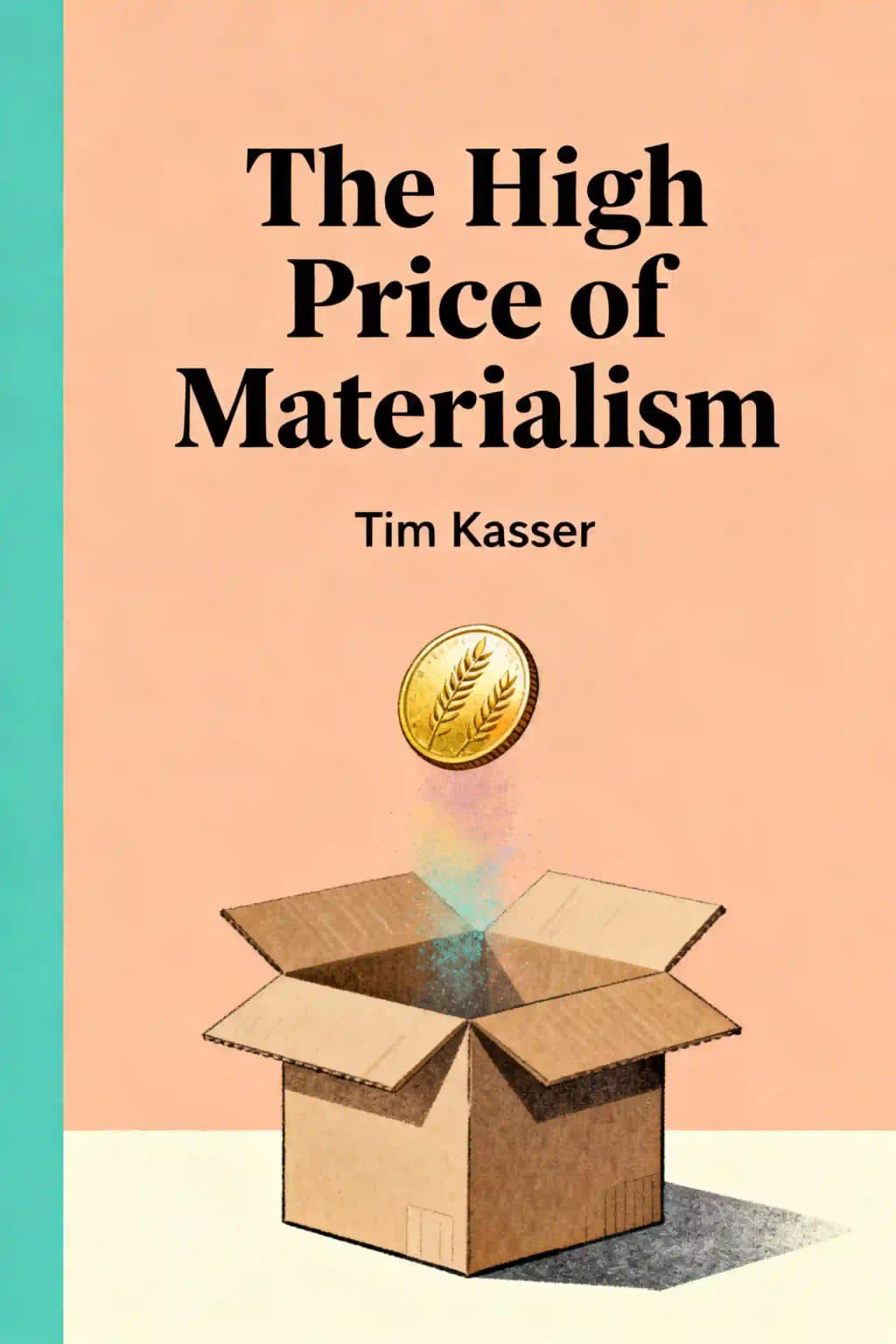
In a world where we're constantly bombarded with messages that happiness comes wrapped in designer packaging, Tim Kasser's "The High Price of Materialism" delivers a sobering counternarrative. This groundbreaking work has become required reading in psychology departments at Harvard, Stanford, and Yale, with celebrities like Russell Brand and minimalist influencers citing it as transformative to their worldview. Since its publication, the book has sparked a quiet revolution, inspiring the voluntary simplicity movement and providing scientific backbone to the growing pushback against consumer culture. What makes this work particularly powerful is how it systematically dismantles, through rigorous research rather than moral preaching, the central promise of modern capitalism: that acquiring more stuff will make us happier. As we stand at a crossroads of climate crisis and mental health epidemics, Kasser's insights have never been more relevant or urgent.
第 2 章
The Paradox of Modern Materialism
Twenty-five centuries ago, Lao Tzu warned against pursuing possessions and status, a caution echoed by virtually every philosophical tradition. Yet today, these ancient warnings compete with an overwhelming barrage of consumeristic messages proclaiming that material acquisition and image cultivation provide genuine worth and satisfaction. We're caught between contradictory messages about what makes life meaningful-the sages or the celebrities, the philosophers or the advertisers.
This confusion extends throughout society. Politicians express concern about consumerism displacing values while prioritizing economic growth above all else. Religious leaders preach against wealth accumulation while televangelists amass fortunes. Even psychology itself remains divided-evolutionary and behavioral theories suggest wealth and status are fundamental motivators, while humanistic perspectives argue materialistic pursuits detract from well-being by distracting us from authentic experiences.
What makes Kasser's contribution so valuable is that it moves beyond opinion and anecdote into systematic scientific investigation. Until the 1990s, research on materialism remained surprisingly sparse, with most studies focusing narrowly on whether money buys happiness rather than examining how materialistic values themselves might shape our well-being. Kasser's work fills this gap by investigating not just whether wealthy people are happier, but how prioritizing wealth, image, and status affects our psychological health, relationships, and society.
The evidence he presents is striking and consistent: across diverse populations from teenagers to adults, and spanning cultures from America to Singapore to Russia, people who strongly value wealth and possessions report lower psychological well-being than those less concerned with such aims. This pattern holds regardless of actual income level, suggesting it's not wealth itself but the pursuit and prioritization of it that undermines our happiness.
第 3 章
The Science of Materialism and Well-Being
To understand materialism's effects, Kasser and colleagues developed the Aspiration Index, measuring the relative importance people place on different life goals. Their initial studies with college students revealed that those who prioritized financial success over self-acceptance, affiliation, or community feeling reported significantly lower levels of self-actualization and vitality, along with higher levels of depression and anxiety.
These findings were replicated with diverse groups, including 18-year-olds from various socioeconomic backgrounds. Materialistic teens showed poorer social productivity and more behavioral disorders, including increased vandalism and weapon-carrying. The researchers expanded their work to examine other materialistic values beyond financial success, finding that image and fame aspirations similarly reflect an "extrinsic" value orientation focused on external rewards rather than intrinsic satisfaction.
To overcome limitations of predetermined questionnaires, researchers developed methods allowing participants to list personal goals in their own words, then measured how much these self-generated goals oriented toward possessions, attractiveness, and popularity. This approach confirmed earlier findings-college students with materialistic strivings reported lower self-actualization and fewer positive emotions, while adults with materialistic goals experienced less positive emotion and life satisfaction.
Other researchers have consistently found parallel results. Patricia and Jacob Cohen's large-scale study of over 700 adolescents revealed that materialistic youth were significantly more likely to suffer from numerous mental health issues, including separation anxiety, attention deficit disorder, paranoia, histrionic tendencies, borderline traits, narcissism, and dependent personality characteristics. Marketing researchers Russell Belk, Marsha Richins, and Scott Dawson developed different materialism scales, all showing that materialistic individuals report lower life satisfaction, less happiness, and more depression.
Perhaps most compelling is that these findings aren't limited to Americans. Studies using translated versions of materialism measures have confirmed these relationships among British, Danish, German, Indian, Romanian, Russian, South Korean, Chinese, Turkish, Australian, Canadian, and Singaporean participants. A comprehensive study by Diener and Oishi of over 7,000 college students across 41 nations consistently showed that strong focus on making money was associated with diminished life satisfaction-regardless of national wealth or economic development.
第 4 章
The Psychological Needs Framework
Why does materialism correlate with poor well-being? Kasser introduces a framework based on psychological needs to explain materialism's "dark side." Unlike physical needs that everyone acknowledges, psychological needs remain somewhat controversial among scientists, though many theorists use this concept to understand human motivation and well-being.
Four fundamental psychological needs emerge as essential to human functioning: safety and security (including basic sustenance); competence and self-esteem (feeling capable and maintaining positive self-view); connectedness (intimacy, belonging, and relationships); and autonomy and authenticity (feeling free, self-directed, and genuinely engaged). Well-being increases when these needs are satisfied and decreases when they're not.
While needs motivate us to act, they don't specify exactly how to satisfy them. Consumer culture constantly bombards us with messages that needs can be satisfied through products-whether for security, self-esteem, or connection. These messages lead people to internalize materialistic values to varying degrees, organizing their lives around possessions, money, and image. Unfortunately, materialistic values ultimately lead to a lifestyle that poorly satisfies psychological needs, like junk food that temporarily fills but doesn't truly nourish.
People internalize materialistic values to different degrees partly due to exposure-those who watch more television or have materialistic parents tend to be more materialistic themselves. However, preexisting need satisfaction also plays a crucial role. As Maslow observed, people whose needs remain unfulfilled fixate on what they lack. Materialistic values thus often emerge as both symptoms of unmet needs and as misguided attempts to satisfy those needs.
第 5 章
Insecurity: The Root of Materialistic Values
Tolkien's observation that fear drives people toward material pursuits reflects a fundamental truth: humans require material resources to feel safe and secure. While all people seek material means to meet basic needs, those who highly value materialistic aims are often driven by deeper unmet security needs.
Family environments strongly determine how secure children feel and significantly influence their later value systems. Research reveals that teenagers with strong materialistic values had mothers who were less nurturing and parents who were less likely to listen to their perspectives or acknowledge their feelings. Parents of materialistic teenagers tended to be overly possessive, harsh in discipline, and inconsistent with rules-all practices that undermine children's security needs.
Divorce also contributes to materialism, not primarily through financial strain but through "the diminution of interpersonal resources such as love and affection" that often accompanies family disruption. When parents' ability to provide warmth and nurturance diminishes after divorce, many children turn to materialistic pursuits to fill this emotional gap.
Contrary to common assumptions that wealth breeds materialism, research shows that poverty actually creates stronger materialistic tendencies. Children from poorer backgrounds were more likely to value materialism than those from more affluent families. Growing up with economic insecurity-uncertain meals, housing instability, and neighborhood safety concerns-creates chronic feelings of insecurity that often manifest as materialistic values.
Beyond conscious expressions, research has explored how feelings of insecurity unconsciously drive materialistic pursuits. A qualitative study comparing dreams of highly materialistic individuals with those less focused on materialism revealed that death appeared much more frequently in materialists' dreams (20.5% vs 3%), and materialists' dreams featured falling significantly more often (15% vs 3%), a symbol universally interpreted as representing insecurity.
Most compelling is experimental evidence showing that when college students were assigned to write about their own death (versus writing about music in a control condition), they displayed significantly more materialistic tendencies. Those who contemplated death reported higher expected financial worth, anticipated spending nearly twice as much on pleasure items, and showed more greed in economic games. This provides the strongest support yet that feelings of insecurity actually cause materialistic tendencies, rather than merely correlating with them.
第 6 章
The Fragile Self-Worth of Materialistic Individuals
Despite common wisdom suggesting that achieving materialistic goals should increase happiness and self-esteem, evidence shows this rarely happens. Even wildly successful people like Netscape founder Jim Clark remain unsatisfied after reaching enormous wealth goals, constantly moving their targets higher. Research consistently demonstrates that beyond meeting basic needs, increases in wealth don't yield lasting improvements in well-being.
Self-esteem reflects people's evaluations of themselves-high self-esteem involves positive self-evaluations and feelings of worthiness, while low self-esteem involves negative self-evaluations and feelings of inadequacy. Research shows high self-esteem develops from warm environments with loving parents and successful goal attainment, while low self-esteem stems from neglect and inability to achieve goals. Materialistic values correlate with low self-esteem, with materialistic individuals reporting feeling useless and inadequate.
Beyond low self-esteem, materialistic individuals often develop "contingent" self-esteem, where their sense of worth depends on meeting external standards like grades, business deals, or weight. This creates an unstable self-worth that plummets without constant validation. Materialistic individuals often develop narcissistic tendencies to mask feelings of inadequacy, as illustrated by one materialistic participant's dream about becoming a motorcycle racing champion-revealing a self-worth dependent on external validation and recognition.
Many psychologists believe emotional states result from discrepancies between our current reality and our ideals. For materialistic individuals, ideals about money, possessions, looks, and status create particularly problematic discrepancies. They're especially attuned to wealth and status cues, constantly comparing themselves to the "Joneses" and absorbing idealized media images. This creates a vicious cycle: materialistic ideals romanticize wealth, creating unreachable standards and chronic discrepancies.
When people achieve materialistic goals like making a million dollars, they initially experience positive emotions but quickly habituate to their new standard of living. What once seemed luxurious becomes routine, and they begin comparing themselves to those with even more wealth. Like addiction, materialistic pursuits require increasingly larger "fixes"-what once gave a "high" from a small purchase eventually requires bigger possessions and sums to generate the same feeling.
第 7 章
How Materialism Poisons Our Relationships
Humans are fundamentally social creatures whose psychological health depends on close connections with others. However, people focused on materialistic aims often pursue these goals at the expense of relationships. Research shows materialistic values are associated with lower-quality relationships with both friends and romantic partners-relationships that are shorter, less positive, and more conflictual.
Studies consistently show that materialistic individuals place less value on interpersonal relationships and community involvement. Cross-cultural research by Shalom Schwartz, spanning forty nations, demonstrates that materialistic values (wealth, social recognition, image, ambition) directly oppose values of benevolence (loyalty, honesty, friendship) and universalism (social justice, equality, peace). Even preschoolers show this pattern-children exposed to toy commercials were more willing to play with "not-so-nice" children who possessed advertised toys rather than play with friends.
When people prioritize materialism, they tend to develop what philosopher Martin Buber called "I-It" relationships-treating others as objects to be used rather than as subjective beings with their own feelings and perspectives. This objectification manifests in various contexts: parents viewing children as "assets" to be managed; singles describing dating with market metaphors like "fresh meat" or being "a good product"; and business relationships framed through manipulation and combat terminology.
Materialistic individuals demonstrate less generosity, empathy, and consideration for others' perspectives. Studies show they would spend significantly more on themselves and less on charity from a windfall compared to non-materialistic people. They score lower on empathy measures and higher on scales measuring instrumental friendships-relationships maintained primarily for status enhancement or personal gain. Additionally, materialistic individuals score higher on Machiavellianism-tendencies toward cynicism, distrust, self-centeredness, and manipulation in relationships.
A Prisoner's Dilemma study dramatically illustrated this dynamic-materialistic college students consistently chose selfish "get ahead" options over cooperation, even though this strategy ultimately yielded fewer points overall. Ironically, materialistic individuals often grouped with like-minded peers, creating environments where mutual exploitation left everyone worse off.
第 8 章
The Chains of Materialism: How It Undermines Freedom
While materialism is often associated with freedom in capitalist societies, it actually undermines our personal freedom and authenticity in profound ways. Despite the illusion of individualism through consumer choice, materialism diminishes our autonomy-our ability to act in accord with our true selves, feeling free and volitional in our actions.
Research consistently shows that individuals strongly oriented toward materialistic values place correspondingly less emphasis on authenticity and freedom. Across thousands of Aspiration Index responses, those valuing wealth, fame, and image care less about aspirations like "choosing what I do," "following my interests," and "feeling free." This conflict represents two fundamentally different motivational systems: materialism derives from a system focused on external rewards and praise, while autonomy stems from a system concerned with expressing interest, enjoyment, and doing things for their own sake.
Materialistic values directly undermine experiences of intrinsic motivation or "flow"-activities pursued solely for their inherent joy, interest, and challenge. During flow experiences, people feel most authentic and free, deeply connected to their activities while often losing self-awareness. Materialism works against flow in three key ways: it shifts focus to external rewards rather than inherent enjoyment; it increases self-consciousness about others' perceptions; and it encourages activities (like excessive television watching) that rarely produce flow states.
Extensive research demonstrates that external rewards consistently decrease intrinsic motivation for inherently enjoyable activities. When initially engaged in enjoyable activities, people are motivated by choice and freedom, saying things like "Because I choose to" or "Because it's fun." After receiving rewards, their motivation shifts from internal to external, changing to "For the money" or "To show how good I am."
Materialistic individuals score significantly higher on measures of public self-consciousness, agreeing with statements like "I'm concerned about what other people think of me" and "I usually worry about making a good impression." This heightened self-consciousness prevents the deep engagement necessary for autonomy and flow experiences.
Compulsive buyers exemplify the controlled, pressured experience of materialism. They describe shopping as automatic and uncontrollable: "It's not that I want it," one reports, while another admits never being able to "buy one quart of milk" without buying more. These individuals don't experience choice but rather mounting anxiety relievable only through purchasing. Far from providing freedom, materialistic values chain people to pressured, controlled experiences even in activities supposedly aligned with their values.
第 9 章
Beyond Personal Costs: The Impact on Family, Community, and Earth
When materialistic values guide our behavior, they affect not just ourselves but our lovers, children, neighbors, society, and planet. Marriage to a materialistic spouse means living with someone who likely values appreciation, helping, loyalty, responsibility, honesty, and forgiveness less than desired. Such partners tend to be less generous, understanding, and more aggressive, manipulative, and distrustful during conflicts.
Materialistic values transmit from parents to children through both modeling and specific behaviors. Research shows significant associations between mothers' and teens' values-71% of teens whose mothers prioritized financial success over self-acceptance shared those priorities. Parents with materialistic values likely expose children to more television (reinforcing these values), demonstrate less nurturing parenting styles, and work longer hours to maintain materialistic lifestyles. Unfortunately, parents often compensate for absence by buying gifts, which only reinforces the message that material goods can substitute for time together.
When powerful people embrace materialistic values, entire communities bear the costs. Business executives facing value conflicts often choose shareholder profits over worker welfare, while government officials create laws and tax structures that favor corporations while underfunding health, education, environment, and arts programs. Particularly concerning are marketers and advertisers who target children, viewing them as objects to be manipulated for profit. Industry executives openly discuss "owning" children "from cradle to grave" and exploiting their emotional vulnerabilities.
Many scientists identify overconsumption as a fundamental threat to Earth's ecosystem. Studies consistently show materialistic individuals engage in fewer environmentally friendly behaviors. In Sheldon and McGregor's forest management experiment, groups of materialistic students harvested timber resources much more aggressively than non-materialistic groups. This led to rapid depletion of their forests, which lasted only fifteen years compared to nearly twenty years for non-materialistic groups. Ironically, the materialistic groups ultimately made less profit because they depleted their resource base too quickly.
第 10 章
Breaking Free: Strategies for Personal and Social Change
The problem of materialism is framed as a values issue-people embrace materialism because society promotes it, while society remains materialistic because individuals believe these pursuits lead to happiness. This interdependence offers hope: changing either individual values or societal structures can break this cycle.
The healthiest alternative values reflect and support our fundamental psychological needs-safety and security, competence and self-worth, connection to others, and authenticity and freedom. These "intrinsic values" include self-acceptance/personal growth, relatedness/intimacy, and community feeling/helpfulness. Research consistently shows people prioritizing intrinsic values report greater happiness, better psychological health, stronger relationships, more community contribution, and increased ecological concern compared to materialistic individuals.
Several research-based strategies can help individuals shift from materialistic to intrinsic values:
1. Contemplate the research showing materialism undermines wellbeing. The goal isn't poverty but balance-keeping materialistic aims secondary to intrinsic ones.
2. Examine your fears. Materialism often increases when we have non-nurturing parents, fear death, or question our self-worth. Confronting these uncomfortable issues is essential to stop them from driving materialistic behavior.
3. Get off the materialistic treadmill. Recognize the cycle when you think "Maybe if I just had that new..." or "Maybe if I could just make more money..." Ask whether such pursuits have truly improved your life before.
4. Ask yourself why you really want money, looks, or fame. Identify your true psychological needs-loneliness? disconnection? lack of challenge?-and find direct paths to addressing them.
5. Rethink your relationships. If your relationships are problematic, consider whether you've invested the same energy in them as in money and image.
6. Change your activities. Remove behaviors that reinforce materialism-put the TV in the closet, cancel subscriptions to glamour magazines, stop mall shopping. Form new habits: walking, reading, volunteering, meditating, playing with children, or pursuing creative activities that align with intrinsic values.
Parents can counter society's materialistic messages by modeling non-materialistic behavior, limiting children's exposure to advertising, talking openly about materialism, and banding together with other parents to create alternative comparison groups. Schools should address materialistic influences like corporate-sponsored content and exclusive contracts with product manufacturers.
At the societal level, we should regulate advertisements by creating ad-free zones in schools, roadways, and public spaces. We can support intrinsically-oriented corporations that balance profit with employee well-being, community welfare, and environmental responsibility. We should elect officials who understand that increasing national wealth doesn't increase happiness once basic needs are met, and adopt alternative progress measures beyond GDP that include education, environment, and human rights.
第 11 章
The Path to Authentic Fulfillment
The book concludes with Marcus Pfister's fable "The Rainbow Fish," which powerfully illustrates the core message about materialism and happiness. The story follows a beautiful fish adorned with iridescent scales who initially takes great pride in his unique appearance, refusing to share his scales with others despite their admiration and requests. His possessiveness leads to profound loneliness, as other fish avoid him entirely. After consulting a wise octopus who helps him understand the emptiness of his materialism, he begins sharing his precious scales. With each scale he gives away, he experiences a new kind of joy, until he retains just one shimmering scale for himself. Through this act of giving, he discovers that true happiness emerges not from possessing beautiful things, but from the warmth of friendship and community.
This allegory perfectly mirrors Kasser's extensive research findings on materialism and well-being. The data consistently shows that individuals focused on acquiring possessions, status, and image report lower life satisfaction, increased anxiety, and more frequent episodes of depression. In contrast, those who prioritize intrinsic values - such as deep relationships, personal growth, and community contribution - demonstrate significantly higher levels of psychological well-being and life satisfaction. Studies across different cultures and socioeconomic groups reveal that people who volunteer regularly, maintain close friendships, and engage in meaningful work report feeling more fulfilled than those pursuing material success.
The evidence against materialism's effectiveness is particularly striking in longitudinal studies. Research tracking individuals over decades shows that those who maintained strong materialistic values consistently experienced deteriorating well-being over time. These individuals reported more relationship conflicts, lower job satisfaction, and increased feelings of emptiness despite achieving their material goals. Conversely, people who shifted their focus toward intrinsic values experienced improved mental health, stronger social connections, and greater life purpose.
Breaking free from materialism requires both individual and collective action. On a personal level, it involves conscious choices to prioritize experiences over possessions, relationships over status, and personal growth over external validation. This might mean choosing a lower-paying job that allows more family time, dedicating regular hours to community service, or simply spending more time in nature and less time shopping. On a broader scale, it requires challenging societal messages that equate success with consumption and creating communities that value connection, creativity, and environmental stewardship over material wealth.
The transformation from materialistic to intrinsic values creates positive ripple effects throughout society. As individuals shift their focus, they often become more environmentally conscious, more engaged in their communities, and more supportive of policies that promote collective well-being over individual wealth accumulation. This creates a virtuous cycle where personal growth and social progress reinforce each other, leading to more sustainable and fulfilling ways of living for everyone.