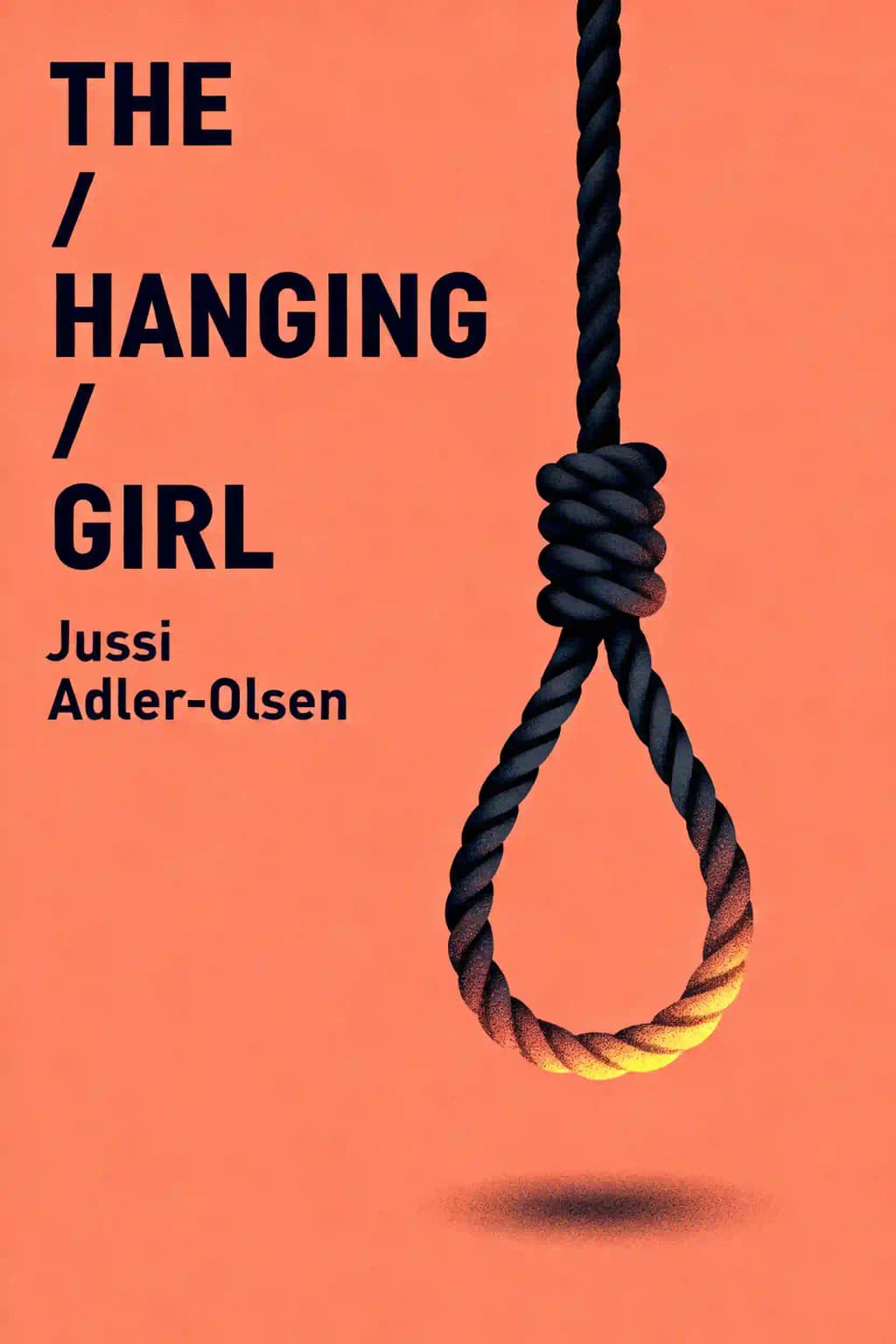
When a mummified corpse reopens a 20-year-old cult mystery, Detective Carl Mrck plunges into darkness. The sixth installment in Adler-Olsen's 12.5-million-copy Department Q series delivers the psychological depth that earned it international awards and film adaptations. What secrets die with The Hanging Girl?
Carl Valdemar Jussi Henry Adler-Olsen is the bestselling Danish crime fiction author of The Hanging Girl and the internationally acclaimed Department Q series. Born in Copenhagen in 1950 as the son of a prominent psychiatrist, Adler-Olsen brings psychological depth and institutional insight to his Scandinavian noir novels.
The Hanging Girl explores themes of religious extremism and cult manipulation through the investigations of deeply flawed detective Carl Mørck, showcasing the author's signature blend of dark Nordic atmosphere and complex character development.
After studying medicine, sociology, and film at the University of Copenhagen, Adler-Olsen began writing full-time in 1995, launching the Department Q series with The Keeper of Lost Causes in 2007.
His crime novels balance psychological tension with social commentary, drawing from his father's psychiatric work and his own diverse academic background. Adler-Olsen's books have sold over 25 million copies worldwide and been translated into more than 40 languages, regularly appearing on The New York Times bestseller list and dominating charts across Europe.
The Hanging Girl follows Copenhagen's Department Q as they investigate a 17-year-old cold case involving Alberte Goldschmid, a vivacious teenager found dead hanging in a tree after an apparent hit-and-run in 1997. Detective Carl Mørck initially dismisses the case, but after the obsessed investigating officer commits suicide, Carl's team travels to the island of Bornholm to uncover what they discover is actually murder, leading them to a dangerous sun-worshipping cult.
Jussi Adler-Olsen is a Danish crime fiction writer born August 2, 1950, best known for his internationally bestselling Department Q series. The son of a psychiatrist, he studied medicine, sociology, and film before becoming a full-time writer in 1995. His novels have sold over 25 million copies in more than 40 languages, making him one of Denmark's most successful crime authors. He made his fiction debut in 1997 before launching Department Q in 2007.
The Hanging Girl appeals to fans of Scandinavian crime fiction, cold case mysteries, and character-driven detective stories. Readers who enjoy complex investigations with psychological depth, flawed but determined protagonists, and slow-burning tension will find this book compelling. It's ideal for those who appreciate mysteries that explore institutional failures and the human cost of unsolved crimes, as well as existing Department Q series followers seeking the sixth installment.
The Hanging Girl is worth reading for its intricate plotting, compelling cold case investigation, and the continued development of Department Q's memorable characters. Jussi Adler-Olsen skillfully weaves together seemingly unrelated storylines—the tragic hit-and-run case and a subplot involving a manipulative cult leader—that eventually intersect. While some critics found it underwhelming compared to earlier entries, the novel delivers surprising twists and explores themes of obsession, guilt, and manipulation effectively.
Department Q investigates the 1997 death of Alberte Goldschmid, a beautiful 17-year-old who vanished from school on the island of Bornholm and was found hanging upside down in a tree. Initially ruled an accident, Sergeant Christian Habersaat spent nearly two decades convinced it was murder. The case involves no witnesses, accumulated evidence suggesting foul play, and leads that point toward a hidden cult on the Swedish island of Öland. Carl Mørck's team must determine whether this truly was murder.
Alberte Goldschmid was a vivacious, fun-loving 17-year-old girl who disappeared from school in 1997 while living on the Danish island of Bornholm. Described as beautiful and vibrant, she was struck at high speed in what appeared to be a hit-and-run accident and thrown up into a tree where she was found hanging. Her tragic death haunted investigator Christian Habersaat for nearly 20 years as he accumulated evidence suggesting her death was not accidental.
Sergeant Christian Habersaat calls Carl Mørck from Bornholm, desperately requesting help with Alberte's cold case that has obsessed him for nearly two decades. When Carl dismissively refuses and hangs up, Habersaat dramatically shoots himself in the head at his own retirement ceremony just hours later. His suicide, along with the earlier suicide of his son, leaves Carl wracked with guilt and forces him to take on the case. Rose shames Carl into investigating what Habersaat believed was murder.
The investigation leads Department Q to discover connections between Alberte's death and a sun-worshipping cult established on the Swedish island of Öland. A separate storyline follows a quasi-guru running a self-help religious institute and a woman obsessed with him. Though these plots initially seem unrelated to the Bornholm case, they eventually intersect, revealing that a cold, manipulative sadist connected to the cult is protecting a completely different way of life. The cult leader refuses to let anyone stand in their way.
The Hanging Girl features Carl Mørck, the eternally grouchy head of Department Q who carries personal guilt throughout the investigation. His team includes Assad, his Syrian assistant who is more than he appears; Rose, his headstrong assistant who forces Carl to take the Bornholm case; and Gordon, a newcomer to Department Q. The antagonist is a skilled, iron-willed manipulator connected to the cult. Sergeant Christian Habersaat, though dead early in the story, drives the entire investigation.
The Hanging Girl is the sixth installment in Jussi Adler-Olsen's Department Q series, published after The Marco Effect and before Selfies. It continues the ongoing character development of Carl Mørck's team while introducing newcomer Gordon. The novel maintains the series' focus on cold cases and explores Carl's perpetual struggle with guilt and his reputation as a difficult non-team player. Like other Department Q books, it examines institutional failures and the lasting impact of unsolved crimes on both victims and investigators.
The Hanging Girl explores obsession and its devastating consequences, as seen through Habersaat's 17-year fixation that ends in suicide. The novel examines guilt and personal responsibility, particularly Carl's burden after dismissing Habersaat's plea. Manipulation and control emerge through the cult leader who protects their interests at any cost. Additional themes include the institutional failure to solve crimes, the persistence of truth despite official closure, and how tragedy reverberates through families and communities across decades.
Department Q is a Copenhagen police cold case unit that investigates significant unsolved cases. Created ostensibly to handle important cold cases, it was actually designed to sideline Carl Mørck, viewed by superiors as a difficult non-team player. Operating from the basement of police headquarters, Department Q consists of Carl, his Syrian assistant Assad, headstrong Rose, and later Gordon. Despite its origins as a bureaucratic dumping ground, the department proves highly effective at solving cases others abandoned, uncovering truths that were deliberately buried or overlooked.
通过作者的声音感受这本书
将知识转化为引人入胜、富含实例的见解
快速捕捉核心观点,高效学习
以有趣互动的方式享受这本书
His fixation destroyed his marriage.
Pirjo's devotion to Atu is absolute and pathological.
His followers surrender their identities and possessions to him.
将《The Hanging Girl》的核心观点拆解为易于理解的要点,了解创新团队如何创造、协作和成长。
将《The Hanging Girl》提炼为快速记忆要点,突出坦诚、团队合作和创造力的关键原则。

通过生动的故事体验《The Hanging Girl》,将创新经验转化为令人难忘且可应用的精彩时刻。
随心提问,选择声音,共同创造真正与你产生共鸣的见解。

"Instead of endless scrolling, I just hit play on BeFreed. It saves me so much time."
"I never knew where to start with nonfiction—BeFreed’s book lists turned into podcasts gave me a clear path."
"Perfect balance between learning and entertainment. Finished ‘Thinking, Fast and Slow’ on my commute this week."
"Crazy how much I learned while walking the dog. BeFreed = small habits → big gains."
"Reading used to feel like a chore. Now it’s just part of my lifestyle."
"Feels effortless compared to reading. I’ve finished 6 books this month already."
"BeFreed turned my guilty doomscrolling into something that feels productive and inspiring."
"BeFreed turned my commute into learning time. 20-min podcasts are perfect for finishing books I never had time for."
"BeFreed replaced my podcast queue. Imagine Spotify for books — that’s it. 🙌"
"It is great for me to learn something from the book without reading it."
"The themed book list podcasts help me connect ideas across authors—like a guided audio journey."
"Makes me feel smarter every time before going to work"

免费获取《The Hanging Girl》摘要的 PDF 或 EPUB 版本。可打印或随时离线阅读。
In the quiet corners of Bornholm island, a seventeen-year-old mystery hangs like a specter. Police Sergeant Christian Habersaat ends his life during his own retirement party, consumed by an unsolved case that destroyed his career, his marriage, and ultimately his will to live. His obsession? The death of a young woman named Alberte Goldschmid, found hanging from a tree after an apparent hit-and-run in 1997. When his son Bjarke is found dead shortly after - another apparent suicide - the case lands on the desk of Copenhagen's cold case division, Department Q. What Detective Carl Mrck and his assistants Assad and Rose discover is far more sinister than a simple traffic accident. The hanging girl's death connects to a charismatic cult leader, unrequited love, and the devastating power of secrets kept for decades. As the team unravels the threads of this cold case, they find themselves racing against time to prevent more deaths at the hands of those who kill in the name of devotion.