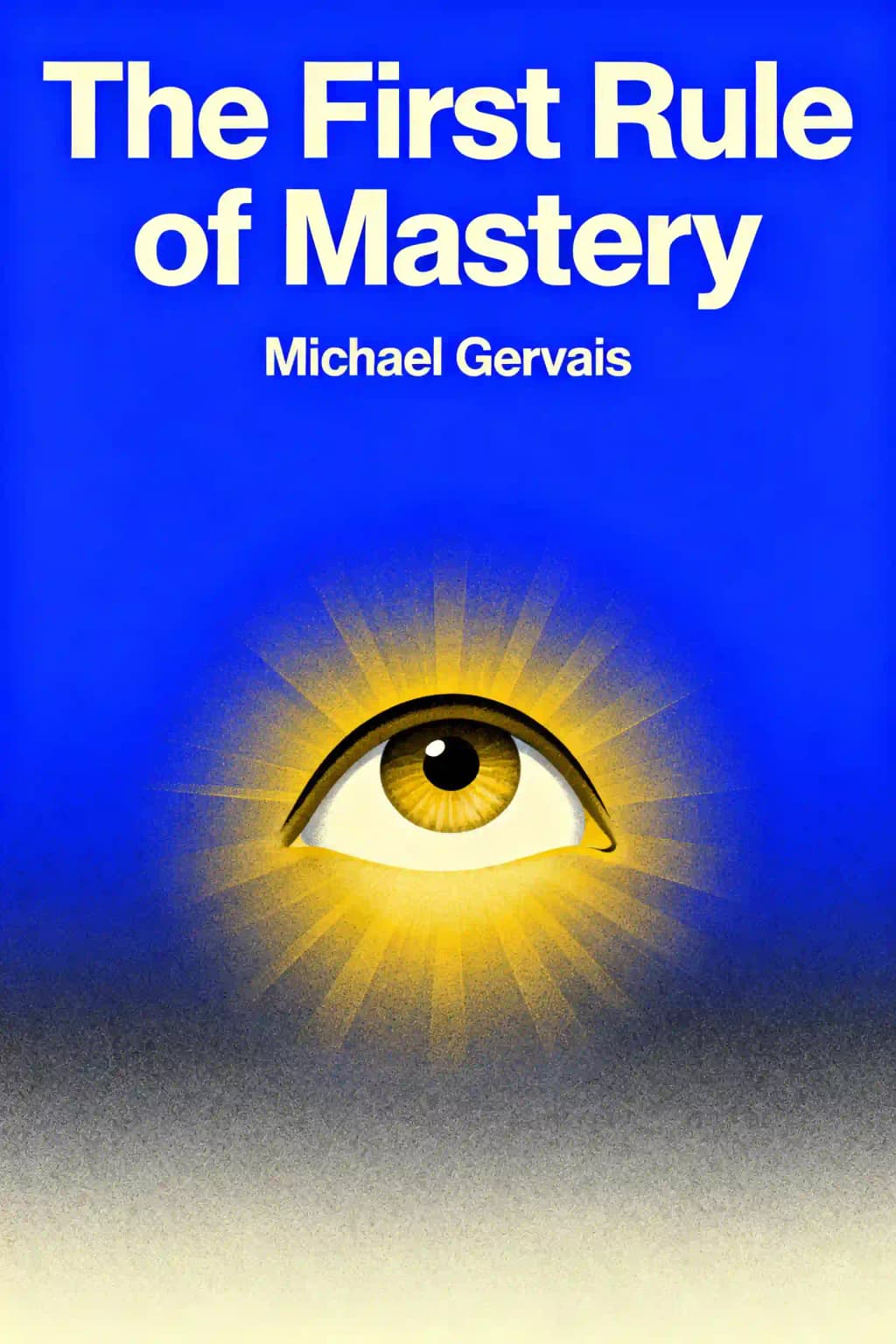
Discover why Microsoft CEO Satya Nadella and Olympic champions swear by Gervais's USA Today bestseller. Can you stop caring what others think? This psychological roadmap to self-mastery reveals why FOPO holds you back - and how breaking free unlocks your true potential.
Michael Gervais, PhD, is the bestselling author of The First Rule of Mastery and a renowned high-performance psychologist specializing in optimizing mental resilience for elite achievers.
Drawing from his 20+ years of experience working with Olympic athletes, NFL teams like the Super Bowl-winning Seattle Seahawks, and Fortune 50 CEOs, Gervais explores the crippling impact of social approval-seeking in his breakthrough book. As co-founder of Compete to Create—a mindset training platform used by Microsoft and Amazon—he translates cutting-edge psychology into tools for thriving under pressure.
Gervais is also the host of the globally recognized Finding Mastery podcast, where he interviews top performers across industries to decode mastery mindsets. His framework has guided Team USA athletes to over 30 Olympic medals and shaped leadership programs at institutions like Harvard Business Review.
The First Rule of Mastery became an instant USA TODAY bestseller, resonating with professionals seeking to transcend self-doubt. Its principles have been adopted by Olympians and business leaders alike.
The First Rule of Mastery by Michael Gervais explores overcoming the fear of people’s opinions (FOPO), a psychological barrier that limits potential. Blending neuroscience, high-performance coaching insights, and practical exercises, Gervais teaches readers to shift focus from external validation to internal alignment with personal values. The book emphasizes mindfulness, self-awareness, and actionable strategies to achieve mastery in any field by breaking free from societal expectations.
This book is ideal for professionals, athletes, leaders, and anyone struggling with self-doubt or external judgment. It’s particularly valuable for individuals seeking to enhance performance, build resilience, and cultivate authenticity. Gervais’ strategies resonate with those navigating high-pressure careers, creative fields, or personal growth journeys.
Yes. Praised for its actionable advice and grounded in scientific research, the book offers transformative tools to combat FOPO. Readers gain clarity on aligning actions with core values, making it a compelling read for anyone seeking to thrive authentically. Reviews highlight its blend of storytelling, psychology, and practicality.
FOPO (Fear of People’s Opinions) is an evolutionary survival mechanism now amplified by social media and societal pressures. It triggers anxiety over judgment, leading to risk aversion and conformity. Gervais argues FOPO stifles creativity, authenticity, and growth, making its mastery critical for personal and professional success.
Gervais structures the journey to mastery into three phases:
Key strategies include mindfulness practices, journaling for self-reflection, and reframing self-talk. Gervais emphasizes building an “internal compass” through values-based decision-making and embracing discomfort as a growth signal. Techniques are derived from his work with elite athletes and executives.
Mindfulness is central to disrupting FOPO’s grip. Gervais advocates meditation and present-moment awareness to quiet the default mode network (DMN), the brain region linked to self-referential thoughts. This practice helps individuals detach from judgmental narratives and focus on purposeful action.
Unlike habit-focused guides (Atomic Habits) or resilience frameworks (Dare to Lead), Gervais targets the root cause of self-sabotage: external validation. The book combines performance psychology with existential inquiry, offering a unique lens on achieving excellence through self-trust.
Some readers note the subtitle (“Stop Worrying About What People Think of You”) oversimplifies the content, which delves deeper into systemic self-mastery than mere opinion management. However, most praise its nuanced approach to balancing social connectivity with personal integrity.
Exercises include:
Gervais links social media to heightened FOPO, as constant comparison and curated personas amplify insecurity. He advises curating online environments, setting boundaries, and prioritizing real-world connections to mitigate its influence.
These lines encapsulate the book’s call to reclaim agency and authenticity.
通过作者的声音感受这本书
将知识转化为引人入胜、富含实例的见解
快速捕捉核心观点,高效学习
以有趣互动的方式享受这本书
This hidden epidemic may be the single greatest constrictor of human potential today.
This book isn't just about performance-it's about freedom.
Mastery is an inner-directed life externally expressed.
We hustle for approval while dismissing our own needs.
FOPO affects all aspects of modern life.
将《The First Rule of Mastery》的核心观点拆解为易于理解的要点,了解创新团队如何创造、协作和成长。
将《The First Rule of Mastery》提炼为快速记忆要点,突出坦诚、团队合作和创造力的关键原则。

通过生动的故事体验《The First Rule of Mastery》,将创新经验转化为令人难忘且可应用的精彩时刻。
随心提问,选择声音,共同创造真正与你产生共鸣的见解。

"Instead of endless scrolling, I just hit play on BeFreed. It saves me so much time."
"I never knew where to start with nonfiction—BeFreed’s book lists turned into podcasts gave me a clear path."
"Perfect balance between learning and entertainment. Finished ‘Thinking, Fast and Slow’ on my commute this week."
"Crazy how much I learned while walking the dog. BeFreed = small habits → big gains."
"Reading used to feel like a chore. Now it’s just part of my lifestyle."
"Feels effortless compared to reading. I’ve finished 6 books this month already."
"BeFreed turned my guilty doomscrolling into something that feels productive and inspiring."
"BeFreed turned my commute into learning time. 20-min podcasts are perfect for finishing books I never had time for."
"BeFreed replaced my podcast queue. Imagine Spotify for books — that’s it. 🙌"
"It is great for me to learn something from the book without reading it."
"The themed book list podcasts help me connect ideas across authors—like a guided audio journey."
"Makes me feel smarter every time before going to work"

免费获取《The First Rule of Mastery》摘要的 PDF 或 EPUB 版本。可打印或随时离线阅读。
After eleven years away from competitive softball, Lauren Regula received the call every retired athlete dreams of: an invitation to play in the 2020 Olympics. But instead of celebrating, she froze. Her mind flooded with concerns about leaving her three children and business behind. Then came the voices-real and imagined-questioning her priorities. How could a mother abandon her family? Wasn't this selfish? Lauren wasn't just wrestling with logistics; she was battling something far more insidious: the fear of what others would think. This fear nearly cost her one last shot at Olympic glory, and it's the same force quietly strangling potential in millions of lives every single day. We live under constant surveillance-not from cameras, but from our own hypervigilant minds. We scan faces for disapproval, interpret silence as judgment, and contort ourselves into shapes we think others want to see. This isn't just social anxiety; it's a fundamental misalignment between who we are and who we think we should be. The fear of people's opinions doesn't just make us uncomfortable-it makes us strangers to ourselves.