第 1 章
The Psychology Behind the Price: Mastering Your Mental Game
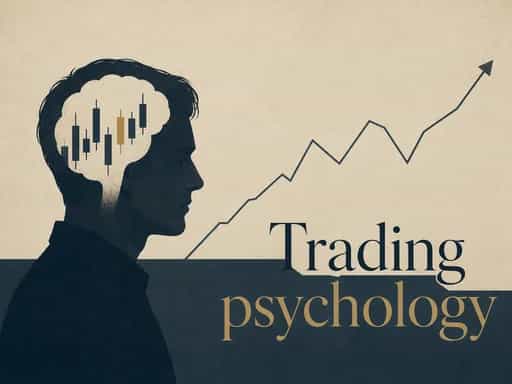
What separates successful traders from those who repeatedly fail? It's not superior market knowledge or access to better information. According to Mark Douglas, it's psychology-specifically, the ability to maintain self-discipline in an environment designed to trigger your worst emotional responses. Warren Buffett famously said that temperament matters more than intellect in investing, and Douglas's work has become the definitive guide on this subject. First published in 1990, "The Disciplined Trader" remains a Wall Street classic, consistently appearing on the reading lists of hedge fund managers and professional traders. Even in today's algorithmic trading era, the book's insights on human psychology have proven timeless, with many successful traders crediting it for transforming their careers after devastating losses. The book's enduring popularity stems from its profound insight: trading success is 80% psychological and only 20% methodological.
第 2 章
Why Traditional Success Principles Fail in Trading
The trading environment creates a psychological paradox unlike anything in our normal experience. Most people structure their lives with defined boundaries and predictable rewards-work hard, follow rules, and receive compensation proportional to effort. Trading demolishes these fundamental assumptions. Here, unlimited reward can arrive in seconds with minimal effort, while diligent work can result in devastating losses. A trader might spend weeks researching a position only to lose money, while a casual observation could lead to significant profits in minutes.
This creates profound internal conflicts that shake our core beliefs about success. When you receive windfall profits with minimal effort, it contradicts deeply ingrained beliefs about deserving money only through hard work. A trader might make more in an hour than they previously earned in months, triggering guilt and discomfort. These conflicts often lead traders to unconsciously return profits to the market through self-sabotage, such as overtrading, ignoring stop losses, or taking unnecessary risks.
The market also presents an environment categorically different from anything most people are trained to handle-a never-ending, always changing, virtually structureless event in perpetual motion. While we typically find security in stable conditions and defined boundaries, the market forces traders to confront constant change and uncertainty. Traditional education teaches us that patterns repeat and rules remain consistent, but markets can shift dramatically without warning, rendering previously successful strategies suddenly ineffective.
Unlike conventional environments where we can manipulate external conditions to satisfy our desires, the market is too vast for individuals to control. Even the largest institutional investors cannot consistently control market direction. This requires a fundamental shift in approach-rather than trying to control external conditions, successful trading demands adapting our internal perspective to align with market realities. Traders must learn to respond to what is happening rather than what they think should happen.
This explains why so many initially successful traders eventually fail. They apply principles that worked elsewhere-like persistence, hard work, and detailed analysis-without investigating their validity in market conditions. The deceptive simplicity of trading-requiring minimal physical effort while potentially delivering enormous rewards-distorts our normal performance standards based on time, effort, expertise, and reward. A trader might execute perfectly but still lose money, or make mistakes and profit handsomely.
When traders inevitably fail to meet these unrealistic expectations, they experience inadequacy, guilt, and shame. Failed trades trigger intense emotional responses that can cascade into destructive behavior patterns. This creates three psychological obstacles: releasing negative emotions that cloud judgment, repairing psychological damage from painful experiences that create fear and hesitation, and replacing inappropriate trading habits with effective skills aligned with market realities. Success requires developing new mental models that embrace uncertainty and probability rather than seeking the comfort of certainty and control.
第 3 章
The Market's Unique Psychological Environment
Unlike the structured social environments we're accustomed to, the market operates with its own psychological characteristics that challenge our fundamental assumptions about reality.
First, the market is always right-not because it reflects true value, but because it represents the collective belief about value among all active traders. What you personally believe is irrelevant unless you can trade with enough volume to control the market. Each trade creates both a transaction and a market, regardless of the reasoning behind it. This means traditional concepts of "right" and "wrong" don't exist in markets-academic credentials, reputation, and intelligence don't make you right as they might in society.
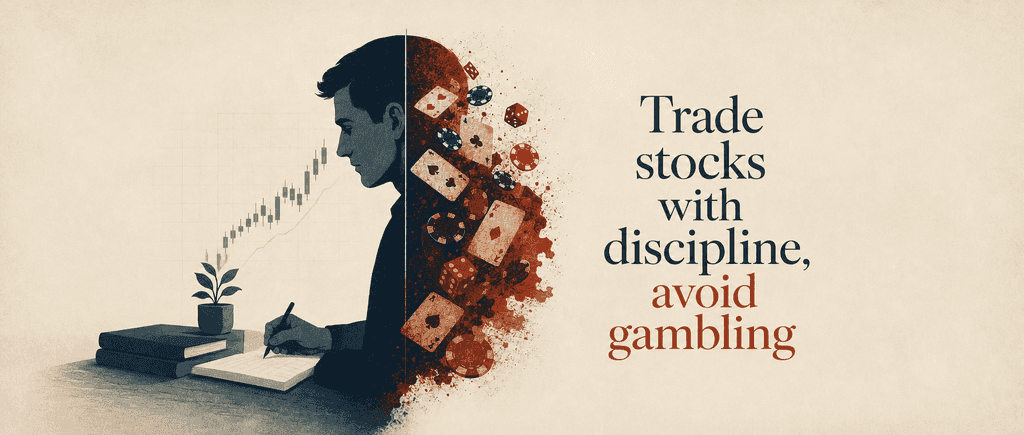
Second, the market offers unlimited potential for profit and loss. Unlike gambling where you always know exactly how much you can win or lose, trading offers no such certainty. This psychological characteristic leads traders to indulge in fantasies of unlimited wealth while filtering out vital information that contradicts their hopes. In losing trades, this manifests as imagining the market will come back in your favor instead of confronting the possibility of continued losses.
Third, prices are in perpetual motion with no defined beginning or ending. Markets never stop; they only pause. This transforms seemingly simple decisions into an endless process of deciding "how much is enough" from both profit and loss perspectives. The market environment is unstructured with no psychological beginning or ending-the game only begins when you decide to enter and ends only when you decide to exit.
Fourth, the market is an unstructured environment like a constantly flowing river with almost no constraints. Unlike structured social activities with defined rules, in the market you make up all your own rules. You decide when to jump in, with how much force, whether to increase or decrease that force, and when to jump out. Without personal rules to create definition and direction, you'll feel overwhelmed by possibilities and likely create devastating losses.
Finally, in the market environment, reasons are irrelevant. Most traders don't know why they did what they did because they don't plan their trades, eliminating any connection between themselves and their results. They act spontaneously and impulsively, then create after-the-fact rationales that are merely justifications or excuses.
第 4 章
How Our Mental Environment Shapes Our Trading
Our mental environment functions differently from physical reality. While our physical world experiences time linearly through planetary movement and bodily cycles, our mental environment operates like a timeless stream where consciousness moves freely between past, present, and future.
In the physical world, we need reference points in three-dimensional space to perceive time passing. But mentally, we exist outside these constraints. Our memories aren't recorded chronologically as moments of time but stored as charges of energy with varying intensities.
Significant experiences with strong emotional impact-whether positive or negative-create high-energy memories easily recalled decades later with their original emotional intensity. Meanwhile, routine activities leave minimal energy imprints, making them difficult to remember specifically.
This explains why our perception of time varies with emotional states. Terrorizing experiences make seconds feel like hours because the painful sensory assault focuses our attention on time's passage. Conversely, joyful experiences seem to fly by as we're absorbed in happiness without noticing time.
For traders, this has profound implications. Our experiences transform into electrical impulses carrying either positive or negative charges depending on environmental impact. Positively charged energy is expansive, promoting mental growth and learning through confidence. It maintains our natural childlike curiosity, compelling us to explore the unknown.
Conversely, negatively charged energy generates fear, making us perceive the environment as threatening. Fear drastically limits both behavior and perception, restricting our choices to familiar patterns or causing complete avoidance. This creates degenerative cycles of discontent as we avoid new experiences and the joy of learning.
Most critically for traders, our beliefs program our senses to select only information that corresponds with what we already believe. They create closed loops where every component reinforces the others-beliefs control incoming information, which shapes perception, which guides actions, which create experiences that reinforce the original beliefs.
Consider the "FREE MONEY" experiment on Michigan Avenue-despite a man literally trying to give away cash, only one person accepted because everyone else's beliefs about money being "never free" prevented them from perceiving the truth. Most people avoided him entirely, demonstrating how beliefs limit our awareness of possibilities.
第 5 章
Fear: The Ultimate Trading Enemy
Fear stands as perhaps the most destructive force in trading, fundamentally altering how we process information and make decisions. This emotion narrows our perception to focus exclusively on perceived threats, ironically causing us to manifest the very experiences we're trying to avoid. In trading, this manifests when traders afraid of being wrong focus only on information confirming their positions while ignoring contradictory signals, creating dangerous blind spots in their analysis.
The fear response triggers several destructive behavioral patterns. Most notably, fear of losing causes traders to exit winning positions prematurely, focusing exclusively on potential retracements rather than continued profit potential. For example, a trader might exit a strong trending position at the first minor pullback, despite multiple indicators suggesting the primary trend remains intact. The fear literally creates the loss they were trying to avoid-when a trader is in a winning position but fears losing profits, they'll hyperfocus on any small contrary movement or negative news, causing them to exit early regardless of the broader profit potential.
This fear-based decision making creates a painful cycle. Once out of a position, if the market continues moving favorably, traders agonize over profits left behind, not realizing their fear caused them to lose those additional profits. This psychological pattern explains the common phenomenon where most traders cut profits short and let losses run - exactly the opposite of successful trading principles. The fear of loss becomes a self-fulfilling prophecy.
To prevent these perceptual blind spots, traders must learn to operate without fear by developing genuine self-trust and robust trading systems. This means trusting themselves to confront all market information objectively and act in their best interests without hesitation or emotional interference. Building this self-trust requires establishing clear trading rules and following them consistently regardless of temporary temptations or emotional impulses.
The development of self-trust serves as a critical resource to prevent both recklessness and paralysis. When you know you have a proven system and the discipline to follow it, you create an internal foundation of confidence. This confidence allows you to remain calm and objective even in volatile market conditions. Trading rules should address position sizing, entry and exit criteria, and risk management parameters that you'll follow without hesitation.
Once you truly trust yourself to always respond appropriately according to your predetermined rules, you'll find there's nothing to fear in the markets. This emotional freedom allows you to observe market action without distortion, making the learning process easier and dramatically improving your ability to anticipate potential market movements. The elimination of fear-based trading transforms not just your results, but your entire trading experience.
第 6 章
The Three Components of Trading Success
Your trading results depend on skills in three primary areas: perception of opportunity, execution of trades, and accumulation of profits. These components form an interconnected system where weakness in any area can undermine overall performance.
Your perception of opportunity depends on the depth of insight into market behavior-the number and quality of distinctions you can make. This includes recognizing patterns, understanding market dynamics, and identifying high-probability setups. To develop this "vision" of broader market perspective, you need to: (1) institute a completely disciplined trading approach and (2) release yourself from negative emotional energy stored in past trading experiences. This requires maintaining detailed trading journals, studying market mechanics, and regularly reviewing both winning and losing trades.
Self-discipline naturally develops the self-trust essential for functioning in an environment without external constraints. Without discipline, you'll be at the mercy of unrestrained impulses, leading to emotional trading decisions and deviation from your strategy. You can't understand market behavior more deeply than you understand your own behavior first. This means developing consistent routines, following strict risk management rules, and maintaining emotional equilibrium regardless of market conditions.
Your ability to execute trades depends on how much fear you generate-or don't generate. What you fear isn't the market but your inability to act appropriately without hesitation. This fear manifests in various ways: hesitation before entry, premature exits, moving stops, or failing to take valid setups. You learned to fear the market through painful experiences where you didn't know what to do next, resulting in unexpected outcomes. Overcoming this requires systematic exposure to trading situations while maintaining strict risk controls.
Your ability to accumulate profits is primarily a function of your self-valuation-the most important psychological component of success. Your degree of self-valuation regulates how much money you'll give yourself from the maximum potential available at any moment. This manifests in behaviors like cutting winners too soon, not sizing positions appropriately, or sabotaging winning streaks. Traders often unconsciously maintain a certain level of profits that matches their self-image.
If you perceive an opportunity but don't execute the trade, only two possibilities exist: either fear of failure immobilized you, or you're struggling with a belief system that says you don't deserve the money. These psychological barriers often stem from past experiences and limiting beliefs about money and success. Successful traders work to identify and address these underlying issues through self-reflection, mentoring, and consistent practice. Otherwise, you would have acted on your perception, as rational analysis combined with emotional readiness naturally leads to action.
The integration of these three components - perception, execution, and accumulation - creates a framework for sustainable trading success. Each element must be developed simultaneously, as strength in one area cannot compensate for weakness in another.
第 7 章
Understanding Market Psychology
Markets consist of traders - they are the sole force that moves prices through their collective actions and reactions. A market transaction occurs when two traders with diametrically opposing beliefs reach agreement on price: buyers convinced they're purchasing at a low point to sell higher later, while sellers believe they're disposing of assets at a high point to repurchase lower later. Though neither trader enters a position expecting to lose money, from the moment they execute their trade, one will inevitably profit while the other faces losses with the very next price movement.
For prices to move from their equilibrium state, traders must demonstrate increasing conviction by willingly buying above or selling below the last traded price. This heightened conviction, sometimes driven by calculated analysis and other times by raw emotion like fear or greed, establishes new support and resistance levels. These traders take market initiative, creating paper losses for those who traded at previous price levels, and potentially generating momentum that draws in additional participants.
Price movement fundamentally reflects the ongoing psychological tug-of-war between buyers and sellers. When one side gains dominance, prices move decisively away from the weaker group until emotional and financial pain forces them to liquidate their positions. These forced liquidations add momentum to the dominant force, creating a self-reinforcing cycle. This pattern continues until prices reach levels perceived as extreme, causing the dominant group to switch sides as they take profits, often leading to sharp reversals.
Significant reference points in markets are price levels that trigger heightened emotional responses and raise traders' expectations about possible outcomes. These points typically represent locations where large numbers of traders have established opposing positions based on conflicting beliefs about future price direction. When expectations aren't met, losing traders must liquidate by trading in the opposite direction of their original position. This creates a scramble for limited counterparties and often results in substantial directional price movement.
Previous highs and lows serve as especially prominent reference points where traders anticipate either breakthrough or reversal. As markets approach these levels, tension builds and expectations rise about which outcome will prevail. If buyers successfully push prices beyond previous highs, it often converts skeptical observers into believers who then join the market, adding further upward momentum. This phenomenon is particularly visible in trending markets where successive higher highs attract new participants.
Support and resistance levels gain psychological significance precisely because traders collectively recognize and believe in them, creating self-fulfilling prophecies. These levels often coincide with round numbers, previous turning points, or technical indicators that many traders monitor. When markets approach these widely-watched levels, traders position themselves in anticipation of either penetration or failure. The eventual outcome typically disappoints one group of traders, forcing them to exit positions and creating significant price moves as they scramble to do so. This dynamic is especially powerful when combined with high volume and market volatility.
第 8 章
The Seven Steps to Trading Success
The path to trading success follows seven distinct steps:
First, stay focused on what you need to learn rather than on making money. Each moment is a perfect reflection of your development level-not a mistake, but information about what you need to know to interact more effectively. Set aside trading capital as tuition for your education and make a firm commitment to learning.
Second, learn to deal with losses properly. Predefine what a loss is in every potential trade-determine what the market must look like to tell you the trade no longer represents an opportunity. Execute losing trades immediately upon perception. Eventually, with enough trust in yourself to cut losses, you may develop the objectivity to recognize losers based on comprehensive market knowledge.
Third, become an expert at just one market behavior. Choose one simple trading system that identifies a pattern, preferably mechanical rather than mathematical, so you're working with visual representations of market behavior. Understand every aspect of the system and its potential to produce profitable trades while avoiding all other possibilities.
Fourth, learn how to execute a trading system flawlessly. Technical trading systems mathematically define, quantify, and categorize past relationships in collective human behavior to predict statistically probable outcomes. Practice with a simple system using comfortable risk levels, focusing on the learning process rather than immediate profits.
Fifth, learn to think in probabilities. This requires identifying which trader group demonstrates the greatest market-moving potential and understanding prevalent market beliefs. You need a detached perspective-watching what the market tells you rather than focusing on what it's doing to you personally.
Sixth, learn to be objective. To achieve objectivity, operate from beliefs that allow anything to happen in the markets rather than expecting limited expressions. When you accept that anything can happen, market movements won't threaten you or cause you to avoid or distort information.
Seventh, learn to monitor yourself. Constantly monitor your thinking and what market information you're focused on. Ask yourself if anything "has to happen" in a trade, and notice your commitment level to specific outcomes. Maintain the perspective of "what is happening" rather than what "has to happen."
第 9 章
The Ultimate Trading Truth
Trading ultimately becomes a profound feedback mechanism revealing how much you like and value yourself in any given moment. After learning to trust yourself to act consistently in your best interests, the only real limitation becomes your degree of self-valuation. You'll give yourself an amount of money that directly corresponds with what you believe you deserve based on your acquired value system and self-worth. This manifests in everything from position sizing to risk management decisions to how you handle both wins and losses.
Every trading moment perfectly indicates your current developmental state and precisely what you need to improve. When traders refuse to acknowledge this perfection in feedback, they deny themselves access to critical information needed for growth. A losing trade isn't just a financial setback - it's valuable data about your decision-making process. Finding our true starting point requires accepting each outcome as accurately reflecting who we are right now, so we can identify specific skills to develop. This might mean improving technical analysis, risk management, or addressing emotional triggers that lead to impulsive trades.
Every "should have," "could have," or "if only" statement indicates our degree of illusion and self-deception. If we truly could have done better in that moment, with the knowledge and emotional state we had then, we would have. Acknowledging this gives us our true starting point for learning. For traders, this means confronting the unvarnished truth about ourselves to effectively confront the truth in the markets. The less illusion we indulge in about our capabilities and performance, the more our perceptions will reflect actual market conditions, as we won't block or filter available information through the lens of wishful thinking.
To increase your trading success, systematically identify and change anything in your mental environment that doesn't contribute to the highest possible self-valuation. This includes negative self-talk, limiting beliefs about money, and destructive trading patterns. Stay focused on what you specifically need to learn, do the necessary work to develop those skills, and your belief in what's possible will naturally expand as you become more willing to adapt to market realities. This might involve keeping a detailed trading journal, working with a mentor, or regularly reviewing and updating your trading plan.
The more positive and confident you feel about yourself, the more abundance will naturally flow your way through improved trading decisions. This isn't mystical thinking-it's the psychological reality of how our beliefs shape our perceptions, which determine our actions, which create our results. When you truly understand and internalize this cycle, you'll have discovered the secret to trading success that eludes so many. Successful traders aren't just skilled at reading charts or managing positions - they've developed the self-awareness and emotional intelligence to align their internal state with external market realities.





![[65597bcd-002d-438d-ab19-eac2127e4c0a:c0000] Instagram p1-1](/_next/image?url=https%3A%2F%2Fd1y2du6z1jfm9e.cloudfront.net%2Fassets%2Fpodcast%2Fyellow.png&w=1024&q=50)
![[72d89e9e-7d52-4df6-9894-aa9511f94048:c0000] Instagram p1-1](/_next/image?url=https%3A%2F%2Fd1y2du6z1jfm9e.cloudfront.net%2Fassets%2Fpodcast%2Fblue.png&w=1024&q=50)