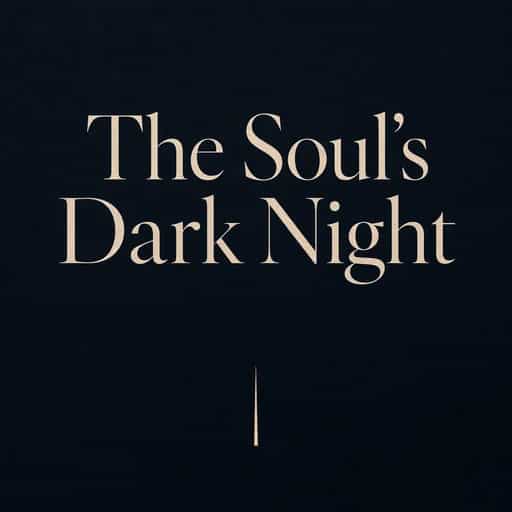
The dark night of the soul: a psychiatrist explores the connection between darkness and spiritual growth by Gerald G. May Summary

《The dark night of the soul》概述
Explore spiritual darkness as a pathway to growth in Gerald G. May's profound blend of psychology and spirituality. Embraced by spiritual leaders worldwide, this transformative work reveals why our deepest struggles - what mystics call "the dark night" - hold the key to authentic liberation.
- Dark nights strip attachments to reveal divine love’s transformative power.
- Suffering isn’t punishment but divine grace in disguise, guiding spiritual liberation.
- Ego death in the dark night births true self-liberation and purpose.
- Gerald May redefines suffering as a doorway to spiritual freedom, not failure.
- Letting go of control invites God’s hidden healing in darkness.
- Spiritual dryness paradoxically deepens trust beyond feelings or rigid beliefs.
- The dark night of recovery replaces addiction with divine love as anchor.
- Embrace existential void to uncover meaning rooted in service, not self.
- St. John’s “purgation” model dismantles idolatry of beliefs, behaviors, and outcomes.
- Instead of fearing darkness, embrace it as spiritual rebirth’s necessary womb.
- Teresa of Ávila’s “interior castle” mirrors modern psychology’s unconscious defense mechanisms.
- Divine attraction operates like gravity—mutual, unstoppable, and center-seeking.
《The dark night of the soul》作者介绍
Gerald Gordon May (1940–2005) was a psychiatrist and a pioneer in contemplative theology. He authored The Dark Night of the Soul: A Psychiatrist Explores the Connection Between Darkness and Spiritual Growth, blending his clinical expertise with spiritual wisdom.
May, a graduate of Wayne State University’s medical school, dedicated over 30 years to the Shalem Institute for Spiritual Formation. There, he mentored thousands in the integration of psychological health with faith practices.
His bestselling works, including Addiction and Grace and Will and Spirit, established him as a leading voice in addiction recovery and contemplative psychology, merging Christian mysticism with modern psychiatry. May’s writings, praised for their poetic depth and clinical insight, remain foundational in pastoral care and therapeutic circles. The Dark Night of the Soul has been translated into multiple languages and is frequently cited in academic studies on spirituality and mental health.
关于《The dark night of the soul》的常见问题
What is The Dark Night of the Soul by Gerald G. May about?
The Dark Night of the Soul explores the spiritual journey through periods of existential darkness, framed as a transformative process toward liberation and deeper divine connection. Gerald May blends psychology and Christian mysticism, drawing on St. John of the Cross and Teresa of Ávila to argue that spiritual "dark nights" are not crises but opportunities for ego surrender and grace.
Who should read The Dark Night of the Soul?
This book is ideal for seekers navigating spiritual dryness, mental health professionals exploring faith integration, or anyone interested in mystical Christianity. May’s psychological lens makes it accessible for modern readers unfamiliar with 16th-century mysticism.
Is The Dark Night of the Soul worth reading?
Yes, for its unique synthesis of psychiatry and spirituality. While some find its abstract concepts challenging, reviewers praise its insights into suffering’s redemptive role and its practical guidance for embracing spiritual uncertainty.
How does Gerald May define the "dark night of the soul"?
May describes it as a mysterious, divine-led process where attachments to ego and control dissolve, creating space for unconditional love. It’s not a depressive episode but a surrender to God’s hidden work, leading to liberation.
What role does suffering play in The Dark Night of the Soul?
Suffering is reframed as a catalyst for spiritual growth—a "hidden grace" that dismantles illusions of self-sufficiency. May emphasizes it’s not punitive but a path to deeper trust and freedom.
How does the book integrate psychology and spirituality?
May merges clinical psychiatry with mystical theology, analyzing emotional struggles through St. John of the Cross’s framework. He links neurotic patterns to spiritual stagnation and contemplative practices to psychological healing.
What are the signs of a dark night according to John of the Cross?
Three key signs:
- Dissatisfaction with former spiritual practices
- Inability to meditate conventionally
- Persistent longing for God amid feelings of abandonment
How does The Dark Night of the Soul differ from depression?
While symptoms may overlap, the dark night is a voluntary surrender to divine mystery, whereas depression involves involuntary mental anguish. May notes they can coexist but require distinct responses.
What is Gerald May’s view on spiritual attachments?
He warns against idolizing spiritual experiences (e.g., prayer consolations), which can hinder true union with God. Liberation comes through releasing outcomes, not accumulating virtues.
How does the book use Teresa of Ávila’s Interior Castle?
May parallels Teresa’s metaphor of soul-as-castle to describe progressing through self-discovery layers. Each chamber reveals deeper divine intimacy, yet the journey feels increasingly obscure.
What critiques exist about The Dark Night of the Soul?
Some find May’s reliance on ancient mystics limits originality, and his abstract style may confuse readers seeking concrete steps. Others note repetitive sections.
How does Gerald May’s background influence the book?
As a psychiatrist and Shalem Institute senior fellow, May bridges clinical expertise with contemplative wisdom. His work with addicts and personal spiritual struggles inform the book’s compassionate tone.
通过作者的声音感受这本书
将知识转化为引人入胜、富含实例的见解
快速捕捉核心观点,高效学习
以有趣互动的方式享受这本书
《The dark night of the soul》核心主题
《The dark night of the soul》经典语录
The darkness ultimately reveals itself as the very path to light.
The spiritual journey isn't about getting closer to God.
The night is God, 'an inflow of God into the soul.'
Our own certainty is precisely what causes us to stumble.
All liberation involves relinquishment and loss.
《The dark night of the soul》主要人物
快速摘要模式 - 12分钟阅读或收听《The dark night of the soul》摘要

将《The dark night of the soul》的核心观点拆解为易于理解的要点,了解创新团队如何创造、协作和成长。

闪卡模式 - 《The dark night of the soul》精华:6条核心见解

将《The dark night of the soul》提炼为快速记忆要点,突出坦诚、团队合作和创造力的关键原则。

趣味模式 - 《The dark night of the soul》的启示 - 24分钟故事

通过生动的故事体验《The dark night of the soul》,将创新经验转化为令人难忘且可应用的精彩时刻。
个性化模式 - 0分钟阅读或收听《The dark night of the soul》摘要

随心提问,选择声音,共同创造真正与你产生共鸣的见解。

"Instead of endless scrolling, I just hit play on BeFreed. It saves me so much time."


"I never knew where to start with nonfiction—BeFreed’s book lists turned into podcasts gave me a clear path."


"Perfect balance between learning and entertainment. Finished ‘Thinking, Fast and Slow’ on my commute this week."
"Crazy how much I learned while walking the dog. BeFreed = small habits → big gains."
"Reading used to feel like a chore. Now it’s just part of my lifestyle."

"Feels effortless compared to reading. I’ve finished 6 books this month already."
"BeFreed turned my guilty doomscrolling into something that feels productive and inspiring."

"BeFreed turned my commute into learning time. 20-min podcasts are perfect for finishing books I never had time for."
"BeFreed replaced my podcast queue. Imagine Spotify for books — that’s it. 🙌"

"It is great for me to learn something from the book without reading it."
"The themed book list podcasts help me connect ideas across authors—like a guided audio journey."
"Makes me feel smarter every time before going to work"
"Instead of endless scrolling, I just hit play on BeFreed. It saves me so much time."
"I never knew where to start with nonfiction—BeFreed’s book lists turned into podcasts gave me a clear path."
"Perfect balance between learning and entertainment. Finished ‘Thinking, Fast and Slow’ on my commute this week."
"Crazy how much I learned while walking the dog. BeFreed = small habits → big gains."
"Reading used to feel like a chore. Now it’s just part of my lifestyle."
"Feels effortless compared to reading. I’ve finished 6 books this month already."
"BeFreed turned my guilty doomscrolling into something that feels productive and inspiring."
"BeFreed turned my commute into learning time. 20-min podcasts are perfect for finishing books I never had time for."
"BeFreed replaced my podcast queue. Imagine Spotify for books — that’s it. 🙌"
"It is great for me to learn something from the book without reading it."
"The themed book list podcasts help me connect ideas across authors—like a guided audio journey."
"Makes me feel smarter every time before going to work"
"Instead of endless scrolling, I just hit play on BeFreed. It saves me so much time."
"I never knew where to start with nonfiction—BeFreed’s book lists turned into podcasts gave me a clear path."
"Perfect balance between learning and entertainment. Finished ‘Thinking, Fast and Slow’ on my commute this week."
"Crazy how much I learned while walking the dog. BeFreed = small habits → big gains."
"Reading used to feel like a chore. Now it’s just part of my lifestyle."
"Feels effortless compared to reading. I’ve finished 6 books this month already."
"BeFreed turned my guilty doomscrolling into something that feels productive and inspiring."
"BeFreed turned my commute into learning time. 20-min podcasts are perfect for finishing books I never had time for."
"BeFreed replaced my podcast queue. Imagine Spotify for books — that’s it. 🙌"
"It is great for me to learn something from the book without reading it."
"The themed book list podcasts help me connect ideas across authors—like a guided audio journey."
"Makes me feel smarter every time before going to work"
"Instead of endless scrolling, I just hit play on BeFreed. It saves me so much time."
"I never knew where to start with nonfiction—BeFreed’s book lists turned into podcasts gave me a clear path."
"Perfect balance between learning and entertainment. Finished ‘Thinking, Fast and Slow’ on my commute this week."
"Crazy how much I learned while walking the dog. BeFreed = small habits → big gains."
"Reading used to feel like a chore. Now it’s just part of my lifestyle."
"Feels effortless compared to reading. I’ve finished 6 books this month already."
"BeFreed turned my guilty doomscrolling into something that feels productive and inspiring."
"BeFreed turned my commute into learning time. 20-min podcasts are perfect for finishing books I never had time for."
"BeFreed replaced my podcast queue. Imagine Spotify for books — that’s it. 🙌"
"It is great for me to learn something from the book without reading it."
"The themed book list podcasts help me connect ideas across authors—like a guided audio journey."
"Makes me feel smarter every time before going to work"

免费获取《The dark night of the soul》摘要的 PDF 或 EPUB 版本。可打印或随时离线阅读。