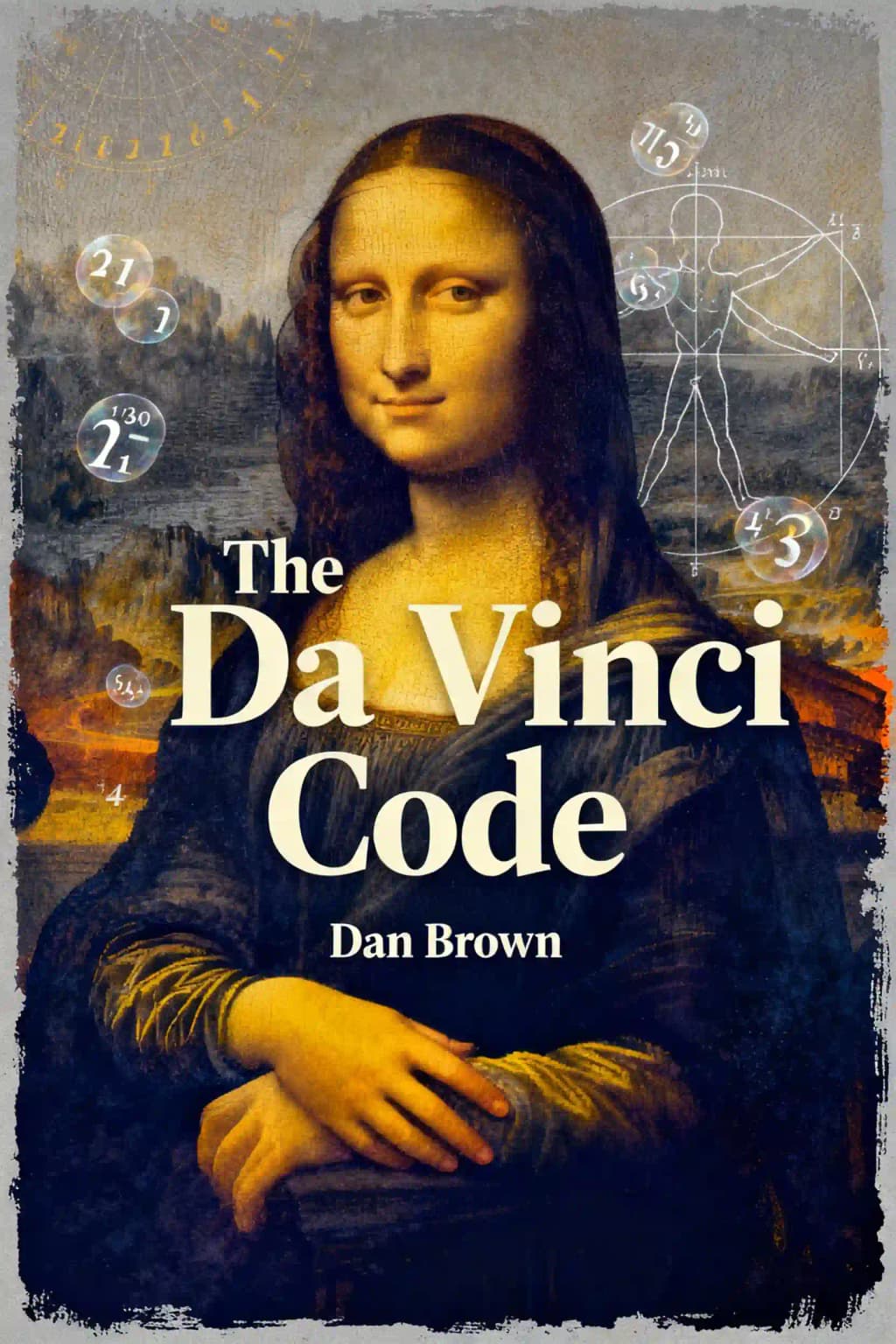
A religious thriller that sparked global controversy with 50+ million copies sold. Blending art, history, and conspiracy theories about Jesus and Mary Magdalene, "The Da Vinci Code" ignited fierce debates within Christianity while inspiring renewed interest in cryptography and historical mysteries worldwide.
Dan Brown, bestselling author of The Da Vinci Code and master of intricate conspiracy thrillers, is renowned for blending art, history, and religion into pulse-pounding narratives. Born in Exeter, New Hampshire, in 1964, Brown’s upbringing—as the son of a mathematician and a church organist—fueled his fascination with the collision of science and faith, a theme central to his Robert Langdon series.
A former English teacher at Phillips Exeter Academy, Brown transitioned to writing with Digital Fortress (1998) before achieving global fame with Angels & Demons (2000) and The Da Vinci Code (2003), which redefined the modern thriller genre.
His novels, including Inferno (2013) and Origin (2017), explore cryptic symbolism, secret societies, and moral dilemmas, often rooted in meticulously researched historical details. Brown’s work has been translated into 57 languages, with adaptations like The Da Vinci Code (2006) starring Tom Hanks. Recognized in TIME’s 2005 list of the 100 Most Influential People, Brown’s books have sold over 200 million copies worldwide, cementing his status as a cornerstone of contemporary suspense fiction.
The Da Vinci Code follows Harvard symbologist Robert Langdon and cryptologist Sophie Neveu as they unravel a murder mystery linked to a centuries-old secret society. Their quest reveals a conspiracy surrounding the Holy Grail’s true identity—not a physical object, but documents proving Jesus Christ and Mary Magdalene’s marriage and bloodline, hidden by Leonardo da Vinci’s coded artwork and pursued by factions like Opus Dei.
This thriller appeals to fans of fast-paced mysteries, historical conspiracy theories, and religious symbolism. Ideal for readers who enjoy puzzles, art history, or debates about faith vs. science. While primarily targeting adults, its blend of action and intellectual intrigue also engages younger audiences.
Yes, for its gripping plot and controversial themes, though critics note historical inaccuracies. It’s a page-turner that sparked global debates about Christianity’s origins, making it worthwhile for readers open to speculative fiction. However, approach it as entertainment rather than factual.
The Grail is reimagined as the Sangreal documents—proof of Jesus and Mary Magdalene’s marriage and descendants, guarded by the Priory of Sion. This contradicts traditional lore of a chalice, positioning the Grail as a symbolic challenge to Church authority.
Da Vinci’s The Last Supper and Vitruvian Man hide clues. Langdon deciphers hidden messages, such as a supposed female figure (Mary Magdalene) beside Jesus in the fresco, supporting the novel’s theme of suppressed “divine feminine” power.
This secret society protects the Grail secret across generations, with historical figures like da Vinci as past leaders. Their rivalry with Opus Dei—a radical Catholic group—drives the conflict, highlighting tensions between hidden knowledge and institutional power.
It challenges Christian orthodoxy by suggesting Jesus had heirs and that the Church suppressed Mary Magdalene’s role. Critics, including religious scholars, dispute its historical claims, though the novel frames these ideas as fictional speculation.
The novel posits that Christianity erased sacred femininity, symbolized by Mary Magdalene’s marginalized legacy. Langdon argues that ancient societies revered goddess worship, a balance the Church allegedly destroyed.
Langdon and Sophie trace the Grail to Scotland’s Rosslyn Chapel, where they discover the secret remains protected. Teabing, the antagonist, is arrested, while the Church’s cover-up is hinted to persist.
Similar to Angels & Demons, it combines art, history, and conspiracies but focuses more on religious revisionism. Fans of Brown’s Langdon series will appreciate recurring themes of symbology and secret societies.
Yes, the 2006 film stars Tom Hanks as Langdon. While commercially successful, it received mixed reviews for pacing deviations from the book. The novel’s intricate puzzles translate visually, appealing to mystery lovers.
Engage with its ideas as speculative fiction, not historical fact. Cross-reference claims with credible sources, and appreciate its role in sparking dialogue about religion, art, and power dynamics.
通过作者的声音感受这本书
将知识转化为引人入胜、富含实例的见解
快速捕捉核心观点,高效学习
以有趣互动的方式享受这本书
Men go to far greater lengths to avoid what they fear than to obtain what they desire.
Art history, religious symbolism, and murder mysteriously intersect.
The Louvre itself becomes a character.
Readers are immediately thrust into a world.
将《The Da Vinci Code》的核心观点拆解为易于理解的要点,了解创新团队如何创造、协作和成长。
将《The Da Vinci Code》提炼为快速记忆要点,突出坦诚、团队合作和创造力的关键原则。

通过生动的故事体验《The Da Vinci Code》,将创新经验转化为令人难忘且可应用的精彩时刻。
随心提问,选择声音,共同创造真正与你产生共鸣的见解。

"Instead of endless scrolling, I just hit play on BeFreed. It saves me so much time."
"I never knew where to start with nonfiction—BeFreed’s book lists turned into podcasts gave me a clear path."
"Perfect balance between learning and entertainment. Finished ‘Thinking, Fast and Slow’ on my commute this week."
"Crazy how much I learned while walking the dog. BeFreed = small habits → big gains."
"Reading used to feel like a chore. Now it’s just part of my lifestyle."
"Feels effortless compared to reading. I’ve finished 6 books this month already."
"BeFreed turned my guilty doomscrolling into something that feels productive and inspiring."
"BeFreed turned my commute into learning time. 20-min podcasts are perfect for finishing books I never had time for."
"BeFreed replaced my podcast queue. Imagine Spotify for books — that’s it. 🙌"
"It is great for me to learn something from the book without reading it."
"The themed book list podcasts help me connect ideas across authors—like a guided audio journey."
"Makes me feel smarter every time before going to work"

免费获取《The Da Vinci Code》摘要的 PDF 或 EPUB 版本。可打印或随时离线阅读。
The Louvre's marble floors are stained with blood, and the dying curator has arranged his body into a cryptic message. When Harvard symbologist Robert Langdon arrives at this crime scene in the dead of night, he has no idea he's about to become a fugitive-or that the symbols scrawled in blood will challenge everything he thought he knew about Christianity. This is how Dan Brown's "The Da Vinci Code" begins: with a murder that launches readers into a conspiracy spanning two thousand years. The novel sold over 80 million copies, sparked global controversy, and got banned in several countries. Why? Because it dared to ask: What if the greatest story ever told wasn't quite the way we've been told it?
