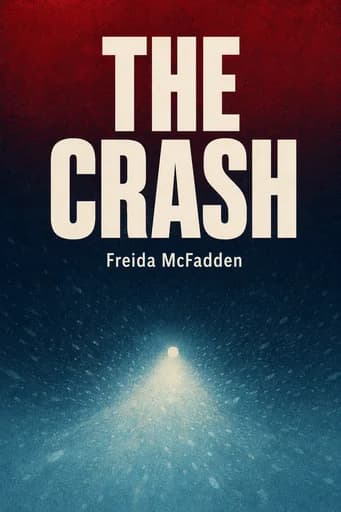
《坠毁》概述
弗蕾达·麦克法登(Freida McFadden)的《星期日泰晤士报》榜首畅销书《坠落》(The Crash)将读者带入了一个心理迷宫,让人在不知不觉中一口气读完四个小时。凭借更出色的人物塑造和麦克法登标志性的反转,这会是那部最终让她的批评者们哑口无言的惊悚小说吗?
下载《坠毁》摘要
免费获取《坠毁》摘要的 PDF 或 EPUB 版本。可打印或随时离线阅读。
由哥伦比亚大学校友在旧金山创建
"Instead of endless scrolling, I just hit play on BeFreed. It saves me so much time."


"I never knew where to start with nonfiction—BeFreed’s book lists turned into podcasts gave me a clear path."


"Perfect balance between learning and entertainment. Finished ‘Thinking, Fast and Slow’ on my commute this week."
"Crazy how much I learned while walking the dog. BeFreed = small habits → big gains."
"Reading used to feel like a chore. Now it’s just part of my lifestyle."

"Feels effortless compared to reading. I’ve finished 6 books this month already."
"BeFreed turned my guilty doomscrolling into something that feels productive and inspiring."

"BeFreed turned my commute into learning time. 20-min podcasts are perfect for finishing books I never had time for."
"BeFreed replaced my podcast queue. Imagine Spotify for books — that’s it. 🙌"

"It is great for me to learn something from the book without reading it."
"The themed book list podcasts help me connect ideas across authors—like a guided audio journey."
"Makes me feel smarter every time before going to work"
由哥伦比亚大学校友在旧金山创建
"Instead of endless scrolling, I just hit play on BeFreed. It saves me so much time."
"I never knew where to start with nonfiction—BeFreed’s book lists turned into podcasts gave me a clear path."
"Perfect balance between learning and entertainment. Finished ‘Thinking, Fast and Slow’ on my commute this week."
"Crazy how much I learned while walking the dog. BeFreed = small habits → big gains."
"Reading used to feel like a chore. Now it’s just part of my lifestyle."
"Feels effortless compared to reading. I’ve finished 6 books this month already."
"BeFreed turned my guilty doomscrolling into something that feels productive and inspiring."
"BeFreed turned my commute into learning time. 20-min podcasts are perfect for finishing books I never had time for."
"BeFreed replaced my podcast queue. Imagine Spotify for books — that’s it. 🙌"
"It is great for me to learn something from the book without reading it."
"The themed book list podcasts help me connect ideas across authors—like a guided audio journey."
"Makes me feel smarter every time before going to work"
"Instead of endless scrolling, I just hit play on BeFreed. It saves me so much time."
"I never knew where to start with nonfiction—BeFreed’s book lists turned into podcasts gave me a clear path."
"Perfect balance between learning and entertainment. Finished ‘Thinking, Fast and Slow’ on my commute this week."
"Crazy how much I learned while walking the dog. BeFreed = small habits → big gains."
"Reading used to feel like a chore. Now it’s just part of my lifestyle."
"Feels effortless compared to reading. I’ve finished 6 books this month already."
"BeFreed turned my guilty doomscrolling into something that feels productive and inspiring."
"BeFreed turned my commute into learning time. 20-min podcasts are perfect for finishing books I never had time for."
"BeFreed replaced my podcast queue. Imagine Spotify for books — that’s it. 🙌"
"It is great for me to learn something from the book without reading it."
"The themed book list podcasts help me connect ideas across authors—like a guided audio journey."
"Makes me feel smarter every time before going to work"
"Instead of endless scrolling, I just hit play on BeFreed. It saves me so much time."
"I never knew where to start with nonfiction—BeFreed’s book lists turned into podcasts gave me a clear path."
"Perfect balance between learning and entertainment. Finished ‘Thinking, Fast and Slow’ on my commute this week."
"Crazy how much I learned while walking the dog. BeFreed = small habits → big gains."
"Reading used to feel like a chore. Now it’s just part of my lifestyle."
"Feels effortless compared to reading. I’ve finished 6 books this month already."
"BeFreed turned my guilty doomscrolling into something that feels productive and inspiring."
"BeFreed turned my commute into learning time. 20-min podcasts are perfect for finishing books I never had time for."
"BeFreed replaced my podcast queue. Imagine Spotify for books — that’s it. 🙌"
"It is great for me to learn something from the book without reading it."
"The themed book list podcasts help me connect ideas across authors—like a guided audio journey."
"Makes me feel smarter every time before going to work"


来自《坠毁》的相同理念。选择适合你的声音、深度和节奏,随时切换。
"The Crash" by Freida McFadden isn't just another psychological thriller-it's a masterclass in suspense that has captivated millions of readers worldwide. This #1 New York Times bestseller has become a cultural phenomenon, with celebrities like Reese Witherspoon and Stephen King praising McFadden's ability to create page-turning suspense with unexpected twists. What makes this book particularly fascinating is how McFadden, a practicing physician specializing in brain injury, weaves her medical knowledge into her fiction, creating scenarios that are both terrifying and medically plausible. The novel explores themes of desperation, motherhood, and survival in a way that's both accessible and deeply unsettling. As one of the most-recommended thrillers of recent years, "The Crash" continues to dominate book clubs and social media discussions, with readers debating the moral complexities faced by its characters long after turning the final page.
Tegan, a 23-year-old pregnant grocery store clerk, lives in a rundown apartment in Lewiston, Maine. Nearly eight months pregnant and struggling financially, she's pinned her hopes on a financial arrangement with Simon Lamar, a wealthy real estate developer who fathered her child during what she believed was a one-night stand. Simon's lawyer, Jackson Bruckner, has been visiting Tegan weekly, bringing her cash and working on a contract that would provide financial security for her and her baby in exchange for her silence. But as the contract signing approaches, Tegan experiences a devastating realization. When Simon arrives at her apartment with the paperwork, his cologne triggers suppressed memories-he had drugged and assaulted her that night. The nightmares she'd been having weren't just dreams but fragments of memory trying to surface. "I suddenly remembered his face hovering over me, my tongue feeling heavy as I tried to say no, him telling me to go back to sleep," Tegan recalls, the horror of the truth washing over her. Despite Jackson's urging to sign the contract anyway, Tegan refuses the nondisclosure agreement, determined to report Simon to the police. This decision costs her the financial security she desperately needed but preserves her integrity. When her brother Dennis invites her to stay with him until the baby arrives, Tegan decides to make the drive despite worsening weather conditions. During the journey, she receives a cryptic, breaking-up call from Jackson mentioning Simon and the police, before losing control of her car on the icy road and crashing into a tree. The accident leaves Tegan trapped in her freezing car with a likely broken ankle and her legs pinned under the dashboard. As snow rapidly accumulates around her vehicle and panic sets in, headlights appear-a green pickup truck driven by a large, intimidating bearded man named Hank, who offers to help.
轻松跟读,《坠毁》中的每个词都会随音频实时高亮。
What initially seems like a rescue quickly becomes a nightmare. Hank takes Tegan to his isolated cabin where his wife Polly, a former nurse, promises to care for her until an ambulance can arrive. But with the power and phone lines supposedly down due to the storm, Tegan is placed in a converted basement "hospital room" that once housed Polly's dying mother. The basement immediately feels wrong to Tegan. "It's eerily quiet, pitch-black without Polly's flashlight, and beneath the chemical sanitizer smell lurks the sickening odor of decay, as if someone died there," she observes. Her instincts prove correct as days pass with no ambulance arriving and increasingly transparent excuses from Polly about why they can't take her to the hospital. As Tegan's ankle worsens and her pleas for help grow more desperate, the truth gradually emerges: Polly has no intention of letting her leave. When a police officer comes looking for Tegan, both Hank and Polly deny seeing her. When Tegan tries to signal for help by starting a small fire, Polly quickly extinguishes it. When she threatens Polly with a syringe she finds in the bathroom, Polly simply takes it away. The psychological dynamics in the house are complex and disturbing. Hank appears conflicted about keeping Tegan prisoner but is manipulated by Polly through threats of suicide and blackmail related to past misdeeds. Polly, meanwhile, reveals herself to be deeply disturbed-a woman so desperate for a child that she's willing to keep Tegan captive until she gives birth, with the implied intention of taking the baby afterward. "I've made a decision," Polly thinks to herself. "Very soon, we will have a child. My mother was right-our family will be complete."
Through alternating perspectives, we discover Polly's devastating journey toward motherhood. After enduring seven years of increasingly aggressive infertility treatments, multiple failed IVF cycles costing over $100,000, and a particularly traumatic failed adoption where the birth mother changed her mind at the last moment, Polly's mental state began to deteriorate. The breaking point came during her shift at Memorial Hospital's newborn nursery, where she experienced a psychological breakdown - holding a newborn well beyond her shift and refusing to return the baby to its mother. This incident not only cost her nursing license but culminated in a suicide attempt that left her hospitalized for three weeks. Her mother's deathbed prophecy that "someday, your family will be complete" transformed from comfort into obsession, becoming the driving force behind her increasingly unstable behavior. The words echo in her mind during sleepless nights, fueling her conviction that she deserves motherhood at any cost. Polly's desperation manifests in increasingly sinister ways. She meticulously catalogs Tegan's life, spending hours scrolling through years of social media posts and even breaking into her apartment to photograph personal documents. She constructs elaborate justifications for her actions, convincing herself that Tegan's occasional drinking and past relationship troubles make her an unfit mother. Her medical background proves dangerous as she carefully calibrates doses of Benadryl in Tegan's food - enough to keep her drowsy and compliant but not enough to harm the baby. She researches and prepares a "Midwives Brew," a dangerous combination of herbs known to trigger premature labor. In one particularly chilling scene, she stands over Tegan's sleeping form with a hammer, calculating the exact force needed to shatter her good knee - a moment that reveals the frightening precision of her medical knowledge turned toward violence. "Though she backs away, disgusted with herself, she resolves that difficult decisions must eventually be made - she won't let Tegan keep her from getting everything she's dreamed of," McFadden writes, masterfully capturing the terrifying logic of someone who has convinced themselves that their noble ends justify increasingly horrific means. The narrative gains additional complexity through Polly's relationship with Sadie, a neglected seven-year-old who lives next door. When Sadie accidentally discovers Tegan in the basement, Polly's response reveals the contradictions in her character. She shows genuine maternal instinct toward Sadie, bringing her nutritious meals, helping with homework, and documenting the bruises that suggest abuse from her alcoholic father. This tenderness exists in stark contrast to her calculated cruelty toward Tegan, creating a morally complex character whose capacity for both nurture and destruction makes her all the more terrifying. Her ability to compartmentalize - to be both protector and predator - highlights the psychological complexity of her character and raises disturbing questions about the nature of maternal instinct gone wrong.
While Tegan struggles to escape her captivity, a more sinister and complex plot gradually comes to light. Through a series of revelations, we learn that her brother Dennis and Simon Lamar weren't merely casual acquaintances but deeply entangled business partners developing an extensive network of luxury ski resorts across three states. Their venture, valued at over $50 million, represented Dennis's life's work and financial future. When Tegan threatened to report Simon's brutal assault, Dennis made a calculated decision that would forever alter their relationship - he arranged to have her brake lines cut, causing what appeared to be a tragic mountain road accident. This revelation adds multiple layers of betrayal to Tegan's ordeal. Dennis, who had "always looked out for" Tegan since their parents died in a house fire when she was twelve, who was "like a father" to her through her teenage years and early twenties, chose to prioritize his business relationship with Simon over his sister's safety and fundamental right to justice. The person she trusted most in the world - who taught her to drive, attended every dance recital, and helped her through college - was willing to orchestrate her murder to protect his financial interests and business empire. Jackson Bruckner, Simon's long-time lawyer who initially dismissed Tegan's assault allegations with practiced efficiency, undergoes a significant moral transformation throughout the story. After initially pressuring Tegan to sign the nondisclosure agreement with thinly veiled threats about her career prospects, he later experiences a crisis of conscience. His discovery of seven other victims in Simon's past leads him to break attorney-client privilege, reaching out to another survivor and desperately attempting to warn Tegan before her crash. His evolution from calculated enabler to guilt-ridden ally represents one of the few moral redemptions in the story, though his warnings come too late to prevent the tragedy. The novel masterfully explores how those closest to us can sometimes pose the greatest danger - whether through deliberate malice like Dennis, opportunistic exploitation like Simon, or desperate obsession like Polly. These betrayals cut deeper precisely because of the trust and intimacy that preceded them. As Tegan reflects in the climactic confrontation scene, "The person beneath me is struggling more than I expected... I could stop - I have fifteen, maybe thirty seconds to decide if I want to be a murderer. But I don't stop. I can't. When someone takes everything from you, sometimes survival means becoming the very thing you feared."
As Tegan's condition deteriorates with a severely infected ankle that could cost her her life, the ethical tensions that have been building throughout the narrative reach a devastating crescendo. The infection, which started as a minor wound from her attempted escape, has progressed to a dangerous level of sepsis, with angry red streaks climbing up her leg. Hank, who has watched with mounting horror as Tegan's fever spikes and her consciousness becomes increasingly erratic, finally reaches his own moral breaking point. Despite his earlier compliance with Polly's scheme - driven by love for his wife and fear of losing her - he makes the life-altering decision to take Tegan to the hospital while Polly is away at her shift at the nursing home. This act of defiance saves Tegan's life but creates irreparable fissures in his marriage and places both him and Polly at risk of lengthy prison sentences. The weight of his choice is evident in the trembling of his hands as he carries Tegan's nearly unconscious body to the car, knowing that each mile toward the hospital is another mile toward the destruction of his life as he knows it. The moral compromise is most starkly evident in Polly's character arc, which reaches its apex in the hospital scene. After discovering Tegan's absence, Polly experiences a psychological spiral that reveals the depths of her desperation. She methodically plans to go to the hospital, her kitchen shears concealed in her coat pocket, her mind racing through scenarios of silencing Tegan permanently. The cold calculation with which she plans this act stands in sharp contrast to the nurturing persona she had tried to project as Tegan's "mother." In a masterfully crafted twist of fate, when she arrives at the hospital wearing her old nursing scrubs - a costume that symbolizes the perversion of her caregiving role - she witnesses Dennis attempting to inject a lethal dose of morphine into Tegan's IV. Dennis, who has his own twisted motivations for wanting Tegan silenced, becomes a dark mirror reflecting Polly's own murderous intentions. Despite having come with the same purpose, Polly experiences a moment of clarity that cuts through her obsessive fog. She intervenes, saving Tegan's life before disappearing into the night. This pivotal moment encapsulates the complex moral calculus at the heart of the novel. Polly, who had orchestrated Tegan's kidnapping and contemplated killing her, discovers there are still lines she won't cross - even if those lines seem arbitrarily drawn. The distinction between committing murder herself and allowing someone else to do it becomes the razor's edge on which her remaining humanity balances. As she leaves the hospital, the kitchen shears still heavy in her pocket, she finally confronts the magnitude of what she nearly became. The novel poses profound questions about the nature of moral compromise and the human capacity for both terrible acts and redemption. Through Polly's journey, we see how ordinary people can justify increasingly horrific actions while still maintaining some internal moral framework - however warped it may become. As Polly finally comes to understand, "Hank is her family, and their family is complete." This realization comes at an enormous cost, illuminating how her obsession with having a child nearly destroyed the genuine love and family she already possessed.
轻松跟读,《坠毁》中的每个词都会随音频实时高亮。
The epilogue takes place a year after Tegan's ordeal, revealing how trauma's ripples extend far beyond the immediate event. She has established a new life in a three-bedroom townhouse in a quiet suburban neighborhood, where her daughter Tia is taking her first tentative steps across freshly carpeted floors. The home represents both a physical and symbolic fresh start - its neutral walls and empty rooms waiting to be filled with new memories, deliberately chosen to be nothing like the clinical whiteness of Hank and Polly's isolated farmhouse. Despite her traumatic experience, Tegan has made a conscious decision not to report Hank and Polly to the authorities, a choice that weighs heavily on her conscience. She recognizes the paradoxical nature of their role in her story - they saved her life twice, first when Hank pulled her from the snowbound car as hypothermia threatened to claim her, and again when Polly intervened at a crucial moment, stopping Dennis from administering what would have been a lethal dose of morphine. Their actions, while born of twisted intentions, ultimately preserved her life and her daughter's future. This decision reflects the moral complexity that runs throughout the novel, challenging simple categorizations of good and evil. While Hank and Polly committed serious crimes against Tegan - holding her captive, administering drugs without consent, and subjecting her to psychological manipulation - they also became unexpected guardians. Meanwhile, Simon and Dennis, who initially positioned themselves as allies and protectors, revealed themselves as predators hiding behind professional facades. Dennis now serves 10-15 years for attempted murder, while Simon faces an even longer sentence for drugging and raping multiple women across three states, his medical license permanently revoked. Tegan's relationship with Jackson evolves with careful deliberation. Their weekly coffee meetings have become a anchor in her new routine, and his patient, understated presence offers a stark contrast to the chaos of her recent past. After dedicating herself primarily to motherhood and recovery rather than dating, Tegan begins to recognize the possibility of something deeper with Jackson, who has consistently demonstrated his trustworthiness and support. His natural rapport with Tia - bringing her small gifts and reading stories during his visits - hints at the potential for him to become a father figure in her life. Yet even as Tegan moves forward, reconstructing her life piece by piece, she carries secrets that will never be fully shared. She "vows never to tell him what really happened during those four nights after the crash," understanding that some experiences resist full disclosure. These unspoken traumas become part of her private mythology, compartmentalized but never forgotten, informing her choices and relationships without defining them completely. Her silence about certain aspects of her ordeal isn't about trust or dishonesty - it's about survival and the recognition that some wounds heal better in darkness, known only to their bearer.
Throughout the novel, McFadden masterfully portrays the psychological effects of captivity and helplessness. Tegan cycles through various strategies to survive - pleading, bonding, violence, and attempted escape - as she realizes the precariousness of her situation. Her physical immobility due to her injured ankle creates a powerful metaphor for her overall powerlessness. This injury forces her to confront her vulnerability in visceral ways, from depending on Polly for basic needs to calculating how her limited mobility affects any chance of escape. The basement setting functions as both a literal and symbolic prison, with McFadden using rich sensory details to heighten the claustrophobic atmosphere. The fluorescent lighting, antiseptic smell, and constant hum of medical equipment create an unsettling hospital-like environment. Once a place where Polly cared for her dying mother, it becomes a space of both care and captivity for Tegan. The hospital bed, medical supplies, and Polly's nursing knowledge are used both to help Tegan and to keep her dependent and trapped. This duality reflects the complex relationship between captor and captive, where care and control become disturbingly intertwined. Polly's professional expertise makes her particularly effective at maintaining this control, as she knows exactly how to keep Tegan alive while preventing her recovery. Tegan's pregnancy adds another dimension to her captivity, as she must consider not only her own survival but that of her unborn child. She refuses pain medication that might harm her baby and worries constantly about the effects of stress on her pregnancy. Her body becomes both a source of vulnerability - making escape more difficult - and a source of strength, as her determination to protect her child drives her resistance. The author explores this duality through Tegan's internal monologue, showing how her maternal instincts both constrain and empower her. "I feel Tuna kick reassuringly, strengthening my resolve to get us out somehow," Tegan thinks, using her nickname for her unborn daughter as a source of courage and purpose. These moments of connection with her baby provide brief respites from her terror and help maintain her sanity. The pregnancy also creates a ticking clock element to her captivity - she knows she must find a way to escape before giving birth, as the implications of delivering her baby in captivity are too horrifying to contemplate. The psychological warfare between Tegan and Polly intensifies as the pregnancy progresses, with both women aware that the approaching birth will inevitably change their power dynamic. Tegan's moments of rebellion become more calculated and strategic, even as her physical condition makes her increasingly dependent on her captor's care. This paradox - of growing stronger mentally while becoming more physically vulnerable - forms the core tension of her captivity experience.
"The Crash" explores how quickly our sense of safety can be shattered and how difficult it is to rebuild trust after betrayal. Tegan's world is repeatedly upended-first by the realization that Simon assaulted her, then by the car crash that leaves her helpless, then by her captivity in Hank and Polly's basement, and finally by the discovery that her own brother orchestrated her accident. The novel suggests that our perceptions of others are often dangerously incomplete. Simon, a successful businessman and family man, is actually a serial rapist. Dennis, a loving brother, is willing to murder his sister for financial gain. Polly, a former nurse who appears to be a victim of domestic abuse, is actually manipulating her husband into participating in a kidnapping. Even Jackson, who initially seems complicit in covering up Simon's crimes, eventually becomes one of Tegan's strongest allies. This theme extends to physical spaces as well. Tegan's car, normally a source of independence, becomes a death trap. The hospital, traditionally a place of healing, becomes the site where Dennis attempts to murder her. Hank and Polly's home, which initially appears to be a refuge from the blizzard, becomes a prison. These inversions highlight the fragility of the structures-both physical and social-that we rely on for safety. In the end, "The Crash" is not just about surviving physical danger but about navigating a world where trust has been fundamentally compromised. Tegan's decision to build a new life with her daughter, to cautiously open herself to a relationship with Jackson, and to leave Hank and Polly's fate unresolved represents a complex but necessary reckoning with this new reality. She has learned that safety is never absolute, that people are capable of both terrible harm and unexpected redemption, and that survival sometimes requires difficult moral compromises.
Despite its dark themes, "The Crash" ultimately offers a message of resilience and cautious hope. Tegan survives multiple attempts on her life and builds a new existence with her daughter. Polly, confronted with the consequences of her actions, seems to recognize her need for professional help and recommits to her marriage with Hank. Even Sadie, the neglected child next door, may find a better situation after her abusive father's accidental death. The novel suggests that even after experiencing the worst of human behavior, it's possible to find connection and meaning. Tegan's bond with her daughter Tia represents the purest relationship in the story-one based on unconditional love and protection rather than exploitation or obsession. Her developing relationship with Jackson offers the possibility of healthy partnership after trauma. Yet McFadden resists a simplistic happy ending. Tegan still has a slight limp from her injuries, a physical reminder of her ordeal. She keeps secrets about what happened during those four days after the crash. The moral ambiguity of her decision not to report Hank and Polly hangs over her new beginning. These unresolved elements suggest that recovery from trauma isn't about perfect healing but about finding ways to move forward while acknowledging what can never be undone. In its final moments, the novel returns to its central question: What are we capable of when pushed to our limits? For Tegan, the answer is resilience and selective forgiveness. For Polly, it's both terrible cruelty and unexpected mercy. For Hank, it's moral courage that comes almost too late. Through these complex characters, McFadden suggests that our capacity for both harm and healing is greater than we imagine, and that sometimes the line between villain and savior is disturbingly thin.
深受 100 万+ 学习者喜爱
“坚持使用 23 天了,我每天都会打开它。它现在已经成为我的日常习惯。”
jayallen




Inside the Criminal Mind
This plan offers a deep dive into forensic psychology and behavioral analysis for those fascinated by criminology. It is essential for aspiring investigators, legal professionals, or true crime enthusiasts seeking to understand the 'why' behind the world's most complex crimes.

The Machinery of Global Crashes
Understanding the structural vulnerabilities of the global economy is essential for navigating today's volatile financial landscape. This plan is ideal for investors, policy enthusiasts, and professionals seeking to grasp how interconnected market forces and government levers precipitate large-scale crashes.

Raven's Revenge: The Complete Narrative Deconstruction
This learning plan is essential for writers and literary analysts seeking to master the mechanics of high-stakes conflict and redemption arcs. It provides a deep dive into narrative framing and the structural requirements of a compelling counterattack, making it ideal for storytellers focused on the thriller or drama genres.

The Unconventional Breakup Refactor
This plan is essential for anyone trapped in a cycle of post-breakup rumination and emotional distress. It provides a structured, systems-based approach to recovery for individuals seeking to reclaim their mental clarity and rebuild their lives after a significant loss.

The Anatomy of a Murderous Idea
This plan is essential for students of literature and philosophy seeking to understand the psychological depths of Crime and Punishment. It is ideal for anyone interested in the intersection of morality, criminal psychology, and the arduous path toward spiritual atonement.

Cows: A Descent into Visceral Madness
This course is designed for enthusiasts of transgressive fiction and psychological horror who wish to deconstruct the mechanics of visceral storytelling. It provides a deep dive into the descent from domestic misery into surrealist madness, ideal for writers and analysts of the macabre.

Break the Freeze: From Perfectionism to Action
This plan is designed for high-achievers and creatives who find themselves stuck in cycles of overthinking and perfectionism. It provides the psychological insights and practical tools necessary to transition from mental paralysis to consistent, confident execution.

Reclaim Your Life After Heartbreak
Breakups can leave your nervous system in a state of shock and your mind trapped in endless loops. This plan is designed for anyone struggling to move past a split, offering a structured path from immediate emotional stabilization to long-term identity reconstruction.





