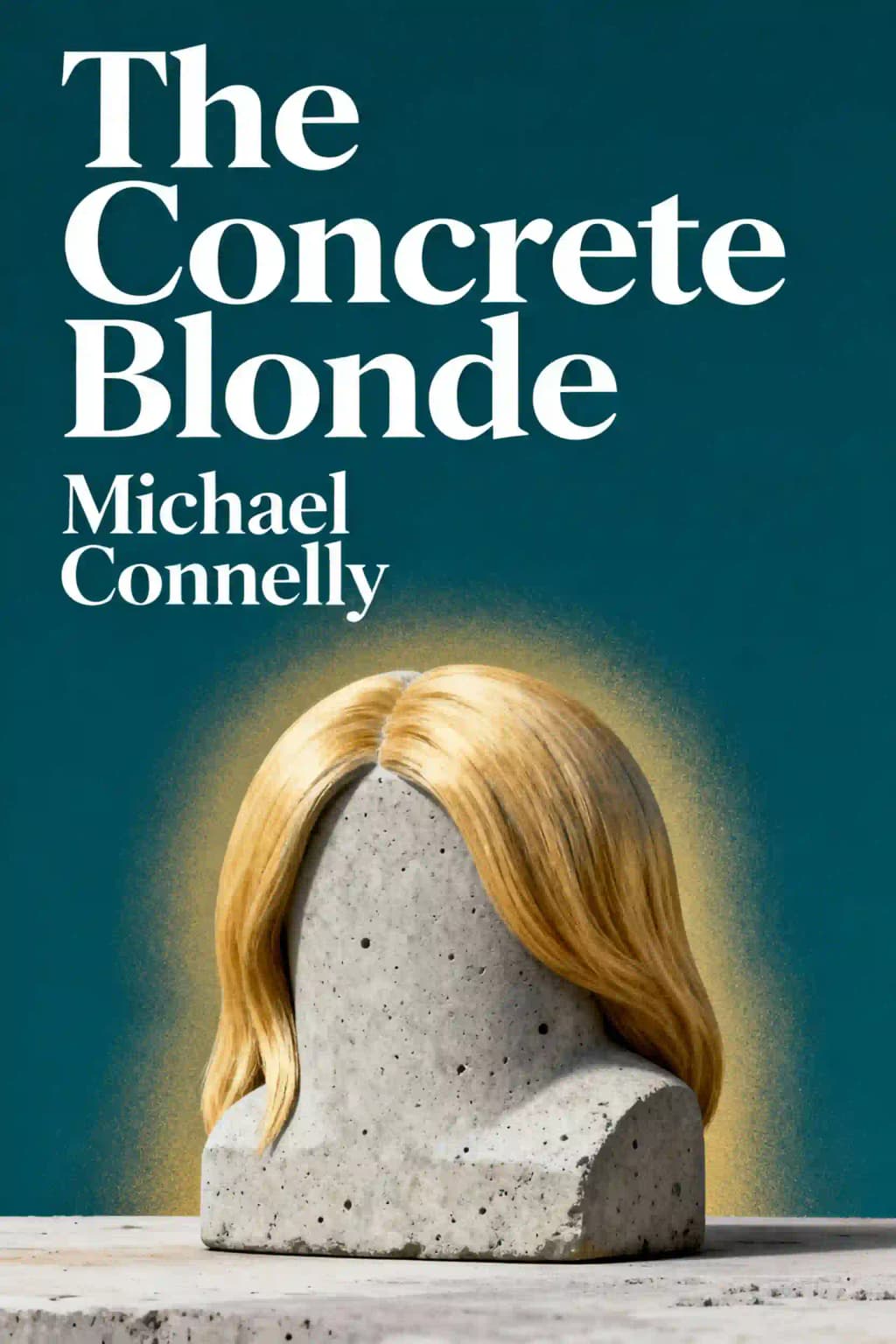
The concrete blonde
《The concrete blonde》概述
In "The Concrete Blonde," Harry Bosch faces courtroom drama and a serial killer investigation simultaneously. Ranked #2 among Connelly's 30+ novels by Goodreads readers, this thriller showcases his evolution from procedural master to philosophical storyteller. What justice-system secrets made this novel "almost poetic"?

《The concrete blonde》核心主题
- police accountability
- wrongful death litigation
- serial killer copycats
- moral ambiguity
- split-second decision making
《The concrete blonde》经典语录
Justice is just a concrete blonde.
Sometimes split-second decisions have irreversible consequences.
Did you stop the killings? All of them?
The courtroom becomes a theater of psychological warfare.
《The concrete blonde》主要人物
- Harry BoschLAPD detective on trial for wrongful death
- Norman ChurchThe suspected 'Dollmaker' serial killer
- Honey ChandlerCivil rights attorney suing Bosch
- Deborah ChurchWidow of Norman Church who filed the lawsuit
- IrvingLAPD Assistant Chief
关于作者
《The concrete blonde》作者介绍
Michael Joseph Connelly is the bestselling author of The Concrete Blonde and a master of crime fiction and police procedural novels. Born in Philadelphia in 1956, Connelly draws on his experience as a crime reporter for the Los Angeles Times, where he covered the criminal underworld that would define his fictional landscape. The Concrete Blonde, published in 1994, is the third Harry Bosch novel, expertly weaving courtroom drama with a hunt for a serial killer known as the Dollmaker.
Connelly's debut, The Black Echo, won the Edgar Award for Best First Novel in 1992, launching a career spanning over 40 novels featuring iconic characters like LAPD Detective Harry Bosch and defense attorney Mickey Haller.
His books have been adapted into acclaimed series including Bosch, Bosch: Legacy, and The Lincoln Lawyer. With over 89 million copies sold worldwide and translated into 45 languages, Connelly was honored as a Grand Master by the Mystery Writers of America in 2023.
下载《The concrete blonde》摘要
免费获取《The concrete blonde》摘要的 PDF 或 EPUB 版本。可打印或随时离线阅读。
关于本书的常见问题
The Concrete Blonde is a crime thriller by Michael Connelly that follows LAPD Detective Harry Bosch as he faces a wrongful death lawsuit for killing a suspected serial killer called the Dollmaker. When a new victim surfaces with the Dollmaker's signature four years after the shooting, Bosch must prove he killed the right man while hunting a killer who may still be alive. The novel masterfully combines courtroom drama with a tense police investigation.
The Concrete Blonde is ideal for crime fiction enthusiasts who enjoy police procedurals blended with legal drama. Fans of serial killer thrillers, courtroom battles, and morally complex detective stories will find this Harry Bosch novel compelling. Readers interested in themes of justice, police accountability, and psychological suspense will appreciate Michael Connelly's fast-paced storytelling and intricate plot structure that keeps you engaged from start to finish.
The Concrete Blonde is widely considered one of the best Harry Bosch novels and represents Michael Connelly hitting a new level in his writing career. Readers praise its excellent pacing, dual storylines, and satisfying ending that expertly weaves together courtroom drama and serial killer investigation. While the writing style remains straightforward, the gripping plot and unexpected twists make The Concrete Blonde a must-read for crime thriller fans.
The Dollmaker was a serial killer who stalked Los Angeles, murdering women and leaving a macabre calling card by applying grotesque makeup to his victims' faces. Four years before the novel begins, Detective Harry Bosch shot and killed Norman Church, a man suspected of being the Dollmaker, during a tense confrontation in a Silverlake apartment. Makeup belonging to the victims was found in Church's possession, seemingly confirming his guilt.
The Concrete Blonde concludes with reporter Joel Bremmer being revealed as "the Follower," the copycat killer who continued the Dollmaker's work. Harry Bosch uses psychological manipulation and a hidden recording device to extract Bremmer's confession, including the murder of attorney Honey Chandler. Bremmer accepts a plea deal of life without parole in exchange for leading police to buried victims, while Bosch finds personal hope through reconciliation with Sylvia Moore.
The Concrete Blonde stands out by combining two compelling narratives: a civil trial where Bosch defends his actions and an active serial killer investigation. This dual structure creates exceptional tension as courtroom battles unfold alongside the hunt for a murderer. The novel also delves deeper into themes of police violence and accountability, addressing issues that remain relevant today despite being published in 1994. Michael Connelly's courtroom scenes demonstrate the skill he later perfected in The Lincoln Lawyer series.
The real killer is Joel Bremmer, a crime reporter who covered the Dollmaker case and became "the Follower," a copycat who continued murdering women after Norman Church's death. Bremmer's intimate knowledge of the investigation, gained through his media access, allowed him to mimic the Dollmaker's methods convincingly. His capture reveals that while Bosch did kill a guilty man, another predator operated simultaneously, making the truth more complex than initially believed.
The Concrete Blonde explores justice's imperfect nature, examining whether killing a guilty man through questionable means constitutes true justice. Michael Connelly addresses police violence, accountability, and the psychological toll of hunting serial killers. The novel questions how society confronts evil while maintaining moral integrity, symbolized by Bosch's internal struggle between doing what's right and following proper procedure. Themes of redemption and hope emerge through Bosch's personal relationships amid professional turmoil.
The Concrete Blonde features extensive courtroom scenes that form a central pillar of the narrative. The civil trial, where attorney Honey Chandler represents the Dollmaker's widow against Harry Bosch and the LAPD, showcases Michael Connelly's ability to craft compelling legal drama. These courtroom sequences zip along with excellent pacing, demonstrating the writing skills Connelly later applied to his Lincoln Lawyer series. The trial creates mounting pressure as evidence emerges that complicates Bosch's defense.
Many readers consider The Concrete Blonde the best Harry Bosch novel in the early series, representing significant growth in Michael Connelly's storytelling ability. Compared to his earlier works, this third Bosch novel features tighter editing, crisper pacing, and more sophisticated dual plotting. Some reviewers rank it alongside The Fifth Witness and The Lincoln Lawyer for quality. The Concrete Blonde demonstrates Connelly's mastery of blending police procedural with courtroom thriller, establishing techniques he refined throughout his career.
Harry Bosch emerges as a morally complex detective with genuine regard for victims and unwavering dedication to justice in The Concrete Blonde. Michael Connelly allows readers deeper access to Bosch's thoughts, revealing a fundamentally good person haunted by difficult choices. Despite his crusty exterior, Bosch shows authentic appreciation for women and refuses easy answers to complex social issues. His character development includes vulnerability through romantic relationships and psychological depth as he confronts the possibility of having killed an innocent man.
The Concrete Blonde remains relevant because it addresses police violence and accountability issues that persist in contemporary society. Published in 1994, the novel's exploration of wrongful death lawsuits, police use of force, and systemic justice questions resonates strongly with current debates about law enforcement reform. Michael Connelly's nuanced treatment of these themes demonstrates how social tensions endure across decades. The book's psychological depth and ethical complexity provide valuable perspective on timeless questions about justice, authority, and moral responsibility.