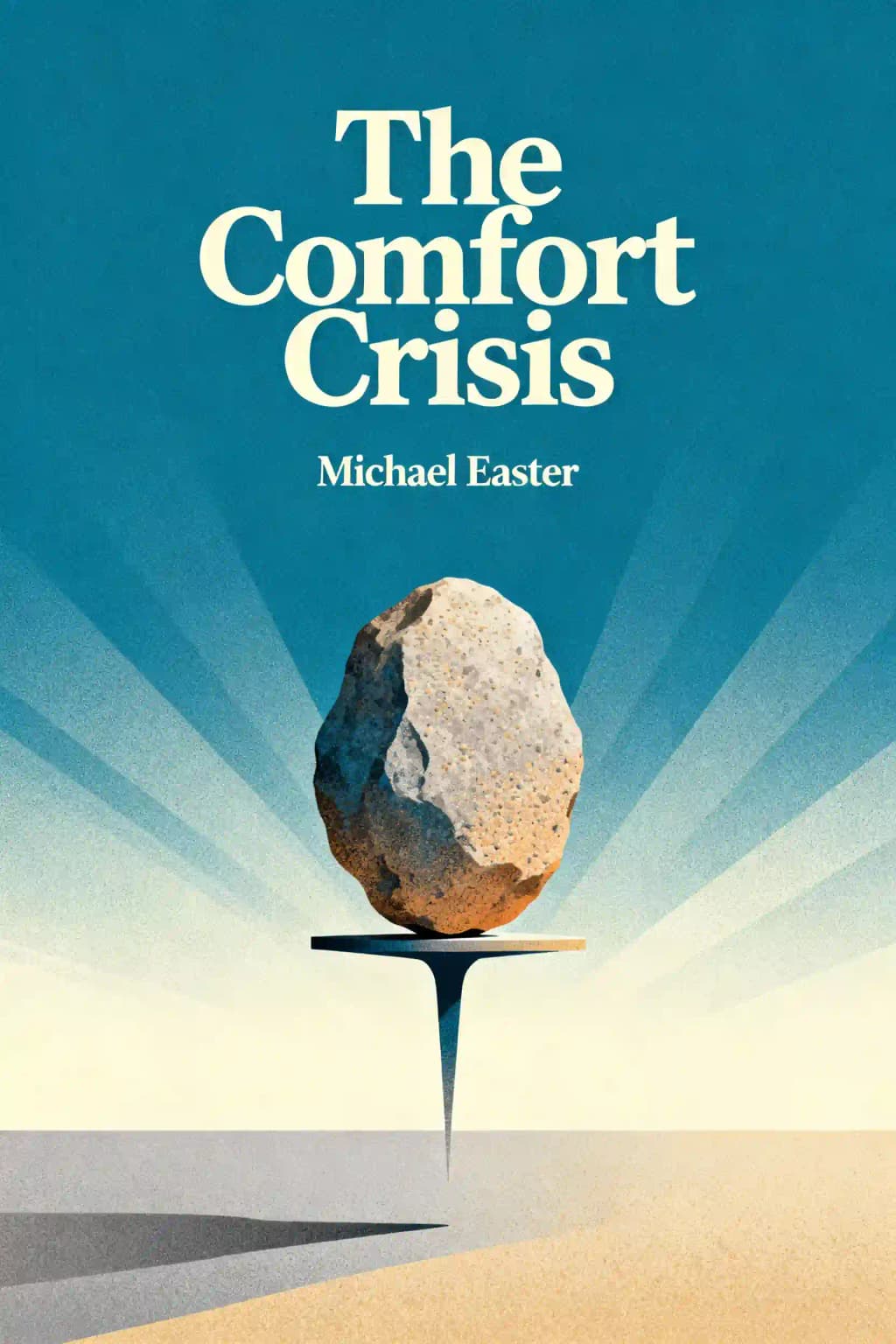
Craving comfort is killing you. In "The Comfort Crisis," Michael Easter's wilderness expedition reveals how our modern ease destroys health and happiness. Embraced by elite MLB teams, military units, and Fortune 500s, this counterintuitive bestseller asks: Could your cushy life be your biggest enemy?
Michael Easter, New York Times bestselling author of The Comfort Crisis, is a journalist and professor renowned for exploring how modern science and ancestral wisdom intersect to improve health, resilience, and performance.
The book, blending self-help, anthropology, and adventure narratives, draws from Easter’s global expeditions—embedding with monks in Bhutan, Special Forces operatives, and remote tribes—to examine humanity’s struggle with modern comfort.
A visiting lecturer at the University of Nevada Las Vegas (UNLV) and co-founder of its Public Communications Institute, Easter’s work as a Men’s Health contributing editor and podcaster informs his contrarian insights on habit formation and human potential. His follow-up bestseller, Scarcity Brain, further dissects evolutionary psychology’s role in consumer behavior.
Easter’s ideas have been adopted by Major League Baseball teams, Fortune 500 companies, and military units, while his media reach spans The Joe Rogan Experience, CBS Saturday Morning, and NPR. The Comfort Crisis has been translated into 10 languages, cementing Easter as a leading voice in redefining 21st-century well-being.
The Comfort Crisis argues that modern society’s extreme comfort—sheltered lifestyles, constant technology use, and overconsumption—harms mental and physical health. Michael Easter blends evolutionary biology, personal stories (like a 33-day Alaskan hunting trip), and research to show how embracing discomfort through challenges in nature, fasting, and physical exertion can combat diseases like obesity, anxiety, and depression.
This book is ideal for self-improvement enthusiasts, outdoor adventurers, and anyone feeling stagnant in modern comfort. It appeals to readers interested in health optimization, resilience-building, and reconnecting with nature. Professionals in high-stress roles or those seeking mindfulness practices will also find actionable insights.
Yes—it offers a fresh perspective on balancing comfort with purposeful discomfort. Critics praise its engaging storytelling and evidence-based arguments but note some concepts (like extreme wilderness challenges) may feel unrelatable. Despite minor critiques about lacking structured takeaways, it sparks meaningful reflection on modern living.
A misogi is a transformative challenge with three elements: separation (leaving society), transition (facing extreme physical/mental trials), and incorporation (returning with new perspectives). Easter’s 33-day Alaskan caribou hunt exemplifies this concept, pushing participants to expand their comfort zones without external validation.
Easter links conditions like obesity and anxiety to evolutionary mismatch—our bodies aren’t adapted to constant comfort. Solutions include intermittent fasting, “exercise snacking” (short, intense workouts), and reducing screen time to mimic ancestral stressors that improve resilience.
The 80% Rule advocates stopping eating when 80% full, aligning with ancestral eating patterns to prevent overconsumption. Easter cites studies showing this practice enhances longevity, metabolic health, and mindfulness around food.
Easter argues nature deprivation exacerbates stress and disconnection. Spending time outdoors—especially in “wild” environments—reduces anxiety, boosts creativity, and restores mental focus. He references studies showing even short nature exposures lower cortisol levels.
The book highlights how smartphones and social media create “comfort traps,” numbing users with dopamine-driven feedback loops. Easter suggests digital detoxes to reclaim attention, improve relationships, and rediscover real-world engagement.
While Atomic Habits focuses on incremental behavior change, The Comfort Crisis advocates radical discomfort to break stagnation. Both emphasize mindset shifts, but Easter prioritizes environmental rewilding over daily habit stacking.
Some readers find Easter’s examples (e.g., extreme Arctic survival) impractical for average lifestyles. Others note the book lacks a concise summary of actionable steps, requiring readers to extrapolate principles from anecdotes.
Its themes resonate amid rising tech addiction, mental health crises, and sedentary work cultures. The book’s call to embrace discomfort offers a counterbalance to AI-driven convenience and remote work trends, promoting holistic well-being.
通过作者的声音感受这本书
将知识转化为引人入胜、富含实例的见解
快速捕捉核心观点,高效学习
以有趣互动的方式享受这本书
We're not just comfortable - we're too comfortable.
Our brains haven't caught up.
Make it really hard, but don't die.
Discomfort isn't something to avoid.
Boredom isn't just an unpleasant state.
将《The Comfort Crisis》的核心观点拆解为易于理解的要点,了解创新团队如何创造、协作和成长。
将《The Comfort Crisis》提炼为快速记忆要点,突出坦诚、团队合作和创造力的关键原则。

通过生动的故事体验《The Comfort Crisis》,将创新经验转化为令人难忘且可应用的精彩时刻。
随心提问,选择声音,共同创造真正与你产生共鸣的见解。

"Instead of endless scrolling, I just hit play on BeFreed. It saves me so much time."
"I never knew where to start with nonfiction—BeFreed’s book lists turned into podcasts gave me a clear path."
"Perfect balance between learning and entertainment. Finished ‘Thinking, Fast and Slow’ on my commute this week."
"Crazy how much I learned while walking the dog. BeFreed = small habits → big gains."
"Reading used to feel like a chore. Now it’s just part of my lifestyle."
"Feels effortless compared to reading. I’ve finished 6 books this month already."
"BeFreed turned my guilty doomscrolling into something that feels productive and inspiring."
"BeFreed turned my commute into learning time. 20-min podcasts are perfect for finishing books I never had time for."
"BeFreed replaced my podcast queue. Imagine Spotify for books — that’s it. 🙌"
"It is great for me to learn something from the book without reading it."
"The themed book list podcasts help me connect ideas across authors—like a guided audio journey."
"Makes me feel smarter every time before going to work"

免费获取《The Comfort Crisis》摘要的 PDF 或 EPUB 版本。可打印或随时离线阅读。
Our bodies and minds evolved through struggle, not Netflix binges and DoorDash deliveries. Throughout human history, seeking comfort meant survival-finding food, shelter, and safety. The problem? Our environment has transformed dramatically while our brains remain stubbornly prehistoric. This creates what scientists call an "evolutionary mismatch"-our ancient programming colliding with modern conveniences. We're hardwired to crave calories because food scarcity was once a constant threat. Now we have unlimited access to hyper-palatable foods, yet our brains still push us to consume as if famine might strike tomorrow. What's fascinating is how we keep moving the goalposts of what constitutes "comfort." Research on "prevalence-induced concept change" shows that as problems diminish, we begin categorizing previously acceptable situations as problematic. When shown faces along a spectrum from threatening to non-threatening, study participants began identifying neutral faces as threatening once truly threatening faces became rare. This "comfort creep" explains why, despite unprecedented material wealth and convenience, rates of depression and anxiety continue to rise. We're not just comfortable-we're too comfortable, and it's robbing us of the very experiences that make us feel fully human.