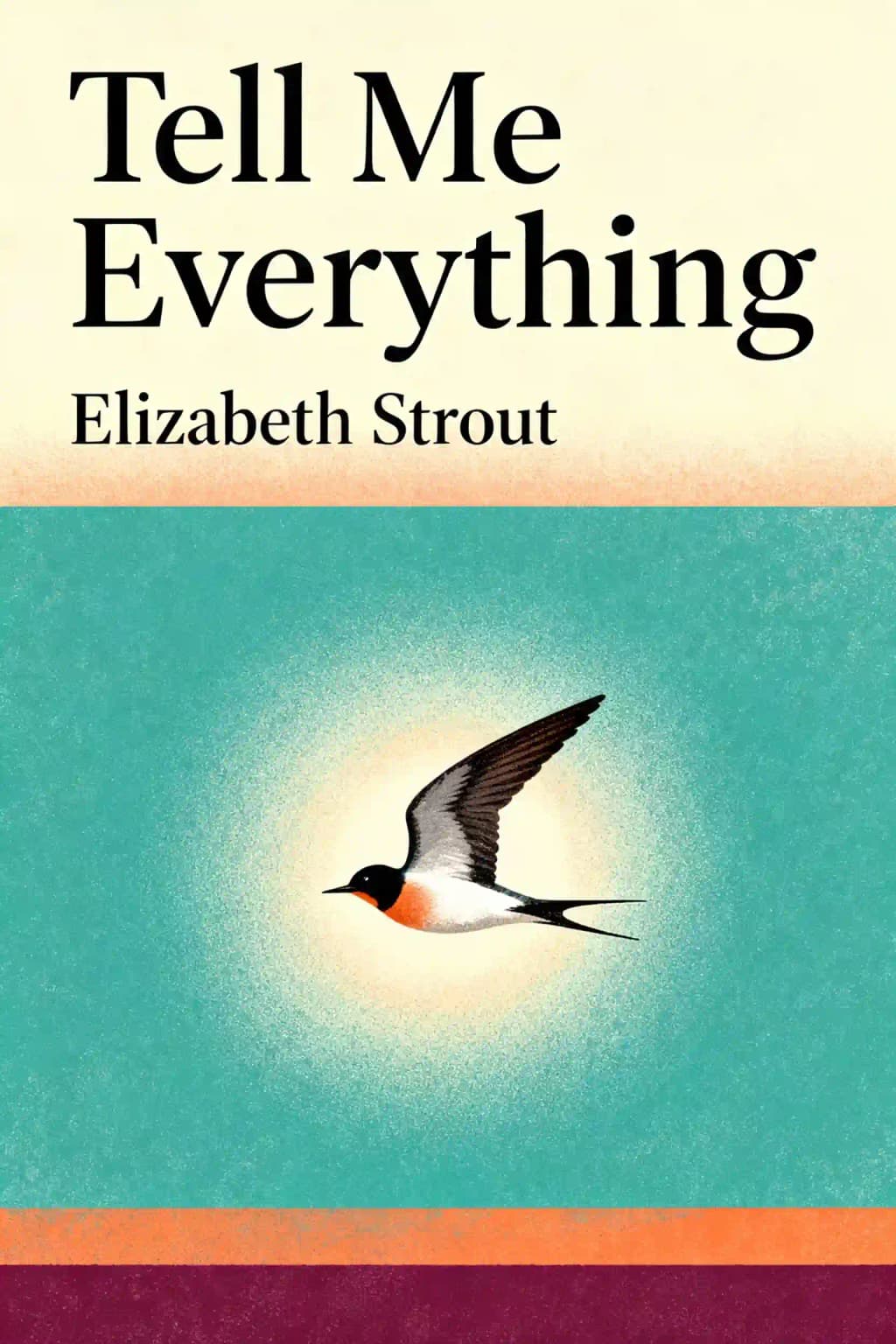
In "Tell Me Everything," Elizabeth Strout reunites beloved characters in a stunning tapestry of small-town lives. Oprah's second Strout selection reveals how "extraordinary love exists in ordinary actions." What makes this bestseller so powerful that critics call it a "shimmering" exploration of human connection?
Elizabeth Strout is the Pulitzer Prize-winning author of Tell Me Everything and a master of literary fiction known for her empathetic portrayals of small-town life and richly drawn, flawed characters.
Born in Portland, Maine in 1956, Strout draws deeply from her New England roots to craft interconnected stories that explore family secrets, love, and loss. She won the 2009 Pulitzer Prize for Fiction for Olive Kitteridge, which sold over one million copies and was adapted into an Emmy-winning HBO miniseries.
Her other bestselling novels include My Name Is Lucy Barton (longlisted for the Man Booker Prize), Oh William!, Lucy by the Sea, and The Burgess Boys—many featuring recurring characters across multiple books. Strout has also won the Siegfried Lenz Prize and edited The Best American Short Stories 2013.
Tell Me Everything was selected as an Oprah's Book Club pick, cementing Strout's place as one of America's most celebrated contemporary novelists.
Tell Me Everything by Elizabeth Strout follows lawyer Bob Burgess as he defends a man accused of murdering his mother while developing a deep friendship with writer Lucy Barton in Crosby, Maine. Lucy also befriends the elderly Olive Kitteridge, and together they share "unrecorded lives"—stories of ordinary people whose experiences deserve remembering. The novel explores human connection, loneliness, and what gives life meaning through interwoven character narratives.
Elizabeth Strout is a Pulitzer Prize-winning author and #1 New York Times bestseller known for her compassionate portraits of small-town life. She won the Pulitzer Prize for Olive Kitteridge and has been shortlisted for the Booker Prize. Strout excels at capturing the inner lives of ordinary people, revealing hidden emotions beneath everyday existence. Tell Me Everything is her tenth novel and an Oprah's Book Club selection.
Tell Me Everything appeals to readers who appreciate character-driven literary fiction and quiet, introspective storytelling. It's ideal for those interested in exploring loneliness, human connection, and the meaning found in ordinary lives. Fans of Elizabeth Strout's previous works featuring Lucy Barton and Olive Kitteridge will particularly enjoy this reunion, though newcomers can read it as a standalone novel about friendship and storytelling.
Tell Me Everything is worth reading for its profound exploration of human relationships and Strout's masterful character development. Critics praise it as Strout "operating at the height of her powers" with remarkable emotional insight. The novel was shortlisted for the Women's Prize for Fiction and named a Best Book of the Year by Time, NPR, and Vogue. Its empathetic portrayal of loneliness and connection resonates deeply with readers seeking meaningful literary fiction.
"Unrecorded lives" in Tell Me Everything refers to ordinary people whose stories go untold and forgotten despite experiencing profound tragedies, love, and loss. Lucy Barton and Olive Kitteridge share these stories—like Olive's mother who secretly loved another man her entire life—to give meaning to otherwise forgotten existences. Elizabeth Strout suggests that every life, no matter how ordinary, contains hidden depths worthy of documentation and remembrance.
Lucy Barton and Bob Burgess develop a deep, platonic friendship through regular walks along the Maine coast in Tell Me Everything. They confide secrets, fears, and regrets—Bob shares his return to smoking and strained family relationships while Lucy discusses loneliness and complicated relationships with her daughters. Their connection provides solace as someone who truly listens, though Elizabeth Strout explores the complexity of their feelings as Bob falls in love with Lucy despite her relationship with her ex-husband William.
Tell Me Everything examines how people remain lonely even within long-term relationships, with Lucy observing that "many people in long marriages live with ghosts beside them." Elizabeth Strout portrays characters struggling with alcoholism, unfound love, aging, and death while desperately seeking genuine connection. The novel suggests that storytelling and truly listening—as Lucy and Bob, or Lucy and Olive do—offers healing through understanding that our hidden emotions and lack of connection are universally shared human experiences.
Olive Kitteridge, now ninety and living in a retirement community, serves as a storyteller and mentor figure in Tell Me Everything by Elizabeth Strout. She befriends Lucy Barton and they spend afternoons sharing stories of "unrecorded lives," reanimating forgotten people and giving their experiences meaning. Through Olive, Strout explores aging, mortality, and the importance of bearing witness to others' lives. Olive also reads to her friend Isabelle and demonstrates wisdom about human nature accumulated over decades.
The central theme of Tell Me Everything is that love and human connection come in diverse forms and give life meaning. Elizabeth Strout explores how ordinary people hide loneliness, grief, and trauma beneath everyday existence, yet their stories deserve recognition. Through Bob Burgess, Lucy Barton, and Olive Kitteridge sharing "unrecorded lives," the novel argues that noticing others, truly listening, and documenting experiences—even mundane ones—validates human existence and creates meaningful relationships.
Tell Me Everything can absolutely be enjoyed as a standalone novel despite being the fifth book in Elizabeth Strout's Amgash series. The author provides sufficient context for new readers to understand characters like Lucy Barton, Olive Kitteridge, and Bob Burgess without prior knowledge. However, longtime Strout fans gain deeper appreciation from reuniting with beloved characters and witnessing their evolution. The self-contained narrative welcomes newcomers while rewarding series followers with richer emotional resonance.
Tell Me Everything functions as a meditation on storytelling itself, with Lucy Barton and Olive Kitteridge discussing what makes stories compelling and why certain narratives resonate while others don't. Elizabeth Strout explores storytelling as a way to validate human experience, combat loneliness, and create meaning from ordinary life. The novel's structure—stories within stories—demonstrates how sharing narratives builds intimacy and understanding. Strout suggests that bearing witness to others' "unrecorded lives" is an act of love.
The fictional town of Crosby, Maine serves as more than backdrop in Tell Me Everything—it represents the small-town world where gossip circulates yet genuine vulnerability remains rare. Elizabeth Strout uses the autumn Maine landscape for Bob Burgess and Lucy Barton's contemplative coastal walks, creating space for intimate conversations. The close-knit community reveals how people can live near each other for decades while hiding profound loneliness, trauma, and unfulfilled desires beneath polite interactions and familiar routines.
通过作者的声音感受这本书
将知识转化为引人入胜、富含实例的见解
快速捕捉核心观点,高效学习
以有趣互动的方式享受这本书
"You're a sin-eater," she tells him, "someone who unconsciously takes on others' sins."
"I did a good job with life, for the most part."
"The reason I used to drink too much is because I'm terrified.
Isn't this the human condition?
Christmas decorations appear before Thanksgiving, but for Bob, the holiday season brings sadness
将《Tell Me Everything》的核心观点拆解为易于理解的要点,了解创新团队如何创造、协作和成长。
将《Tell Me Everything》提炼为快速记忆要点,突出坦诚、团队合作和创造力的关键原则。

通过生动的故事体验《Tell Me Everything》,将创新经验转化为令人难忘且可应用的精彩时刻。
随心提问,选择声音,共同创造真正与你产生共鸣的见解。

"Instead of endless scrolling, I just hit play on BeFreed. It saves me so much time."
"I never knew where to start with nonfiction—BeFreed’s book lists turned into podcasts gave me a clear path."
"Perfect balance between learning and entertainment. Finished ‘Thinking, Fast and Slow’ on my commute this week."
"Crazy how much I learned while walking the dog. BeFreed = small habits → big gains."
"Reading used to feel like a chore. Now it’s just part of my lifestyle."
"Feels effortless compared to reading. I’ve finished 6 books this month already."
"BeFreed turned my guilty doomscrolling into something that feels productive and inspiring."
"BeFreed turned my commute into learning time. 20-min podcasts are perfect for finishing books I never had time for."
"BeFreed replaced my podcast queue. Imagine Spotify for books — that’s it. 🙌"
"It is great for me to learn something from the book without reading it."
"The themed book list podcasts help me connect ideas across authors—like a guided audio journey."
"Makes me feel smarter every time before going to work"

免费获取《Tell Me Everything》摘要的 PDF 或 EPUB 版本。可打印或随时离线阅读。
In the coastal town of Crosby, Maine, ordinary lives conceal extraordinary pain. Bob Burgess, a lawyer who returned from New York fifteen years ago, walks regularly with famous writer Lucy Barton along the frozen river. During these walks, they reveal their deepest fears to each other. "The reason I used to drink too much is because I'm terrified. I'm always terrified," Bob confesses, explaining his nightly wine consumption and smoking habit. Lucy responds with understanding, creating connection through shared emotional honesty. The pandemic has left its mark on everyone. Housing prices have skyrocketed, forcing longtime residents like Charlene Bibber to sell their homes. Despite having money from the sale, she realizes it won't sustain her for long in the changing economy. Her story represents the growing divide in small towns across America. Winter brings "a sense of compression... of being squeezed" for Bob, whose heart "flickers with anxiety" due to both the season and "the state of the world." Christmas decorations appear early, but for Bob, the holidays bring sadness stemming from a childhood memory when he innocently told his widowed mother he didn't like Christmas, causing her to cry-a "thumbprint pressed deeply into his soul of real sorrow and regret." Isn't this the human condition? We walk through life carrying invisible burdens while presenting composed exteriors to the world.