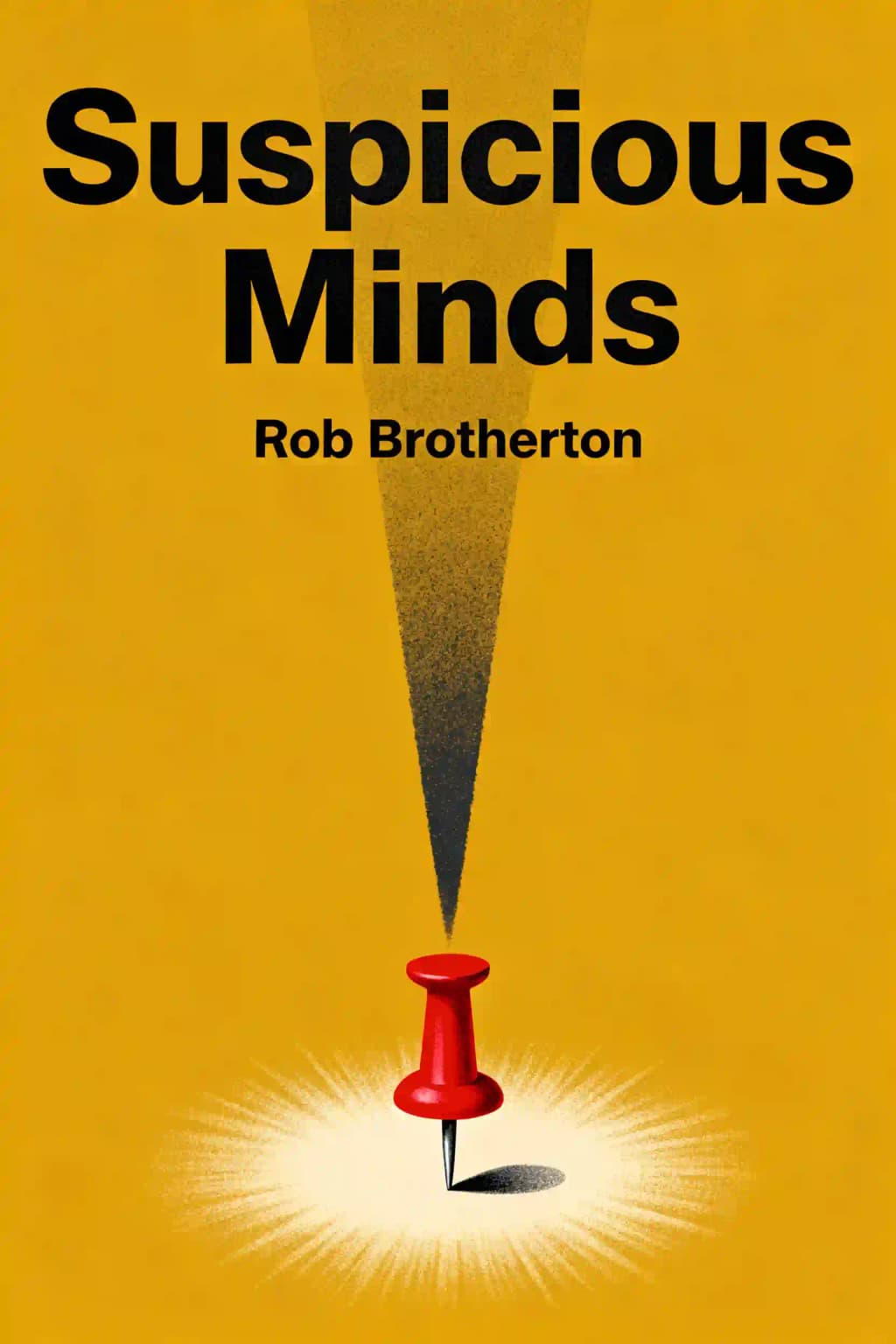
Why do 40% of Americans believe in conspiracy theories? "Suspicious Minds" reveals how our brains are wired for suspicion, earning starred reviews from Publishers Weekly for its humorous, accessible exploration of why rational people embrace irrational beliefs.
通过作者的声音感受这本书
将知识转化为引人入胜、富含实例的见解
快速捕捉核心观点,高效学习
以有趣互动的方式享受这本书
What if I told you that you're a conspiracy theorist? Before you protest, consider this: when you suspect your colleague took credit for your idea, when you wonder if that "random" price increase was strategically timed, or when you question whether that news story is telling the whole truth-you're engaging in conspiracy thinking. We all do it. Our brains are wired for suspicion, pattern detection, and intention seeking. This isn't a bug in our mental programming; it's a feature. The real question isn't whether we think conspiratorially, but why we can't help ourselves-and what happens when this natural tendency spirals into elaborate theories about shape-shifting reptilians or faked moon landings. Picture a courtroom where the jury consists of 100 billion neurons, each casting votes without your conscious knowledge. That's your brain-a biological parliament making decisions, forming judgments, and shaping perceptions while you, the "conscious you," merely observe the final verdict and claim credit for the outcome. We like to believe we're rational agents carefully weighing evidence, but psychological research reveals a humbling truth: consciousness is just a tiny passenger on a massive ship, taking credit for a journey engineered by processes we barely understand. Dutch researchers found that people made to feel uncertain were more likely to see patterns in random visual noise-unless they first tidied a messy desk. Physical order satisfied their psychological need for structure, reducing their tendency to find imaginary patterns. Even font legibility matters. Conspiracy theories presented in clear, readable fonts were rated more believable than identical theories in difficult-to-read fonts. None of the participants realized these subtle factors were influencing their judgments. This is the conspiracy in our minds-not a plot by shadowy elites, but the hidden workings of our own cognitive machinery.
将《Suspicious Minds》的核心观点拆解为易于理解的要点,了解创新团队如何创造、协作和成长。
将《Suspicious Minds》提炼为快速记忆要点,突出坦诚、团队合作和创造力的关键原则。

通过生动的故事体验《Suspicious Minds》,将创新经验转化为令人难忘且可应用的精彩时刻。
随心提问,选择声音,共同创造真正与你产生共鸣的见解。

"Instead of endless scrolling, I just hit play on BeFreed. It saves me so much time."
"I never knew where to start with nonfiction—BeFreed’s book lists turned into podcasts gave me a clear path."
"Perfect balance between learning and entertainment. Finished ‘Thinking, Fast and Slow’ on my commute this week."
"Crazy how much I learned while walking the dog. BeFreed = small habits → big gains."
"Reading used to feel like a chore. Now it’s just part of my lifestyle."
"Feels effortless compared to reading. I’ve finished 6 books this month already."
"BeFreed turned my guilty doomscrolling into something that feels productive and inspiring."
"BeFreed turned my commute into learning time. 20-min podcasts are perfect for finishing books I never had time for."
"BeFreed replaced my podcast queue. Imagine Spotify for books — that’s it. 🙌"
"It is great for me to learn something from the book without reading it."
"The themed book list podcasts help me connect ideas across authors—like a guided audio journey."
"Makes me feel smarter every time before going to work"

免费获取《Suspicious Minds》摘要的 PDF 或 EPUB 版本。可打印或随时离线阅读。
