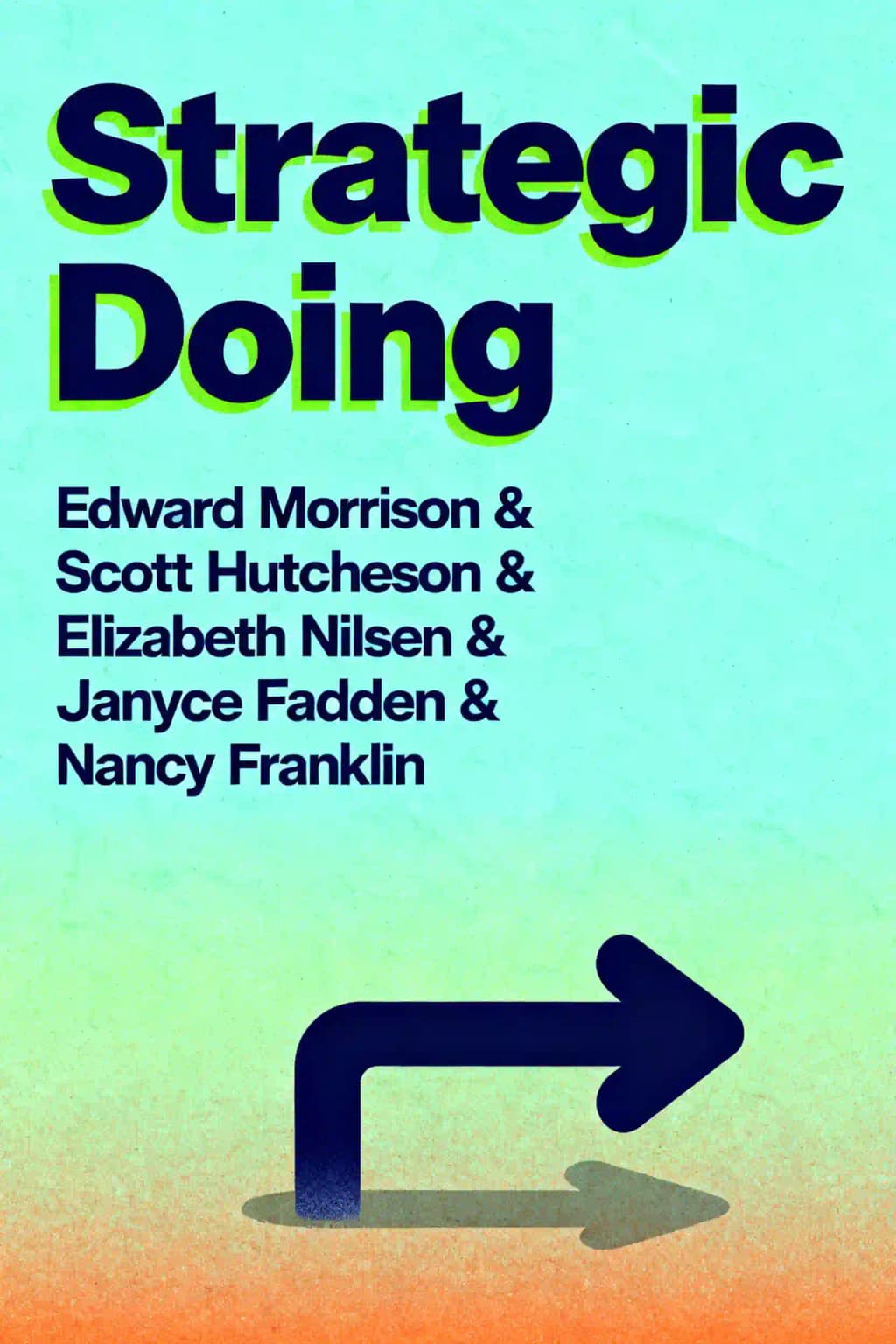
In "Strategic Doing," Morrison reveals ten agile leadership skills transforming business and education across 2,000+ practitioners worldwide. How did this #1 Amazon bestseller in six categories create a methodology that turns complex challenges into actionable opportunities? The answer might revolutionize your approach to collaboration.
通过作者的声音感受这本书
将知识转化为引人入胜、富含实例的见解
快速捕捉核心观点,高效学习
以有趣互动的方式享受这本书
Think about the last meeting you sat through where everyone nodded along, took notes, and absolutely nothing changed afterward. Now imagine a different scenario: a group of strangers in Youngstown, Ohio, spending just one hour with cellist Yo-Yo Ma, identifying their city's hidden strengths, and walking out with concrete plans that would actually transform their community. This isn't fantasy-it's what happens when we stop trying to solve 21st-century problems with 20th-century thinking. Our world has fundamentally shifted. Before the industrial revolution, families controlled their own work rhythms. Then came hierarchies-rigid structures where someone at the top gave orders that cascaded down. Early Hollywood epitomized this: MGM employed everyone from directors to theater ushers in one massive pyramid. But today's challenges-climate change, innovation, community revitalization-don't respect organizational charts. They exist in networks: loose, porous connections where people voluntarily collaborate around shared goals. Traditional strategic planning, born in 1960s business schools for stable environments with clear command structures, simply doesn't work here. It's like bringing a map to navigate a river that changes course daily. The trap we fall into is what's called "If Only Land"-constantly wishing for resources we don't have rather than using what's already in our hands. This hierarchical mindset assumes someone with more authority will eventually provide what we need. But networks have no top or bottom, no designated resource provider. The shift required isn't just structural; it's psychological. We must think differently, behave differently, and most importantly, "do" differently-taking small experimental steps rather than waiting for perfect plans. Here's a surprising finding: researchers at the University of Arizona discovered that the happiest people in their study had twice as many deep conversations and one-third as much small talk as the unhappiest ones. Yet we've built a world that makes sustained conversation nearly impossible. We're interrupted every 11 minutes on average, and it takes 25 minutes to fully refocus afterward. Creating space for real dialogue requires intentional design. Jeff Bezos's "two-pizza rule" aligns with research showing that optimal groups contain five to seven people-each person beyond seven reduces effectiveness by 10%. Odd numbers work better than even ones. Location matters too: neutral territory prevents perceived advantages and minimizes distractions. One fascinating insight is the "teddy bear principle"-childhood cues, like meeting in children's museums, actually promote prosocial behavior among adults. But the deepest requirement is psychological safety: the shared belief that you can take interpersonal risks without punishment. Amy Edmondson's research shows that in psychologically safe teams, members feel genuinely accepted and respected. The Constitutional Convention offers a historical template-James Madison recorded specific civility rules that allowed strong personalities to have productive dialogue. Modern equivalents might include putting smartphones away or ensuring "equity of voice," where everyone speaks roughly the same amount. In Flint, Michigan, where conversations about poverty and racism carry intense emotional weight, facilitator Bob Brown had everyone throw their business cards in the trash-symbolizing that foundation presidents and formerly incarcerated individuals would contribute as equals to their shared future.
将《Strategic Doing》的核心观点拆解为易于理解的要点,了解创新团队如何创造、协作和成长。
将《Strategic Doing》提炼为快速记忆要点,突出坦诚、团队合作和创造力的关键原则。

通过生动的故事体验《Strategic Doing》,将创新经验转化为令人难忘且可应用的精彩时刻。
随心提问,选择声音,共同创造真正与你产生共鸣的见解。

"Instead of endless scrolling, I just hit play on BeFreed. It saves me so much time."
"I never knew where to start with nonfiction—BeFreed’s book lists turned into podcasts gave me a clear path."
"Perfect balance between learning and entertainment. Finished ‘Thinking, Fast and Slow’ on my commute this week."
"Crazy how much I learned while walking the dog. BeFreed = small habits → big gains."
"Reading used to feel like a chore. Now it’s just part of my lifestyle."
"Feels effortless compared to reading. I’ve finished 6 books this month already."
"BeFreed turned my guilty doomscrolling into something that feels productive and inspiring."
"BeFreed turned my commute into learning time. 20-min podcasts are perfect for finishing books I never had time for."
"BeFreed replaced my podcast queue. Imagine Spotify for books — that’s it. 🙌"
"It is great for me to learn something from the book without reading it."
"The themed book list podcasts help me connect ideas across authors—like a guided audio journey."
"Makes me feel smarter every time before going to work"

免费获取《Strategic Doing》摘要的 PDF 或 EPUB 版本。可打印或随时离线阅读。