Baudrillard's mind-bending exploration of reality in a world where simulations replace truth. The book that inspired "The Matrix" revolutionized how we understand media and modern existence. In our Instagram-filtered lives, are you living in reality - or just its simulation?
Jean Baudrillard (1929–2007) was a groundbreaking French sociologist and philosopher whose influential work Simulacra and Simulation cemented his reputation as a visionary critic of postmodern culture and hyperreality. A professor at the University of Paris, Baudrillard initially engaged with Marxist theory in works like The System of Objects and The Consumer Society before pioneering his signature concepts of simulacra and symbolic exchange.
His provocative analyses of media-saturated societies, articulated in bestsellers such as America and The Gulf War Did Not Take Place, challenge conventional understandings of reality and representation.
Baudrillard’s ideas gained mainstream recognition through references in The Matrix film series, which drew heavily on his theories of simulated environments. An accomplished photographer, he further explored the tension between image and authenticity in visual media. Translated into over 20 languages, his works remain essential reading in philosophy, media studies, and critical theory. Simulacra and Simulation continues to influence debates on artificial intelligence, virtual identity, and the cultural impact of technology decades after its 1981 publication.
Simulacra and Simulation explores how symbols and signs replace reality in postmodern society, creating a hyperreal world where simulations dominate human experience. Baudrillard argues that media, technology, and consumer culture generate simulacra—copies without originals—that distort truth and dissolve boundaries between real and artificial. Key themes include the "precession of simulacra" (simulations preceding reality) and critiques of mass media’s role in shaping perception.
This book suits philosophers, media theorists, and artists interested in postmodern critiques of technology, consumerism, and representation. It’s valuable for readers analyzing how digital culture (e.g., social media, AI) constructs reality. However, its dense prose and abstract ideas may challenge casual readers, making it better for academic or intellectually curious audiences.
Yes, for its groundbreaking analysis of hyperreality and media’s societal impact, though critics note its complexity and lack of practical solutions. Baudrillard’s ideas remain influential in understanding AI, virtual identities, and algorithmic culture, making it relevant in 2025. However, some dismiss its arguments as overly pessimistic or abstract.
Simulacra are copies or representations that lack an original reference, becoming self-referential constructs. Baudrillard outlines their evolution:
Media perpetuates hyperreality by flooding society with images and signs that replace genuine experiences. For example, news cycles prioritize sensationalism over facts, and platforms like Instagram promote curated identities. Baudrillard argues this creates a “disneyfication” of reality, where simulations feel more authentic than lived experiences.
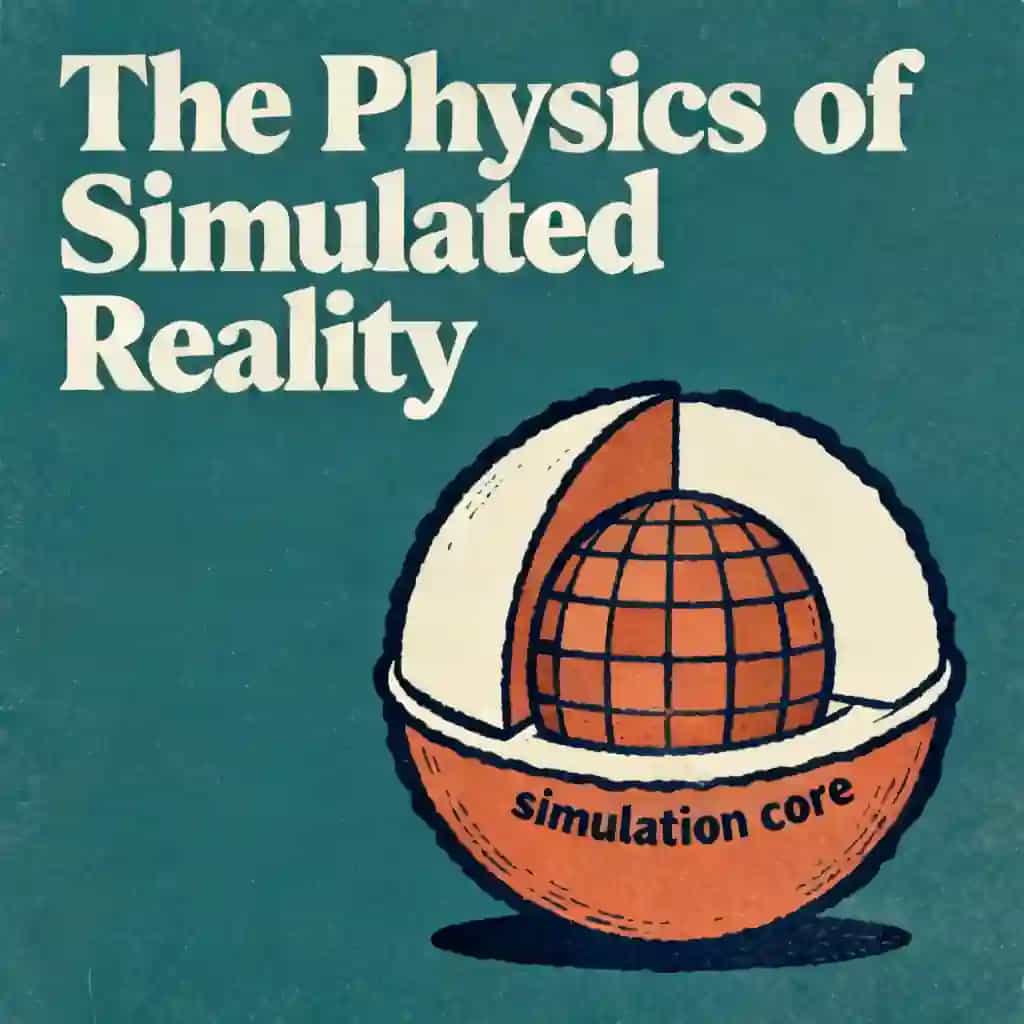
This concept describes how simulations precede and shape reality. Baudrillard uses the example of maps dictating territorial claims rather than reflecting land. In 2025, this manifests as algorithmically generated content (e.g., ChatGPT responses, deepfakes) influencing human behavior and beliefs before real-world interactions occur.
The implosion refers to the collapse of distinctions between reality and representation, truth and falsehood, due to simulacra overload. For instance, AI language models blur authorship, and viral misinformation erodes shared facts. This erodes critical thinking, leaving society adrift in a sea of contradictory signals.
Critics argue Baudrillard’s theories are nihilistic, lack empirical evidence, and offer no actionable solutions. Others find his writing style needlessly opaque. However, supporters praise his prescient insights into digital culture’s distortions, such as “influencer” personas and AI-generated art.
Both Baudrillard and Guy Debord critique media’s role in alienating society from reality. While Debord focuses on capitalism’s spectacle (e.g., advertising), Baudrillard extends this to simulations replacing reality entirely. Their ideas are foundational to analyzing modern “content overload” and algorithmic curation.
Artists use simulacra to critique consumer culture—for example, creating works that parody AI-generated art or Instagram aesthetics. By exposing how simulations distort reality, they challenge viewers to question mediated experiences, as seen in digital art exploring deepfakes or virtual identities.
Its analysis of hyperreality explains AI’s societal impact, such as chatbots mimicking human conversation or VR environments replacing physical spaces. The book also foreshadows issues like “self-simulacra” (algorithmic profiles dictating behavior) and synthetic media eroding trust in institutions.
“The simulacrum is never what hides the truth—it is truth that hides the absence of a deeper reality.”
This underscores Baudrillard’s view that simulations replace truth entirely.
“Disneyland is presented as imaginary to make us believe the rest is real.”
Highlights how institutions maintain illusions of reality through controlled simulations.
The book epitomizes postmodern thought by rejecting objective truth and emphasizing fragmented, media-driven realities. It aligns with critiques of grand narratives, arguing instead that identity, culture, and power are constructed through ever-replicating symbols.
通过作者的声音感受这本书
将知识转化为引人入胜、富含实例的见解
快速捕捉核心观点,高效学习
以有趣互动的方式享受这本书
The simulacrum is never that which conceals the truth—it is the truth which conceals that there is none.
Simulation is no longer that of a territory, a referential being or a substance. It is the generation by models of a real without origin or reality: a hyperreal.
Abstraction today is no longer that of the map, the double, the mirror, or the concept. Simulation is no longer that of a territory, a referential being or a substance.
It is no longer a question of imitation, nor duplication, nor even parody. It is a question of substituting the signs of the real for the real.
The territory no longer precedes the map, nor does it survive it. It is nonetheless the map that precedes the territory—precession of simulacra—that engenders the territory
将《Simulacra and Simulation》的核心观点拆解为易于理解的要点,了解创新团队如何创造、协作和成长。
将《Simulacra and Simulation》提炼为快速记忆要点,突出坦诚、团队合作和创造力的关键原则。

通过生动的故事体验《Simulacra and Simulation》,将创新经验转化为令人难忘且可应用的精彩时刻。
随心提问,选择声音,共同创造真正与你产生共鸣的见解。

"Instead of endless scrolling, I just hit play on BeFreed. It saves me so much time."
"I never knew where to start with nonfiction—BeFreed’s book lists turned into podcasts gave me a clear path."
"Perfect balance between learning and entertainment. Finished ‘Thinking, Fast and Slow’ on my commute this week."
"Crazy how much I learned while walking the dog. BeFreed = small habits → big gains."
"Reading used to feel like a chore. Now it’s just part of my lifestyle."
"Feels effortless compared to reading. I’ve finished 6 books this month already."
"BeFreed turned my guilty doomscrolling into something that feels productive and inspiring."
"BeFreed turned my commute into learning time. 20-min podcasts are perfect for finishing books I never had time for."
"BeFreed replaced my podcast queue. Imagine Spotify for books — that’s it. 🙌"
"It is great for me to learn something from the book without reading it."
"The themed book list podcasts help me connect ideas across authors—like a guided audio journey."
"Makes me feel smarter every time before going to work"

免费获取《Simulacra and Simulation》摘要的 PDF 或 EPUB 版本。可打印或随时离线阅读。
We no longer live in a world where signs represent reality - we inhabit a hyperreal universe where simulations have completely replaced the real. Imagine Borges' famous fable about cartographers creating a map so detailed it perfectly covers its territory. In our world, the territory no longer exists; only the map remains. Reality hasn't just been concealed; it has been entirely supplanted by models that reference nothing beyond themselves. This isn't simply about deception. When someone pretends to be ill, they feign symptoms, but when someone simulates illness, they produce actual symptoms. This collapse between "true" and "false" creates a crisis for institutions built on this distinction - medicine can't determine if a patient is "really" sick when symptoms are genuinely produced through simulation. Images have evolved through four historical phases: first reflecting reality, then masking reality, next masking reality's absence, and finally becoming pure simulation with no relation to reality. We now exist in this fourth phase, where images precede reality rather than represent it. Consider how we experience contemporary events. When a disaster occurs, our first encounter is typically through media images that shape our understanding before we can form our own perceptions. These images don't simply report reality - they construct it. Why does this matter? Because when reality becomes indistinguishable from its simulation, truth, authenticity, and meaning undergo radical transformation.