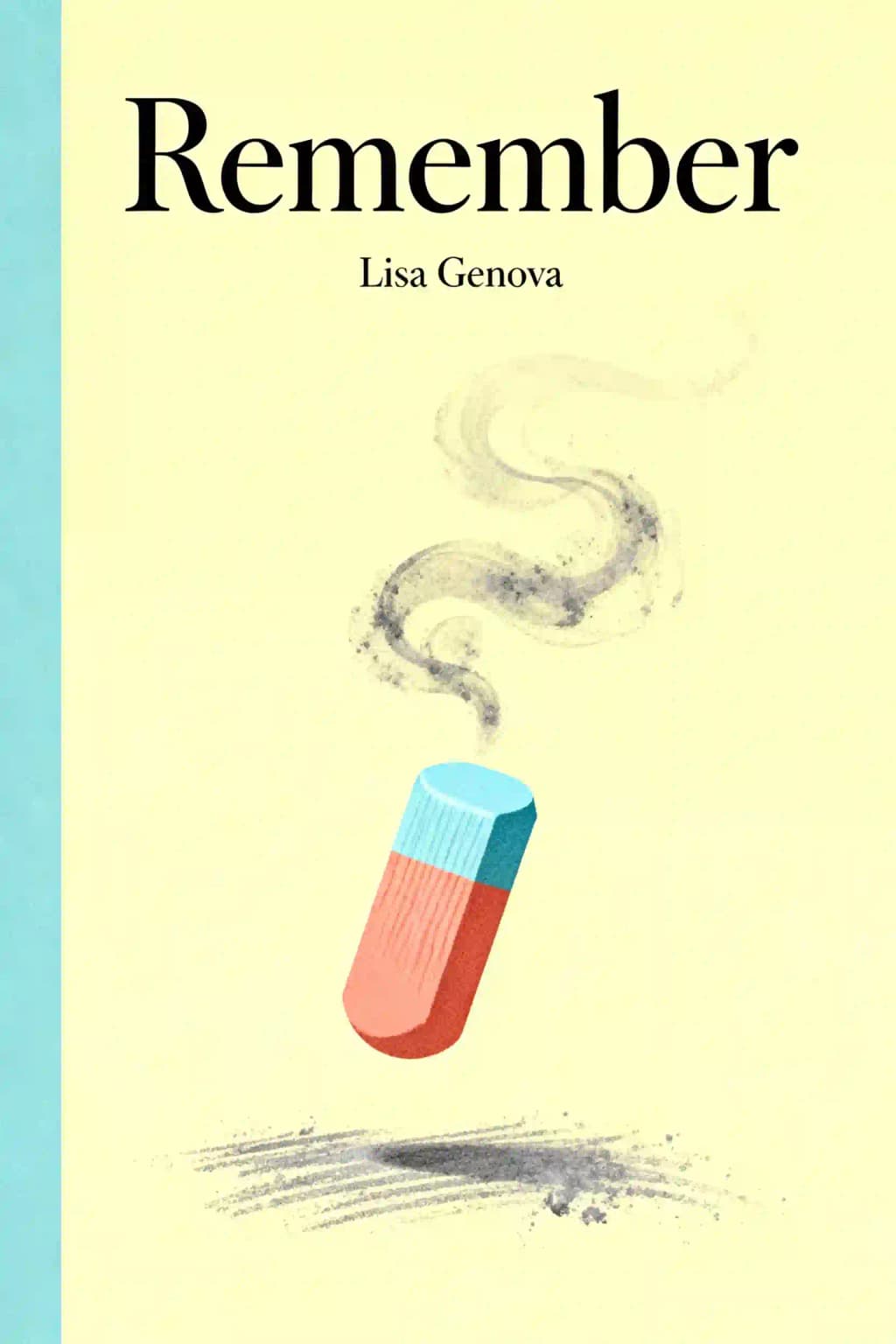
Harvard neuroscientist Lisa Genova reveals why we forget names yet remember trauma. "Remember" demystifies memory science with insights praised by Steven Pinker, offering practical strategies that transformed readers' lives. Sleep more, stress less - your memories aren't failing, they're just being human.
通过作者的声音感受这本书
将知识转化为引人入胜、富含实例的见解
快速捕捉核心观点,高效学习
以有趣互动的方式享受这本书
Ever sprinted through your house searching for your phone while actively talking on it? Or introduced yourself to someone you'd met just minutes earlier? Before you spiral into fears of early-onset dementia, take a breath. These moments aren't harbingers of cognitive doom-they're simply your brain doing exactly what it evolved to do. Memory isn't a flawless recording device but a remarkably selective system designed to prioritize what matters while discarding the mundane. We live in an age where every forgotten password feels like a personal failing, yet understanding how memory actually works reveals something liberating: forgetting is a feature, not a bug. Your brain performs millions of complex operations flawlessly each day-walking, talking, recognizing faces-while occasionally dropping trivial details like where you parked. This isn't decline; it's design. Memory isn't one thing but an intricate dance of interconnected processes. When you experience something-a conversation, a sunset, a first kiss-your brain translates these sensory inputs into neural language through encoding. The hippocampus, a seahorse-shaped structure buried deep in your brain, then weaves together these disparate threads into a unified pattern through consolidation. These patterns become stored as physical changes in your neural architecture, strengthening connections between neurons that fired together. Later, retrieval reactivates these networks, reconstructing the experience. Here's what makes this fascinating: memories aren't filed away in a single location like documents in a cabinet. They're distributed throughout your brain in the same regions that processed the original experience. Visual memories live in visual cortex, emotional memories in the amygdala, and so on. When you remember your grandmother's kitchen, you're literally reactivating the same neural networks that processed those sights, smells, and feelings years ago. The real question isn't why we forget so much, but how we remember anything at all in our distraction-saturated world.
将《Remember》的核心观点拆解为易于理解的要点,了解创新团队如何创造、协作和成长。
将《Remember》提炼为快速记忆要点,突出坦诚、团队合作和创造力的关键原则。

通过生动的故事体验《Remember》,将创新经验转化为令人难忘且可应用的精彩时刻。
随心提问,选择声音,共同创造真正与你产生共鸣的见解。

"Instead of endless scrolling, I just hit play on BeFreed. It saves me so much time."
"I never knew where to start with nonfiction—BeFreed’s book lists turned into podcasts gave me a clear path."
"Perfect balance between learning and entertainment. Finished ‘Thinking, Fast and Slow’ on my commute this week."
"Crazy how much I learned while walking the dog. BeFreed = small habits → big gains."
"Reading used to feel like a chore. Now it’s just part of my lifestyle."
"Feels effortless compared to reading. I’ve finished 6 books this month already."
"BeFreed turned my guilty doomscrolling into something that feels productive and inspiring."
"BeFreed turned my commute into learning time. 20-min podcasts are perfect for finishing books I never had time for."
"BeFreed replaced my podcast queue. Imagine Spotify for books — that’s it. 🙌"
"It is great for me to learn something from the book without reading it."
"The themed book list podcasts help me connect ideas across authors—like a guided audio journey."
"Makes me feel smarter every time before going to work"

免费获取《Remember》摘要的 PDF 或 EPUB 版本。可打印或随时离线阅读。