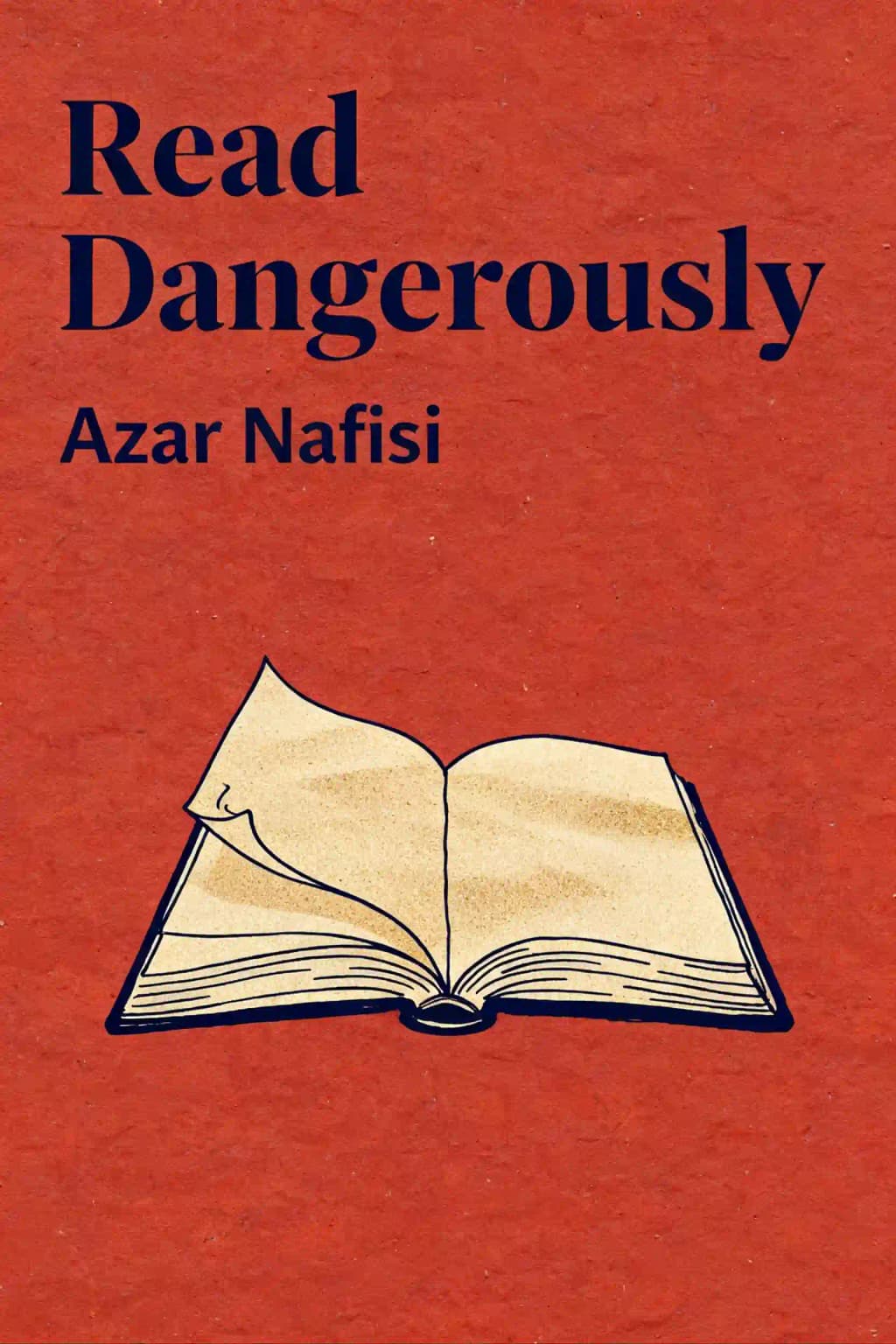
In "Read Dangerously," Azar Nafisi challenges us to embrace literature as resistance in polarized times. Shortlisted for the Christian Gauss Award, this timely manifesto arrives as book banning surges nationwide. What dangerous ideas might you discover between forbidden pages?
Azar Nafisi, the Iranian-American bestselling author of Read Dangerously: The Subversive Power of Literature in Troubled Times, is celebrated for her exploration of literature’s role in resisting oppression.
Born in Tehran in 1948, she taught Western classics at Iranian universities until her exile in 1997 for defying authoritarian policies. Her journey is chronicled in her seminal memoir, Reading Lolita in Tehran (2003), a New York Times bestseller translated into 32 languages and adapted into a 2024 film.
A former director of Johns Hopkins University’s Dialogue Project and an Oxford fellow, Nafisi intertwines literary analysis with dissident narratives in works such as Things I’ve Been Silent About and The Republic of Imagination.
Her writing, recognized with the Persian Golden Lioness Award and Booksense’s Nonfiction Book of the Year, champions free expression through global talks and academic leadership. Read Dangerously continues her tradition of framing literature as a catalyst for social justice, solidifying her status as a vital voice in transnational literary discourse.
Read Dangerously: The Subversive Power of Literature in Troubled Times explores how literature fosters resistance against oppression, urging readers to engage with controversial texts that challenge authoritarianism. Nafisi blends memoir, literary analysis, and political commentary to argue that stories cultivate empathy and critical thinking, serving as tools for social change in repressive societies.
This book is ideal for readers interested in literature’s role in activism, educators teaching critical theory, and individuals navigating political turmoil. It resonates with those seeking to understand how authors like Salman Rushdie and Margaret Atwood use storytelling to confront censorship and ideological control.
“Reading dangerously” involves engaging with narratives that subvert dominant power structures, whether societal norms or state-enforced ideologies. Nafisi emphasizes exposing oneself to marginalized perspectives, analyzing banned works, and reflecting on how literature can dismantle oppressive systems.
Both books frame literature as a revolutionary act. While Reading Lolita focused on Iranian women defying censorship through Western classics, Read Dangerously broadens this lens to global contexts, examining how diverse texts—from Satanic writings to dystopian fiction—fuel resistance across cultures.
She critiques regimes that ban books to suppress dissent, arguing that censored works often reveal systemic injustices. Nafisi praises platforms amplifying marginalized voices and encourages readers to “seek the stories they’re trying to silence.”
Some argue Nafisi oversimplifies complex political issues through a Western literary lens. Critics also note her focus on individual resistance risks overlooking collective activism needed for structural change.
Amid global rises in book bans and AI-driven disinformation, Nafisi’s call for critical literacy offers a timely defense of democratic discourse. The book equips readers to discern truth in an era of digital manipulation.
Nafisi analyzes texts like The Satanic Verses to show how authorities demonize art that challenges religious or political dogma. These case studies illustrate literature’s power to redefine cultural narratives.
While The Republic of Imagination celebrates fiction’s role in democracy, Read Dangerously adopts a more urgent tone, framing literature as a survival tool in autocratic climates. Both emphasize empathy but diverge in geopolitical scope.
Nafisi’s “dangerous reading” framework includes:
通过作者的声音感受这本书
将知识转化为引人入胜、富含实例的见解
快速捕捉核心观点,高效学习
以有趣互动的方式享受这本书
Literature as resistance fights not just external tyrants but the tyrant within us.
Reading dangerously teaches us to know our enemies and thereby discover ourselves.
I am too busy sharpening my oyster knife.
Understanding requires imagination.
Books pose an existential threat precisely because they know no borders.
将《Read Dangerously》的核心观点拆解为易于理解的要点,了解创新团队如何创造、协作和成长。
将《Read Dangerously》提炼为快速记忆要点,突出坦诚、团队合作和创造力的关键原则。

通过生动的故事体验《Read Dangerously》,将创新经验转化为令人难忘且可应用的精彩时刻。
随心提问,选择声音,共同创造真正与你产生共鸣的见解。

"Instead of endless scrolling, I just hit play on BeFreed. It saves me so much time."
"I never knew where to start with nonfiction—BeFreed’s book lists turned into podcasts gave me a clear path."
"Perfect balance between learning and entertainment. Finished ‘Thinking, Fast and Slow’ on my commute this week."
"Crazy how much I learned while walking the dog. BeFreed = small habits → big gains."
"Reading used to feel like a chore. Now it’s just part of my lifestyle."
"Feels effortless compared to reading. I’ve finished 6 books this month already."
"BeFreed turned my guilty doomscrolling into something that feels productive and inspiring."
"BeFreed turned my commute into learning time. 20-min podcasts are perfect for finishing books I never had time for."
"BeFreed replaced my podcast queue. Imagine Spotify for books — that’s it. 🙌"
"It is great for me to learn something from the book without reading it."
"The themed book list podcasts help me connect ideas across authors—like a guided audio journey."
"Makes me feel smarter every time before going to work"

免费获取《Read Dangerously》摘要的 PDF 或 EPUB 版本。可打印或随时离线阅读。
Picture a young girl in Tehran, sitting cross-legged on her bedroom floor as her father reads aloud from ancient Persian epics and French novellas. These weren't just bedtime stories-they were survival kits. In a country sliding toward revolution, where certainty would soon replace nuance and ideology would trump imagination, these tales became something more precious than any physical refuge. They became a portable homeland, one that could never be confiscated at a checkpoint or burned in a public square. This is what literature does in its most radical form: it gives us a place to stand when the ground beneath our feet turns hostile. In our current moment-when both Iran's theocracy and America's polarization threaten to reduce human complexity to binary choices-we need this refuge more than ever. Reading dangerously means engaging with opposition, discovering ourselves by knowing our enemies, and resisting the tyrant within us before we can effectively fight the tyrant outside.