第 1 章
From Conflict to Possibility: The Wisdom of a Global Peacemaker
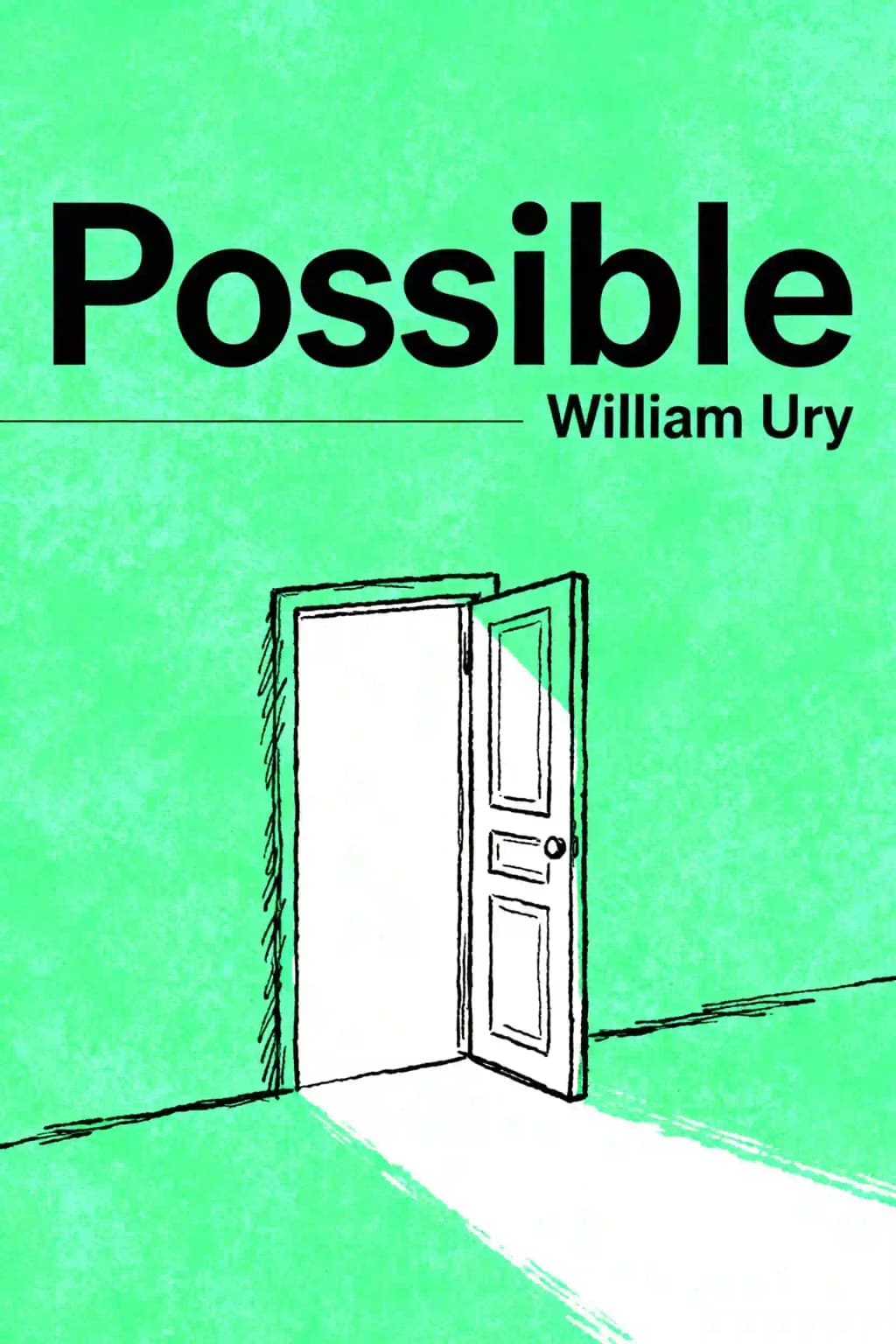
In a world where conflict seems increasingly intractable, William Ury's "Possible" arrives like a beacon of hope. This groundbreaking work by the co-author of the negotiation bible "Getting to Yes" has become a favorite among world leaders from Jimmy Carter to Juan Manuel Santos. Drawing on fifty years of experience mediating some of history's most challenging conflicts-from Cold War nuclear tensions to Colombia's half-century civil war-Ury presents a revolutionary framework for transforming seemingly impossible situations. Oprah Winfrey called it "a masterclass in conflict resolution," while The New York Times praised it as "essential reading for our polarized times." What makes this book particularly powerful is that it doesn't just theorize about peace-it provides a practical roadmap based on real-world successes in the most resistant conflicts imaginable.
第 2 章
The Path to Possible: Three Victories That Transform Conflict
The central question driving William Ury's life's work emerged from his childhood in post-war Europe: How can we deal with our deepest differences without destroying what we hold dear? As a young anthropology graduate student, Ury was invited by Professor Roger Fisher to collaborate on what would become "Getting to Yes," launching his five-decade journey as both participant and observer in the world's most difficult conflicts.
Today's world faces unprecedented levels of polarization and conflict. More than two in five Americans fear the country may be sliding into civil war, with similar divisions appearing globally. Our communication technologies amplify conflict by focusing on strife that captures attention. Yet paradoxically, we need more conflict-constructive conflict that challenges injustice and stimulates growth.
The problem isn't conflict itself but how destructively we handle it. Like navigating rapids, the only way out is through. Rather than resolving conflicts, we should transform them-changing their form from destructive fighting into productive negotiation. This transformation isn't just about agreements but about changing relationships.
Ury calls himself a "possibilist"-someone with passion for the possible. This doesn't mean being naively optimistic; it means confronting negative possibilities while persistently seeking positive ones. The possibilist credo comes from a profound insight shared by a Semai elder in Malaysia: "Typhoons, earthquakes, and tsunamis are forces of nature we cannot control. But war is made by us. Therefore, it can be stopped by us."
The path to possible consists of three victories: going to the balcony (a victory with ourselves), building a golden bridge (a victory with others), and engaging the third side (a victory with the whole). These victories unlock our full potential: the balcony unlocks potential within us, the bridge unlocks potential between us, and the third side unlocks potential around us.
第 3 章
First Victory: Stepping Back to See Clearly
The first victory on the path to possible is going to the balcony-gaining perspective in heated situations. This concept came alive for Ury during a midnight meeting with Venezuelan President Hugo Chavez in 2003, when Chavez angrily berated him as a "fool" in front of his entire cabinet. Rather than reacting defensively, Ury pinched his palm, breathed deeply, and mentally stepped onto an imaginary balcony above the scene. This self-regulation allowed him to listen patiently until Chavez eventually asked for advice, creating an opening for Ury to suggest a Christmas truce that the president enthusiastically accepted.
Going to the balcony involves three powers: pausing, zooming in, and zooming out. The power to pause was dramatically demonstrated during the Cuban Missile Crisis when Soviet submarine officer Vasili Arkhipov refused to authorize launching a nuclear torpedo despite being under attack from depth charges. His calm insistence on following protocol prevented what would have become nuclear war.
A transformative pause means to stop to choose-to create space between stimulus and response. Our greatest obstacle in conflict isn't the difficult person across from us, but ourselves. When we react without thinking-attacking, avoiding, or appeasing-we become our own worst enemies.
The quickest way to pause is simply to breathe. Deep breaths calm the nervous system, decrease cortisol, and lower heart rate. Dr. Jill Bolte Taylor taught Ury the "90-second rule"-it takes just ninety seconds for the biochemicals of fear and anger to dissipate if we allow ourselves that time. Within silence, we can observe our sensations, feelings, and thoughts, recognizing and naming them to diminish their power.
In polarizing conflicts, we easily oscillate between hyperarousal (anger, rage, fear) and hypoarousal (despair, resignation, depression). Between these extremes lies what psychiatrist Daniel Siegel calls the "Window of Tolerance"-an optimal emotional zone where we remain calm and in control of our emotions. Activities like walking in nature help us stay in this zone by putting human dramas in perspective.
Even the most significant transformations begin with something small and quiet-a pause. Nelson Mandela exemplifies this principle. During his twenty-seven years of imprisonment, Mandela transformed his naturally fiery temperament through daily reflection and meditation. By choosing to use his imprisonment as an opportunity for self-reflection rather than rage, he laid the foundation for transforming South Africa's conflict.
第 4 章
Focusing on What Truly Matters
The second power of the balcony is zooming in-focusing on what truly matters beneath surface positions. When Ury's infant daughter needed surgery, he and his wife initially rejected a doctor based on his insensitive comments. But upon learning he was the best pediatric surgeon available, Ury paused to reflect on what mattered most: his daughter's well-being. Despite their initial reaction, they met with him privately and discovered a competent, kind physician who ultimately became their daughter's trusted doctor for over ten years.
The deceptively simple question "What do I really want?" is often unclear when we're trapped in conflict. Positions are what we say we want; interests are why we want what we want-our underlying motivations. The classic library story illustrates this: two students quarreling over an open window find resolution when a librarian asks why each wants their position. One needs fresh air, the other wants to avoid papers blowing around. Opening a window in the adjacent room satisfies both interests.
To reach the deepest level of motivation, we must ask "why?" multiple times in succession. When a frustrated software sales director complained about customers demanding free customizations, Ury repeatedly asked why he wanted to maintain revenues. With each question, they dug deeper: from "maintain revenues" to "make profit" to "company survival" to "having jobs" and finally to "putting food on my family's table." This bedrock need gave him the resolve to say no when necessary.
Brazilian business leader Abilio Diniz was consumed by a bitter two-year dispute over control of Brazil's leading supermarket chain. When Ury asked what he really wanted, Diniz first listed business demands. But when pressed deeper, he sighed and said "Liberdade" (freedom)-revealing his true need. This illustrates a crucial insight: the deeper we go into motivations, the more possibilities emerge. While positions and interests often conflict, basic human needs like freedom, dignity, security, and respect can be satisfied simultaneously.
第 5 章
Expanding Our View to See New Possibilities
The third power of the balcony is zooming out-expanding our perspective to see the bigger picture. Ury learned this lesson through failure at a Kentucky coal mine where miners rejected an agreement he had negotiated with union leaders and management. He had failed to see that the real decision-makers were rank-and-file miners who distrusted anything management approved.
Zooming out means expanding your focus to see the whole situation. Our perspective in conflicts often becomes constricted by common assumptions: that there are only two parties, the goal is immediate agreement, the timeframe is short-term, and the issue is zero-sum. By seeing the bigger picture, we can identify many parties, alternatives to agreement, longer-term scenarios, and positive-sum outcomes.
When addressing conflicts, we must recognize at least three tables of negotiation, not just one. Beyond the main negotiation table are the internal tables where each party must negotiate with their own constituents. Most workshop participants confirm that internal negotiations are actually more challenging than external ones.
The purpose of negotiation isn't necessarily to reach agreement but to explore whether you can meet your needs better through negotiation than through your BATNA (Best Alternative To a Negotiated Agreement). Your BATNA is your "walk-away" alternative-your Plan B. Developing it gives you confidence and independence.
Beyond examining your best alternative, consider your WATNA-Worst Alternative To a Negotiated Agreement. During Ury's work on preventing accidental nuclear war in the 1980s, facing the worst-case scenario motivated concrete action, including establishing nuclear risk reduction centers for US-Soviet communication during emergencies.
When solutions seem impossible in the near term, we can zoom out to envision a positive future. During a workshop on the Israeli-Palestinian conflict, participants became "archaeologists of the future," imagining artifacts they might find twenty years later if peace prevailed-train tickets between Tel Aviv and Gaza, badges from Gaza's Google campus. This exercise activates possibility thinking that motivates ongoing action.
Zooming out allows us to question whether we're playing the right game. In Ury's seminars, an arm-wrestling exercise demonstrates how cooperation yields far more points than competition. In South Africa, both Mandela and de Klerk realized their struggle was strategically stalemated-continuing would result in mutual destruction. Instead of seeking compromise, they envisioned transformation: a peaceful, democratic, multiracial South Africa with room for everyone.
第 6 章
Building Bridges Across Divides
The second victory on the path to possible is building a golden bridge-creating a pathway from confrontation to cooperation that addresses the core needs of all parties. At the 1978 Camp David negotiations, President Carter faced a deadlock between Israeli Prime Minister Begin, who insisted on keeping Jewish settlements in the Sinai, and Egyptian President Sadat, who demanded their removal. Using the one-text process-where mediators draft proposals based on interests rather than positions-the US team created 23 drafts that eventually satisfied both leaders' core needs: sovereignty for Egypt and security for Israel through demilitarization.
Building a golden bridge involves three powers: listening, creating, and attracting. Listening to connect means starting where the other person's mind is, not where ours is. When Dennis Rodman shared insights about Kim Jong Un, he revealed surprising human dimensions of the North Korean leader, including Kim's dream to "walk down Fifth Avenue, go to Madison Square Garden, and watch the Bulls play the Knicks." This glimpse into the human behind the caricature suggested a possible opening.
Deep listening requires dropping preconceptions. While interviewing Syrian rebel commanders during the civil war, Ury met a young Salafist jihadist commander who turned out to be a poetry student. His stereotypes immediately crumbled as the young man recited beautiful Classical Arabic poetry and revealed he had turned to fighting after being tortured for writing a politically sensitive poem at sixteen.
Creativity transforms conflicts into opportunities. In Colombia, Ury facilitated an exercise where advisors role-played as FARC guerrilla leaders giving victory speeches. This helped them identify FARC's core interests: social justice, land reform, political power, and personal security. From this understanding, they developed a simple negotiating agenda that eventually led to a historic peace deal ending one of the world's longest-running conflicts.
Ury traces his approach to creativity back to Roger Fisher's Devising Seminars at Harvard in 1977, which posed a revolutionary question: "Who can do what tomorrow morning?" This shifted the focus from passive analysis to practical action. The seminars adopted the "golden rule of brainstorming": no criticism allowed during the initial idea generation phase. This approach transformed the dynamic-instead of shutting each other down, participants competed to be creative.
第 7 章
The Power of Attraction Over Force
The third power in building a golden bridge is attraction-making agreement appealing rather than using force. Using Aesop's fable of the North Wind and Sun competing to remove a shepherd's cloak, Ury demonstrates that attraction (the Sun's warmth) works better than force (the Wind's blowing). In conflict, pushing makes others instinctively push back, creating stalemates.
Trust is perhaps the most powerful attractor. When neither side trusts the other, Ury suggests creating a "trust menu"-a pre-agreed language of goodwill consisting of positive signals each side can send. In Venezuela, he helped President Chavez and his opponents develop such a menu, with each side agreeing to stop using derogatory language about the other.
When trust begins to build, "choreographing the play" becomes possible-envisioning the steps that could free opponents from their conflict trap. During the 2017 Korean Missile Crisis, Ury and Korea expert Robert Carlin imagined what Kim Jong Un could say in his upcoming New Year's speech to send positive signals. Many of their suggestions actually materialized, helping de-escalate tensions between the US and North Korea.
Creating visual representations of success can powerfully attract parties toward resolution. Ury had photoshopped images created of Trump, Kim, and Moon meeting at Panmunjom. When he shared one with South Korea's nuclear negotiator, the man kept and framed it. Later, Ury proposed the idea of an informal summit at Panmunjom to Jared Kushner. Two weeks later, the three leaders met exactly as visualized.
第 8 章
Engaging the Community to Transform Conflict
The third victory on the path to possible is engaging the third side-activating the surrounding community to help transform conflict. The Cuban Missile Crisis of 1962 nearly resulted in nuclear war, with Soviet missiles already activated in Cuba and invasion seeming imminent. As Robert McNamara later revealed, had the US invaded, there was a "99 percent probability that nuclear war would have been initiated." This sobering reality raises the question: when leaders in crisis cannot reach agreement, is war the only alternative?
After witnessing how close we came to nuclear war, Ury traveled to the Kalahari Desert to study conflict resolution among the Kua people. Despite having deadly poison arrows (their equivalent of nuclear weapons), the Kua manage conflicts through community intervention. When disputes arise, community members hide weapons and gather everyone around the campfire to talk until resolution is found. This process, called kgotla, includes everyone and continues until they discover what social rules were broken and how harmony can be restored.
South Africa's transformation from apartheid to democracy demonstrated the third side's power at a national scale. Despite predictions of a thirty-year struggle and racial bloodbath, the conflict transformed dramatically in just five years. This "miracle" resulted from the engagement of both external and internal third-siders. Internationally, the UN, governments, churches, students, and sports federations created pressure through sanctions and isolation. Internally, business leaders, faith communities, and civic organizations worked across racial lines.
The third side represents people power-individuals adopting the perspective of the whole community while supporting conflict transformation. Like an immune system protecting against harmful viruses, the third side functions as a social immune system keeping destructive conflict in check. Thirdsiders don't need to be neutral-they can advocate for their position while still taking the perspective of the whole.
第 9 章
Creating Space for Dialogue and Understanding
Engaging the third side involves three powers: hosting, helping, and swarming. Hosting means welcoming parties and their conflict with curiosity rather than avoidance. In 2003, Ury co-facilitated a public dialogue in Venezuela during a dangerous political conflict that threatened civil war. Over 1,000 people-both supporters and opponents of President Hugo Chavez-gathered in a theater. When Ury asked what word they would use to say no to violence, someone called out "Basta!" (Enough!). Three times they shouted it together, until the theater shook with their unified cry. This moment transformed the emotional atmosphere from fear and anger to a positive intention to end destructive conflict.
At the core of nearly every deep conflict lies the wound of exclusion. The only remedy for exclusion is inclusion, meeting the universal need to belong. In Venezuela, dialogue participants founded a movement called "Aqui Cabemos Todos" (Here there is room for everyone), creating space for the third side in a polarized society.
After welcoming parties in conflict, the next step is to witness-listening deeply to the pain and loss that accompanies difficult conflicts. During the Colombian peace talks, victims were invited to share their stories with negotiators. One powerful story was of Pastora Mira, who nursed her son's killer back to health and thanked him when he confessed-because his recognition liberated her from hatred.
The final aspect of hosting is weaving-creating a web of community that connects conflicting parties. When facilitating a conversation between polarized members of Congress after President Clinton's impeachment, Ury arranged chairs in a circle rather than across a table. When one member arrived with a baby who lay in the center, the infant became a powerful symbol of the third side-the future they all shared.
第 10 章
Offering Assistance Without Taking Over
The second power of the third side is helping-assisting parties to move from "I Can't" to "I Can" in conflict situations. In 2015, Ury was called to Colombia to help resolve a critical impasse in peace talks. The Colombian delegation was internally divided over language about institutional responsibility for war crimes. Through careful listening and asking clarifying questions, Ury helped them find a simple solution-changing "institutional actors" to "state actors"-resolving in twenty minutes what had blocked negotiations for over a month.
Helping is an innate human capacity. Even experienced mediators like Ury sometimes need help with their own conflicts, as he learned when serving as executor of his mother's will. Unable to mediate family inheritance issues as a participant, Ury's cousin Paul successfully helped resolve the situation. Paul later told Ury it was "the most satisfying work" he'd ever done.
Most people resist being told what to do in sensitive situations and find their own insights most persuasive. Ury emphasizes asking clarifying questions that uncover underlying interests and generate options. Effective counsel blends general knowledge with local knowledge-the close-up understanding of people and context that comes through experience.
When parties are deeply divided, thirdsiders create a safe container for dialogue that's strong enough to hold intense emotions. Ury describes facilitating a conversation between Ali (a Kurdish political leader) and Mehmet (a former Turkish extremist). When Ali mentioned "self-determination," Mehmet stormed out in anger, calling it "treason." Ury convinced him to return and created space for both perspectives. The breakthrough came when Ali clarified that while Kurds deserve self-determination, he personally would "defend Turkey against any external threat with my blood and my life."
第 11 章
Mobilizing Collective Action for Change
The third power of the third side is swarming-tackling seemingly impossible situations by deploying diverse teams using radical collaboration. In October 2017, Ury assembled twelve volunteers with varied backgrounds for a two-week social experiment in Boulder, Colorado, asking: "Who can do what tomorrow morning to interrupt the escalation to nuclear war with North Korea?"
Swarming means surrounding a dispute with a critical mass of ideas and influence, mobilizing the latent potential of community. Like birds defending their nest from a hawk, people can work together to interrupt destructive conflict. Ury emphasizes we swarm the conflict, not the person-attacking problems, not people.
Effective swarming requires ACT: Access, Credibility, and Trust. Access means connections to people in conflict; credibility comes from competence and track record; trust stems from intent and integrity. This currency enables communities to influence parties to stop fighting. When concerned about North Korea, Ury contacted experts with access, leading to a real swarm effort with twenty-one trips to Washington, Seoul, and Pyongyang, resulting in eighty-five meetings with key officials.
Ury describes how effective swarm teams leverage complementary strengths. In Colombia, he and four other advisors worked seamlessly with President Santos, each bringing different expertise. Together they developed "swarm intelligence" that far exceeded any individual's capabilities. Santos later credited this world-class advisory team as essential to the peace process.
Swarming succeeds through critical mass, creating persuasive power that overcomes resistance. President Santos demonstrated coalition-building mastery by transforming potential blockers into allies. He surprisingly reached out to Venezuela's Hugo Chavez and Cuba's Fidel Castro-both FARC supporters-convincing them to facilitate negotiations rather than obstruct peace.
第 12 章
A World of Possibilities Awaits
We're all born as possibilists-naturally curious and open to possibilities. Today's world desperately needs possibilists to transform conflicts at all levels. We face accelerating change, political polarization, environmental crises, and renewed great power tensions that threaten nuclear conflict. The fundamental choice we face is whether to go to the gutter or the balcony, burn bridges or build them, force people to take sides or make room for the third side.
After nearly fifty years studying conflict transformation, Ury reaffirms his core insight: "The path to possible is to go to the balcony, build a golden bridge, and engage the third side-all together, all at once." This path addresses three dimensions: the balcony unlocks potential within us, the bridge unlocks potential between us, and the third side unlocks potential around us. Together, these elements form our innate "superpowers" for conflict transformation.
Ury concludes with a dream inspired by an ancient Tibetan prophecy about warriors arising in times of peril, armed with compassion and insight. He dreams of a world filled with brave possibilists who fearlessly transform conflicts at home, work, and in communities. He envisions people everywhere developing their natural abilities to go to the balcony, build bridges, and engage the third side, unlocking humanity's full potential to handle differences constructively.
The book ends with a challenge to readers that echoes through the ages: "If not you, who? If not now, when?" In a world that often seems hopelessly divided, Ury's path to possible offers not just hope but a practical roadmap for transforming our most difficult conflicts into opportunities for growth, connection, and positive change.