第 1 章
Beyond Survival: How the World's Poorest Manage Their Money
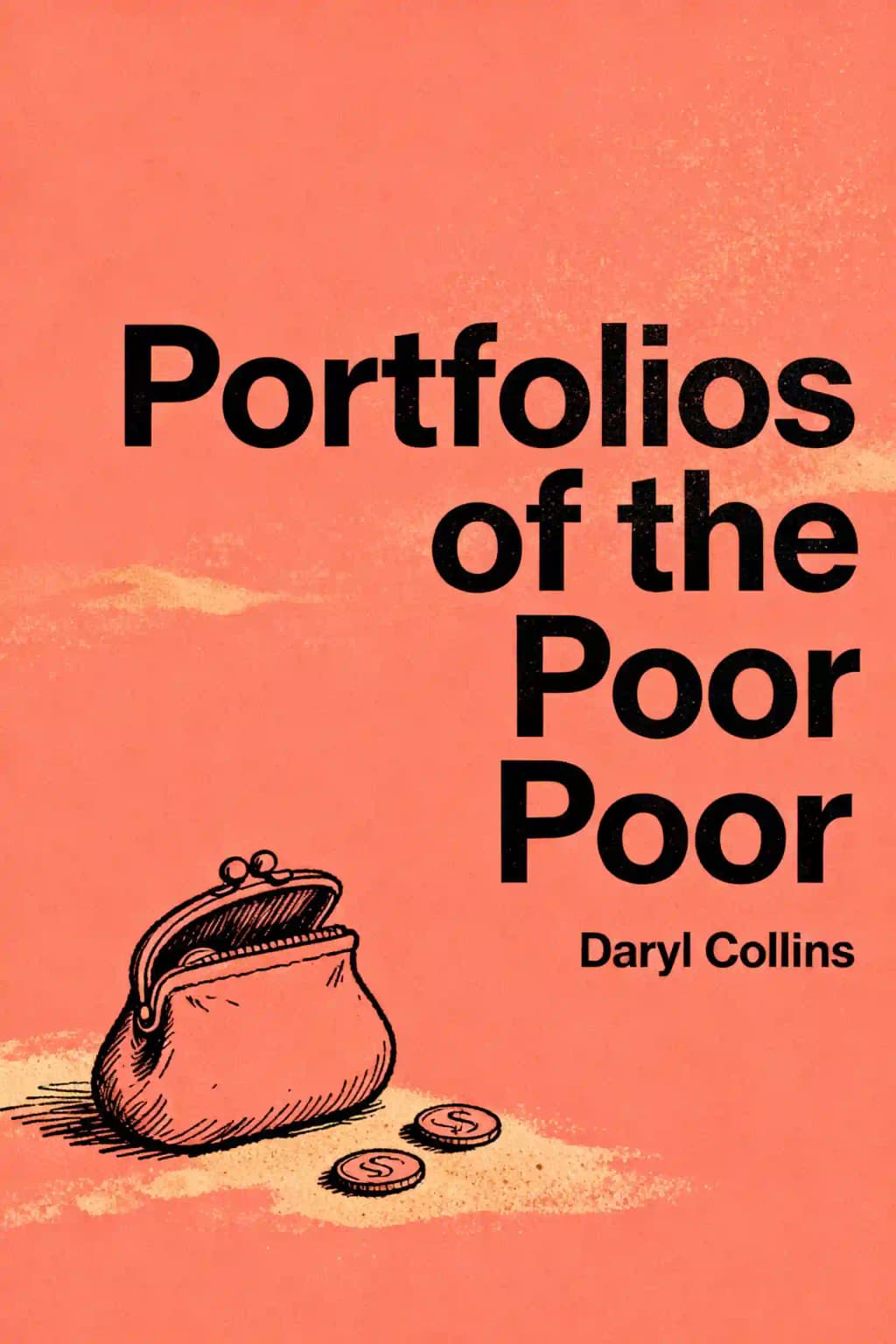
When we think of extreme poverty-living on less than two dollars a day-we often imagine people scraping by meal to meal with no financial strategy. Yet the reality is strikingly different. In Bangladesh, a couple earning just $70 per month maintains a sophisticated portfolio of six different financial instruments. In South Africa, an elderly grandmother on a government pension saves one-third of her income through informal savings clubs. These aren't anomalies but common patterns revealed in "Portfolios of the Poor," a groundbreaking study that tracked the financial lives of 250+ households across three continents through bi-weekly interviews for a full year. The book shattered conventional wisdom about poverty when published in 2009, influencing everyone from Bill Gates to development economists worldwide. Its revolutionary "financial diaries" methodology revealed that the poorest people on earth are, in fact, some of the most active and sophisticated money managers-not because they want to be, but because they have to be.
第 2 章
The Triple Whammy: Small, Irregular, Unpredictable Incomes
Imagine receiving your paycheck not just in a smaller amount, but at unpredictable intervals, sometimes not at all. This "triple whammy" defines financial life for the world's poorest: incomes that are not just low but irregular and unpredictable, combined with inadequate financial tools to manage these fluctuations. This uncertainty creates a constant state of financial stress that impacts every aspect of daily life.
Take Subir and Mumtaz in Dhaka, Bangladesh. Their family of seven survives on $1.90-$3.15 per day through multiple income sources: Subir drives a rickshaw, their teenage son works in a factory, another son collects rags, and Mumtaz works as a maid. None of these jobs provides consistent income. When Subir can't find passengers or falls ill, the family's income plummets. During monsoon season, their income can drop by 60% as fewer people venture out, while medical emergencies can wipe out several weeks of earnings.
This pattern repeats across continents. In Delhi, brothers Somnath and Jainath, garment factory workers hired through brokers, experienced extreme income fluctuations. Their combined monthly wages varied between $53-85 and disappeared completely for four months when orders declined, preventing them from sending money home to their rural family. They resorted to borrowing from local moneylenders at 10% monthly interest just to cover basic needs.
Even "permanent" jobs prove unstable. In Delhi, half of wage earners lost jobs during the study year, with severance pay being rare or nonexistent. In rural areas, small farmers face extreme unreliability, recovering only 25-30% of expected harvests during bad years due to disadvantaged irrigation access and inability to finance timely farm inputs. A single failed crop can push families into debt for several seasons.
The financial diaries revealed that virtually no households relied on single, steady income streams. In Bangladesh, only 2 of 42 households derived most income from permanent employment. Most patched together income from multiple sources-wage labor, self-employment, casual work, and small businesses. A typical family might combine seasonal agricultural work, street vending, domestic service, and occasional construction work. Child labor remained common in South Asia, with about 19% of households having working children under 15, while virtually nonexistent in South Africa. These children often sacrifice education to contribute to family survival.
This irregularity and unpredictability create serious cash-flow management challenges that go far beyond what people with steady incomes can imagine. For the poor, financial management isn't about optimizing returns but about basic survival through constant juggling of resources. They must make daily decisions about which bills to pay, which meals to skip, and which school fees to postpone. The stress of this constant financial juggling affects physical health, mental wellbeing, and long-term economic mobility, creating a cycle that's extremely difficult to break without external intervention or structural changes.
第 3 章
Complex Financial Lives: The Art of Money Management
Contrary to common assumptions that the poor live hand-to-mouth, the financial diaries revealed remarkably complex and sophisticated financial portfolios. Every household, even those living on less than $2 per day, actively managed both savings and debt simultaneously. None of the studied households used fewer than four financial instruments, with averages ranging from eight to ten different types per household, including informal savings groups, money guards, reciprocal lending arrangements, and formal microfinance products.
Consider Hamid and Khadeja from Bangladesh, whose story illustrates this complexity. Living on roughly $70 per month ($0.78 per person per day), they maintain reserves across six different instruments totaling over $150 - from cash kept at home to money sent to relatives and life insurance policies. They also manage multiple liabilities, including a $153 microfinance loan and various interest-free debts from neighbors and family members. Their annual financial turnover of $965 exceeds their total income of $840, meaning each dollar earned undergoes $1.15 of intermediation through various financial instruments. This sophisticated financial juggling allows them to handle emergencies, seasonal income fluctuations, and planned expenses like school fees.
This "cash flow intensity" is a consistent pattern across all countries studied, from South Africa to India. Households continuously "push" (deposit, lend, repay) and "pull" (withdraw, borrow, accept) money through various financial tools at high volumes relative to their incomes. Counterintuitively, poorer households often have higher financial turnover relative to income than wealthier ones, demonstrating that lower incomes require more rather than less active financial management. For instance, a family earning $2 per day might engage in dozens of small financial transactions monthly to ensure basic needs are met.
Most transactions occur with informal partners rather than formal institutions, creating complex webs of financial relationships. Contrary to stereotypes about predatory moneylenders, the most frequent partners are friends or relatives offering interest-free loans. Subir's case exemplifies this pattern - he borrowed five small amounts (under $4 each) from neighbors and colleagues in just two months, while his wife borrowed once from her sister. These small, quickly repaid loans ensured the family could eat daily and maintain social bonds that serve as financial safety nets.
Small-scale savings form the other core element of daily money management, with diverse approaches including saving at home, with savings groups, or through informal deposit collectors. Every household attempted to save, often simultaneously holding small savings while taking loans. This seemingly contradictory behavior reflects how poor households maximize access to multiple financial tools rather than choosing between alternatives. For example, a household might save with a local savings group while maintaining a microfinance loan, using each tool for different purposes.
The informal financial tools they use are typically convenient (nearby) and flexible (without strict terms), qualities some microfinance providers in Bangladesh have recognized and attempted to incorporate into their services. However, these informal arrangements suffer from three key limitations: unreliability (partners may lack cash when needed), lack of privacy (causing social discomfort in tight-knit communities), and lack of transparency (leading to unexpected terms or fraud). Despite these drawbacks, the poor demonstrate remarkable financial acumen in managing complex portfolios of formal and informal financial instruments to meet their daily needs and long-term goals.
第 4 章
When Risk Strikes: Health Crises and Financial Catastrophes
For poor households, risk isn't an abstract concept but a daily reality that can devastate families within days. When Jaleela in Bangladesh fell ill with dysentery alongside her baby in 1974, her husband had to pawn her marriage jewelry - their only significant asset - to pay for treatment. Years later, when her husband fell ill and couldn't work, the family went hungry for three days until a neighbor helped, highlighting how quickly health issues can spiral into broader family crises.
The diaries documented 167 financial emergencies during the research year, with health issues dominating in Bangladesh and India, accounting for nearly 70% of all emergencies. In South Africa, expensive funerals were the primary financial emergency due to strict social conventions requiring elaborate ceremonies and rising AIDS-related deaths. A typical funeral could cost up to six months of family income, forcing many into debt.
Unlike people in wealthy countries with access to formal insurance, few diary households had insurance despite facing more numerous and severe risks with potentially devastating consequences. Research shows less than 6% of extremely poor people globally have health insurance, and even fewer have access to life or disability coverage. While economists have extensively studied "village insurance" where community members help each other during crises, the diaries revealed that households primarily rely on self-insurance rather than community-wide support. This self-reliance often means depleting savings, selling assets, or borrowing at high interest rates.
Health emergencies rapidly transform into financial crises, creating a devastating domino effect. In Bangladesh, Mahenoor's family's story illustrates this trajectory perfectly. After her husband Salil's throat cancer diagnosis, they first sold their rickshaws - their primary source of income. As treatment costs mounted, they sold their small plot of land, their last significant asset. Despite these sacrifices, Salil died anyway, leaving his widow and children not only grieving but assetless and deeply indebted to multiple lenders.
Without insurance, poor people frequently delay seeking proper treatment until conditions worsen dramatically, creating a costly cycle. Feizal's case demonstrates this common pattern - after fracturing his thigh bone, he first visited inexpensive traditional doctors, spending $33 over several months with no improvement. Only when his father intervened did he receive proper medical care, by which time the total costs had ballooned to over $500, including treatment expenses plus eight months of lost income - far exceeding what early intervention would have cost.
When emergencies strike, households must cobble together funds from multiple sources, even with partial insurance coverage. In South Africa, funeral expenses require particularly complex financing strategies. When Xoliswa's mother died, her funeral insurance plan covered only 45% of the $2,500 costs. Relatives contributed 49% through cash and in-kind donations, while the remainder came from savings clubs and high-interest moneylenders. This patchwork approach to financing emergencies often leaves families with long-term debt burdens that take years to resolve.
The research also revealed that women often bear the heaviest burden during health crises, both as caregivers and financial managers. They frequently sacrifice their own health needs to prioritize other family members and are more likely to take on additional work or high-interest loans to cover emergency expenses.
第 5 章
Building Blocks: Creating Usefully Large Sums
Poor households, like their wealthier counterparts, face significant financial challenges beyond daily survival-establishing homes, educating children, seizing opportunities, and preparing for old age. While the wealthy use mortgages, education plans and pensions, poor households must assemble large sums through piecemeal strategies.
Contrary to expectations, households living on minimal incomes demonstrate remarkable ability to save substantial portions of their earnings. Nomsa, a 77-year-old South African grandmother supporting four grandchildren on a government grant of $115 monthly, manages to save $40 (about one-third of her income) in informal savings clubs each month.
The researchers identified 298 "usefully large sums" (amounts exceeding one month's household income created through a single financial instrument) totaling $80,857 across all households. In India and Bangladesh, typical households extracted lump sums averaging around three months' income. Surprisingly, poorer households often accumulated proportionally larger sums relative to their incomes than their wealthier neighbors.
These lump sums serve three primary purposes: life cycle needs (like weddings and funerals), emergencies, and opportunities (particularly investments in land and buildings). In India, weddings dominated these expenses-for rural Indian households with a marrying child, wedding expenses consumed an astonishing 56% of total annual spending.
Saving and borrowing share a surprising similarity in practice-both involve steady, incremental pay-ins. The difference lies primarily in when the large sum is received: at the beginning with loans ("accelerators") or at the end through saving ("accumulators"). Poor households strategically use both approaches to assemble the lump sums they need.
Counterintuitively, some diarists deliberately chose high-interest loans even when they had savings available. Seema from Vijayawada borrowed $20 at 15% monthly interest despite having $55 in savings, explaining that the interest pressure would ensure quick repayment, whereas rebuilding withdrawn savings would take much longer.
Beyond simple saving-up clubs, many households participated in ROSCAs (Rotating Savings and Credit Associations) where members contribute regularly and take turns receiving the full pot, or ASCAs (Accumulating Savings and Credit Associations) that function more like credit unions, lending accumulated savings to members or non-members while charging interest.
Despite the impressive array of savings and borrowing mechanisms available to poor households, these tools remain imperfect. The informal systems have significant shortcomings, particularly in reliability, flexibility, and term length. Most informal saving devices are intentionally time-bound, with shorter terms generally working better. This short lifespan provides regular health checks on the device but limits long-term accumulation.
第 6 章
The Price of Money: Understanding Interest Rates Differently
In 2007, Mexican microfinance bank Banco Compartamos completed a successful public offering, serving over one million low-income women customers with interest rates exceeding 100 percent annually. While some celebrated this commercial success in banking for the poor, critics like Muhammad Yunus were outraged by the high rates.
The financial diaries show that pricing of financial services for the poor is complex and often misunderstood. For the poor, interest is rarely compounded; sometimes it remains a flat fee regardless of repayment timing. In South Africa, moneylenders typically charge 30 percent monthly interest, which would translate to an effective APR of 2,230 percent if compounded-but they rarely compound interest.
Analyzing 57 South African moneylender loans revealed significant differences between stated and actual interest rates. While the average stated rate was 30 percent monthly, the internal rate of return (IRR) varied considerably based on loan duration. For very short-term loans (a few days), the monthly IRR could reach nearly 90 percent because borrowers paid a full month's interest regardless of duration. However, for loans held longer than a month, the IRR dropped dramatically-to 17 percent at one month and 8.3 percent at three months.
Surprisingly, 33 of 57 loans were repaid before the month ended, despite this raising the effective interest rate. This reflects the priority poor households place on cash-flow management rather than interest rate optimization. With average loans of just $35 (less than 10% of monthly income), maintaining creditworthiness for future borrowing needs takes precedence over minimizing interest costs.
Moneylenders are often community members themselves, making loan forgiveness and rescheduling more common than outsiders might expect. In Bangladesh and India, stated interest was paid in full in less than half of all private interest-bearing loans, with interest discounted or forgiven in a third or more cases.
Lenders often state high initial rates as both deterrent and insurance-if they collect high interest for even a few months before renegotiating, they may still earn a positive return overall, similar to how microfinance institutions charge upfront fees to reduce risk.
第 7 章
Reimagining Microfinance: The Grameen II Revolution
In the late 1990s, Bangladesh's Grameen Bank faced a crisis when loan repayment rates fell from their advertised 98 percent to below 75 percent in some areas, worsened by a devastating 1998 flood. The bank responded with a major rethink of its approach, launching "Grameen II" in 2001.
Grameen II made two major changes. First, it addressed lending rigidity by introducing a range of loan terms (from three months to three years) instead of the single one-year term. Loans could be topped up before being fully repaid, and struggling borrowers could reschedule by extending terms. Grameen II also removed the requirement for continuous borrowing and eliminated group responsibility for repaying each other's loans.
Second, Grameen II expanded product offerings beyond lending, particularly for savings. The original compulsory group savings that couldn't be withdrawn for 10 years was replaced with two new products: a personal passbook savings account allowing deposits and withdrawals anytime, and a Grameen Pension Savings (GPS) commitment plan offering good interest rates for regular monthly deposits over 5-10 years.
These innovations helped poor households manage daily cash flow and accumulate large sums securely. Kapila Barua, a diarist whose husband earned about $1.50 on days he found farm labor, maintained a modest balance (around $18) but used her account actively. She typically deposited $4-10 quarterly and made strategic withdrawals for various purposes: food shortfalls, school costs, helping fellow members with loan repayments, insurance contributions, gold earrings, handicraft inputs, and medical treatment for her son.
Grameen's Pension Savings (GPS) accounts transformed how poor households build financial assets. Unlike informal savings clubs, GPS offers long-term commitment savings with regular deposits starting at $1 monthly for 5-10 year terms. The accounts proved remarkably popular-of 27 diary households with GPS accounts, 20 held more than the minimum required for loan eligibility, and 11 maintained multiple accounts.
While Grameen II's primary goal was creating a source of loan capital by mobilizing more savings, it succeeded dramatically-by late 2004, deposits exceeded loans for the first time, and by 2007, clients collectively owned $1.40 in savings for each $1 in loans. Effectively, Grameen transformed from a microenterprise lender into a true retail bank focused on poor households.
第 8 章
Principles for Better Financial Services
Despite each poor household having unique financial portfolios reflecting their individual circumstances and preferences, the financial diaries reveal common patterns in how the poor manage money. By carefully analyzing these patterns across different countries and contexts, three key opportunities emerge for providers, alongside guiding principles to help them succeed in serving this market effectively.
Three significant opportunities exist for microfinance providers to better serve poor households: (1) Helping poor households manage money day-to-day through tools that match their irregular income patterns, (2) Helping them build savings over the long term despite income volatility, and (3) Helping them borrow for all purposes, not just business. Day-to-day cash-flow management requires convenient facilities for small savings deposits as low as a few cents and modest withdrawable loans that can be accessed quickly. Building long-term savings demands contractual products that accommodate regular small deposits while providing incentives to maintain the saving habit. General-purpose loans must be carefully matched to households' actual cash flows rather than restricted to microenterprise, recognizing that poor families often blur the line between business and personal expenses.
Four key principles should guide the development and delivery of financial services for the poor: reliability, convenience, flexibility, and structure. Reliability means delivering services exactly as promised - this is critical when most aspects of poor people's lives are unreliable, especially their income streams. For example, ATMs must always have cash, and loan disbursements must happen on schedule. Convenience requires frequent access points, nearby locations, quick transaction times, and private service delivery - poor people cannot afford to spend hours traveling to a bank or waiting in line. Flexibility means reconciling financial services with irregular and unpredictable cash flows, allowing variable deposit amounts from very small to larger sums, and adaptable loan terms that can accommodate seasonal income patterns. Structure provides regularities that promote self-discipline, especially important for long-term commitments like saving for education or old age, but less crucial for day-to-day transactions like buying food.
Recent technological and operational developments in microfinance have made these services increasingly feasible and cost-effective to deliver. Bangladesh's microfinance sector demonstrates that convenient money-management accounts, structured savings products, and flexible loans can be delivered profitably to poor households at reasonable rates through dense networks of field officers and mobile banking. Even in sparsely populated areas like rural Kenya, innovations like M-PESA mobile banking and wireless money transfers are reaching remote villages, allowing people to send money to family members, pay bills, and save small amounts - all through basic mobile phones. Similar innovations in India, the Philippines, and other developing countries show how technology can help overcome the traditional barriers of cost and distance in serving poor customers.
第 9 章
The Hidden Bind of Poverty
Not having enough money is difficult, but not being able to manage what little you have is worse-this is poverty's hidden bind. Without tools to marshal money into the right sums at the right times, minor setbacks become crises and opportunities are missed.
While poverty reduction requires economic growth, jobs, and public infrastructure, financial tools are central to poor people's survival strategies. Far from living hand-to-mouth, they actively save, join savings clubs, and maintain complex financial relationships. With better tools-particularly reliable access to day-to-day money management, long-term savings, and general-purpose loans-poor households can maximize the value of each dollar and improve their lives.
Microfinance now has the potential to win an unimaginable race-becoming the first high-quality basic service available to the poor universally. Unlike schools and clinics that require substantial public resources and political will, microfinance can deliver reliable, affordable services independently once appropriate legal frameworks exist.
The financial diaries reveal that poor households face more fundamental financial challenges than asset-building-managing irregular income to ensure food on the table. Poor households focus intensely on cash-flow management rather than risk-return calculations, resembling start-up companies more than established firms. Unlike wealthier people with access to credit cards and ATMs, the poor patch cash-flow mismatches through small-scale borrowing from friends, neighbors and employers-often at high social and psychological costs.
Reliable, reasonably priced financial tools would make an enormous difference, yet helping with cash-flow management has received limited attention in microfinance strategies. For a mass market in financial tools for the poor, services must be reliable, transparent, and flexible-allowing for general-purpose loans rather than strictly business loans, penalty-free grace periods during cash-flow problems, loan "top-ups," emergency loans, and loans secured against common assets like gold or deposits.
While improved money-management tools won't solve all problems faced by poor households, they offer promising incremental improvements in an area where poor households already invest significant time and energy. The recognition that poor households are "bankable" has transformed global thinking about poverty and finance. The greatest contribution of microfinance may be bringing reliability to the financial lives of poor households who otherwise face unreliable institutions in all aspects of life.