第 1 章
When the Stakes Are High: Mastering the Art of Performance Under Pressure
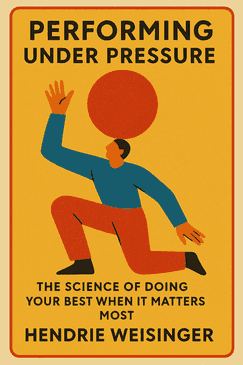
What if the secret to thriving in your most critical moments wasn't about becoming superhuman, but about managing pressure more effectively than those around you? This groundbreaking book by Hendrie Weisinger and J.P. Pawliw-Fry has become a cornerstone text for elite performers across industries. Warren Buffett reportedly keeps a copy on his desk, while Olympic athletes cite its principles in post-medal interviews. Based on a comprehensive study of 12,000 individuals assessed by over 100,000 observers, this work reveals a counterintuitive truth: nobody actually performs better under pressure-we simply need to learn how to minimize its harmful effects. In our increasingly connected world where pressure anxiety has become a constant companion, this book offers both immediate strategies and long-term solutions to help your natural abilities shine through when it matters most.
第 2 章
The Science of Pressure: More Than Just Stress
Pressure and stress are often confused, but they function differently in our lives. While stress occurs when demands exceed our resources (too many tasks, too little time), pressure exists specifically in situations where something important depends on your performance outcome. The difference is crucial: stress management offers multiple response options to reduce overwhelm, while pressure situations demand one specific outcome-success at the task at hand. For instance, preparing for a routine presentation might cause stress, but delivering a make-or-break pitch to your company's biggest potential client creates pressure.
This distinction evolved for good reason. Stress developed as a chemical response preparing our bodies to meet environmental demands through the release of cortisol and adrenaline. Pressure, however, evolved as a selection mechanism determining who advances in life. For our ancestors, pressure situations were often life-or-death scenarios where failure could be fatal, like hunting dangerous prey or defending against rival tribes. Today, most pressure situations don't literally threaten our lives, but they trigger similar primal feelings: if you don't perform well, negative consequences will follow, whether it's losing a job opportunity, failing an important exam, or missing a crucial athletic play.
The college admission process perfectly exemplifies pressure's evolutionary "weeding out" function. With elite universities like Stanford accepting only 5% of applicants, even students with near-perfect records face rejection. Erinn Andrews, a former Stanford admissions officer, describes the intense competition where students compete within specific applicant "pools" - athletes against athletes, musicians against musicians, international students against their peers. With 42,000 applications for just 2,200 spots, the pressure on high school students is immense. This creates a cascading effect where even applying to "safety schools" becomes pressure-laden as students worry about their entire academic future.
Failing to distinguish between stress and pressure has serious consequences. When we treat every stressful situation as a pressure situation, we begin feeling constantly "under the gun" and develop pressure anxiety. Everything becomes super-important, from routine emails to casual meetings, intensifying distressful feelings disproportionate to circumstances. This habitual confusion reduces our ability to think clearly and wastes energy on things that ultimately don't matter. For example, treating every work deadline as life-or-death can lead to burnout and decreased performance on truly critical tasks.
Rick Waddell, Northern Trust CEO, demonstrated remarkable presence during the 2008 financial crisis when, despite enormous pressure, he paused during a chance encounter to ask a lower-level executive about his recently deceased goddaughter-showing that distinguishing between stress and pressure allows us to maintain perspective and human connection even in challenging times. This illustrates how proper pressure management enables leaders to remain composed and empathetic even during crisis situations. Other successful executives report similar abilities to compartmentalize pressure moments from general stress, allowing them to direct their peak performance energy toward truly consequential situations while maintaining balanced responses to everyday challenges.
第 3 章
Anatomy of a Pressure Moment: The Perfect Storm
Pressure situations share three fundamental attributes that trigger anxiety and underperformance: the outcome is important to you, the outcome is uncertain, and you feel personally responsible for and judged on the results. These elements combine to create what psychologists call a "perfect storm" of psychological pressure, where the intensity of these factors directly correlates with the likelihood of underperformance.
Because our brains are evolutionarily programmed to prioritize important tasks, pressure moments are inevitable in both professional and personal contexts. These situations have evolved to feel like all-or-nothing scenarios - a surgeon performing a critical operation, an athlete taking the game-winning shot, or a job candidate in a final interview. We become deeply ego-invested in important tasks, making our self-worth and identity dependent on success or failure. This psychological investment amplifies the pressure, creating a self-reinforcing cycle of stress.
Uncertainty proves to be particularly devastating to performance, powerfully affecting both our brain chemistry and bodily responses. Groundbreaking research by Hennessey and Levine demonstrated that animals' cortisol levels spike significantly more from variable, unpredictable shocks than from stronger but predictable ones. This finding was paralleled in human studies during WWII, where London suburbs experiencing random, unpredictable bombing patterns showed markedly higher ulcer rates than central London areas that experienced regular, nightly bombing. The predictability, even of negative events, allowed people to develop coping mechanisms.
John Coates' extensive research with financial traders on trading floors revealed how uncertainty triggers a cascade of physiological responses. Rising cortisol levels lead to three primary effects: increased risk aversion, selective attention to negative information, and impaired decision-making ability. This "uncertainty response" creates what Coates terms "anticipatory anxiety," suppresses testosterone production, and fundamentally alters how we perceive our environment - an adaptation that served early humans well but often proves counterproductive in modern professional settings.
The weight of responsibility combined with fear of judgment creates perhaps the most intense psychological pressure. When we feel others are evaluating us, we become preoccupied with thoughts of failure and social embarrassment, diverting crucial cognitive resources away from the task at hand. Matthew Lieberman's groundbreaking UCLA research demonstrated that this social pain activates the same neural pathways as physical pain, explaining why rejection and judgment feel physically threatening. Modern brain imaging studies show that the anterior cingulate cortex activates similarly whether experiencing physical pain or social exclusion.
Jon Theuerkauf's experience at MCI serves as a compelling real-world example - as a young manager presenting unprepared to senior executives, his fear of judgment was so overwhelming that it paralyzed his ability to think clearly or admit his unreadiness. This resulted in a significant career setback that could have been avoided with better pressure management. Similar scenarios play out daily in boardrooms, classrooms, and performance venues worldwide, where the pressure of social judgment overrides rational decision-making and optimal performance.
The power of social judgment stems from our evolutionary heritage as social creatures who relied on group acceptance for survival. Modern neuroscience confirms that our brains process social needs as fundamental survival requirements, not mere preferences. This hardwiring makes judgment-related pressure particularly difficult to overcome without specific training and awareness.
第 4 章
Why We Choke: The Mental Mechanics of Pressure
Choking represents a significant performance drop under pressure when we most want to excel. It's more than just failure-it's performing substantially below capability. Understanding how our brain's memory systems react to pressure is essential to preventing these performance collapses.
A complex interaction of three factors forms the human performance system: physical arousal, thoughts, and behavior. These elements influence each other-change in one triggers changes in the others. To perform effectively under pressure, you must regulate physical arousal, think clearly, and execute appropriate responses. Pressure disrupts this system: elevated heart rate makes thinking rigid; perceiving survival stakes triggers anxiety and fear that make the moment more threatening.
Two memory systems explain choking under pressure. Working memory capacity (WMC), located in the prefrontal cortex, functions like a mental scratch pad with limited space for manipulating information. It's crucial for deliberate thinking tasks like solving math problems or analyzing data. Procedural memory, housed in the cerebellum, coordinates complex actions automatically after sufficient practice.
Initially, working memory helps learn complex tasks, but with practice, these tasks become automatic and transfer to procedural memory. Choking occurs when either system malfunctions: competing thoughts consume working memory space needed for crucial information, or conscious focus disrupts automatic procedural skills.
Kim Adams Nelson's appearance on Shark Tank demonstrates these principles in action. The show represents a quintessential high-pressure situation where entrepreneurs must pitch their businesses to investor "Sharks" in just minutes. For her well-rehearsed initial pitch, Kim relied on procedural memory, allowing words to flow automatically without overthinking. During the crucial question-and-answer segment, she needed maximum working memory capacity to stay focused without distracting worry thoughts.
Research shows that in venture-capital pitches, investors' decisions often turn on nonverbal factors like comfort and charisma rather than content. Boston College researcher Lakshmi Balachandra studied 185 venture-capital pitches and found that variables like "calmness," "passion," "eye contact," and "lack of awkwardness" were stronger predictors of success than the actual pitch content.
Under pressure, people behave differently-becoming more uptight, defensive, less warm, and less humorous. To succeed in high-stakes situations, you need both to manage your working memory to think clearly and to manage your behavior to connect effectively with others.
第 5 章
Pressure Traps: How Good Intentions Backfire
Pressure traps are counterintuitive forces that increase rather than decrease pressure. They're omnipresent in work, school and sports; well-concealed as forms of motivation or support; and dangerous, potentially causing perpetual pressure anxiety. While we often create our own traps, we frequently inadvertently set them for others we care about.
We begin each day intending to inspire others to perform their best, using methods that mirror how people motivated us. But these traditional approaches-financial incentives, encouragement, and competition-aren't always guided by research and can actually intensify pressure, contributing to underperformance.
The support trap works through our evolutionary fear of abandonment and need for group acceptance. Historically, disappointing others meant exile from the group-a survival threat. Even today, we remain hardwired to seek group acceptance. People with stronger needs for approval experience more pressure to perform. This explains why even elite performers struggle when performing before supportive audiences.
Parents often inadvertently place children in this trap by making their support contingent on performance, creating conditional relationships that undermine confidence. The solution is to reassure performers that your support transcends any single performance and isn't tied to outcomes. As psychiatrist Dr. Ronald Podell's father told him: "Whether you come in first or last, you're still my horse!"
Incentives like bonuses or rewards seem motivational but often backfire by increasing pressure and decreasing performance. Princeton psychologist Sam Glucksberg demonstrated this with his candle experiment: participants promised monetary rewards performed significantly worse than those without incentives. Brain scans reveal that incentives cause excessive mid-brain arousal that interferes with decision-making and attention.
Competition can either motivate or devastate performance depending on our mindset. The "ranking mindset" stems from our evolutionary past when competition was literally about survival-winner takes all, loser faces extinction. This zero-sum approach creates immense pressure, as subconsciously we feel losing equals extinction.
In contrast, the "excellence mindset" focuses on developing personal capabilities rather than proving superiority. People with this mindset use competition as an opportunity for self-improvement, reducing pressure by shifting focus from beating others to personal growth. John Child, an Olympic beach volleyball player, exemplified this approach, focusing internally on being his best rather than rankings, which helped him win bronze at the 1996 Olympics despite being seeded seventh.
To avoid setting pressure traps for others or falling into them yourself, awareness is key. For the support trap, understand that people fundamentally need acceptance rather than abandonment. With incentives, emphasize quality work rather than rewards, as meaningful work motivates more than money. Free yourself by letting your own values and goals motivate you, focusing on what you can control-your own efforts-rather than external validation.
第 6 章
Pressure Solutions: Immediate Strategies for High-Stakes Moments
After successfully landing on the Hudson River, Captain Sullenberger credited his 42 years of "small deposits" in experience and training. Jim Breach at Unilever overcame pressure by focusing on his core values rather than pleasing his boss. Quarterback Eli Manning handles pressure through extensive practice scenarios. These pressure solutions help regulate, redirect, or release pressure by reducing anxiety, avoiding distraction, regulating arousal, guiding behavior, and maintaining focus.
Seeing pressure as a challenge rather than a threat is crucial for performance. When viewed as threatening, pressure undermines confidence, impairs memory and judgment, and constricts blood vessels, reducing oxygen flow. But when seen as a challenge or opportunity, pressure becomes a performance enhancer-blood vessels dilate, providing more oxygen to tissues, giving you energy and mental clarity. LeBron James exemplifies this, viewing decisive games as "fun" rather than pressure.
When you believe you have more than one chance to succeed, pressure diminishes significantly. In a study of auto mechanics, those told they had multiple opportunities to demonstrate competence performed better than those given just one chance. Life typically offers multiple opportunities-Oprah Winfrey was fired from her first news anchor job, Steven Spielberg was rejected multiple times by film school, and J.K. Rowling faced thirty publisher rejections.
The more important we perceive an event to be, the more pressure we feel. Joe Falco's approach before the Super Bowl-"I treat it like any other game"-exemplifies this solution. By minimizing an event's significance, we can perform better. Even telling children that grades aren't the most important thing in life can reduce pressure, enhance learning enjoyment, and discourage cheating.
Focusing on your mission is one of the easiest pressure solutions to implement. By staying clear on what you're trying to accomplish-whether shooting a clean round of golf or having a strong interview-you depressurize the situation quickly. This solution prevents distracting thoughts generated by self-consciousness or external factors that can derail your efforts.
Playing the "what if" pressure game prepares you to expect the unexpected in high-pressure situations. By asking yourself questions about potential problems-PowerPoint malfunctions during presentations, sudden time constraints, or even medical emergencies-you condition yourself to handle surprises. The New Zealand All Blacks rugby team, historically successful but prone to choking in World Cups, finally won in 2011 after adopting the motto "Expect the Unexpected."
Affirming your self-worth before high-pressure situations helps you perform at your best. Research published in Psychological Science demonstrates that people who affirm their self-worth before difficult tasks make fewer errors and learn more easily from mistakes. This validation bolsters ego strength, preventing you from being overwhelmed by threats and contributing to cognitive resiliency-your ability to bounce back from failure.
By visualizing past successes in similar situations, you stimulate the same responses that helped you before. Pressure moments are filled with uncertainty, but remembering past successes ignites confidence-you did it before and you can do it again. NBA MVP Steve Nash explains, "Before I shoot a foul shot, I think of the thousands I've made, and do it the same way."
第 7 章
The COTE of Armor: Building Long-Term Pressure Immunity
The final section of the book introduces the COTE of Armor framework-Confidence, Optimism, Tenacity, and Enthusiasm-as natural pressure management tools everyone possesses but must sharpen. Drawing from research in psychology, neuroscience, organizational behavior, and economics, plus clinical experience and surveys of 12,000 people worldwide, the authors provide a manual for developing these attributes.
Confidence acts as an antidote to pressure's negative effects-doubt, distorted thinking, and physiological overarousal. Confident people still experience doubt, but they see high-pressure situations as challenges rather than crises, effectively immunizing themselves against pressure's harmful effects. They work harder, persist longer, remain more optimistic, show more determination, and set higher goals.
Building confidence requires deliberate effort through three key steps: assessing your current confidence level, engaging your brain using neuroscience, and developing confidence habits. Our posture dramatically impacts our neurochemistry. Amy Cuddy's research shows that "high-power poses"-open and expansive body positions-increase testosterone by 20-25% and decrease cortisol by the same amount.
Small victories-micro-successes-stimulate the winner effect just like major achievements. A productive conversation, positive client call, or compliment from a colleague releases testosterone and dopamine, building confidence incrementally. Since these small wins occur more frequently than major triumphs, they're actually more important for confidence building.
Optimism, the second component of your COTE of Armor, provides a powerful advantage under pressure. While pessimists see only disease, old age, and death ahead, optimists like Nobel Prize winner Elie Mechnikov see challenges to overcome through innovation and effort. Bill and Melinda Gates credit optimism as the driving force behind their foundation's success.
Optimism operates on two time dimensions: expectations about the future and explanations of the past. Positive expectations about future outcomes help us manage anxiety and take necessary risks. Our prefrontal cortex serves as a prediction center that enables us to see beyond immediate challenges. When facing pressure, optimists feel more excitement and enthusiasm while pessimists experience dread and anxiety.
Tenacity is essential for long-term survival and success. Like the tardigrade-a microscopic creature that can survive extreme temperatures, pressure, radiation, and even space-humans need remarkable persistence to thrive. Angela Duckworth's research on National Spelling Bee competitors reveals that success under pressure comes not from talent alone but from "effortful activities designed to optimize improvement."
Tenacity's DNA consists of four essential "chromosomes": Goals, Focus, Hope, and Coping (G-F-H-C). Each fuels the creation of the next, and weakness in any disrupts tenacious behavior. Someone lacking meaningful goals won't focus effectively; without hope, tenacity falters; and poor coping skills make perseverance impossible.
Enthusiasm manifests as a multifaceted experience: it's an energizing affective state that creates physical arousal with faster breathing and accelerated heart rate; it generates positive thoughts like "I can do this" or "I love this"; it expresses through movement and engagement; it includes universal responses across cultures like smiling and clapping; and most importantly, it communicates excitement and positivity to others in an infectious manner.
MIT professor Sandy Pentland's research reveals that enthusiasm is the most powerful predictor of team success, more significant than all other factors combined. Using sociometers to track communication patterns, his team found that energy and engagement outside formal meetings explained one-third of productivity variations among teams.
John Lasseter, Pixar's creative leader, exemplifies how enthusiasm can transform team performance under extreme pressure. During the 1998 Toy Story 2 crisis, Lasseter's infectious enthusiasm proved crucial. As David Price noted, "John exuded confidence throughout the process. He brought an infectious enthusiasm to the team. He would kid around and laugh and relax everyone."
第 8 章
The Science of Elite Performance: What Sets Top Performers Apart
The Institute for Health and Human Potential (IHHP) conducted groundbreaking research spanning seven years to identify the crucial factors that differentiate high performers under pressure. Their comprehensive study assessed more than 12,000 individuals across 25 countries using their proprietary EI360 multi-rater assessment tool, which gathered feedback from supervisors, peers, direct reports, and self-evaluations. This extensive data collection provided unprecedented insights into pressure performance across various industries and cultures.
The analysis meticulously compared behaviors of the top 10 percent and bottom 10 percent performers, revealing distinct patterns that enabled high performers to excel under pressure. The study identified ten critical behaviors most highly correlated with superior pressure performance. Top performers consistently demonstrated the ability to remain non-defensive when receiving criticism, maintaining composure during high-stakes situations. They showed remarkable skill in handling setbacks, often viewing them as learning opportunities rather than failures. These individuals excelled at managing negative emotions, rarely allowing frustration or anxiety to impact their decision-making. They actively sought and utilized feedback for personal growth, maintained a positive outlook even in challenging circumstances, and demonstrated exceptional emotional intelligence by considering others' perspectives.
Three behaviors emerged as the strongest predictors of career advancement in high-pressure environments. First, the ability to listen without jumping to conclusions or forming premature judgments - top performers consistently gathered complete information before responding. Second, maintaining acute awareness of one's emotional state and its impact on performance - successful individuals could recognize and regulate their emotions effectively. Third, the willingness to freely admit mistakes and learn from them - this transparency built trust and facilitated rapid learning and adaptation.
A particularly revealing finding was the significant disconnect between self-perception and actual performance. The research showed that self-ratings predicted only 2.6-4.2 percent of performance variance, indicating a stark "blind spot" in self-awareness. This discovery highlighted the critical importance of seeking external feedback and establishing what the researchers termed "personal boards of directors" - trusted advisors who provide honest, constructive feedback for continuous improvement.
The IHHP research introduced the concept of the COTE of Armor, maintained through four essential daily practices: Affirming Your Self through positive self-talk and confidence-building exercises, Being Positive Every Day by actively seeking opportunities in challenges, Committing to Your Best by setting and pursuing high standards, and Celebrating achievements both large and small. These practices, when implemented consistently, create a robust foundation for sustained high performance under pressure.
The research conclusively demonstrated that pressure performance is a skill that can be developed and refined. While natural talent plays a role, the ability to perform under pressure is largely determined by learned behaviors and practiced responses. Top performers don't eliminate pressure - they learn to harness it, using proven strategies to maintain focus and execution when stakes are highest. This insight transforms pressure from an insurmountable obstacle into a manageable challenge that, when handled effectively, can actually enhance performance.