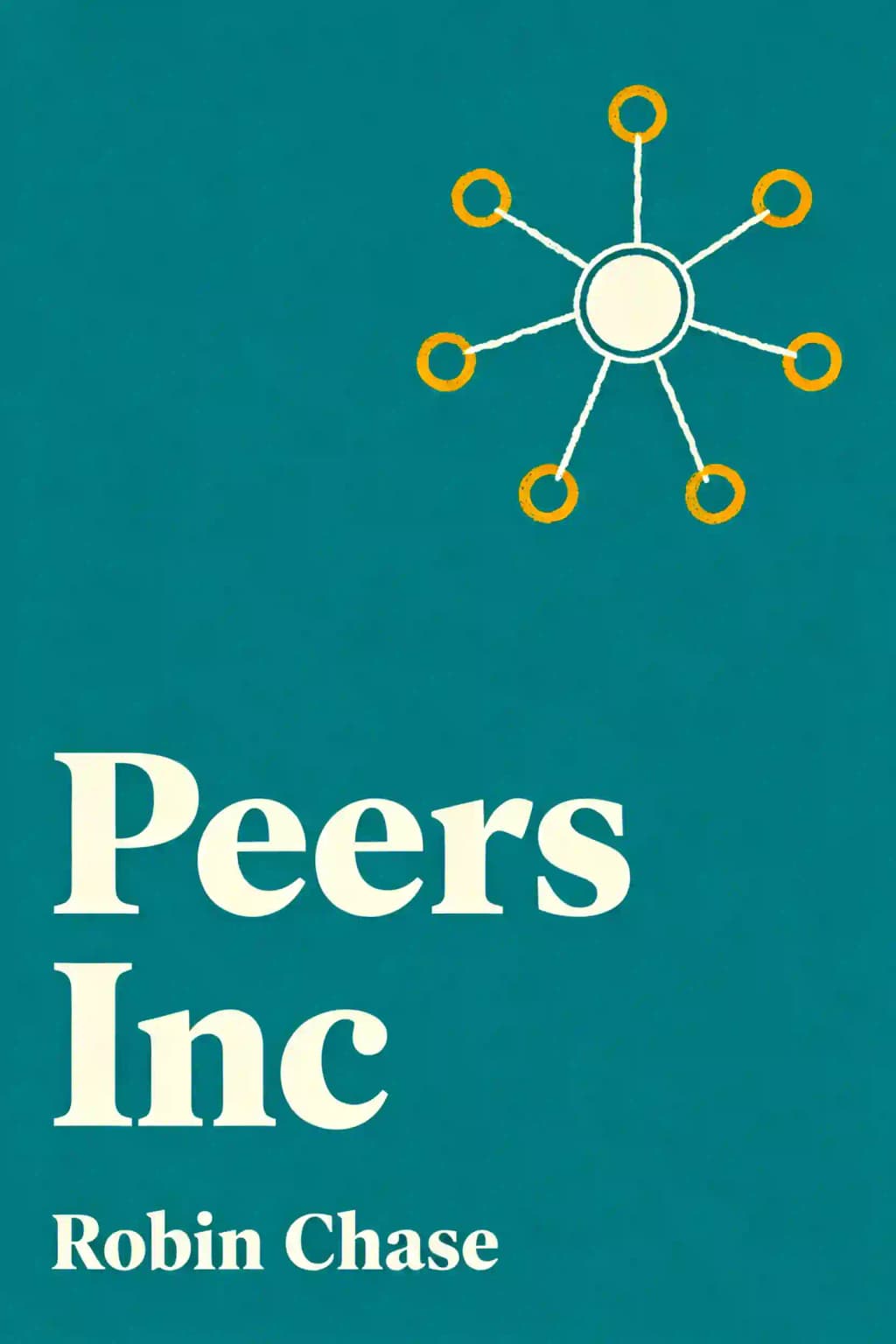
Robin Chase's "Peers Inc" reveals how collaborative platforms are revolutionizing capitalism. Time's "100 Most Influential People" honoree and Zipcar founder offers a blueprint for harnessing excess capacity to combat climate change. Could this "first great book about the sharing economy" redefine abundance in our resource-limited world?
Robin Chase, author of Peers Inc: How People and Platforms Are Inventing the Collaborative Economy and Reinventing Capitalism, is a pioneering transportation entrepreneur and sharing economy innovator. Best known as co-founder and former CEO of Zipcar, the world’s largest carsharing network, Chase has shaped modern urban mobility through ventures like Buzzcar, GoLoco, and Veniam, a vehicle data-transmission company. Her book explores how collaborative business models unlock innovation and sustainability, drawing from her firsthand experience disrupting traditional industries.
Chase’s expertise is recognized globally. TIME named her among its 100 Most Influential People, and she serves on boards for the World Resources Institute and Dutch multinational DSM’s Sustainability Advisory Board.
A frequent speaker featured in The New York Times, NPR, and TED-style forums, she blends practical insights from leading tech-driven companies with visionary advocacy for equitable cities. Peers Inc has become a seminal text on platform economies, cited by policymakers and Fortune 500 leaders alike. Chase holds degrees from Wellesley College and MIT, with an honorary doctorate from the Illinois Institute of Technology.
Peers Inc explores the collaborative economy model where corporations ("Inc") provide platforms to harness individuals ("Peers") and excess resources. Robin Chase, Zipcar's co-founder, argues this synergy drives innovation, scalability, and efficiency, using examples like Airbnb and Zipcar. The book outlines building blocks (excess capacity, platforms, peer participation) and stages of development, showing how this model reshapes capitalism and addresses global challenges like climate change.
Entrepreneurs, business leaders, and policymakers interested in the sharing economy, collaborative innovation, or sustainable business models will find this book valuable. It’s also relevant for readers exploring how platforms like Uber or Airbnb disrupt industries, and those seeking strategies to leverage underutilized resources for economic and environmental impact.
Yes, for its actionable insights into the collaborative economy’s mechanics and real-world examples. Chase blends theory with her Zipcar experience, though some critiques note uneven pacing. The book remains essential for understanding platform-based business models and their societal implications, particularly for sustainability and income inequality.
By optimizing existing resources (reducing waste) and accelerating innovation through collaboration. Chase argues that platforms enabling car-sharing or renewable energy networks can scale solutions faster than traditional models, cutting emissions while maintaining economic growth.
Traditional models focus on owning resources and centralized control. Peers Inc prioritizes shared assets, decentralized innovation, and peer contributions, enabling faster scalability, lower costs, and adaptability. For example, Zipcar’s car-sharing reduces ownership needs while expanding access.
Without equitable influence, platforms risk exploiting peers (e.g., Uber drivers lacking benefits). Chase emphasizes that long-term viability requires fair profit-sharing, decision-making, and protections to sustain trust and participation.
Critics highlight risks like worker exploitation, regulatory gaps, and monopolistic tendencies. For instance, Uber’s treatment of drivers underscores how power imbalances can emerge. Chase acknowledges these challenges but argues proactive policies can mitigate them.
Zipcar’s success demonstrated how a platform could transform car ownership by leveraging excess vehicles and peer participation. Chase uses this case to illustrate scalable resource-sharing, iterative learning, and the balance between corporate infrastructure and user-driven innovation.
Yes, by integrating platforms to unlock underused assets (e.g., manufacturing tools, data) and inviting peer innovation. Chase suggests this helps legacy firms stay competitive, though transitioning requires cultural shifts and embracing openness.
As remote work, AI, and sustainability priorities grow, collaborative models remain vital. The book’s principles apply to emerging trends like decentralised tech (Web3) and circular economies, making it a blueprint for resilient, adaptive businesses.
通过作者的声音感受这本书
将知识转化为引人入胜、富含实例的见解
快速捕捉核心观点,高效学习
以有趣互动的方式享受这本书
Sharing, not owning, creates the greatest value.
Americans want ownership, not access.
The path forward isn't producing more but organizing differently.
We live amid abundance.
Platforms connect and empower peers.
将《Peers Inc》的核心观点拆解为易于理解的要点,了解创新团队如何创造、协作和成长。
将《Peers Inc》提炼为快速记忆要点,突出坦诚、团队合作和创造力的关键原则。

通过生动的故事体验《Peers Inc》,将创新经验转化为令人难忘且可应用的精彩时刻。
随心提问,选择声音,共同创造真正与你产生共鸣的见解。

"Instead of endless scrolling, I just hit play on BeFreed. It saves me so much time."
"I never knew where to start with nonfiction—BeFreed’s book lists turned into podcasts gave me a clear path."
"Perfect balance between learning and entertainment. Finished ‘Thinking, Fast and Slow’ on my commute this week."
"Crazy how much I learned while walking the dog. BeFreed = small habits → big gains."
"Reading used to feel like a chore. Now it’s just part of my lifestyle."
"Feels effortless compared to reading. I’ve finished 6 books this month already."
"BeFreed turned my guilty doomscrolling into something that feels productive and inspiring."
"BeFreed turned my commute into learning time. 20-min podcasts are perfect for finishing books I never had time for."
"BeFreed replaced my podcast queue. Imagine Spotify for books — that’s it. 🙌"
"It is great for me to learn something from the book without reading it."
"The themed book list podcasts help me connect ideas across authors—like a guided audio journey."
"Makes me feel smarter every time before going to work"

免费获取《Peers Inc》摘要的 PDF 或 EPUB 版本。可打印或随时离线阅读。
What if I told you that the average car sits unused 95% of its life, costing its owner thousands annually while gathering dust? In 1999, a Cambridge mother of three named Robin Chase faced a daily frustration: her husband took their only car to work, leaving her stranded. When a friend mentioned European car-sharing programs, something clicked. Within months, Chase launched Zipcar with just $50,000, one lime-green Volkswagen Beetle nicknamed "Betsy," and a revolutionary insight-what if we stopped owning and started sharing? The concept seemed absurd to investors. Americans love ownership, they insisted. People can't be trusted with shared property. The technology is too complex. Yet Chase persisted, driven by three radical beliefs: people would share when economics made sense, technology could make sharing effortless, and humans could be trusted. When the company nearly collapsed three days before launch over a $7,000 security deposit, an angel investor wired $25,000 overnight after meeting Chase at a party. Today, Zipcar's model has spawned a global revolution-Airbnb controls more rooms than the world's largest hotel chains without owning property, Uber transformed transportation without vehicles, and entire industries are being reimagined around a simple question: why own when you can share?