第 1 章
The Future is Alive: How Biology is Transforming Technology
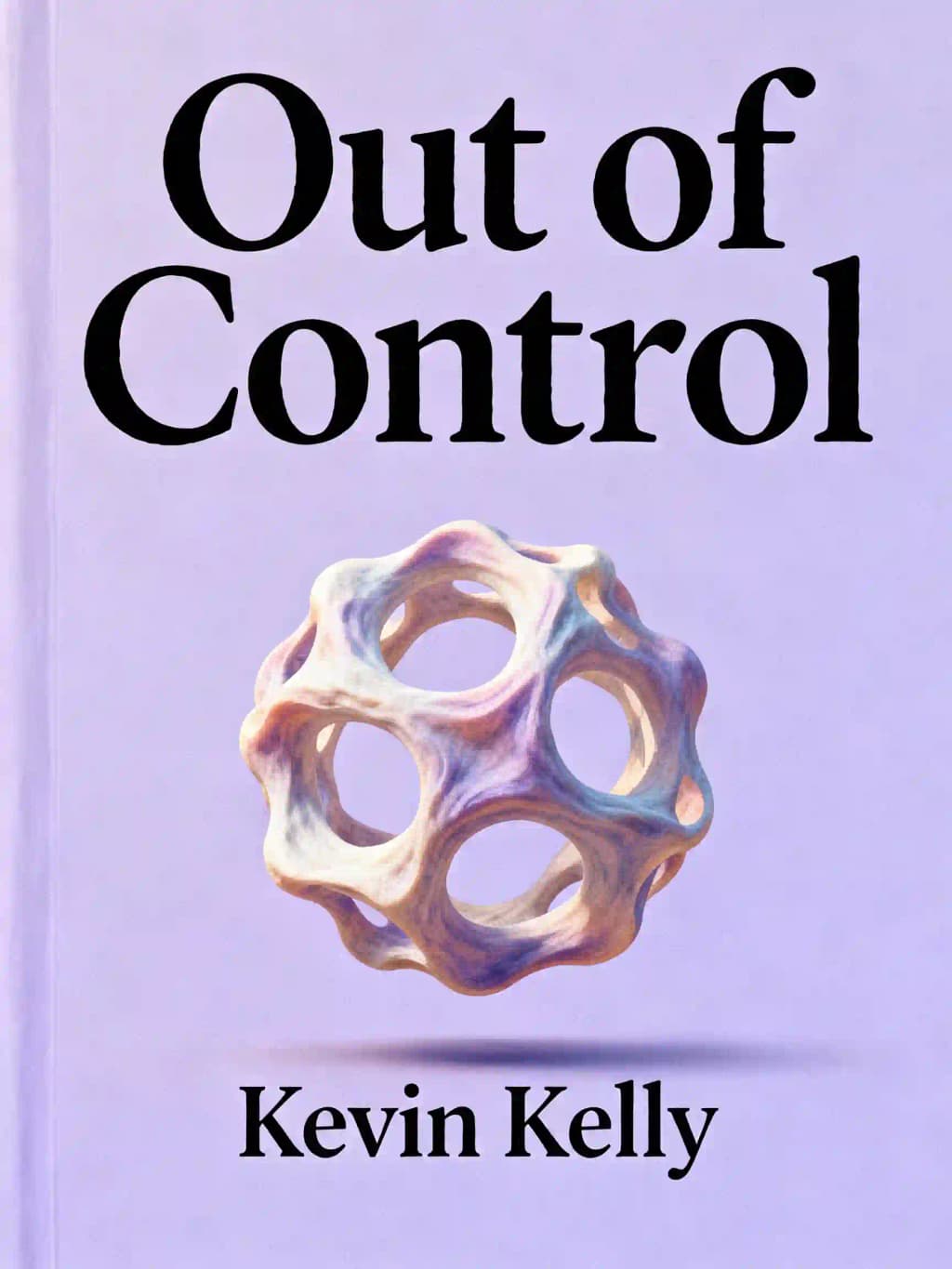
When Kevin Kelly published "Out of Control" in 1994, Wired magazine was barely a year old, the internet was still a niche technology, and "smart" devices were the stuff of science fiction. Yet Kelly's groundbreaking work predicted with uncanny accuracy the biological revolution that would transform our technological landscape. This book-frequently cited by tech luminaries like Elon Musk and Mark Zuckerberg as profoundly influential-explores how our machines are becoming more lifelike while life itself is becoming more engineered. Kelly's vision of a "neo-biological civilization" continues to shape Silicon Valley's approach to everything from artificial intelligence to network economics. Perhaps most remarkably, the book's central thesis-that complex systems work best when allowed to self-organize rather than being rigidly controlled-has become the guiding philosophy behind today's most successful technological ecosystems.
第 2 章
The Marriage of the Born and Made
I am sealed in a glass cottage where plants and machinery work together to recycle my atmosphere. This experimental space capsule demonstrates how the living and manufactured have unified into one system that sustains me. The ancient metaphors of machines as organisms and organisms as machines are becoming profitable reality as our fabricated environment grows increasingly complex.
Nature is yielding her mind to us-we're taking her logic. While clockwork logic builds only simple contraptions, bio-logic can assemble thinking devices and complex systems. Traits of living systems successfully transferred to machines include self-replication, self-governance, limited self-repair, evolution, and learning.
Simultaneously, the logic of technology is being imported into life through bioengineering, accelerating improvements once achieved through selective breeding. The overlap between mechanical and lifelike increases yearly, revealing they are of one being-what Kelly calls "vivisystems."
As we unleash living forces into our created machines, they acquire wildness and surprises beyond our control. This is the bargain all gods must accept: surrendering sovereignty over their finest creations. The technological future is headed toward a neo-biological civilization where the distinction between what is born and what is made dissolves into a seamless continuum.
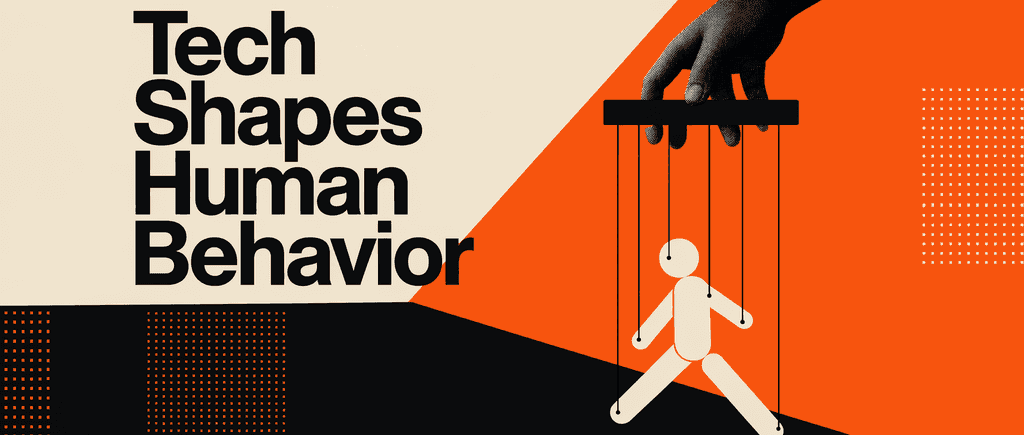
This marriage represents a fundamental shift in how we understand both technology and life. Our machines are becoming more organic-adapting, learning, evolving-while our understanding of life becomes increasingly mechanistic and engineerable. The most powerful technologies emerging today are neither purely mechanical nor purely biological but exist in the fertile borderlands between these realms.
The implications are profound. As our technologies become more lifelike, they necessarily become less controllable in the traditional sense. Like gardeners rather than engineers, we must learn to nurture and guide rather than dictate and command. This requires a new relationship with our creations-one based on partnership rather than mastery, influence rather than control.
第 3 章
The Wisdom of Swarms
The beehive outside Kelly's window exhales and inhales legions of workers like a living organism. Over years of beekeeping, he encountered the remarkable nature of bee colonies. Once, cutting into a fallen bee tree, he plunged his hand into the comb and felt startling heat-95 degrees at least. The overcrowded hive of 100,000 cold-blooded bees had become a warm-blooded organism.
This collective organism concept came late to human understanding. The "spirit of the hive" that Maeterlinck pondered isn't governed by the queen. When swarming, the queen merely follows while worker bees scout locations and report back through elaborate dances. The intensity of a scout's dance promotes her chosen site, with other bees checking favored locations and joining the performance upon return. Through this compounding process, one site eventually dominates by mob vote, and the swarm follows-a democratic election by idiots that works marvelously.
The marvel of hive mind is that no one controls it, yet an invisible hand governs. When complexity reaches critical mass, new categories like "colony" emerge from simple categories like "bug." You can search a bee forever with the most sophisticated tools, yet never find the hive-because the hive emerges only from their interactions.
This reveals a universal law of vivisystems: higher-level complexities cannot be inferred from lower-level existences. No computer, mind, or mathematical formula can unravel emergent patterns without actually playing them out. Running a system becomes the only sure method to discover what structures lie latent within it.
The implications extend far beyond insects. Human crowds demonstrate similar emergent intelligence. In Las Vegas, 5,000 people collectively played Pong by holding colored wands, instantly coordinating to control paddles without central direction. When challenged to form numbers within a circle, the group quickly self-organized, with individuals deciding whether they should be part of the emerging shape.
Even more remarkably, the group successfully flew a plane simulator together. Though landing proved difficult due to feedback delays causing oscillations, the collective mind somehow coordinated to abort landings and try again. Without verbal communication, 5,000 minds simultaneously decided to attempt a 360-degree roll-and succeeded gracefully.
These swarm systems offer remarkable advantages: they're adaptable to new stimuli, evolvable, resilient through redundancy, boundless, and generate novelty. However, they come with apparent disadvantages: they're nonoptimal, noncontrollable, nonpredictable, nonunderstandable, and nonimmediate. The tradeoff resembles biological systems' cost/benefit ratios. For supreme control, clockware works best; for supreme adaptability, swarmware is superior.
第 4 章
Machines with an Attitude
Mark Pauline builds machines that devour other machines-intricate, often huge robots with biological vibes. With a hand reconstructed from his own feet after a rocket accident, he lives in a San Francisco warehouse surrounded by mechanical skeletons. A few times yearly, Pauline stages machine performances through his deliberately misleading corporate-sounding "Survival Research Labs" (SRL). These unpermitted, dangerous spectacles feature mechanical dinosaurs battling in makeshift arenas.
Pauline's machines grow increasingly sophisticated as he breeds new mechanical predators, upgrading old models with new appendages or cross-fertilizing between creatures. Using military surplus parts bought at $65 per pound from downsizing bases or "Obtainium" (easily liberated materials), Pauline converts machines "from things which once did 'useful' destruction into things that can now do useless destruction."
His creations include a guinea pig-piloted crablike robot, a Shockwave Cannon that rattles skyscraper windows, and autonomous Swarmers that beat MIT's lab in creating the first swarming robots. Pauline sees his work as entertainment for machines, not humans: "We don't ask how machines are going to entertain us. We ask, how can we entertain them?"
This vision contrasts sharply with today's industrial robots-nearly a million worldwide-that remain mostly glorified arms: smart but blind, tethered to wall plugs, and without freedom. Researchers now realize the path forward requires cutting the electrical cord to create "mobots" (mobile robots) rather than "staybots," following two essential rules: move on your own and survive on your own.
MIT professor Rodney Brooks proposed an alternative approach to traditional robotics: instead of one incapacitated genius robot, build an army of useful idiots. In his 1989 paper "Fast, Cheap and Out of Control: A Robot Invasion of the Solar System," Brooks suggested sending millions of tiny, dispensable robots to explore planets rather than single overweight machines.
Brooks's "subsumption architecture" organizes robot intelligence from the bottom up. Instead of centralized control, behaviors are built in layers, with higher functions subsuming lower ones when needed. The lowest levels (like obstacle avoidance) are never altered, just occasionally overridden by higher functions. New capabilities are added incrementally over proven systems, creating complexity through layering rather than redesign.
This mirrors how complex systems naturally evolve, following a simple recipe: do simple things first, perfect them, add new layers over working foundations, never change what already works, make each new layer flawless, and repeat indefinitely. It's not just a blueprint for robots but for managing any complex system-from animal brains to national governments.
Brooks envisions flooding the world with inexpensive, small, ubiquitous semi-thinking things. For just $10 extra, a "smart door" could know you're approaching, communicate with other doors, notify lights when you leave, and help control climate. Extending this intelligence to supposedly inert objects would create a colony of sentient entities serving us and learning to serve better.
第 5 章
The Ecology of Creation
As autumn gray settles over one of America's last wildflower prairies, Kelly stands ready to set it ablaze. This controlled burn represents the intersection of the natural and the manufactured-a metaphor for how life is becoming engineered while machines are becoming more lifelike.
Steve Packard, who guides Kelly through this prairie restoration project, has spent decades recreating this ecosystem near Chicago. His vision was to transform a suburban dumping ground into a blooming prairie oasis. Packard's initial efforts focused on planting prairie wildflowers and expanding them by clearing brush. He burned the grass to discourage non-native weeds, letting fires "decide" how far to advance.
By the third year, Packard realized something was wrong-plantings struggled in shade and unfamiliar grasses took over. Reading botanical history and studying these oddball species, he discovered they weren't prairie plants at all, but belonged to a savanna ecosystem-a prairie with trees. When farmers stopped the fires, these ecosystems quickly collapsed into woods, becoming nearly extinct by the 1900s.
After sowing the "mushy oddball savanna species," Packard's fields soon blazed with rare, forgotten wildflowers. During the 1988 drought, non-native weeds shriveled while native species flourished. Eastern bluebirds, absent from the county for decades, returned. Endangered plants like white-fringed orchid and pale vetchling sprouted spontaneously. Most miraculously, the silvery-blue butterfly, unseen in Illinois for a decade, found its way to the emerging savanna.
This restoration demonstrated the "law of increasing returns"-as the web of interrelations tightened, adding each new piece became easier. But it also revealed a crucial principle: complex systems must be built incrementally and indirectly. You can't just flood an area and hope for a wetland; you need the assembly instructions for systems that evolved over hundreds of thousands of years.
While Packard resurrected prairie ecosystems, David Wingate in Bermuda pursued a parallel path with the cahow, a seabird thought extinct for centuries until rediscovered in 1951. Facing the paradox all system-builders confront-where to start when everything depends on everything else-he built artificial nesting sites for the cahows, planted blight-resistant cedars protected by fast-growing casuarinas as windbreaks, which eventually allowed night herons to return, which controlled land crabs, which permitted rare sedges to grow.
This sequential assembly demonstrated how ecosystems require interim scaffolding to develop. Complex systems must be built incrementally and indirectly-first creating platforms that enable the desired system. As Packard noted, "it may take a million years to make an ecosystem." This principle applies equally to technological systems like computer networks and robots, which must be grown rather than assembled all at once.
第 6 章
The Dance of Coevolution
Gregory Bateson, a founding father of cybernetics, inspired Stewart Brand's famous riddle: "What color is a chameleon placed on a mirror?" This koan explores feedback loops in adaptive systems. The riddle illustrates how feedback systems create circular causality rather than linear chains of cause and effect. In networked environments, small changes can create large effects unpredictably, as events influence each other in complex, recursive patterns.
Stewart Brand, studying under population biologist Paul Ehrlich at Stanford, discovered the concept of coevolution through butterfly-plant relationships. The monarch butterfly and milkweed exemplify this dance-each defensive move by the plant forces evolutionary countermoves by the butterfly, binding them together as interdependent enemies. This "tightly coupled dance" was termed "coevolution" in a 1958 paper, though Darwin had noted similar "coadaptions" a century earlier.
Nature teems with coevolutionary relationships-over 50% of today's species are parasitic, reflecting increasing codependency in evolutionary history. Business follows similar patterns, with companies forming symbiotic alliances rather than competing. These relationships aren't always equal; most natural symbioses involve one party gaining slightly more advantage, yet both benefit overall.
Coevolution creates a network where all organisms participate in a continuum from direct symbiosis to indirect influence. This force ripples outward from intimate neighbors until it touches all living things, creating an aggregate state that transcends individual organisms. The network of life on Earth goes beyond living ingredients, roping in the entire planet including its non-living matrix of rock and gas into its coevolutionary dynamics.
British biochemist James Lovelock proposed that Earth's atmosphere exists in a persistent state of disequilibrium, with inexplicably high oxygen levels and coexisting incompatible gases. This chemical anomaly, maintained for billions of years, revealed life's invisible hand. While dead planets achieve chemical equilibrium through geological processes, Earth maintains a "persistent state of disequilibrium" through life's spontaneous circuits.
Lovelock discovered that self-control and self-governance aren't mystical vital spirits but logical processes emerging in any sufficiently complex medium-even iron gears or chemical pathways. He proposed the Gaia hypothesis in 1972, suggesting Earth's entire range of living matter "could be regarded as constituting a single living entity, capable of manipulating the Earth's atmosphere to suit its overall needs."
This view sees Earth as a vast network of coevolutionary impulses creating a closed circuit of self-making and self-control. Like cells composed mostly of chemical cycles or trees mostly dead pulp, Gaia is alive despite containing mechanical parts. At its boundary, "there is no clear distinction anywhere on the Earth's surface between living and nonliving matter. There is merely a hierarchy of intensity."
第 7 章
The Future of Control
The invention of autonomous control has ancient roots in China, where the south-pointing chariot used gears to keep a wooden figure pointing south regardless of the cart's direction. The first truly automatic device came from Ktesibios, a barber-turned-mechanician in third-century B.C. Alexandria, who invented a water clock with a self-regulating valve that maintained constant water flow regardless of reservoir level.
James Watt revolutionized automation by adding a governor to the steam engine, allowing it to regulate its own power at any desired rate. His key innovation was separating the heating and cooling chambers, unleashing unprecedented power that required regulation. He reimagined Thomas Mead's crude windmill regulator into a pure control circuit-the flyball governor. Two leaden balls on pendulums swing from a pole, rising higher with faster rotation. Through linkages, they adjust a valve controlling steam flow, creating a physical equilibrium that maintains constant speed.
The industrial revolution wasn't merely a precursor to the information age-it was the first phase of the knowledge revolution. Without self-control mechanisms like Watt's governor, every machine would have required constant human supervision, negating their labor-saving benefits. Information, not coal itself, made machine power useful and desirable.
Norbert Wiener, an odd but brilliant mathematician, published a revolutionary book on learning machines in 1948 that rivaled the Kinsey Report in public interest despite its complex content. He named both his perspective and book "Cybernetics"-from the Greek kubernetes meaning both "steersman" and "governor"-defining it as "control and communication in the animal and the machine." This work popularized feedback as a universal principle, suggesting that lifelike self-control was merely an engineering problem.
The most unexpected miracle of self-control circuits was their ability to extract precision from imprecision. Consider the steel industry's pre-1948 struggle to produce uniform thickness sheet metal. Engineers tried regulating six interdependent factors-speed, temperature, traction and others-but adjusting one would disrupt the others in an unfathomable web. After Wiener's cybernetic principles were published, engineers installed a simple feedback loop: a gauge measured the finished sheet thickness and adjusted just the traction variable. Since all factors were interconnected, controlling this single final variable indirectly regulated the entire system.
Feedback loops can be stacked to create higher orders of control. Consider a toilet with not just a water-level regulator but a second circuit adjusting the regulator's target based on water pressure. This second-order control-controlling the controller-creates metacontrol. The system now adapts to shifting goals, giving it a "mildly biological flavor" as it appears to choose its own targets.
The sowing of selves into our built world has spawned three metaphysical changes in human culture. First came control of energy through steam engines, making energy effectively "free." Second, we gained control of materials through information, allowing increasingly smaller amounts to do the work of larger uninformed amounts. Now we're entering the third regime: control of information itself.
第 8 章
The Emergence of Artificial Life
Tom Ray created an electric-powered evolution machine by releasing a tiny hand-made computer virus into a virtual environment where it could safely replicate. His initial 80-byte creature quickly reproduced until its variants-some larger, some smaller-began competing for memory space. Within hours, Ray's system had evolved nearly a hundred types of computer viruses battling for survival.
As a Harvard undergraduate, Ray collected ant colonies in Costa Rica for E.O. Wilson, developing a talent for extracting intact queen chambers from jungle soil. His fieldwork revealed fascinating ecological relationships, like butterflies that followed birds that followed army ants-a nomadic community of codependent species. Frustrated that ecology lacked overarching theories to explain such complex relationships, Ray dreamed of creating an evolution machine that could demonstrate ecological principles through repeatable experiments.
Inspired by a conversation about self-replicating programs, Ray spent a year learning computer programming. He created "Tierra," a virtual computer that contained his experiments safely from the outside world. Within this environment, he introduced three essential elements for evolution: replication, variation (through occasional bit scrambling during copying), and death (via a "Reaper" program that culled older or malfunctioning creatures). Despite warnings from computer scientists that random code mutations would only create broken programs, Ray's system quickly produced viable variants.
Ray's digital ecosystem quickly evolved complex ecological relationships. Parasites like the 45-byte creature thrived by "borrowing" reproductive code from larger 80-byte hosts. This created classic coevolutionary dynamics-when parasites became too numerous, host populations declined, causing parasite populations to crash as well. As Ray introduced immune hosts (79s), new parasites (51s) evolved to exploit them. The system produced increasingly sophisticated relationships: hyperparasites that preyed on other parasites, "social cheaters" that exploited cooperative relationships, and creatures that surpassed human programming efficiency.
John Holland, a pioneer who worked on the earliest computers, developed genetic algorithms (GAs) in the 1960s-mathematical methods for modeling evolution in computer code. Unlike Ray's mutation-first approach, Holland started with sex, recombining two effective code strings to produce potentially better offspring. His system relied primarily on mating with mutation as a secondary mechanism, creating more robust evolution. Holland's key insight was implicit parallelism-evolving huge populations of code simultaneously to explore many landscape regions at once.
By the mid-1980s, Danny Hillis built the first massively parallel computer, the Connection Machine, with 64,000 processors working simultaneously. On his million-dollar machine, he evolved sorting algorithms by allowing 64,000 simple programs to reproduce, mutate, and compete. Most remarkably, when he introduced "parasitic" test cases that coevolved to resist sorting, the algorithms evolved even faster, eventually producing a sorting method previously unknown to computer scientists-nearly matching the best human-engineered solutions.
Evolution isn't confined to silicon-it's already being employed in bioengineering. When faced with impossibly complex molecular problems like drug design, where billions of possible configurations exist, evolution offers a solution. Rather than engineering molecules directly, biotech labs generate billions of random candidates, test them against targets, keep the partial matches, and breed variations until a perfect match emerges.
第 9 章
The Nine Laws of God
How does nature create something from nothing? From computer science, biological research, and interdisciplinary experimentation, Kelly compiled nine laws governing the incubation of complexity. These principles operate in systems from biological evolution to SimCity, representing the broadest generalizations from complexity science:
1. Distribute being: When something emerges from nothing, that extra being is distributed among many smaller interacting units. Life, intelligence, and evolution all arise from large distributed systems where the sum exceeds its parts.
2. Control from the bottom up: In distributed networks, central authority fails as everything happens simultaneously. Governance must emerge from humble interdependent acts performed locally in parallel. Only a mob can steer itself through rapid, massive, heterogeneous change.
3. Cultivate increasing returns: Using ideas, languages or skills strengthens them through positive feedback. Success breeds success-"To those who have, more will be given." All sustaining systems play this game, from economics to biology, altering their environment to increase self-production.
4. Grow by chunking: Complex working systems must begin as simple working systems. Attempts to instantly create complexity inevitably fail. Time allows each part to test itself against others, building complexity incrementally from simple, independently operating modules.
5. Maximize the fringes: Creation thrives in heterogeneity. Uniform entities require occasional revolutionary adaptations that risk destruction, while diverse entities adapt through countless small changes. Innovation comes from remote borders, outskirts, hidden corners, moments of chaos, and isolated clusters.
6. Honor your errors: Advancement requires exploring beyond conventional methods, a process indistinguishable from error. Even brilliant human genius ultimately relies on trial and error. Error management is essential to evolution and must be integrated into any creative process.
7. Pursue no optima; have multiple goals: Complex adaptive systems can't be efficient like simple machines. They must serve multiple masters, "satisficing" many functions rather than optimizing one. They balance exploiting known successes with exploring new paths. Survival is a many-pointed goal, making elegant solutions impossible-if it works, it's beautiful.
8. Seek persistent disequilibrium: Creation requires balancing stability with change. Equilibrium means death, but constant change is just an explosion. Something emerges from persistent disequilibrium-continuously surfing the edge between stability and chaos, a mysterious threshold that's the holy grail of creation.
9. Change changes itself: Large complex systems coordinate and structure change. When systems interact, they influence and alter each other's organization, changing the rules of change itself. While everyday evolution describes how entities change over time, deeper evolution concerns how the rules for changing entities themselves evolve.
These nine principles underpin everything from prairies to natural selection, and are now being implanted in technology. When technology adapts, learns, and evolves, we'll have a neo-biological civilization that blends engineered technology with unrestrained nature. This intensely biological future culture will emerge because: organic life remains our prime infrastructure; machines become more biological; networks make culture more ecological; biotechnology will eclipse mechanical technology; and biological ways will be revered as ideal.
The coming world will feature mutating buildings, living polymers, evolving software, adaptable vehicles, coevolutionary furniture, cleaning gnatbots, manufactured viruses that cure illness, neural interfaces, and an ecology of computing devices in constant flux. Life's liquid logic will flow through it all, as evolution subjugates technology just as it once subjugated inert matter.