第 1 章
When Evil Masquerades as Ordinary
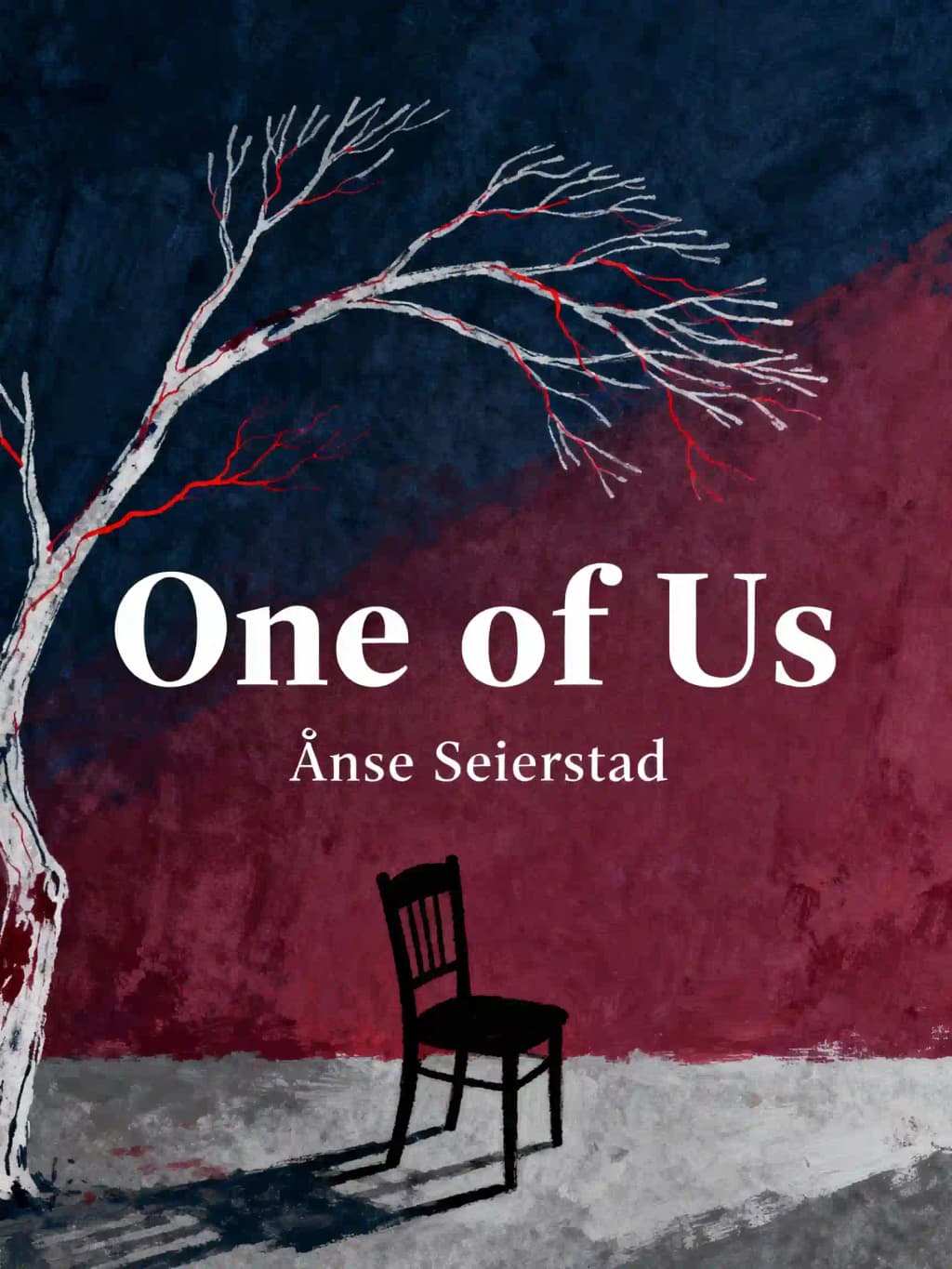
In a chilling twist of fate, February 13, 1979, marked both the birth of Anders Behring Breivik and the beginning of a devastating narrative that would culminate in Norway's darkest day. "One of Us" by Asne Seierstad has become one of the most profound examinations of modern terrorism, earning praise from Barack Obama who called it "a remarkable book" that helped him understand "how terrorism can happen anywhere." The book's meticulous reconstruction of the 2011 Norway attacks that claimed 77 lives has been translated into 30 languages, with The New York Times describing it as "harrowing but necessary reading." What makes this work particularly haunting is how it transforms our understanding of extremism-not as something foreign or distant, but something that can emerge from within the fabric of even the most peaceful societies. As readers follow the parallel lives of the perpetrator and his victims, we're forced to confront an unsettling question: how does someone become capable of such calculated violence while appearing so ordinary?
第 2 章
The Making of a Monster: Breivik's Early Years
Anders Behring Breivik entered the world on a cold winter day in Oslo, born to a diplomat father and a younger mother who already regretted her pregnancy. Their conflicting narratives began immediately-she saw her newborn as "abnormal," while his father declared him "a fine boy." This fundamental discord would shape Anders' early development as his parents' marriage quickly deteriorated.
When Anders was just six months old, his father Jens was appointed to the Norwegian Embassy in London. His mother Wenche followed but grew increasingly isolated and depressed in their grand diplomatic residence. After just six months as an embassy wife, she packed up and returned to Oslo, filing for divorce. Three years would pass before Anders would see his father again.
Wenche's own childhood had been defined by loss and isolation. Born in 1946, she was immediately sent to an orphanage when her mother contracted polio during pregnancy. After five years, she returned home to a dark existence with a reclusive mother who blamed the child for her illness. When Wenche was eight, her father died, and her home grew darker still. Her aggressive half-brother physically abused her, forcing her to hide behind the stove or wander alone through town. By twelve, she had contemplated suicide.
After returning from London, Wenche's life unraveled further. Living in Jens's flat in Oslo, she felt exhausted and isolated with her two children. She became convinced something was wrong with Anders, who had transformed from a calm baby into a clingy, whining child. She felt like "peeling him off her." By May 1981, she sought help from social services, requesting respite care for both children but emphasizing her inability to cope with Anders, who had just turned two.
As her depression deepened, she contemplated abandoning the children to "live her own life." She complained that Anders would hit her and her daughter Elisabeth, cling to her at night, and never give her peace. Elisabeth, now eight, became a "spare mother" for both Anders and Wenche.
By 1983, when Anders was four, specialists at the Centre for Child and Adolescent Psychiatry observed a joyless boy who was "surprisingly undemanding... cautious, controlled... extremely clean and tidy... often looks sad." Anders activated defensive mechanisms whenever someone attempted connection, displaying a feigned smile. The specialists concluded his issues stemmed from his home situation rather than inherent psychological damage. His mother had made him a scapegoat for her frustrations.
Psychological testing revealed Wenche lived in a private internal world with underdeveloped relational skills. Staff witnessed her behavior toward Anders swing from pleasant to brutal, once shouting, "I wish you were dead!" The psychiatrists noted a "pathological relationship" where Wenche simultaneously tied Anders to her symbiotically while aggressively rejecting him.
Despite recommendations for foster care, legal battles between his parents resulted in Anders remaining with his mother. By midsummer 1984, when Anders was five, the child welfare board unanimously ruled: "The necessary conditions for taking the child into care have not been met. Case dismissed."
第 3 章
Seeking Identity: From Tagging to Politics
At thirteen, Anders needed a new identity. Before he could begin tagging walls, he needed the perfect writer name-short, with cool letters that looked good together. He chose "Morg" after a Marvel Comics character, Galactus's ruthless executioner who betrayed his own race. Armed with marker pens and spray cans bought with paper route money, Anders left behind the safe confines of his childhood.
In 1992, Anders started secondary school at Ris, where few students knew him-a perfect opportunity to reinvent himself. Though still quiet during lessons, he showed newfound confidence outside the classroom. He formed a group with three other boys, bonding through shared obsession with hip-hop culture. They listened to rap constantly and attended concerts at the punk club Blitz. When Anders couldn't master breakdancing or rapping due to his high voice, he turned to graffiti.
Unlike his tennis-playing, polo-shirt-wearing classmates from wealthy homes, Anders cultivated a rebellious image with Nike shoes, oversized pants and Champion hoodies. In 1994, during the Lillehammer Winter Olympics, fifteen-year-old Anders and his friend Ahmed were arrested for tagging at a bus station. Though they received light punishment, being caught and not informing on each other earned them credibility in the graffiti community.
Anders adopted immigrant slang and mannerisms, trying desperately to fit in with the East End taggers, though experienced taggers found him mediocre and ordinary. He was drawn to immigrant gangs, seeing them as tougher and more authentic than Norwegian kids. Eventually, Anders's pretensions caught up with him, and his friends ejected him from their group. He broke one of graffiti's cardinal rules by tagging over another artist's work, declaring himself a "king" when he was still considered a "toy" (novice).
Rumors spread that Anders had informed on other taggers, resulting in complete social rejection. At school, he became a target for bullying, with his mannerisms mocked and his appearance caricatured. Anders began obsessively weight training, transforming from thin to muscular, though this only further isolated him. After Anders's third arrest, his father Jens Breivik disowned him completely. Anders was fifteen and would never see his father again.
Years later, after abandoning his tagging phase and its leftist associations, Anders joined the Progress Party-the party that most actively opposed taggers. After leaving Hartvig Nissen school where he felt uncomfortable among the cultural snobs, he enrolled at Oslo Commerce School. There he reinvented himself, trading his tagger style and "Kebab Norwegian" for slimmer Levi's, polo shirts with crocodile logos, and refined speech.
He began speculating in shares, once making 200,000 kroner in a single transaction. His focus on business ventures led him to drop out six months before graduation. Throughout this period, he boasted of studying business management and took part in the Progress Party's political training course, drawn increasingly into their social scene.
第 4 章
The Progress Party and Political Disillusionment
The Progress Party emerged from Anders Lange's anti-tax, anti-government intervention party founded in 1973. After Lange's death, Carl Ivar Hagen took over and renamed it the Progress Party. The party gained momentum in 1987 when Hagen read a fabricated letter from "Mustafa" threatening that Norway would become Muslim. This inflammatory moment tripled the party's support to 12%.
Throughout the 1990s, the party positioned immigrants against the elderly as competing for welfare resources. By 1996, when Breivik joined, the party had shifted its rhetoric toward criticizing Islam specifically. After 9/11, the party intensified its us-versus-them rhetoric, gaining popularity and expanding local branches to attract young people like Anders.
As summer 2002 approached during Norway's hottest year in a century, Anders focused intensely on securing a nomination for the city council elections. He became active on the Progress Party Youth's online forum, writing passionately against what he called Norway's "loser mentality" and advocating American-style ambition.
Drawing on his childhood habit of creating battle tactics and maps, Anders methodically charted the party organization and planned his political future, registering himself as a preliminary candidate for the upcoming election. Despite his efforts, while others were called in for interviews and secured places on the list, Anders was never even considered.
By autumn, his posts grew increasingly bitter about networking being valued over competence. He eventually abandoned the party entirely, claiming a party leader had "stabbed him in the back." His final posts in summer 2003 predicted civil war once Muslims became the majority in Norway.
第 5 章
Isolation and Radicalization: The World of Warcraft Years
After leaving politics behind, Anders found success selling counterfeit diplomas online. Through websites like diplomaservices.com, he offered bachelor's, master's and doctorate certificates for around $100 each. He claimed the business was legal as long as they didn't forge official stamps, describing them as "decorative diplomas." When a newspaper began investigating fake diploma operations, Anders found himself "skating on thin ice," though he continued the lucrative business.
While Anders's friends pursued relationships, he remained isolated and complained that Norwegian women were "too liberated." In 2004, he ordered contact information for Ukrainian women from a dating website. His selections were all blue-eyed, slim teenagers. After corresponding with Natascha from Belarus, Anders visited Minsk. Despite language barriers, Natascha was impressed by his apparent success and education. Anders later brought her to Oslo, where his mother was delighted, framing their photo and declaring it "true love." The relationship quickly soured, with Anders calling Natascha a "gold-digger" while she labeled him a "male chauvinist."
Anders's life was deteriorating. After reconnecting briefly with his father after eleven years of silence, exaggerating his success in business, no further contact followed. His financial situation worsened as the stock market plummeted. He abandoned his diploma forgery business, fearing media exposure. At twenty-seven, he moved back into his mother's home.
In this difficult period, Anders found refuge in the online game World of Warcraft, where he created the character Andersnordic, a human mage. The game offered him the perfect meritocracy he craved-a world where skill and dedication were rewarded, where he could choose his identity and rise through achievement rather than social connections.
World of Warcraft offered Anders the perfect escape. Players chose their own race and class, starting equally and advancing through demonstrated ability. For Anders, the game's clear rules and predictable rewards provided comfort that real life lacked.
Initially quiet and unassuming, Anders gradually transformed as he advanced through the game's hierarchy, becoming more affable and talkative. Fellow players came to know him as cheerful and inspiring-"a tonic to depression." He dedicated himself completely, often playing sixteen to seventeen hours daily. After six months of intensive play, he achieved leadership of a guild, earning a prestigious title.
His gaming schedule increasingly conflicted with real life. After five years isolated in his room playing the game, his business ventures collapsed and his life unraveled while he remained trapped in the virtual world.
第 6 章
The Manifesto: Crafting a Terrorist Ideology
Anders had discovered a new world adjacent to gaming-extremist websites like Gates of Vienna, Stormfront, and Jihad Watch. He could sit in the same chair, facing the same screen, but instead of World of Warcraft, he clicked into sites filled with anti-Islamic content, historical battle imagery, and white nationalist rhetoric.
These online spaces fostered a strong sense of "us versus them" solidarity, requiring nothing from Anders except his attention. He particularly admired Norwegian blogger Fjordman, "The dark prophet of Norway," who predicted Europe's destruction through Muslim immigration.
Anders filled his manifesto with plagiarized content, crediting hardly anyone as everything was subsumed into his pseudonym Andrew Berwick. He blamed "Political Correctness" (which he equated with cultural Marxism) for Europe's decline, lamenting the loss of 1950s values when women were housewives rather than soldiers. He railed against feminism, claiming it was "ubiquitous and all-consuming" in television, military, government, and schools.
The manifesto contained extensive anti-Islamic content, presenting selective Qur'anic verses out of context to portray Muslims as violent conquerors with a secret plan to subjugate Europe. He endorsed the "Eurabia theory" that EU leaders had opened doors to Muslim immigration for oil and market access. While his intellectual heroes wouldn't advocate deportation of Muslims, Breivik felt "called" to go further.
His manifesto detailed elaborate murder plans: bombing journalist conferences, attacking Labor Party gatherings disguised as a fireman, or targeting May Day celebrations. He categorized "traitors" into classes A, B, and C, with death sentences for the first two groups. Muslims would face deportation by 2020 unless they converted to Christianity, abandoned their languages, and accepted strict limitations.
He positioned the Knights Templar as the organization to lead both civil war and reconstruction, claiming anyone who took up arms automatically joined this decentralized network. He awarded himself the highest rank-Justicious Knight Commander-and detailed elaborate self-initiation rituals involving candles, skulls and swords.
Behind his ruthless tone lurked a chilly friendliness, addressing not just anyone but potential converts already sympathetic to his cause. He offered tactical advice: disguise yourself as police, secure financing through jobs or maxed credit cards, improve combat skills through games like Call of Duty, and create cover stories.
After victory in his imagined civil war, he envisioned establishing surrogate mother factories in low-cost countries to produce "ten or so blond, blue-eyed children" each, with research into artificial wombs to replenish the "Nordic gene pool." His ideal society would enforce sexual abstinence before marriage, penalize divorce, and automatically grant fathers custody of children.
第 7 章
The Victims: Young Lives Full of Promise
While Anders descended into extremism, the young people who would become his victims were building lives of purpose and engagement. Simon Sb, a politically active teenager from northern Norway, called his mother Tone from a youth conference asking for permission to join the AUF (Labour Party's youth organization). Simon had been elected to his school's student council and was representing his school at a county youth conference.
Simon grew up in the rugged Norwegian wilderness, learning independence early. His father Gunnar gained local fame writing scripts and lyrics for schools and children's clubs. The children navigated the harsh northern environment alone from their first year of school, walking through darkness and snow to catch the school bus. Once, seven-year-old Simon narrowly missed colliding with a bull elk during a snowstorm. When his worried mother rushed out to check on him, he calmly reassured her: "Don't worry about me, Mum. I'm a man of nature."
On his sixteenth birthday, Simon joined the Norwegian Union of Municipal and General Employees, despite not yet having a job. When friends questioned this, he argued passionately that everyone should join unions to strengthen workers' rights and protect young people from exploitation. After starting at Sjvegan Upper Secondary, Simon contacted the AUF office about starting a local branch. Over tacos at Simon's home, they strategized their recruitment approach. During lunch break the next day, Simon successfully recruited eighty new members, focusing on issues like preventing school closure and getting hot lunches.
Meanwhile, on Nesodden peninsula near Oslo, fifteen-year-old Bano Rashid, a Kurdish immigrant and recent AUF member, deliberately sat next to Nina Sandberg, the Labour Party's mayoral candidate, on the bus. With enthusiasm, she introduced herself as a fellow local politician and declared her family's support.
Bano's parents Bayan and Mustafa had fled Iraq during Saddam Hussein's genocidal Al-Anfal campaign against the Kurds. Despite their professional backgrounds as an accountant and mechanical engineer, they struggled to integrate into Norwegian society, feeling diminished by unemployment and language barriers.
Their greatest joy came from seeing their children adapt-participating in ballet, gymnastics, handball and football. The Rashid family embraced Norwegian customs, hanging advent stars at Christmas. When offered exemption from learning New Norwegian (the country's second official language), Bano indignantly refused special treatment, insisting on full participation. She guided her parents through Norwegian social norms, advised them on house purchases, and published articles about immigration and women's rights.
During a summer trip with her friend Erle and Erle's mother Rikke, an under-secretary in the Ministry of Trade, Bano asked earnestly: "How can I get your life?" Rikke advised education in law or political science, and encouraged Bano to stand in local elections. Ambitious Bano mused that while becoming Prime Minister might be unrealistic, she could realistically aim to be Minister of Equality to "liberate women from oppression."
第 8 章
Preparing for Terror: The Farm and the Bomb
In May 2009, Anders established Breivik Geofarm as a front company for purchasing bomb-making materials. Throughout spring 2010, he acquired equipment online-a bulletproof case, smoke grenades, laser sights, silencers, and blue flashing lights. By summer, he searched for an isolated farm near the Swedish border, writing to local councils that he needed quiet to write a book about share trading.
After signing a rental contract on April 5th, 2011, he immediately registered Breivik Geofarm with agricultural authorities, changing its purpose to root crop production. On May 4th, he moved to the farm, bringing six tonnes of fertilizer delivered partly to the barn and partly beside some birch trees.
At Valstua farm, Anders meticulously documented his bomb-making process, recording both successes and failures. His first day was spent constructing the metal framework, followed by crushing aspirin tablets to extract acetylsalicylic acid. When manual crushing proved too laborious, he improvised with a twenty-kilo dumbbell.
The steroids affecting his mental state caused rapid mood swings. After multiple failures extracting acid from aspirin, he discovered a little-known YouTube video showing an unconventional method. Despite uncertainty about the quality of his product, he proceeded with the technique, spending an entire week filtering.
His greatest challenge came with processing the fertilizer. After attempting to crush pellets with dumbbells proved ineffective, he remembered reading about terrorists using electric mixers. Testing twelve different models, he discovered Electrolux blenders worked best, purchasing six identical units from different towns. By May's end, his hands were so damaged he could barely move his fingers, forcing him to reduce his planned bomb size.
Breivik's operation became increasingly mechanical as he refined his process. Despite physical exhaustion forcing him to rest, he established an efficient routine, processing fertilizer bags in as little as thirty-two minutes. When blenders broke down, he simply replaced them with new ones. By June 6th, he had crushed 1,600 kilos of fertilizer and soaked them in diesel, leaving fertilizer dust coating everything, including his lungs despite wearing a mask.
In early July, Breivik tested his planned route, driving to Utya island. There he studied the MS Thorbjrn ferry and contemplated whether bullets would penetrate its hull. He entered the coordinates into his GPS, marking them as "WoW1" and "WoW2," preparing a cover story about organizing a computer gaming conference if questioned by police.
第 9 章
July 22: Norway's Darkest Day
The "Commander of the Norwegian anti-communist resistance movement" began his day of terror methodically. Dressed in casual clothes, he prepared cheese and ham sandwiches, set up a new high-speed modem, and readied his manifesto for distribution to thousands of email addresses. He lied to his mother about going to a computer shop, while she planned to make his favorite spaghetti bolognese for dinner.
After checking his explosive device in the van parked at the garden center, he drove his Doblo loaded with weapons to Hammersborg torg near the government quarter, carefully paying for parking to avoid attention. He reconnoitered the area, questioned a taxi driver about government workers' schedules, and returned home to finalize sending his manifesto.
While Breivik prepared his attack, life on Utya continued despite the pouring rain. Bano and her friends explored "Lovers' Path" that circled the island. Young couples like Simon and Margrethe strolled together, sitting on rocks until the rain drove them back. Throughout the campsite, tents filled with laughter and music.
Former Prime Minister Gro Harlem Brundtland addressed the youth camp about women's rights and equality. Bano and her sister Lara, barefoot in the damp hall, listened intently as she warned about potential backlashes against gender equality. After lunch, Brundtland met with local election candidates including Bano, advising them to "be yourself" to earn trust.
After attempting to surrender at 18:01, Breivik continued his methodical killing when no one called him back. As he moved south along the beach, Delta forces finally arrived at the island at 18:27, but they were directed north where Breivik had last been seen, while he continued south.
Reaching the southern tip, Breivik encountered survivors partially hidden in bushes. When girls spotted him and called out "Police! Help us!" he approached calmly, asking "Which of you need help?" before opening fire. Above, an NRK helicopter inadvertently filmed the massacre, though the cameraman couldn't see clearly what was happening.
Meanwhile, Havard Gasbakk and five other Delta officers arrived at the island. One secured the ferry landing while the others moved south in formation. They had to navigate through thick undergrowth, following the sound of gunshots. As they advanced, Breivik continued his methodical killing.
The Delta team advanced cautiously, eventually spotting movement and encountering Breivik in his police uniform. They shouted "Delta, Delta!" and ordered him to stop with weapons aimed. After conflicting commands to kneel or lie down, Breivik complied. Gasbakk jumped on him, handcuffed him, and asked if there were others. Breivik replied, "There is only me. There is only me."
第 10 章
Aftermath: A Nation Mourns and Rebuilds
As evening fell, the Sb family's living room filled with concerned relatives, neighbors, and friends. News reports initially mentioned seven deaths, then ten, while the family desperately tried to contact Simon or get information through official channels.
While Gunnar maintained outward composure on the phone with police, his shirt was soaked with sweat. Tone, Simon's mother, collapsed in the utility room, rocking and repeating "Not my Simon," before being helped to join Gunnar on the veranda where they smoked to help them breathe.
Suddenly, Simon's girlfriend Kristine arrived in tears, crying "Simon's dead!" She had spoken with Brage Sollund, who had been hiding in the thicket during the attack. Though Brage hadn't witnessed it himself, he told her "You won't be seeing Simon again," based on what others had reported.
After learning of the attack, the Rashid family rushed to find their daughters. When Lara called her father from a borrowed phone, she broke down: "Dad... I don't know where Bano is." The family made their way to Sundvolden Hotel, with fourteen-year-old brother Ali reassuring his mother: "You know how smart Bano is. She's the best at finding good places to hide."
In the taxi, Mustafa recited the Ayat al-Kursi prayer from the Qur'an-the same prayer he had turned to during the Iraqi civil war years before. Bayan wept for her firstborn daughter, while another waiting mother named Kirsten, whose son Havard was also missing, comforted her.
Prime Minister Jens Stoltenberg flew by helicopter to Sundvolden Hotel after a night of emergency meetings. Looking down on Utya-an island he'd visited annually since age fifteen-he saw white blankets dotting the shore like pearls, each representing a life lost. Though he'd been told the death toll, seeing it made the number incomprehensible.
At Sundvolden Hotel, Stoltenberg moved through the crowd of grieving families. He knelt beside those unable to stand, embraced parents, and listened to their stories. When questioned by foreign journalists about security preparedness, he maintained confidence in the police while acknowledging his emotions: "Utya is the paradise of my youth and yesterday it was turned into a hell."
On Sunday, Prime Minister Stoltenberg delivered an emotional speech that became Norway's response to the tragedy: "Our answer is more democracy, more openness and more humanity. But never naivety."
That Monday, over a million Norwegians gathered in towns and cities across the country, carrying roses. In Oslo, more than 200,000 people assembled at the Town Hall square. The Crown Prince said "Tonight the streets are filled with love" as the crowd sang the national anthem. Prime Minister Stoltenberg declared from the stage: "Evil can kill a human being, but never conquer a people!"
第 11 章
Justice and Healing: The Trial and Beyond
On the morning of his court appearance, Anders Behring Breivik was transported from Ila prison in an armored white van. Upon arrival at the Oslo courthouse, he was escorted through corridors to a security cell in the basement. Dressed in a dark suit with a freshly ironed shirt and copper-colored tie, he viewed the trial as the third phase of his operation-a stage for his performance.
In August, twenty days after the attacks, Breivik met psychiatrists who insisted on security precautions during their interviews. The psychiatrists concluded he suffered from paranoid schizophrenia, noting his "grandiose ideas," use of neologisms, and unclear self-identity. They deemed him not criminally responsible.
Surprisingly, many victims' families supported Breivik's desire for a second psychiatric assessment, wanting him held accountable rather than escaping formal sentencing. Two new forensic psychiatrists were appointed. Having seen public ridicule of his "chivalric" persona, Breivik strategically toned down his rhetoric, now presenting himself as a "foot soldier rather than a messiah." They ultimately diagnosed him with dissocial personality disorder with narcissistic traits, concluding he was criminally responsible.
The trial continued with the prosecution playing the emergency call from a survivor hiding in a toilet on Utya while Breivik was shooting nearby. The courtroom fell completely silent as they listened to the three-minute recording that captured fifty shots and thirteen killings. Many in the courtroom wept openly, while Breivik merely examined his fingernail before looking up again.
On day two of the trial, Breivik took the witness stand with a stack of papers. After adjusting his cufflinks, he began reading rapidly in a monotone voice, positioning himself as "a representative of the Norwegian and European resistance movement." He complained about how the media portrayed him as "pathetic," "mentally ill," and accused him of various perversions.
The prosecutors faced difficult decisions about how to present evidence of the murders. While standard procedure would display photos of victims, the bereaved families opposed showing any pictures. For each victim, the court displayed a picture and text chosen by the bereaved alongside clinical descriptions of their deaths.
After a week of autopsy reports and eulogies, the trial moved to survivor testimonies. The survivors spoke with gravity and restraint about their experiences. Many expressed survivor's guilt and downplayed their ongoing struggles with simple phrases like "It's going fine. Kind of at half speed" or "It varies a lot, up and down, pretty hard going actually."
Viljar Hanssen, who had been shot five times including once through his eye and into his brain, prepared meticulously for his May 22 court appearance. Despite his physical and emotional trauma, he rehearsed his testimony carefully, determined not to break down and give Breivik satisfaction. In court, Viljar spoke clearly about his injuries and recovery, even showing humor: "I lost this eye, but that's useful: it means I don't have to look over there," nodding toward Breivik.
On August 24, 2012, Breivik received the maximum penalty allowed by Norwegian law: twenty-one years. However, the detention in custody meant that as long as he remained a threat to society, his sentence could be extended indefinitely by five-year increments-potentially until his death.
第 12 章
Living with Loss: Families Rebuild
Gunnar, Simon's father, relives his son's final moments on Utya in his mind constantly. The grief is like falling into a black hole. Two years after the tragedy, the Sb family begins rebuilding their lives. They acquire a cabin in the mountains-the Dahl cabin-which becomes a healing project. When they first visit on May 17th (Norway's National Day), they burn down the old structure, too painful to celebrate in town where memories of Simon's speech the previous year still linger.
Throughout the summer, friends and neighbors appear with materials, food, and helping hands, rebuilding the cabin from scratch. By summer's end, it's complete with a new sign: "Simonstua" - Simon's Cottage. Though the black hole of grief still threatens to swallow them, Gunnar reflects that they've "started to see the starlit sky. And the northern lights. And all the beauty around them."
Gerd Kristiansen, Anders's mother, hears her son's voice asking "Are you in your weaver's heaven, Mum?" She recalls how he had admired her weaving since childhood, once requesting a blue "sky" blanket which she had just completed before he left for Utya. Two years after his death, she struggles to return to weaving, finding her fingers stiff and slow.
Contrary to what people expect, her grief hasn't faded but grown, making her afraid to meet others for fear of breaking down. She and her husband Viggo exist "minute by minute," feeling that while time moves forward, their lives have stopped. Their greatest fear is that Anders would be forgotten. Viggo painted Anders's garden hut the blue-green color his son had chosen but never found time to apply himself. They keep Anders's room intact, turning his light on each evening and saying goodnight before bed.
What began as a simple Newsweek article assignment evolved into something much deeper. The author expresses profound gratitude to those who shared the most: the Rashid family, the Kristiansens, the Sbs, and Viljar Hanssen's family-people who revealed "the worst thing of all: losing someone they loved."
Despite the horror of July 22, 2011, Norway responded not with vengeance but with more democracy, more openness, and more humanity. The survivors and families of victims continue to rebuild their lives, finding meaning in their loss and strength in their communities. Their stories remind us that even in the darkest moments, humanity's capacity for resilience and compassion can prevail over hatred and violence.