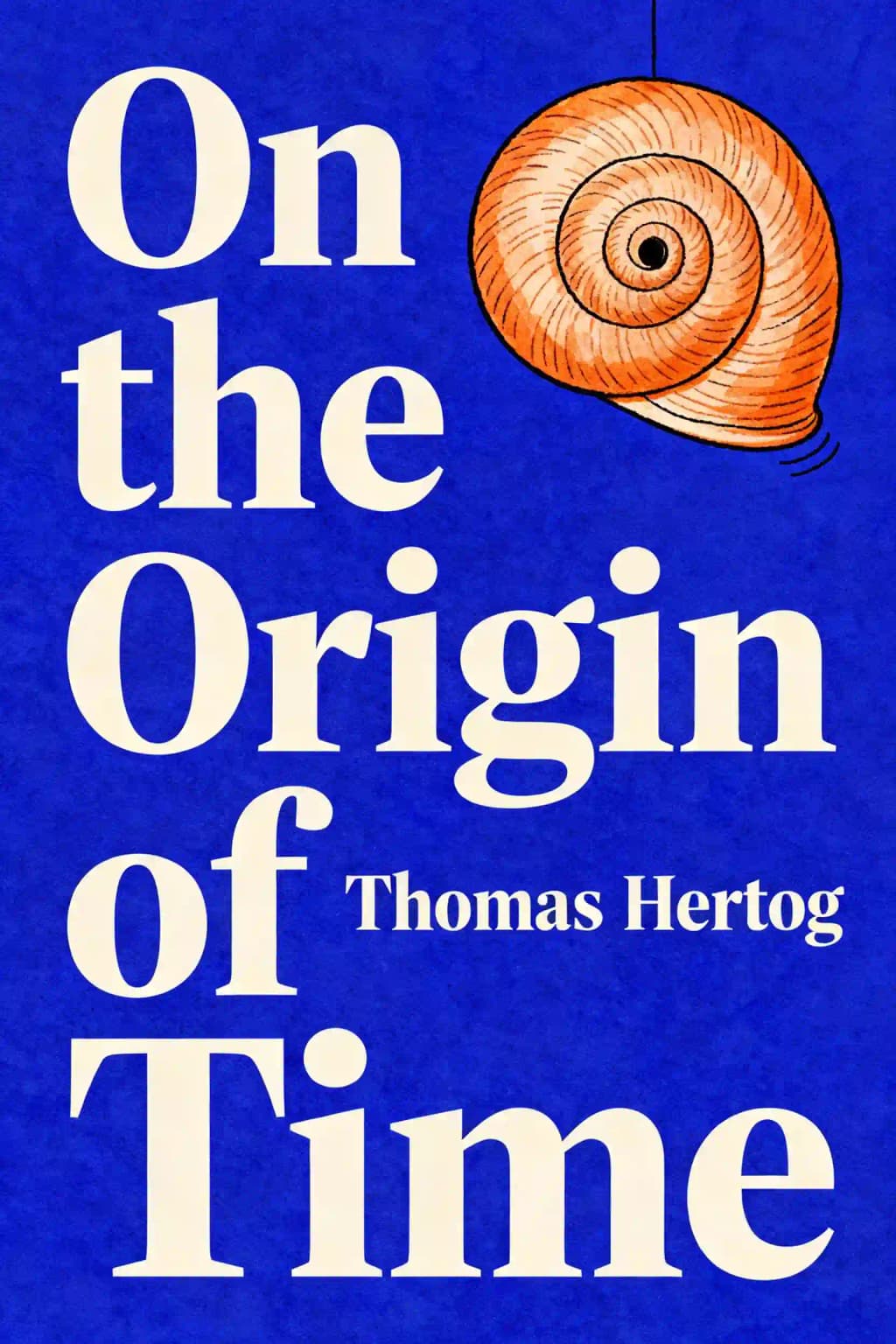
Stephen Hawking's final cosmological vision, co-developed with physicist Thomas Hertog, challenges our understanding of time itself. Like "McCullough-esque storytelling," this mind-bending journey explores how our universe's laws seem suspiciously perfect for life - leaving readers with profound questions about existence.
通过作者的声音感受这本书
将知识转化为引人入胜、富含实例的见解
快速捕捉核心观点,高效学习
以有趣互动的方式享受这本书
A computer screen glowed in a Cambridge office, displaying a single line: "To boldly go where Star Trek fears to tread." Stephen Hawking sat motionless in his wheelchair, ALS having stolen his movement decades earlier, yet his mind burned with a question that would reshape our understanding of existence itself. On his wall hung a photo of him playing poker with Einstein and Newton on the Enterprise's holodeck-a playful reminder that the biggest gambles happen not in cards, but in cosmology. His greeting that June day in 1998 was characteristically blunt: "Andrei claims there are infinitely many universes. This is outrageous." When asked why other universes should matter, his answer cut to the heart of everything: "Because the universe we observe appears designed. Why is the universe the way it is? Why are we here?" This wasn't idle curiosity. It was the beginning of a twenty-year collaboration that would challenge the multiverse, redefine cosmic origins, and place humanity back at the center of the cosmic story-not through arrogance, but through a radical new understanding of how observation itself shapes reality. Imagine adjusting the universe's settings like tuning a radio. Turn gravity slightly stronger, and stars collapse into black holes before life can emerge. Weaken it, and stars never ignite. Our universe sits in an impossibly narrow sweet spot. The cosmic expansion history reads like a perfectly choreographed dance: rapid initial inflation, a slowdown allowing galaxies to form, then acceleration again. Each phase arrived exactly when needed. The precision goes deeper. Temperature variations in the cosmic microwave background-the afterglow of the big bang-measure exactly one part in 100,000. Slightly larger, and the universe would have collapsed into black holes. Slightly smaller, and galaxies would never have formed. Most staggering is dark energy's value: 10^-123 of what physics predicts it "should" be. This incomprehensibly small number allowed the universe to "hesitate" for eight billion years before accelerating again-creating the window for galaxies, stars, planets, and eventually us. It's like discovering that a hurricane randomly arranged grains of sand into a working computer.
将《On the Origin of Time》的核心观点拆解为易于理解的要点,了解创新团队如何创造、协作和成长。
将《On the Origin of Time》提炼为快速记忆要点,突出坦诚、团队合作和创造力的关键原则。

通过生动的故事体验《On the Origin of Time》,将创新经验转化为令人难忘且可应用的精彩时刻。
随心提问,选择声音,共同创造真正与你产生共鸣的见解。

"Instead of endless scrolling, I just hit play on BeFreed. It saves me so much time."
"I never knew where to start with nonfiction—BeFreed’s book lists turned into podcasts gave me a clear path."
"Perfect balance between learning and entertainment. Finished ‘Thinking, Fast and Slow’ on my commute this week."
"Crazy how much I learned while walking the dog. BeFreed = small habits → big gains."
"Reading used to feel like a chore. Now it’s just part of my lifestyle."
"Feels effortless compared to reading. I’ve finished 6 books this month already."
"BeFreed turned my guilty doomscrolling into something that feels productive and inspiring."
"BeFreed turned my commute into learning time. 20-min podcasts are perfect for finishing books I never had time for."
"BeFreed replaced my podcast queue. Imagine Spotify for books — that’s it. 🙌"
"It is great for me to learn something from the book without reading it."
"The themed book list podcasts help me connect ideas across authors—like a guided audio journey."
"Makes me feel smarter every time before going to work"

免费获取《On the Origin of Time》摘要的 PDF 或 EPUB 版本。可打印或随时离线阅读。