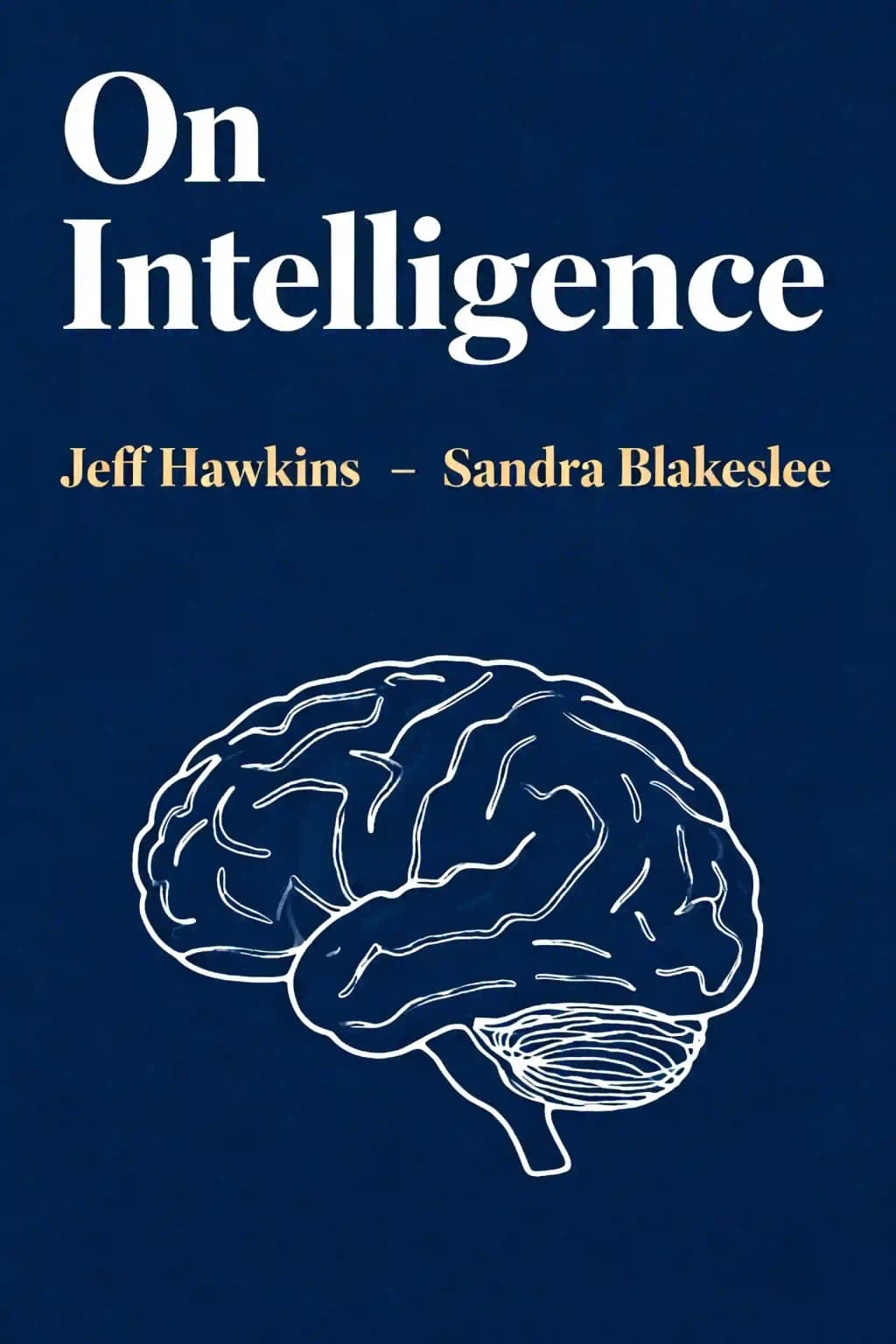
PalmPilot inventor Jeff Hawkins revolutionizes our understanding of intelligence, arguing the brain is a memory-prediction system, not a computer. Elon Musk once called it "essential reading" for anyone curious about AI's future. What if consciousness itself is just sophisticated pattern recognition?
通过作者的声音感受这本书
将知识转化为引人入胜、富含实例的见解
快速捕捉核心观点,高效学习
以有趣互动的方式享受这本书
Imagine picking up your morning coffee cup. Before your fingers even touch the ceramic, your brain has already predicted its weight, texture, and temperature. This remarkable feat-performed effortlessly by your neocortex-represents the true essence of intelligence. Not the behavioral outputs that AI researchers have chased for decades, but prediction. This insight forms the cornerstone of Jeff Hawkins' groundbreaking theory in "On Intelligence," a book that has influenced everyone from Elon Musk to Ray Kurzweil. Unlike traditional views of intelligence as computation, Hawkins reveals a profound truth: our brains don't compute solutions-they predict them based on stored patterns. This fundamental shift in understanding intelligence has maintained relevance for nearly two decades while traditional AI approaches repeatedly hit walls of limitation. For decades, artificial intelligence has overpromised and underdelivered. The field's founding assumption-that the brain is just another kind of computer with intelligence emerging from symbol manipulation-led researchers down a frustrating path. Remember when IBM's Deep Blue defeated chess champion Garry Kasparov? The media hailed it as a triumph of machine intelligence, but Deep Blue wasn't intelligent-it was just incredibly fast, evaluating 200 million positions per second without understanding chess any more than a calculator understands mathematics. The problem stems from AI's behavior-centric approach. Following Alan Turing's influence, researchers equated intelligence with producing correct outputs for given inputs. But intelligence isn't about behavior-you're still intelligent while lying in the dark, thinking. Neural networks emerged as an alternative but quickly settled on simplistic models that missed three essential brain characteristics: time-based processing, feedback connections, and hierarchical architecture.
将《On Intelligence》的核心观点拆解为易于理解的要点,了解创新团队如何创造、协作和成长。
将《On Intelligence》提炼为快速记忆要点,突出坦诚、团队合作和创造力的关键原则。

通过生动的故事体验《On Intelligence》,将创新经验转化为令人难忘且可应用的精彩时刻。
随心提问,选择声音,共同创造真正与你产生共鸣的见解。

"Instead of endless scrolling, I just hit play on BeFreed. It saves me so much time."
"I never knew where to start with nonfiction—BeFreed’s book lists turned into podcasts gave me a clear path."
"Perfect balance between learning and entertainment. Finished ‘Thinking, Fast and Slow’ on my commute this week."
"Crazy how much I learned while walking the dog. BeFreed = small habits → big gains."
"Reading used to feel like a chore. Now it’s just part of my lifestyle."
"Feels effortless compared to reading. I’ve finished 6 books this month already."
"BeFreed turned my guilty doomscrolling into something that feels productive and inspiring."
"BeFreed turned my commute into learning time. 20-min podcasts are perfect for finishing books I never had time for."
"BeFreed replaced my podcast queue. Imagine Spotify for books — that’s it. 🙌"
"It is great for me to learn something from the book without reading it."
"The themed book list podcasts help me connect ideas across authors—like a guided audio journey."
"Makes me feel smarter every time before going to work"

免费获取《On Intelligence》摘要的 PDF 或 EPUB 版本。可打印或随时离线阅读。