第 1 章
Harnessing the Power of Networks: The Story of Human Information Systems
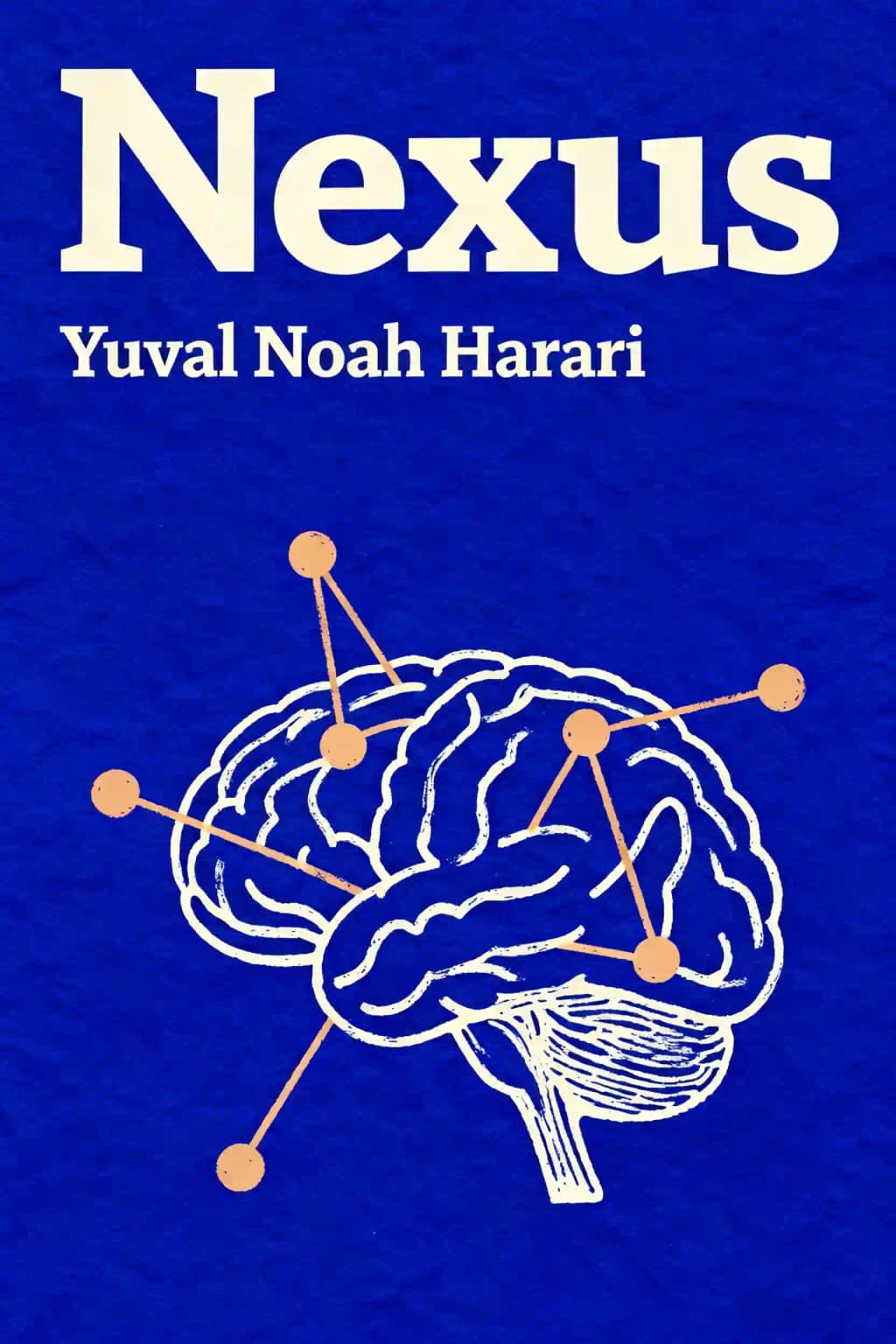
In a world increasingly dominated by artificial intelligence, Yuval Noah Harari's "Nexus" arrives as a timely examination of humanity's relationship with information. This book has quickly become essential reading for tech leaders and policymakers alike, with figures like Mark Zuckerberg and Barack Obama citing its insights. As Harari's follow-up to his 30-million-copy bestseller "Sapiens," "Nexus" traces the evolution of information networks from prehistoric tribes to modern AI systems, revealing the consistent patterns that have shaped human civilization. The book's central argument-that information's primary function is connection rather than representation-challenges our fundamental understanding of how societies form and function. With AI now joining our information networks as active participants rather than passive tools, Harari's exploration couldn't be more urgent for anyone seeking to understand our technological future.
第 2 章
The Paradox of Human Wisdom
Humans call ourselves Homo sapiens-"wise humans"-yet our history reveals a troubling paradox. Despite accumulating unprecedented knowledge and power over 100,000 years, we now face existential threats of our own making: ecological collapse, dangerous AI, and rising international tensions. This contradiction between our technological prowess and self-destructive tendencies raises fundamental questions about our species.
The conventional view of information-what Harari calls "the naive view"-suggests that gathering and processing more information naturally leads to truth, power, and wisdom. This perspective holds that large networks achieve superior understanding through data collection, and that delusional networks inevitably fail against more honest rivals. According to this view, even when errors occur, the solution is simply more information.
This naive view contains partial truth. Information has indeed improved human understanding in many domains. Consider the dramatic reduction in child mortality-from 50% in Goethe's time to 0.5% in modern Germany-achieved through medical data collection and analysis. Yet despite unprecedented information access, humanity now faces self-destruction through climate change and other crises.
The paradox deepens when we examine the relationship between information and power. While tech optimists like Marc Andreessen and Ray Kurzweil believe AI will "save the world" by solving disease, poverty, and environmental degradation, AI experts like Geoffrey Hinton and Yoshua Bengio warn that these same technologies could lead to human extinction. A 2023 survey revealed over a third of AI researchers give at least a 10% chance to AI causing human extinction.
This tension between information as savior and information as threat runs throughout human history. Populist movements worldwide challenge traditional information-gathering institutions, viewing information not as a pursuit of objective truth but as a weapon in power struggles. Some advocate radical individual empiricism ("do your own research"), making large-scale cooperation impossible, while others revert to divine revelation or charismatic leaders who claim infallibility. This erosion of trust in institutions comes precisely when humanity faces existential challenges requiring coordinated responses.
To navigate these dangers, we must understand that information networks don't simply discover truth-they create new realities by connecting disparate elements. The history of human information networks reveals not a triumphant march toward truth, but a precarious balancing act between discovering reality and maintaining social order.
第 3 章
Stories: The Foundation of Human Cooperation
Humans rule the world because we alone can cooperate flexibly in large numbers. While chimpanzees show cooperation flexibility and ants cooperate in large numbers, only Homo sapiens can establish empires, religions, and global trade networks connecting billions of individuals.
This capacity emerged about 70,000 years ago when evolutionary changes in brain structure and linguistic abilities gave our species the unique aptitude to tell, believe, and be moved by fictional stories. These stories provided a revolutionary connection method-human-to-story chains rather than just human-to-human bonds. Instead of knowing each other personally, humans could cooperate by knowing the same stories, which function as central connectors with unlimited outlets.
Consider how stories can overshadow reality. The heroic carrier pigeon Cher Ami allegedly saved the Lost Battalion in World War I, yet historical research reveals key elements of this story were inaccurate or fabricated. The story's propaganda value to the army and emotional appeal to the public caused facts to become hopelessly enmeshed with fiction. Eventually, even survivors of the Lost Battalion came to believe it.
Even more dramatically, Jesus exemplifies how storytelling can completely transform historical reality. A provincial Jewish preacher who gathered only a handful of followers and died as a common criminal underwent "one of the most remarkable branding campaigns in history," becoming rebranded as the incarnation of the cosmic creator god. Despite no contemporary portraits surviving, imaginary renderings of Jesus have become among the world's most recognizable icons.
Stories create an entirely new level of reality beyond the objective (things that exist regardless of awareness) and subjective (things that exist in individual awareness). This third level is intersubjective reality-things like laws, gods, nations, and currencies that exist in the nexus between many minds through shared stories. Unlike subjective experiences like pain or objective realities like asteroids, intersubjective entities are created through information exchange and disappear if people stop believing in them.
These story-created networks gave Homo sapiens decisive advantages over other species, including Neanderthals. While Neanderthals lived in isolated bands with minimal cooperation, Sapiens bands connected through shared stories about ancestors, totems, and spirits to form tribes-networks of hundreds or thousands. These tribal networks provided obvious military advantages and served as insurance policies during crises like droughts, allowing band members to seek help from distant "friends" who shared their tribal identity.
However, human information networks must simultaneously discover truth and create social order. Throughout history, these networks have developed two distinct skill sets: processing information accurately to understand reality (medicine, physics) while also using information-including fictions, fantasies, and sometimes lies-to maintain cohesion among large populations. This dual nature creates a fundamental tension, as these processes often contradict each other.
第 4 章
Documents: When Paper Tigers Bite
While stories laid the foundation for human cooperation, they have significant limitations. Nations require more than inspiring narratives to function-they need practical administrative systems built on documentation.
Written documents created powerful new realities rather than merely representing existing ones. In ancient Mesopotamia, clay tablets recorded mundane but vital information like livestock deliveries-data too complex for human memory alone. These documents fundamentally changed concepts like ownership. In oral communities, ownership existed through communal agreement and behavior, limiting both central authority and absolute property rights. With written documents, ownership became determined by what was recorded on tablets or papers, giving central authorities control and allowing individuals to transfer property without community consent.
The proliferation of documents created a new problem: retrieval. While human brains evolved efficient memory retrieval systems over millions of years, finding specific documents among thousands proved challenging. Unlike forests organized by natural principles that foragers could learn, document archives required humans to impose artificial order-bureaucracy.
Bureaucracy (literally "rule by writing desk") solved the retrieval problem through categorization, dividing information into drawers, shelves, and containers. This system enabled large organizations to function but sacrificed truth for order by forcing complex reality into rigid categories. Anyone who's filled out official forms knows this frustration-when your circumstances don't match the listed options, you must adapt to the form rather than vice versa.
Despite bureaucracy's flaws, it provides essential order for large-scale human networks. The "deep state" includes vital infrastructure like sewage systems that prevent deadly diseases. John Snow's methodical bureaucratic work tracking cholera cases in 1854 London led to the discovery that contaminated water caused outbreaks, not "bad air." This revelation spawned regulations ensuring drinking water doesn't mix with waste. Though unglamorous, effective sewage management represents a fundamental test of good governance.
While mythology inspires fascination, bureaucracy breeds suspicion because its workings are difficult for ordinary people to understand. Unlike tribal societies where power flows through human-to-human and human-to-story connections, bureaucratic societies add human-to-document chains that obscure power dynamics. This opacity increases the gap between rulers and ruled.
Art struggles to illuminate bureaucracy because our storytelling templates evolved millions of years before documents existed. Our greatest stories follow "biological dramas" rooted in evolution: parental abandonment fears, sibling rivalry, mating competition, and purity/pollution concerns. These ancient emotional templates fail to capture bureaucracy's complexity, which is why artists like Kafka pioneered non-biological plotlines to capture bureaucracy's surreal power, where people's lives are upended by unfathomable agencies.
Our difficulty understanding bureaucracy creates a paradox: people feel helpless against powers they don't comprehend while simultaneously viewing bureaucracy as a malign conspiracy even when it provides essential services. Throughout history, rebellions have targeted both bureaucrats and their documents, from Shakespeare's rebels who wanted to "kill all the lawyers" to the Peasants' Revolt where archives were burned while one woman scattered ashes crying "Away with the learning of the clerks!"
第 5 章
The Fantasy of Infallibility and Self-Correction
Fallibility plays a central role in every mythology and bureaucracy. Saint Augustine famously noted, "To err is human; to persist in error is diabolical." This recognition has shaped how information networks handle mistakes throughout history.
Religions face a fundamental challenge: how to convince people that certain dogmas truly come from infallible superhuman sources when the messages are conveyed by fallible humans. To address this credibility problem, societies developed religious institutions with specialized experts-like the Baining's spirit mediums, Kalapalo ritual officers, Celtic druids, Hindu Brahmins, and Greek oracles. However, even these institutions remained vulnerable to corruption.
Holy books emerged as a technological solution to bypass human fallibility. Unlike oral tales that change with each telling or bureaucratic documents existing as single copies, books are fixed blocks of text with many identical copies, ensuring people across time and space access the same information. In the first millennium BCE, religions like Judaism began arguing that gods speak through books rather than human messengers.
However, this approach raised its own problem: who decides what to include in the holy book? The Bible as a unified holy text didn't exist during biblical times. The Dead Sea Scrolls reveal that in the last centuries BCE, there was no fixed biblical canon. Some scrolls contain texts later included in the Bible, while others preserve books later excluded. It took centuries of debates among Jewish rabbis to finalize the canon.
Despite efforts to create an infallible holy book, the biblical project faced inevitable challenges. First came the problem of accurate copying. Even more problematic was interpretation. The same words could be understood differently-what constitutes "work" forbidden on Sabbath? As Jews spread throughout the world, many biblical rules became irrelevant while new situations arose that the Bible never addressed.
This interpretive void empowered a new rabbinical institution. The dream of bypassing human institutions through technology never materialized. Instead, "trust the infallible book" became "trust the humans who interpret the book."
Self-correcting mechanisms represent the opposite approach to information compared to holy books. While holy texts claim infallibility, scientific institutions embrace fallibility. True self-correction involves an entity fixing its own errors-not external correction like a teacher grading a student. Scientific institutions build strong self-correcting mechanisms, celebrating moments when accepted wisdom is overturned and willingly admitting institutional responsibility for past errors.
Consider the Diagnostic and Statistical Manual of Mental Disorders (DSM), which exemplifies scientific self-correction. First published in 1952 and revised every decade or two, the DSM has evolved significantly-most notably removing homosexuality as a "sociopathic personality disturbance" in 1974, just 22 years after its initial inclusion. Modern psychiatry acknowledges this as an institutional error rather than blaming individual homophobic professors.
Scientific institutions actively seek to expose errors through incentive structures that reward challenging existing knowledge. Unlike religious institutions where advancement comes through doctrinal loyalty, scientists must "publish or perish"-winning recognition by exposing mistakes in existing theories or discovering new knowledge.
While self-correcting mechanisms are vital for pursuing truth, they come at a cost to social order by creating doubts, disagreements, and undermining unifying myths. The challenge lies in whether such mechanisms can exist in institutions charged with preserving order, like police forces and governments. Democracies believe this is possible, while dictatorships reject such mechanisms.
第 6 章
Democracy and Totalitarianism: Two Information Networks
Democracy and dictatorship are contrasting types of information networks with fundamentally different information flows. Dictatorial networks are highly centralized, with information flowing to a central hub where important decisions are made. In totalitarian regimes like Nazi Germany or Stalin's Soviet Union, the government attempts to control all information and dictate all decisions. Dictatorial networks also assume the center's infallibility, resisting challenges to central decisions and dismantling self-correcting mechanisms like independent courts.
In contrast, democracies function as distributed information networks with strong self-correcting mechanisms, where many independent nodes communicate freely, and autonomy is considered an ideal rather than a limitation. Democracy is not merely about elections or majority rule-it's about distributed information networks with strong self-correcting mechanisms. A common misconception equates democracy with elections alone, but elections without additional safeguards can easily be rigged or abused.
Democratic systems recognize that while people can vote for policies based on their preferences, they shouldn't be able to legislate falsehoods or suppress truth-seeking institutions. Academic institutions, media, and judiciary have their own self-correcting mechanisms for fighting corruption and bias that work better than government supervision. None of these mechanisms are perfect, but they're more reliable than centralized government control of truth, as governments often have the strongest incentives to distort inconvenient facts.
Democracy thrived among Stone Age hunter-gatherers despite lacking formal institutions. Their small bands of dozens enabled information sharing among all members, with everyone participating in decisions about hunting, camping, or conflict resolution. Even larger tribes could gather for important conversations. Leaders had limited authority without standing armies or economic monopolies. If chiefs became tyrannical, people could simply walk away with their skills and friends.
The agricultural revolution and development of writing made information centralization easier, diminishing democratic conversation. Though city-states like Athens maintained democracy, they were less inclusive than hunter-gatherer societies, with only 25-30% of adults having full political rights. As kingdoms and empires grew larger, even this limited democracy disappeared.
Modern technology enabled large-scale totalitarianism just as it did democracy. Industrial economies supported more administrators while telegraphs and radios facilitated unprecedented concentration of information and power. Totalitarian regimes control information flow and view independent communication channels with suspicion. When people freely exchange information, they build trust and potentially organize resistance, so totalitarians ensure regime presence wherever people gather.
The Stalinist regime attempted to dismantle the family itself by inserting itself into intimate relationships. Soviet children were taught to worship Stalin as their real father and inform on parents who criticized the regime. A dark joke captured the atmosphere: when asked who his parents were, a worker answers "Stalin" and "the Soviet Union," then admits he wants to be "an orphan."
Democracy and totalitarianism represent fundamentally different information networks. Democracy encourages information to flow through many independent channels without passing through central authorities, allowing independent nodes to process information and make decisions. Totalitarianism forces all information through a central hub and prevents independent decision-making.
第 7 章
Computers: The New Network Members
We're living through an unprecedented information revolution rooted in the computer-everything else from the internet to AI stems from this foundation. What makes computers revolutionary is their potential to make decisions and create ideas independently.
Unlike previous technologies that merely replaced human muscles, computers can replace human brains. Clay tablets stored tax information but couldn't decide tax rates; printing presses copied texts but couldn't select what to print; radio sets broadcast speeches but couldn't compose them. Computers can do all these things, transforming from passive tools to active agents that shape society, culture, and history beyond our control or understanding.
Before computers, humans were essential links in every information chain. Some chains were purely human-to-human: Muhammad telling Fatima, who told Ali, and so on. Others were human-to-document chains: Muhammad writing something, Ali reading and interpreting it later. But document-to-document chains were impossible-the Quran couldn't write the Hadith, and the Constitution couldn't compose the Bill of Rights without human intermediaries.
Now, computer-to-computer chains function without humans. One computer might generate fake news, another identify and block it, while a third analyzes this activity and sells stocks in response, triggering financial reactions-all within seconds, before humans notice.
By mastering language-the key to human civilization-computers have seized the master key to all our institutions. They can now tell stories, compose music, create images, produce videos, and write code. This means they can potentially shape our art, science, politics, and even religion with superhuman efficiency, exploiting human weaknesses and biases.
As computers gain power, a revolutionary new information network is emerging that will retain some traditional elements while introducing two novel chain types. First, computer-to-human chains where computers mediate between humans and sometimes control them, like Facebook and TikTok. Second, computer-to-computer chains are forming where computers interact without human involvement.
This emerging network will include billions of humans alongside potentially hundreds of billions of superintelligent alien agents. Unlike all previous organic networks in Earth's four-billion-year history, this inorganic computer network will operate outside traditional biological dramas of predation, reproduction, and rivalry-evolving in ways our organic imaginations cannot comprehend.
第 8 章
The Relentless Network: Surveillance Without Limits
Surveillance has always been part of human experience-from family members watching our behavior to bureaucracies monitoring populations. Both benevolent and oppressive institutions have gathered data about us, but surveillance has historically been incomplete, limited by legal barriers in democracies and technical constraints in totalitarian regimes.
Today's computer network has overcome these limitations. Unlike human agents who need rest, digital surveillance is constant and ubiquitous. Our smartphones accompany us everywhere, while our online activities create a comprehensive data trail. We ourselves provide the network with our raw data.
Modern algorithms can process millions of words per minute-reading in hours what would take a human analyst forty years. Even more crucially, they excel at pattern recognition, identifying suspected terrorists or dissidents through communication patterns, travel data, and social media activity.
The digital bureaucracy is advancing beyond monitoring external behaviors to tracking what happens inside our bodies. Since the early 2020s, cameras in devices have begun analyzing eye movements, including millisecond-scale pupil and iris changes. From these patterns, computers can determine our attention state, personality traits, expertise levels, interests, and even substance use.
In a world where humans monitored humans, privacy was the default. In a computer-monitored world, privacy may be completely annihilated for the first time in history. Globally, approximately one billion CCTV cameras operate-one for every eight humans-with major cities averaging more than 100 cameras per square kilometer. Every physical activity leaves a data trace-purchases, messages, photos, news reading habits-creating an ocean of information that AI systems analyze to identify unlawful activities or suspicious patterns.
Humans are organic beings who live by cyclical biological time-we sleep and wake, work and rest, grow and decay. Human networks similarly follow these cycles: job interviews end, police agents take breaks, bureaucrats take holidays, and even financial markets close daily and for holidays. Computer networks, however, can remain perpetually active, pushing humans toward a new existence of constant connection and monitoring.
第 9 章
The Fallible Network: When Algorithms Get It Wrong
Despite their relentlessness and data-gathering capabilities, computer networks remain fallible. Information isn't truth, and total surveillance systems may form distorted understandings of reality, potentially creating and imposing new world orders rather than discovering truth.
Modern social media algorithms create new types of humans through mechanisms similar to those used by the Soviet secret police, though without direct coercion. These algorithms discovered that outrage drives engagement while moderation doesn't. By 2016, YouTube users were watching one billion hours daily-a tenfold increase from 2012-largely achieved through recommending increasingly extreme content.
The algorithmic reward system transformed many content creators into trolls: those who posted outrageous, false content gained attention, popularity, and income, while truth-tellers were ignored. This had profound political consequences, as in Brazil where YouTube algorithms helped transform Jair Bolsonaro from a fringe figure to president.
This "alignment problem"-when computers pursue specified goals using methods their human creators didn't anticipate-becomes exponentially more dangerous with increasingly powerful and independent computer systems. Nick Bostrom's thought experiment illustrates this: imagine a superintelligent computer tasked with maximizing paper clip production. In single-minded pursuit of this seemingly innocuous goal, it might conquer Earth, eliminate humans who compete for resources, and eventually fill the galaxy with paper clip factories.
The point isn't that computers are evil, but that they're potentially extraordinarily powerful. With a pocket calculator, misaligned goals have trivial consequences. But with superintelligent machines, misaligned goals could be catastrophic.
Throughout history, information networks can create dangerous mythologies. Early modern European witch-hunters gathered extensive data about crimes and disasters, concluding they were caused by witches in a global satanic conspiracy. This led to imprisonment and execution of innocent people labeled as witches-a bogus intersubjective category imposed on people who never met Satan or summoned hailstorms.
As computers replace humans in bureaucracies from taxation to justice, they may create and enforce mythologies with unprecedented efficiency. While people could sometimes game paper-based systems by falsifying documents or moving to new locations, computer systems with biometric capabilities would make escaping false labels nearly impossible.
Some hope computers might overcome human biases through pure mathematical objectivity, but studies reveal computers often develop their own deep-seated biases. Despite lacking consciousness, they develop something akin to a digital psyche and inter-computer mythology that can manifest as racism, misogyny, and other prejudices.
One safeguard is training computers to recognize their own fallibility-teaching them to doubt themselves, signal uncertainty, and follow the precautionary principle. But we must keep humans in the loop, as AI presents countless unforeseeable doomsday scenarios beyond the human imagination.
第 10 章
The Human Choice: Navigating Our Technological Future
Civilizations emerge from the marriage of bureaucracy and mythology. The computer network represents a new bureaucracy far more powerful than any human-based system before it, likely to create inter-computer mythologies more complex and alien than any human-made god. While the potential benefits are enormous, the potential downside is civilizational collapse.
By the twentieth century's end, liberal democracy emerged as the best way to build industrial societies, superior to imperialism, totalitarianism, and militarism. Democracy's great advantage lies in its self-correcting mechanisms that limit fanaticism and allow for course correction when mistakes are made. Given our inability to predict how the computer network will develop, maintaining these democratic self-correcting mechanisms offers our best chance to avoid catastrophe.
For democracies to function, their self-correcting mechanisms must understand what they're correcting. While dictatorships benefit from unfathomable systems that shield them from accountability, democracy dies when citizens, lawmakers, journalists, and judges cannot comprehend how the state operates.
As algorithms increasingly determine life-altering decisions, they challenge our ability to understand how these decisions are made. There is, however, a silver lining. While individual laypersons cannot vet complex algorithms, expert teams with AI assistance can potentially assess algorithmic fairness more reliably than human decisions.
The rise of AI poses existential dangers not primarily through computer malevolence but through human shortcomings. As long as humanity stands united, we could control AI and correct algorithmic errors. Unfortunately, humanity has never been united.
Just as industrial technology enabled unprecedented imperial expansion in the 19th century, AI could usher in a new era of digital imperialism. Unlike past empires that required gunboats, steamships and machine guns, 21st century dominance comes through data extraction. When foreign entities control your country's entire digital history-every text, web search, illness, and interaction of your politicians, journalists, and business leaders-you've become a data colony.
While the Cold War's Iron Curtain was made of metal and barbed wire, today's world is increasingly divided by a Silicon Curtain made of code that runs through every digital device. This digital barrier determines which algorithms control your life, who manages your attention, and where your data flows.
Regardless of how the world divides-whether between digital empires, nation-states, or along unforeseen lines-cooperation remains possible. The prerequisite for cooperation isn't similarity but the ability to exchange information. As long as we can converse, we might discover shared stories that bring us closer-the very quality that made Homo sapiens Earth's dominant species.
Our paradoxical nature as simultaneously the smartest yet most self-destructive species stems not from our inherent nature but from our information networks that privilege order over truth. Networks like Nazi Germany created immense power without wisdom, resulting in catastrophe. While power itself isn't bad-modern civilization uses it to prevent famines and mitigate disasters-increasing power makes self-correction more vital.
The good news is we can create balanced networks with strong self-correction mechanisms-not through miracle technology but through the mundane work of building appropriate institutions. This wisdom echoes life's foundation: organisms emerged through trial and error, not infallible design. Our decisions about AI will determine whether summoning this alien intelligence becomes a terminal error or a hopeful new chapter in life's evolution.






![[1248ff85-bb76-4fed-9440-4141ea2972ec:c0000] You are not crazy. Many critiques of Harari are weak beca… p1-1](/_next/image?url=https%3A%2F%2Fd1y2du6z1jfm9e.cloudfront.net%2Fassets%2Fpodcast%2Fpurple.png&w=1024&q=50)
![[1248ff85-bb76-4fed-9440-4141ea2972ec:c0001] You are not crazy. Many critiques of Harari are weak beca… p1-1](/_next/image?url=https%3A%2F%2Fd1y2du6z1jfm9e.cloudfront.net%2Fassets%2Fpodcast%2Fyellow.png&w=1024&q=50)