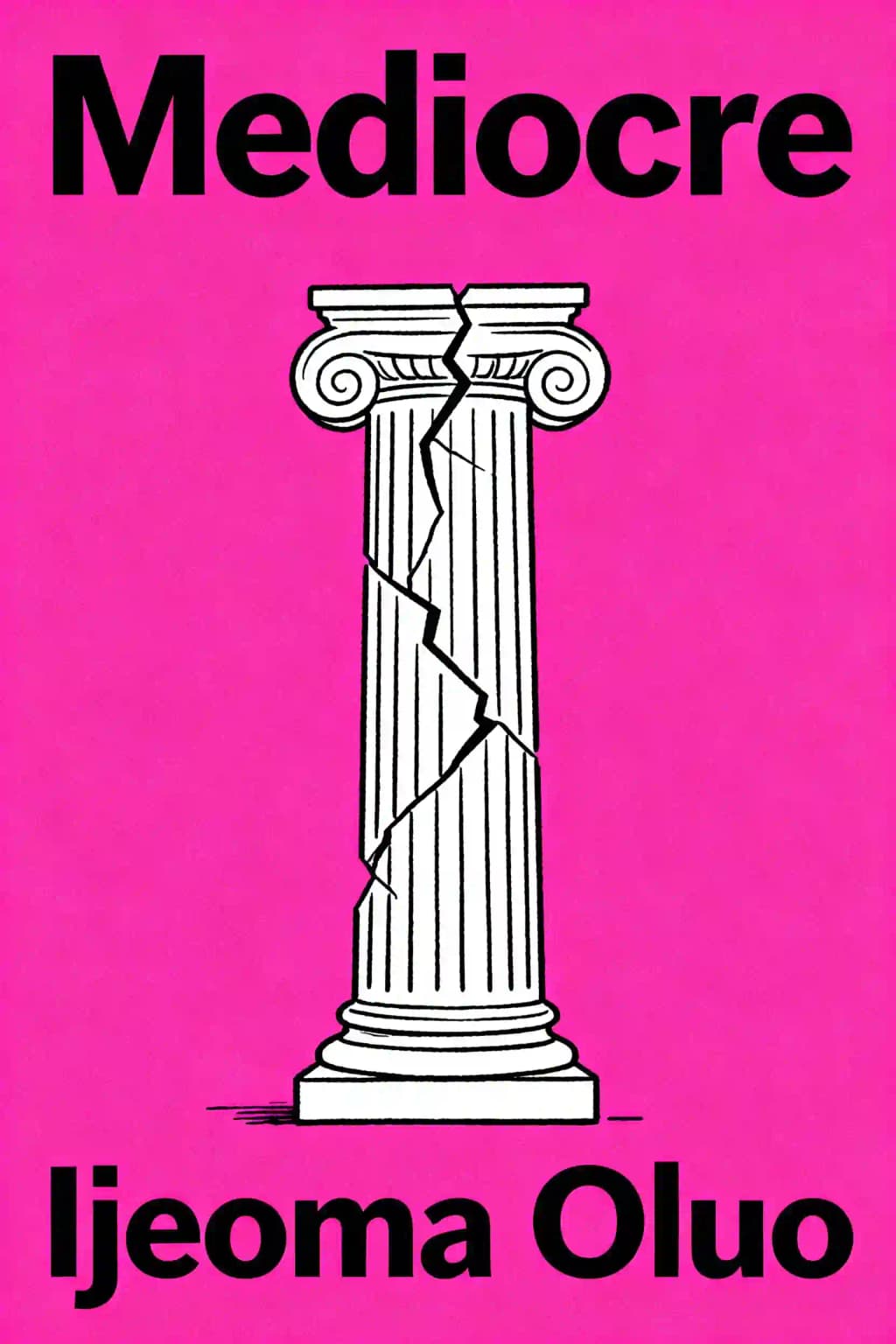
In "Mediocre," Ijeoma Oluo masterfully exposes white male supremacy's dangerous legacy. What myth costs America most? Endorsed by Kimberle Crenshaw and praised by Black Lives Matter co-founder Patrisse Khan-Cullors as "bold, startling, and necessary" - this revelatory work challenges our entire social foundation.
Ijeoma Oluo, #1 New York Times bestselling author of Mediocre: The Dangerous Legacy of White Male America, is a leading voice on race, gender, and systemic oppression. A Seattle-based writer and speaker, Oluo combines historical analysis with incisive cultural critique in this examination of how white male supremacy shapes American institutions.
Her expertise stems from over a decade of groundbreaking work, including contributions to The Guardian, The Washington Post, and NBC News, alongside frequent appearances on The Daily Show and BBC News.
Oluo first gained national prominence with So You Want to Talk About Race (2018), a foundational text on racial dialogue that has sold over one million copies and been translated into 20+ languages. Her forthcoming book Be A Revolution (2024) continues her focus on grassroots activism. Recognized on the TIME 100 Next list and honored by Harvard and the American Humanist Association, Oluo’s work blends rigorous research with accessible prose, making complex social issues urgent and relatable.
Ijeoma Oluo’s Mediocre examines how systemic racism and sexism have enabled white male dominance across U.S. history, from the mythologized Wild West to modern politics and sports. Through historical analysis (e.g., laws restricting married women’s employment during the Great Depression) and contemporary parallels (like backlash against women of color in Congress), Oluo argues white male mediocrity harms everyone by prioritizing power over merit.
This book is critical for readers seeking to understand systemic oppression’s roots, including educators, activists, and anyone examining power dynamics in America. Oluo specifically challenges white men to confront their unearned privileges while offering marginalized groups language to articulate systemic barriers.
Yes—Mediocre received acclaim for its unflinching analysis of white male supremacy, blending rigorous research (e.g., 1940s employment laws) with cultural commentary. Publishers Weekly called it “provocative” and “essential,” while critics praise its accessible dismantling of systemic inequality. However, some reviewers criticize its reliance on progressive media sources.
Oluo highlights lesser-known events like 1930s-era laws barring married women from jobs to “protect” male employment, the erasure of Black cowboys in Western mythology, and the racist/sexist attacks on Shirley Chisholm’s 1972 presidential campaign. These are linked to modern issues like NFL protests and “The Squad’s” 2018 election.
Oluo argues white male power relies on a hierarchy where even low-status white men gain false status by oppressing women and people of color. This system incentivizes complicity rather than merit, harming marginalized groups and stifling white men’s potential.
The book connects historical patterns to recent events, such as violent rhetoric against Rep. Alexandria Ocasio-Cortez and Ilhan Omar, and critiques the valorization of “mediocre” white male leaders who prioritize dominance over competence.
The phrase “Lord, give me the confidence of a mediocre white man” (coined by Sarah Hagi and popularized by Oluo) became a cultural rallying cry against unearned male privilege. Another key line: “White supremacy is, and always has been, a pyramid scheme.”
While her debut focused on guiding race conversations, Mediocre offers a historical framework for understanding systemic oppression’s origins. Both books blend personal narratives with research but target different stages of anti-racist education.
Oluo advocates dismantling systems that reward whiteness and masculinity over skill, urging white men to reject unearned power and allies to center marginalized voices. She emphasizes that progress requires challenging comfort, not seeking “feel-good” diversity initiatives.
Some conservatives dismiss Oluo’s arguments as “cherry-picked anecdotes,” while even sympathetic readers note the bleak outlook offers limited actionable steps. Others argue it oversimplifies complex historical forces.
Oluo critiques how sports like football perpetuate toxic masculinity and white entitlement, examining Colin Kaepernick’s NFL blacklisting and the cultural defense of violent athletes as “heroes”.
The book remains urgent amid ongoing debates over affirmative action, DEI rollbacks, and political movements framing equality as “oppression” of white men. Its historical lens helps contextualize current backlash against racial/gender progress.
通过作者的声音感受这本书
将知识转化为引人入胜、富含实例的见解
快速捕捉核心观点,高效学习
以有趣互动的方式享受这本书
Why struggle when you're already assumed to be great?
Women and people of color could handle equality today.
Our supposed meritocracy is built on exploitation.
Mediocre white men often fabricate villains.
将《Mediocre》的核心观点拆解为易于理解的要点,了解创新团队如何创造、协作和成长。
将《Mediocre》提炼为快速记忆要点,突出坦诚、团队合作和创造力的关键原则。

通过生动的故事体验《Mediocre》,将创新经验转化为令人难忘且可应用的精彩时刻。
随心提问,选择声音,共同创造真正与你产生共鸣的见解。

"Instead of endless scrolling, I just hit play on BeFreed. It saves me so much time."
"I never knew where to start with nonfiction—BeFreed’s book lists turned into podcasts gave me a clear path."
"Perfect balance between learning and entertainment. Finished ‘Thinking, Fast and Slow’ on my commute this week."
"Crazy how much I learned while walking the dog. BeFreed = small habits → big gains."
"Reading used to feel like a chore. Now it’s just part of my lifestyle."
"Feels effortless compared to reading. I’ve finished 6 books this month already."
"BeFreed turned my guilty doomscrolling into something that feels productive and inspiring."
"BeFreed turned my commute into learning time. 20-min podcasts are perfect for finishing books I never had time for."
"BeFreed replaced my podcast queue. Imagine Spotify for books — that’s it. 🙌"
"It is great for me to learn something from the book without reading it."
"The themed book list podcasts help me connect ideas across authors—like a guided audio journey."
"Makes me feel smarter every time before going to work"

免费获取《Mediocre》摘要的 PDF 或 EPUB 版本。可打印或随时离线阅读。
Think about the last time you watched someone fail upward-someone who stumbled into success not through talent or hard work, but simply by showing up with the right skin color and gender. Now multiply that frustration by every institution in America, and you'll start to understand the machinery that props up white male mediocrity while demanding perfection from everyone else. Here's the uncomfortable truth: we've built an entire society around the idea that being a white man is itself an achievement. No resume needed, no proof of competence required. Just exist, and the world assumes you're destined for greatness. Meanwhile, women and people of color run a marathon in weighted vests, proving themselves exceptional before anyone considers them merely equal. This isn't an accident of history-it's a carefully maintained system that rewards the unearned while punishing the deserving.