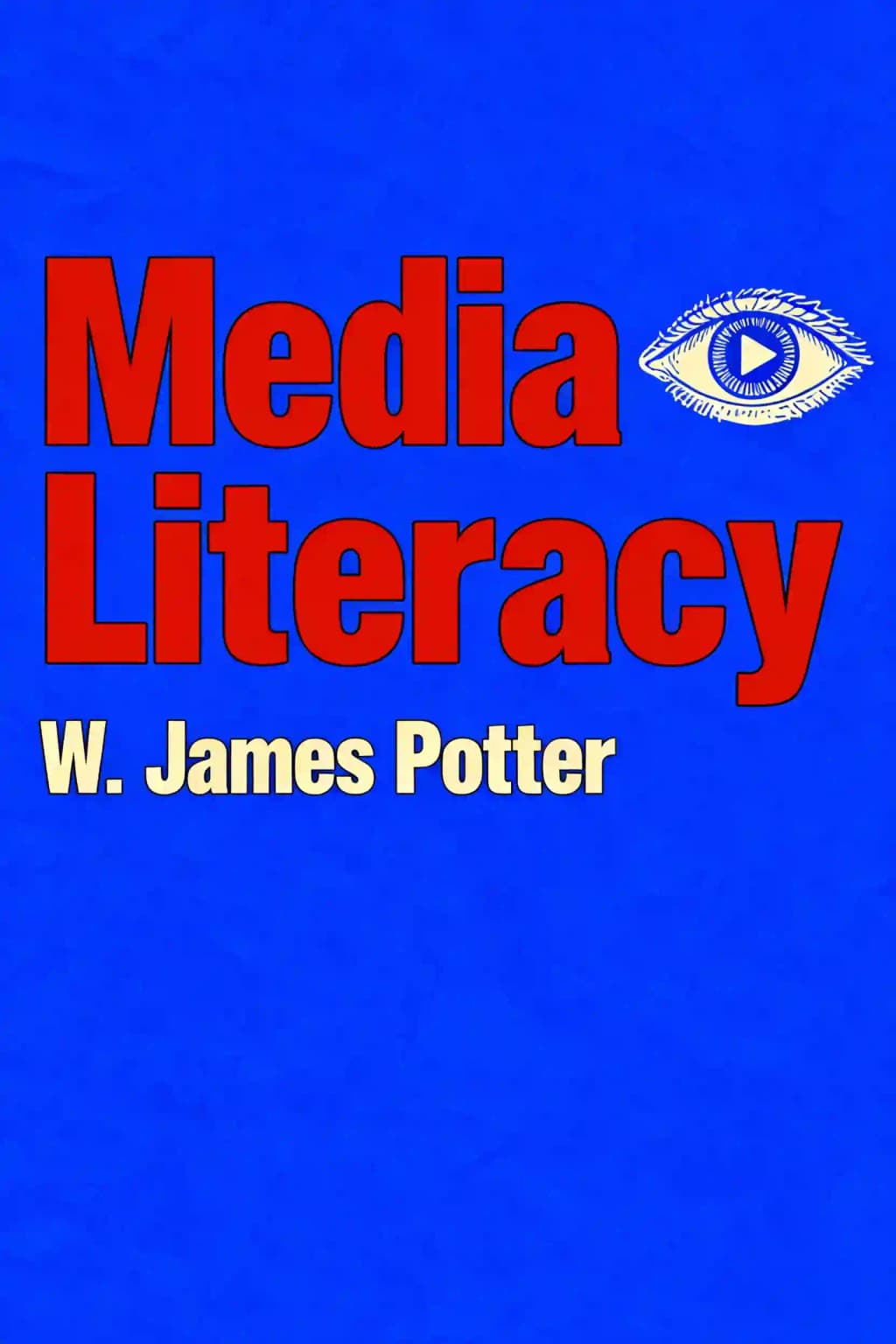
In a media-saturated world where fake news thrives, Potter's definitive guide - now in its tenth edition - equips readers with critical evaluation skills that educators consistently recommend. Discover why this academic staple remains essential for navigating our increasingly complex information landscape.
W. James Potter, author of the international bestseller Media Literacy, is a renowned scholar and leading authority on media effects and communication theory.
A professor at the University of California, Santa Barbara, with dual PhDs in Communication Studies and Instructional Technology, Potter has shaped media literacy education through over three decades of research. His work explores how media influences perceptions, behaviors, and societal structures, emphasizing critical thinking skills for navigating modern media landscapes.
Beyond this seminal text, now in its 10th edition, Potter’s influential works include The 11 Myths of Media Violence and Seven Skills of Media Literacy, which provide practical frameworks for analyzing media content. As former editor of the Journal of Broadcasting & Electronic Media, he has advanced scholarly discourse on media industries and audience engagement.
Translated into multiple languages and used in universities worldwide, Media Literacy has become a cornerstone text for students and professionals seeking to understand the cognitive, emotional, and ethical dimensions of media consumption.
Media Literacy explores how to critically analyze media messages through three core components: skills (analysis, evaluation), knowledge structures (organized memory frameworks), and personal locus (individual goals driving media engagement). The 10th edition emphasizes digital media’s role in shaping perceptions, offering strategies to navigate information overload and mitigate negative media effects.
Students, educators, communication professionals, and general readers seeking to enhance critical thinking about media consumption. It’s particularly valuable for those analyzing media’s societal impact or aiming to build resilience against misinformation.
Yes. This international bestseller (10th edition) is praised for synthesizing decades of media research into actionable frameworks. Updated examples, exercises, and a focus on digital platforms make it a practical guide for modern audiences.
Potter describes effects as constant (ongoing influence), baseline (long-term shifts in beliefs), and fluctuation (short-term behavioral changes). Demographics, cognitive ability, and exposure habits shape these effects.
This framework analyzes media impact through:
The 10th edition highlights algorithms, social media dynamics, and misinformation. Potter provides strategies to filter content, recognize bias, and construct meaning in hyper-connected environments.
Some scholars note its focus on individual skill-building over systemic media reform. However, Potter balances theory with actionable steps, making it accessible for personal and educational use.
Potter’s work stands out for integrating empirical research with practical exercises, whereas others prioritize theoretical debates. Its structured approach helps readers apply concepts to real-world media interactions.
The book includes classroom exercises, case studies, and discussion prompts. Chapters end with activities to help students deconstruct ads, social media posts, and news narratives.
通过作者的声音感受这本书
将知识转化为引人入胜、富含实例的见解
快速捕捉核心观点,高效学习
以有趣互动的方式享受这本书
Multitasking increases exposure but doesn't solve our fundamental information problem.
When relying exclusively on automatic routines, we miss potentially valuable messages.
Media literacy isn't about avoiding media but developing perspectives.
Everyone occupies some position on this continuum.
将《Media Literacy》的核心观点拆解为易于理解的要点,了解创新团队如何创造、协作和成长。
将《Media Literacy》提炼为快速记忆要点,突出坦诚、团队合作和创造力的关键原则。

通过生动的故事体验《Media Literacy》,将创新经验转化为令人难忘且可应用的精彩时刻。
随心提问,选择声音,共同创造真正与你产生共鸣的见解。

"Instead of endless scrolling, I just hit play on BeFreed. It saves me so much time."
"I never knew where to start with nonfiction—BeFreed’s book lists turned into podcasts gave me a clear path."
"Perfect balance between learning and entertainment. Finished ‘Thinking, Fast and Slow’ on my commute this week."
"Crazy how much I learned while walking the dog. BeFreed = small habits → big gains."
"Reading used to feel like a chore. Now it’s just part of my lifestyle."
"Feels effortless compared to reading. I’ve finished 6 books this month already."
"BeFreed turned my guilty doomscrolling into something that feels productive and inspiring."
"BeFreed turned my commute into learning time. 20-min podcasts are perfect for finishing books I never had time for."
"BeFreed replaced my podcast queue. Imagine Spotify for books — that’s it. 🙌"
"It is great for me to learn something from the book without reading it."
"The themed book list podcasts help me connect ideas across authors—like a guided audio journey."
"Makes me feel smarter every time before going to work"

免费获取《Media Literacy》摘要的 PDF 或 EPUB 版本。可打印或随时离线阅读。
You reach for your phone without thinking. Minutes later, you're three Instagram stories deep, watching someone's vacation highlights while your own coffee goes cold. Sound familiar? We're living through history's most dramatic information explosion-10,000 media messages bombard us daily, up from just 500 in the 1970s. YouTube alone receives 500 new hours of video every minute. If you started watching today's uploads on twenty screens simultaneously, you'd still need a full year to finish. This isn't just information overload-it's a fundamental rewiring of human attention. The question isn't whether media shapes us, but who controls that shaping: you, or the algorithms designed to keep you scrolling?