第 1 章
The Power of OKRs: Transforming Ambition into Achievement
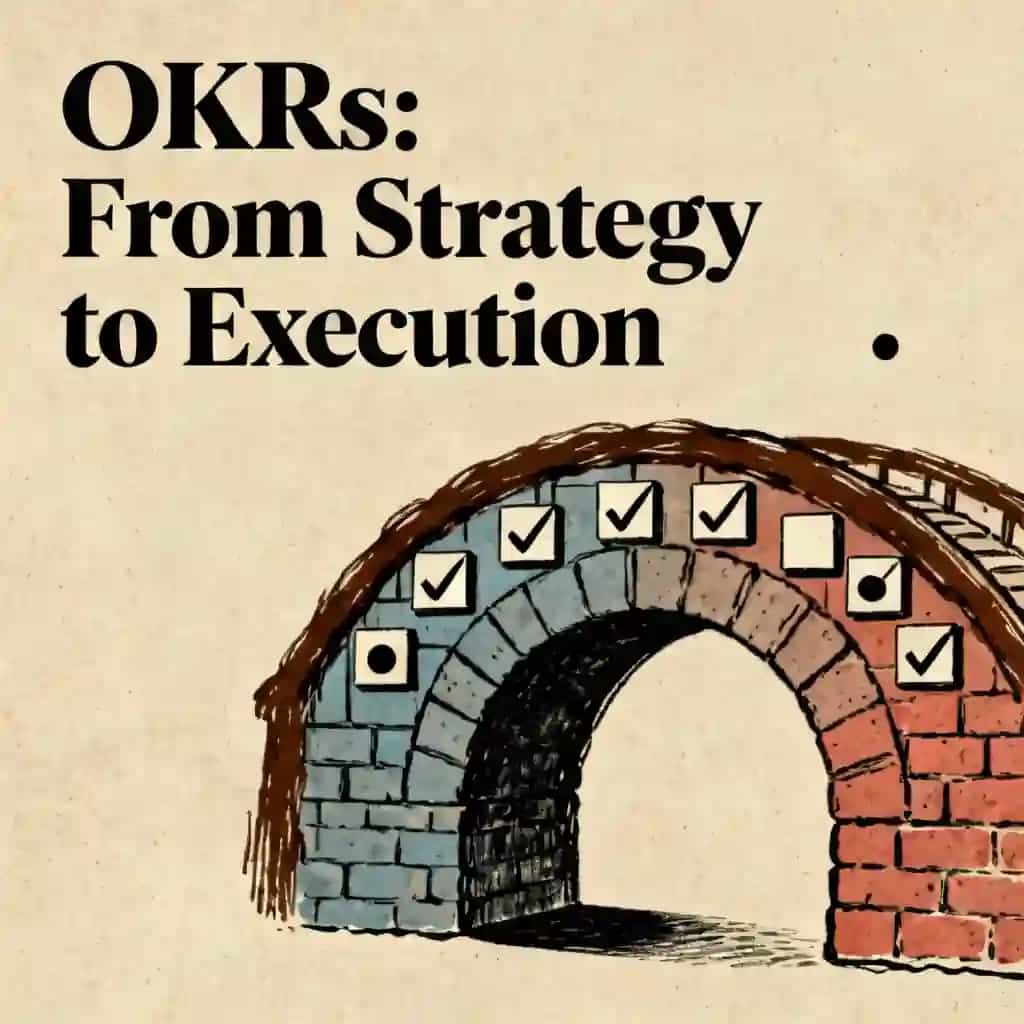
In the bustling landscape of corporate management tools, few have achieved the legendary status of Objectives and Key Results (OKRs). John Doerr's "Measure What Matters" isn't just another business book-it's the definitive guide to the goal-setting system that powered Google from a scrappy startup to a global behemoth. This framework has been embraced by tech giants like Intel and YouTube, philanthropic powerhouses like the Gates Foundation, and even Bono's ONE Campaign. Bill Gates himself called it "a genuine game changer," while Sheryl Sandberg praised it as "a must-read for anyone motivated to improve their organization." Beyond its practical applications, the book reveals how the seemingly simple act of setting and tracking goals can transform not just companies, but entire industries and even global humanitarian efforts. The secret? Making what matters measurable.
第 2 章
From Intel to Google: The Birth of a Revolution
Andy Grove, Intel's legendary CEO, wasn't just a brilliant technologist-he was a revolutionary management innovator who fundamentally understood that execution trumped expertise. In the mid-1970s, when John Doerr joined Intel as a young engineer, Grove was methodically developing a system that would transform how organizations worldwide set and achieve their most ambitious goals. His approach was born from the practical challenges of managing a rapidly growing technology company in Silicon Valley's intense competitive environment.
At Intel, Grove fostered a culture where pedigree and credentials took a backseat to tangible results. Whether you came from Stanford or a state college, what mattered was your ability to deliver measurable outcomes. Grove's genius lay in creating a framework that was both intuitive yet remarkably powerful: Objectives and Key Results (OKRs). Objectives defined WHAT was to be achieved-qualitative, inspirational goals that provided clear direction and purpose. Key Results established HOW progress would be measured-through specific, quantifiable metrics that left no room for ambiguity or misinterpretation. For example, an Objective might be "Establish Intel as the leader in microprocessor technology," with Key Results like "Release the new chip architecture by Q3" or "Achieve 95% yield rates in production."
This approach wasn't entirely new. It built upon Management by Objectives (MBO), pioneered by Peter Drucker in the 1950s, which itself evolved from the scientific management principles of Frederick Taylor and Henry Ford. However, Grove's innovation lay in simplifying and focusing these concepts, stripping away unnecessary complexity and making them more accessible and actionable for teams at all levels. He recognized that the key to successful implementation was finding the sweet spot between ambition and achievability, between stretch goals and realistic targets.
When Doerr visited Google's modest offices in 1999, he found Larry Page and Sergey Brin leading a small but talented team of about 40 people with an extraordinarily bold vision: organizing the world's information. Despite being just another search engine in a crowded market dominated by established players like Yahoo and AltaVista, Google's innovative PageRank algorithm showed immense promise in delivering more relevant search results. The founders set an audacious revenue target of $10 billion-a figure that seemed absurd for a company that was generating virtually no revenue at the time. This goal was met with skepticism by many, but it exemplified the kind of ambitious thinking that OKRs were designed to support.
Doerr introduced OKRs to this ambitious young company through a now-famous presentation, and the system resonated immediately with Google's data-driven culture. Larry Page saw the potential in adopting an organizing principle that could channel their massive ambition into structured, measurable progress. The system's transparency and focus on measurable results aligned perfectly with Google's engineering mindset. This pivotal moment marked the beginning of OKRs' journey from a management technique to a transformative business philosophy that would help Google become one of the most valuable companies in the world, eventually surpassing that seemingly impossible $10 billion target many times over. The success at Google would later inspire countless other organizations, from startups to Fortune 500 companies, to adopt OKRs as their goal-setting framework.
第 3 章
The Four OKR Superpowers: Focus, Align, Track, Stretch
The first superpower of OKRs is Focus-the ability to concentrate on what truly matters. In our distracted world, the discipline to say "no" to good ideas so you can say "yes" to great ones is invaluable. Consider the story of Remind, a communication platform for education. Founders Brett and David Kopf initially struggled with ADHD and dyslexia, which gave them personal insight into educational challenges. When developing Remind, they interviewed hundreds of teachers to identify core communication needs, creating a platform that addressed genuine pain points rather than assumed problems.
As Remind grew, they adopted OKRs to maintain focus amid rapid expansion. By prioritizing metrics like Weekly Active Teachers and retention over raw user numbers, they ensured quality growth rather than empty scale. Their disciplined approach attracted investors despite initial financial struggles, ultimately serving millions of teachers, students, and parents.
The second superpower is Alignment-ensuring everyone rows in the same direction. MyFitnessPal exemplifies this principle. Before implementing OKRs, teams worked in isolation with mismatched goals and unclear dependencies. The introduction of transparent OKRs revealed these disconnections, allowing teams to coordinate effectively. When Under Armour acquired MyFitnessPal, this alignment capability proved crucial in integrating multiple apps with varying cultures into a cohesive strategy.
Wouldn't it be transformative if everyone in your organization knew exactly how their daily work contributed to the company's mission?
The third superpower is Tracking-maintaining accountability through continuous measurement. The Gates Foundation demonstrates how tracking transforms ambitious goals into concrete achievements. Rather than pursuing vague aspirations like "improve global health," they set specific, measurable objectives for disease eradication with clear milestones. Cloud-based OKR platforms enhance this capability by making goals visible to everyone, democratizing organizational objectives and fostering engagement.
Finally, the Stretch superpower encourages reaching beyond comfortable limits. Google's Chrome browser team, led by Sundar Pichai, exemplifies this approach. When tasked with achieving 20 million users-a target many team members considered impossible-they embraced the challenge. This ambitious goal drove innovations like the V8 JavaScript engine, which dramatically improved performance. The team ultimately exceeded their stretch goal, with Chrome becoming the world's dominant browser with billions of users.
These four superpowers don't operate in isolation-they reinforce each other, creating a virtuous cycle of continuous improvement and achievement.
第 4 章
Transforming Culture Through Measurable Goals
OKRs aren't just about hitting targets; they fundamentally reshape organizational culture. When implemented effectively, they foster an environment of peer-to-peer dependability where commitments aren't just made to managers but to colleagues. This social contract transcends traditional hierarchies, creating a self-regulated culture of accountability.
Consider Lumeris, a healthcare company that initially struggled with OKR implementation. Their first attempt failed because it wasn't aligned with their culture. Only after addressing underlying cultural issues-redefining leadership roles and reinforcing core values like responsibility and team loyalty-could they successfully reintroduce OKRs.
The transformation was remarkable. Lumeris developed a practice called "selling your reds," where leaders openly discussed at-risk objectives, encouraging collaborative problem-solving rather than hiding potential failures. This transparency without judgment became a cornerstone of their culture, moving them from a hero-based environment to one centered on interdependence and shared success.
Have you ever noticed how the most innovative companies seem to have cultures where people feel safe to admit mistakes and ask for help?
YouTube's billion-hour watch time goal illustrates how stretch objectives can reshape culture. When Susan Wojcicki became CEO, the team was already pursuing this ambitious target but progress was lagging. Rather than abandoning the goal, she embraced it, attaching names to specific OKRs to foster accountability. This commitment reinforced company morale and purpose, encouraging everyone to think bigger and reimagine what was possible.
The cultural impact extends beyond for-profit companies. Bono's ONE Campaign used OKRs to drive advocacy efforts for debt cancellation and AIDS drug access. As they grew, OKRs helped them maintain focus while expanding their mission. A pivotal moment came when they integrated African perspectives directly into their operations-a deep organizational transformation supported by OKRs to maintain strategic focus.
These examples reveal a profound truth: the way we measure success shapes how we work together, communicate, and solve problems. By making goals transparent, measurable, and ambitious, OKRs create cultures where innovation, accountability, and collaboration naturally flourish.
第 5 章
From Annual Reviews to Continuous Performance Management
Traditional annual performance reviews are increasingly recognized as ineffective relics of an outdated management philosophy. They rely on stack rankings and bell curves that reduce complex human contributions to simplistic numbers, often breeding competition rather than collaboration.
The alternative is continuous performance management, which pairs OKRs with CFRs: Conversations, Feedback, and Recognition. This approach injects OKRs with transparency, accountability, and collaboration, creating a system where neither goals nor individuals are reduced to mere numbers.
Adobe exemplifies this shift. Under Donna Morris's leadership, they abolished annual performance reviews in favor of a continuous, collaborative approach called Check-in. This transformation aligned with Adobe's evolution from a traditional software company to a modern subscription model. The results were striking: voluntary attrition rates dropped significantly as employees felt more engaged and empowered.
The key components of this new approach include:
1. Regular one-on-ones between managers and employees, focusing on setting objectives, problem-solving, coaching, and growth
2. Multidirectional feedback that breaks down hierarchical barriers
3. Decoupling OKRs from compensation to encourage ambitious goal-setting without fear
Pact, a nonprofit organization, implemented a system called "Propel" featuring monthly conversations, quarterly OKR reviews, semiannual career discussions, and continuous feedback. This approach fostered open dialogues about achievements and development, allowing for swift adaptation to changing circumstances.
Imagine how different your work experience would be if feedback came when it was most useful, rather than months later during a formal review.
Zume Pizza demonstrates how this approach benefits even small startups. By implementing OKRs and regular one-on-ones, they created a culture of continuous improvement where roles and responsibilities were clear, interdependence was celebrated, and personal aspirations aligned with organizational objectives. This clarity enabled them to innovate rapidly in a competitive industry, developing technologies like "baking on the way" to enhance service delivery.
The shift to continuous performance management represents a fundamental rethinking of how we motivate and develop people. By providing regular feedback, meaningful conversations, and clear connections between individual contributions and organizational goals, this approach creates more engaged, adaptable, and high-performing teams.
第 6 章
Making the Impossible Possible: Stretch Goals in Action
The concept of stretch goals-objectives that seem beyond reach-is central to the OKR philosophy. Google categorizes OKRs as either committed (expected to be fully achieved) or aspirational (ambitious, higher-risk goals that spur innovation). While committed goals align with stability and predictability, aspirational goals drive breakthrough thinking and extraordinary results.
YouTube's journey to one billion hours of daily watch time exemplifies the power of stretch goals. In 2012, YouTube's leadership set this audacious target-a tenfold increase from their current position-to be achieved by the end of 2016. This simple, yet powerful numeric goal required complex strategizing and teamwork across the organization.
What made this stretch goal effective was that, despite its ambition, it wasn't perceived as arbitrary or impossible. Framed within the context of television's viewership, it represented a challenging but ultimately attainable objective. The goal drove fundamental changes in YouTube's approach, shifting their core metric from views to watch time and prompting infrastructure revamps to support the massive scale they envisioned.
Larry Page, Google's co-founder, championed what he called "10x thinking"-the idea that true innovation comes from seeking tenfold improvements rather than incremental gains. When Gmail launched with 1GB of storage-500 times what competitors offered-it redefined what email could be. This approach encourages asking bolder questions and challenges conventional thinking about what's possible.
Have you ever noticed how setting a goal just beyond what seems reasonable often unlocks creativity and determination you didn't know you had?
However, effective stretch goals must be implemented thoughtfully. They shouldn't appear so insurmountable that they demoralize teams, nor should they disconnect from frontline realities. Leaders must demonstrate genuine commitment to these ambitious targets and create an environment where reaching 60-70% of a stretch goal is celebrated as success.
The Chrome browser team's experience shows how stretch goals evolve over time. Their initial target of 20 million users seemed impossible to many team members, but as they achieved and exceeded it, their ambitions grew. Eventually, they set their sights on creating Chrome OS and Chromebooks, extending their impact beyond the browser to reimagine computing itself.
Stretch goals work because they force organizations to fundamentally rethink approaches rather than simply working harder within existing paradigms. They create permission to experiment, take risks, and pursue breakthrough innovations that might otherwise seem unjustifiable.
第 7 章
The OKR Lifecycle: Implementation and Evolution
Implementing OKRs isn't a one-time event but an ongoing process that evolves with an organization. The journey typically begins with leadership commitment and clarity about what the organization hopes to achieve through OKRs. Without this foundation, implementation risks becoming a superficial exercise.
Cloud-based platforms have transformed how organizations manage OKRs, making goals visible and accessible to everyone. These tools amplify transparency, engagement, and alignment, democratizing organizational objectives and enabling efficient tracking. However, technology alone isn't sufficient-organizations need OKR shepherds who oversee compliance and foster a culture of accountability.
The OKR cycle includes several key phases:
1. Setting objectives and key results at the beginning of each period
2. Midlife tracking with visual progress representations and regular check-ins
3. Wrap-up sessions with objective scoring and self-assessment
4. Reflection and refinement for the next cycle
This process isn't static-it adapts to an organization's needs and maturity. Some companies start with annual OKRs before transitioning to quarterly cycles. Startups might choose monthly OKRs as they pivot frequently, while engineering teams may prefer six-week cycles aligned with development sprints.
Intuit's IT group demonstrates how OKRs can be successfully implemented through a pilot initiative before scaling company-wide. Their approach emphasized transparency and goal-setting as a framework for collaboration and innovation. By starting small and learning from experience, they created a sustainable system that enhanced employee engagement and organizational performance.
What if your team spent less time wondering about priorities and more time executing with clarity and purpose?
MyFitnessPal's experience highlights common implementation challenges. As they scaled, they encountered issues with mismatched goals and unclear dependencies between teams. They refined their approach by making dependencies explicit, ensuring collaboration matched goal expectations, and establishing regular integration meetings. These strategies helped them create more precise and measurable objectives as their OKR process matured.
The evolution of OKRs often mirrors an organization's growth. Early-stage companies might focus on survival metrics, while more established organizations can pursue ambitious stretch goals. The key is maintaining flexibility while preserving the core principles of focus, alignment, tracking, and stretch that make OKRs effective.
第 8 章
Beyond Business: OKRs in Philanthropy and Social Impact
The power of OKRs extends far beyond corporate environments, as demonstrated by their adoption in philanthropic and social impact organizations. The Gates Foundation exemplifies how OKRs can transform ambitious humanitarian goals into concrete achievements.
For the Gates Foundation, setting concrete goals was essential to guide resource allocation and strategic decisions. Drawing from business acumen, they distinguished between directional missions and actionable objectives. Rather than pursuing vague aspirations like "improve global health," they set specific, measurable objectives for disease eradication with clear milestones.
In their fight against malaria, the foundation broadened focus from transmission-blocking vaccines to comprehensive eradication strategies. They proved regional elimination was possible through a radical cure-based approach while maintaining global progress and preparing scalable tools like SERCAP Diagnostics. This methodical approach, guided by clear OKRs, has led to significant advances in global health initiatives.
Bono's ONE Campaign demonstrates how OKRs can drive advocacy efforts. By selecting clear, impactful goals such as debt cancellation and AIDS drug access, they focused their efforts efficiently. As their objectives expanded, OKRs provided clarity and helped them strategically allocate resources across diverse teams and ambitious goals.
A pivotal moment for ONE came when they integrated African perspectives directly into their operations-a deep organizational transformation supported by OKRs to maintain strategic focus. This shift enabled them to genuinely understand and align with African priorities, making their advocacy more authentic and effective.
What if we applied the same rigorous goal-setting to solving social problems that we use to drive business success?
These examples illustrate how OKRs can bridge the gap between lofty aspirations and tangible impact in the social sector. By making goals concrete and progress measurable, organizations can move beyond good intentions to meaningful results. The framework provides discipline and focus without sacrificing the passion and purpose that drive humanitarian efforts.
The application of OKRs in these contexts also reveals how the system can adapt to different environments. While businesses might focus on growth metrics, philanthropic organizations can use OKRs to track lives improved, policies changed, or resources mobilized. The underlying principles remain the same: clarity of purpose, measurable progress, and ambitious goals that inspire extraordinary effort.
第 9 章
The Human Element: OKRs and Individual Growth
At their core, OKRs are about people-how they work together, grow, and contribute to something larger than themselves. The system recognizes that organizational success depends on individual engagement and development.
Regular one-on-ones between managers and employees are essential to this process. Inspired by Peter Drucker and Andy Grove, these conversations focus on setting objectives, problem-solving, coaching, and growth. They transform managers from evaluators to mentors, encouraging proactive problem-solving and future-oriented development.
Zume Pizza demonstrates how this approach benefits both individuals and organizations. Their scheduled, "sacred" one-on-ones created a forum for profound understanding, enhancing engagement and revealing obstacles and motivations. These dialogues allowed for adaptive support, building a culture where personal aspirations aligned with organizational objectives.
The decoupling of OKRs from compensation is another crucial element. This separation allows for a detailed assessment of a person's work without being clouded by salary considerations, fostering initiative, morale, and the pursuit of ambitious stretch goals. When people can set challenging objectives without fear of financial penalties for falling short, they're more likely to push boundaries and innovate.
Have you noticed how your best work often comes when you're inspired by the challenge itself, rather than external rewards?
The Progress Principle, identified by researchers Teresa Amabile and Steven Kramer, reveals that people are most motivated when they experience consistent progress in meaningful work. OKRs support this principle by providing clear goals, autonomy, and opportunities for learning-what the researchers call "catalysts." Combined with CFRs (Conversations, Feedback, and Recognition)-which provide the "nourishers" of interpersonal support and acknowledgment-this creates an environment where people thrive.
YouTube's experience with their billion-hour watch time goal shows how individual accountability drives collective achievement. By attaching names to specific OKRs, they created personal investment in outcomes. This wasn't about assigning blame but fostering ownership and pride in contributions to the larger mission.
The human element of OKRs extends to how they shape relationships within organizations. Transparency creates mutual understanding and empathy, while shared goals foster collaboration across traditional boundaries. When everyone can see how their work connects to others' objectives, silos break down and collective problem-solving emerges naturally.
第 10 章
Measuring What Truly Matters: The Future of OKRs
As we look to the future, OKRs continue to evolve, adapting to changing work environments and organizational needs. The core principles remain relevant, but their application becomes more sophisticated and nuanced.
One emerging trend is the integration of OKRs with broader systems of continuous performance management. As organizations move away from annual reviews toward more frequent feedback and coaching, OKRs provide the framework for meaningful conversations about progress and development. This integration creates a holistic approach to performance that balances accountability with growth.
Another evolution is the expansion of what we consider "measurable." Traditional metrics often focus on outputs-units produced, revenue generated, customers acquired. However, organizations increasingly recognize the importance of measuring outcomes and impacts that truly matter to their mission. This might include customer success metrics, employee well-being indicators, or sustainability measures that reflect long-term value creation.
The democratization of goal-setting continues to accelerate. Bottom-up approaches that empower teams to define their own objectives (aligned with organizational priorities) are replacing rigid cascading models. This shift recognizes that those closest to the work often have the best insights into what goals will drive meaningful progress.
What if the metrics we use to measure success actually reflected our deepest values and longest-term aspirations?
Technology will further transform how we implement OKRs. AI-powered analytics may help identify patterns and correlations between different objectives, suggesting optimizations or revealing unexpected dependencies. Visualization tools will make complex goal networks more intuitive to navigate, helping everyone understand how their work contributes to the bigger picture.
Perhaps most importantly, OKRs are increasingly recognized as a tool for cultural transformation. As Lumeris and ONE Campaign demonstrated, the process of setting, tracking, and reflecting on objectives can fundamentally change how organizations operate. Transparency breeds trust, clarity drives alignment, and ambitious goals inspire innovation.
The future of OKRs lies not just in refining the methodology but in expanding its application to new challenges. From addressing climate change to reimagining education, the discipline of setting clear objectives with measurable key results offers a powerful approach to our most complex problems.
John Doerr's contribution in "Measure What Matters" goes beyond introducing a management technique-it provides a philosophy for translating ambition into achievement through focus, alignment, accountability, and stretch. As organizations and individuals continue to adopt and adapt these principles, we'll discover new ways to measure-and achieve-what truly matters.