第 1 章
When Love and Darkness Collide: A Tale of Sacrifice and Redemption
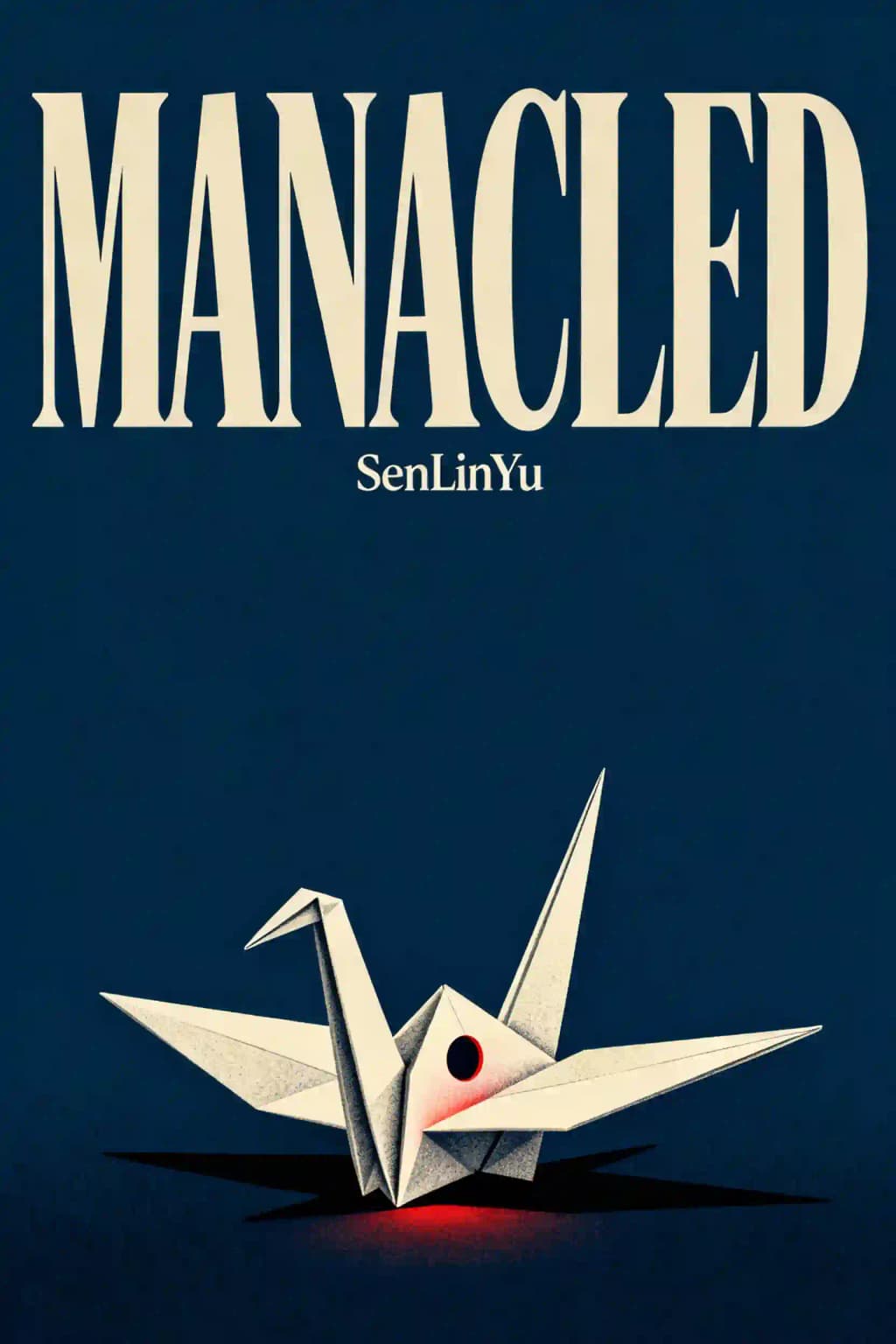
In the shadowy world of Harry Potter fan fiction, few works have achieved the cult status of "Manacled" by SenLinYu. This dark, haunting reimagining of the Wizarding World has amassed over 30 million reads across platforms, with readers describing it as "emotionally devastating" yet "impossible to put down." The story's exploration of trauma, survival, and the blurred lines between good and evil has resonated deeply with fans seeking a more complex, adult examination of J.K. Rowling's universe. What begins as a dystopian tale of imprisonment evolves into a time-jumping narrative that challenges our understanding of heroism and villainy, asking whether love can exist in the darkest places and if redemption is possible for those who've committed unspeakable acts.
第 2 章
From Light to Darkness: A World Where Evil Triumphed
Hermione Granger has spent sixteen months in complete darkness and silence, imprisoned after Voldemort's victory in the Second Wizarding War. Despite Umbridge's attempts to break her through sensory deprivation and a silencing charm, Hermione maintains her sanity through rigorous mental discipline and physical conditioning. When finally examined by a healer, she discovers copper manacles on her wrists that neutralize her magic by conducting it through dragon heartstring-possibly from her own wand-into an iron core, effectively rendering her a Muggle.
The healer makes another disturbing discovery: Hermione's magic has created "fugue states" to protect parts of her mind. Rather than shielding herself from trauma, her magic has walled off information about her parents and Order strategies, suggesting she's protecting something vital. Through conversations with fellow prisoner Hannah Abbott, Hermione learns the horrifying reality of their world: Voldemort, having won the war, initially focused on repopulating pure-blood wizards through arranged marriages. When this failed due to low fertility rates, he implemented a breeding program using female half-blood and Muggle-born prisoners.
The manacles contain traces linked directly to Voldemort, making escape impossible. Anyone attempting to flee is hunted by the High Reeve, Voldemort's masked executioner capable of casting multiple Killing Curses in succession. Many Order members who tried to escape-including McGonagall, Moody, and Neville-have been killed and displayed as warnings. Despite Voldemort's brutal attempts at Legilimency, Hermione's protected memories remain inaccessible, causing him to send her to the High Reeve for "breeding," hoping pregnancy might break through her magical memory barriers.
This nightmarish world represents the ultimate failure of the Light-a society where evil has not just triumphed but institutionalized its cruelty. The systematic dehumanization of Muggle-borns, the public executions, and the breeding program all reflect the horrifying endpoint of Voldemort's ideology. Through Hermione's eyes, we experience the crushing weight of defeat and the desperate struggle to maintain humanity in a world designed to strip it away.
第 3 章
The High Reeve's Property: A Prison of a Different Kind
Transported to a dark, immaculate manor, Hermione is shocked to discover the High Reeve is Draco Malfoy-now older, taller, and emanating a dangerous, refined brutality. Before she can process this revelation, he forcefully invades her mind with Legilimency, confirming she has truly forgotten her protected memories. Cold and dismissive, he states that if she ever recovers them, he'll be the first to know.
Hermione, now filled with hatred for what Malfoy has become-Voldemort's executioner who has murdered countless friends-resolves to find a way to escape or trick him into killing her. She meets Malfoy's wife Astoria, who bitterly reads aloud the instructions for Hermione's care: no cursing or torture, proper feeding, limited work hours, and daily outdoor time. Most disturbingly, they'll receive monthly notifications of when Malfoy must "perform" with Hermione, with Healer Stroud personally checking if they're "successful."
Life at Malfoy Manor becomes a different kind of prison for Hermione. Her bedroom is sparse, containing only scarlet dresses and flimsy shoes unsuitable for escape. When she attempts to leave her room, she's overcome by paralyzing panic-a psychological prison formed during her captivity. Determined to overcome this trauma, she forces herself to gradually venture into the hallway, eventually managing several steps while counting blood drips from her clenched fist.
The ritual of rape begins with clinical precision-a table appears in her room at 7:30, Malfoy arrives at 8:00, violates her without speaking, and leaves. She recites poetry to mentally escape, focusing on anything but what's happening to her body. After each encounter, she lies in bed without washing until morning, trying to forget what's happened. The dehumanizing nature of these encounters reflects the broader theme of bodily autonomy stripped away by an authoritarian regime.
During her forced outdoor time with Malfoy, Hermione discovers a Daily Prophet headline about "Repopulation Efforts" featuring her unconscious photo, revealing that her situation is public knowledge and she's being used as bait for any remaining Resistance members. This revelation crushes her spirit further, as she realizes her degradation serves multiple purposes in Voldemort's regime-not just reproduction, but propaganda and entrapment as well.
The manor itself becomes a character in the story-vast, cold, and filled with secrets. Hermione explores its empty wings, discovering servants' passages and peepholes designed for spying. The physical architecture mirrors the psychological landscape of the story: labyrinthine, with hidden depths and dangerous corners where predators might lurk.
第 4 章
Memories and Mysteries: The Puzzle of Hermione's Mind
As Hermione adjusts to her captivity, she begins experiencing dreams and flashbacks that reveal fragments of her forgotten past. She recalls a rooftop conversation with Harry during the war where they argued about using Dark Magic to win. Harry reproached her changing ethics, asking what happened to the righteous girl who founded S.P.E.W. She responded that "that girl died in a hospital ward trying to save Colin Creevey" and defended her willingness to use any means necessary, insisting she was "always willing to do whatever it took" for Harry.
These memory fragments hint at a more complex Hermione than we initially assumed-one who had grown increasingly pragmatic and willing to cross ethical lines as the war progressed. Through her dreams, we learn she trained as a specialized healer during the war, focusing on saving lives while her friends concentrated on combat. This choice created distance between her and Harry, who maintained more idealistic views about fighting without Dark Magic.
When Healer Stroud examines Hermione and confirms she isn't pregnant after multiple attempts, she forces her to drink a fertility potion with side effects including breast tenderness, headaches, and mood swings. During one of Malfoy's memory inspections, Hermione presents a theory: the war has stalled because Voldemort is dying. She explains how Voldemort and Harry were connected, and how Voldemort has bound his life force to objects-horcruxes. As she asks if Voldemort is dying, pain shoots through her head, her vision turns red, and she collapses.
After suffering a seizure, Hermione regains consciousness to find Malfoy explaining that "fertility potions and Legilimency don't mix." The seizure triggers a cascade of war recollections, including how the Order was unprepared for Voldemort's decisive early strikes. She remembers training abroad for two years as a specialized healer until being urgently recalled after Death Eaters massacred the Order's hospital. Upon return, she found herself isolated-living in Grimmauld Place's hospital ward, constantly surrounded by death and devastation.
These recovered memories paint a picture of a war far more brutal and desperate than initially suggested. Hermione's advocacy for allowing Resistance fighters to kill Death Eaters in self-defense had alienated her from Harry's more idealistic approach, leaving her almost entirely alone except for Snape. The gradual unveiling of these memories creates a puzzle for both Hermione and the reader-what exactly happened during the war, and what crucial information is she still protecting in her mind?
第 5 章
The Spy and the Healer: A Secret History Revealed
As Hermione's seizures continue, more memories break free-flashes of Moody discussing a war-changing opportunity, Malfoy stabbing her, battlefield deaths, and fragments of conversations with Harry, Tonks, McGonagall and others flood her consciousness. These flashbacks reveal a shocking truth: Draco Malfoy had been a spy for the Order of the Phoenix.
In March 2002, three years before the current timeline, Moody presented Hermione with an opportunity that could turn the tide of the war-Draco Malfoy had offered to become a spy to avenge his mother's death, but with conditions: a full pardon and Hermione herself, "now and after the war." Despite her shock and revulsion, Hermione immediately agreed, recognizing the desperate need for intelligence.
The flashbacks reveal how Hermione prepared herself for this mission, purchasing books on concubines, female spies, sex, psychology, influence, and strategy-determined to hold Malfoy's interest long enough to help win the war. She visited Severus Snape for advice, who suggested that Draco's specific request for her revealed a potential advantage-Draco had always noticed her, and she might use this to gain influence over him. "Be interesting to him. Find your way into his mind," Severus advised.
Through these memories, we witness the evolution of Hermione and Draco's relationship from bitter enemies to reluctant allies to something far more complex. Initially meeting in a shack in Whitecroft, Draco agreed not to require an Unbreakable Vow, accepting her word that she belonged to him. He promised not to interfere with her Order work and, surprisingly, declared he wouldn't touch her yet-though he requested "something to warm my cold heart." When Hermione tensely calculated what degradation he might demand, Malfoy asked for a kiss.
Their relationship developed through weekly meetings where Draco trained Hermione in Occlumency and dueling, providing valuable intelligence for the Order. As they spent more time together, Hermione discovered the truth about Draco's motivations-after his father was imprisoned, Voldemort tortured Narcissa for weeks, keeping her caged. Taking the Dark Mark and killing Dumbledore was Draco's desperate attempt to save her. When she died in the Lestrange Manor fire, he needed time to earn back Voldemort's trust before he could betray him effectively.
This revelation transforms our understanding of both characters-Hermione's willingness to sacrifice herself for the greater good and Draco's hidden depths beneath his Death Eater facade. Their story becomes one of two people damaged by war, finding unexpected connection while using each other for their own ends. The line between manipulation and genuine feeling blurs as their relationship deepens, raising questions about the nature of love born in desperate circumstances.
第 6 章
The Price of War: Trauma, Sacrifice, and Moral Compromise
As more memories surface, Hermione confronts the devastating moral compromises she made during the war. She recalls how her healing background and why Colin Creevey's death affected her so deeply-it marked when she realized defense wasn't enough in the war, creating a rift between her and Harry who believed killing is always wrong. This philosophical divide grew as the war progressed, with Hermione becoming increasingly pragmatic while Harry maintained his moral absolutism.
We learn that Hermione placed a Heart of Isis-a powerful magical artifact-in Draco's chest to save him from Dark Magic poisoning after Voldemort carved punishment runes into his back with a goblin-wrought silver blade infused with Nagini's venom. This act of healing represented a turning point in their relationship, as Hermione began calling him "Draco" instead of "Malfoy" in an attempt to reduce the emotional distance between them.
The flashbacks reveal increasingly intimate moments between them, including a night when, drunk on firewhisky, Draco invited Hermione to stay. As they shared Ogden's Reserved on a conjured loveseat, their interaction grew increasingly intimate. He placed her hand against his bare chest, asking if he felt cold. The physical contact became charged as Hermione stroked his skin and felt him shiver. He confessed he was "blindsided" by how lovely she'd become, calling her "a rose in a graveyard."
Their relationship eventually became physical, with Draco helping ground Hermione after she used Dark Magic that left her feeling infected with an icy, painful sensation drawing her toward self-destruction. During their intimate encounter, when she hesitated, fearing vulnerability, he whispered, "You get to have this. You're allowed to feel good things."
The war's toll on both characters becomes increasingly apparent through these memories. Draco, subjected to regular torture by Voldemort, continued providing intelligence to the Order while maintaining his cover. Hermione, isolated from her friends due to her pragmatic approach to the war, found in Draco the only person who truly understood her. Their relationship became a sanctuary amid the horror, even as both recognized the manipulation inherent in their arrangement.
Perhaps most devastating is the revelation about Harry's fate-Hermione discovered too late that Harry himself was a horcrux. Despite her desperate pleas to retreat and find another solution, Harry resolved to sacrifice himself. Before leaving, Hermione revealed Ginny was pregnant with his child, but Harry still chose to face Voldemort, making Hermione promise to care for his family. This promise, torn from her heart, would shape her actions for years to come.
The memory of Harry's death is particularly haunting-Voldemort cast the Killing Curse six times, while pressing his hand to his chest as though injured. Realizing there must still be one horcrux left, Hermione fled toward the apparition point, only to be grabbed by a Death Eater as she disapparated.
第 7 章
The Ultimate Sacrifice: Love in the Darkest Places
After Harry's death, Hermione begged Draco to help rescue Ginny, fearing Voldemort could use Harry's baby for another regeneration potion. When Draco agreed but revealed he'd blown his cover getting Ginny out, Hermione realized with horror that he deliberately sacrificed himself for her. Before he could take her to safety, Hermione made the devastating decision to attack Sussex Lab-where prisoners were subjected to horrific experimentation-hoping to save both the victims there and create a diversion that might help Draco survive.
The attack was successful but led to Hermione's capture. To protect Draco and the knowledge of horcruxes, she used Occlumency to push all memories of him, Ginny, and the horcruxes to the furthest reaches of her mind, then tore down her mental compartments, bringing forward all her war trauma to obscure what truly mattered. This self-sacrifice-deliberately trapping herself in her worst memories to protect others-represents the ultimate act of love and heroism.
In the present timeline, as Hermione recovers these memories, she learns that Draco never stopped looking for her during her imprisonment. He explains that after her capture, she vanished from all prison records. He and Severus searched everywhere, using genetic trace spells, scrying, and even finding her parents in Australia. He never stopped looking, guided by the life signature monitor in her ring that matched his own.
The truth about the High Reeve's actions also becomes clear-Draco had been performing for Voldemort while secretly trying to undermine the regime from within. Though he couldn't save everyone, he made deaths quick when possible and continued working with Severus to find a way to defeat Voldemort. His cold exterior and apparent cruelty were necessary masks to maintain his position while searching for Hermione and working toward Voldemort's downfall.
As they reconnect in the present, both damaged by their experiences, Hermione and Draco must find a way forward together. When Hermione learns that removing her manacles would alert Voldemort to Draco's betrayal, making escape seemingly impossible, she discovers Draco's plan-to expose himself as High Reeve so when Voldemort kills him for letting her escape, the regime will destabilize and collapse. This self-sacrificial plan reveals the depth of his transformation from the selfish boy he once was.
第 8 章
Escape and Healing: Finding Light After Darkness
Hermione refuses to accept Draco's plan to sacrifice himself, insisting they find another way. Through research in the Malfoy library, she discovers a potential solution involving phoenix tears to remove Draco's Dark Mark. When Lucius Malfoy unexpectedly returns to the manor and captures Hermione, attempting to extract information through Legilimency, the confrontation leads to a surprising alliance-Lucius agrees to provide the phoenix tears in exchange for Hermione swearing on her magic that she'll let Draco go if he ever wants to leave her.
Their escape plan is desperate and dangerous-they remove Hermione's manacles, amputate Draco's arm to remove the Dark Mark, and flee on a winged Granian horse as Malfoy Manor erupts in fiendfyre behind them. This dramatic escape represents both physical and psychological liberation-from the manor that served as their prison, from the Dark Mark that bound Draco to Voldemort, and from the manacles that suppressed Hermione's magic and autonomy.
They find sanctuary on a remote Japanese island where Ginny has been raising Harry's son James. Despite their physical escape, psychological healing proves more challenging. Hermione struggles with anxiety and panic attacks, while Draco remains hypervigilant, carrying multiple wands and weapons despite their apparent safety. His protective vigilance continues as he adds layers of wards and blood magic to their rooms, unable to stop being a soldier even in peace.
Their relationship must be rebuilt in this new context-no longer spy and handler, captor and prisoner, but two deeply traumatized people trying to create a life together. When Hermione becomes pregnant, Draco initially distances himself, unable to separate the child from the circumstances of conception. Only after their daughter Aurore is born, when the tiny hand reflexively grips his finger, does his expression transform to one of possessive adoration.
The epilogues reveal how their lives unfold over the years-raising Aurore on their island sanctuary, witnessing Ginny's return to Britain to kill Voldemort, and eventually sending their daughter to school. Though they never return to Britain, where Draco would be remembered as a monster and Hermione is believed dead, they create their own version of peace. The final image-of them standing together at Wellington Central Station after Aurore's departure, Draco's arm slipping possessively around Hermione's waist as he promises "Anything you want, for as long as you want to"-suggests that even after everything, they've found a way to build a life together.
第 9 章
Legacy and Truth: The Stories We Tell About War
The final epilogue jumps forward to 2024, where seventeen-year-old Aurore visits Britain with Ginny. In Flourish and Blotts, she discovers a new history book about the Second Wizarding War that describes her father as "the most infamous mass murderer in Wizarding history" and "a monster in a man's skin." She also finds a photo of her mother with Harry and Ron, with a caption dismissively describing Hermione as merely "a non-active member of the Order" who "did not fight."
This distortion of history-where Hermione's crucial contributions are forgotten and Draco's complex motivations reduced to simple monstrosity-highlights one of the story's central themes: how narratives about war are constructed, who gets to tell them, and what truths are lost in the process. Aurore wishes someone would tell the truth about her parents, lamenting that her mother "doesn't deserve to be forgotten like this" while her father "doesn't deserve to be compared to Voldemort."
This final note resonates beyond the story itself, asking readers to consider how history remembers those who operate in morally gray areas during conflict. Hermione and Draco's story-one of sacrifice, compromise, trauma, and ultimately love-defies simple categorization into hero or villain narratives. Their legacy lives on in their daughter, who carries the burden of knowing a truth that history books don't tell.
"Manacled" ultimately challenges us to look beyond binary thinking about good and evil, exploring how war transforms people in ways both terrible and profound. It asks whether redemption is possible for those who've committed atrocities, whether love can grow in the most hostile environments, and how we carry on after experiencing unimaginable trauma. Through Hermione and Draco's journey from enemies to reluctant allies to lovers, we witness the human capacity for both cruelty and compassion, destruction and healing, despair and hope-sometimes within the same person.
第 10 章
The Lasting Power of Choice and Love
Throughout "Manacled," characters repeatedly face impossible choices that test their humanity and reveal their core values. Hermione chooses to sacrifice herself for the greater good, then later chooses Draco despite knowing his bloody past. Draco chooses to betray Voldemort to avenge his mother, then chooses to sacrifice himself to save Hermione and Ginny. Harry chooses to face Voldemort knowing he carries a horcrux, while Ginny later chooses to return and finish what he started.
These choices, made under the most extreme circumstances, reveal that even in a world where free will seems impossible-where manacles control behavior, where Dark Marks bind servants to masters, where war forces impossible moral compromises-the human capacity to choose remains. As Hermione tells Draco when he questions why she stays with him: "Every day. I'll choose you."
The story's exploration of love is equally nuanced. It's not the pure, uncomplicated love of fairy tales, but something darker and more complex-love born of shared trauma, mutual understanding of darkness, and the recognition of another soul equally damaged by war. When Ginny questions Hermione about Draco's inhumanly cold nature, Hermione asks what Ginny thought about when casting the Killing Curse on Voldemort. "It was Harry," Ginny admits. "I was thinking about everything he did to Harry."
"Love isn't always as pretty or pure as people like to think," Hermione responds. "If he's a monster, then I'm his creator. What did you think was the source of all his rage?"
This exchange encapsulates the story's central insight about love in wartime-it can be a destructive force as well as a healing one, driving people to both heroic sacrifices and terrible acts of violence. Yet ultimately, it's this complex, imperfect love that allows the characters to rebuild their lives after unimaginable loss and trauma. In a world where darkness triumphed, where evil won and good was crushed, love remains the one force powerful enough to create meaning from suffering and hope from despair.