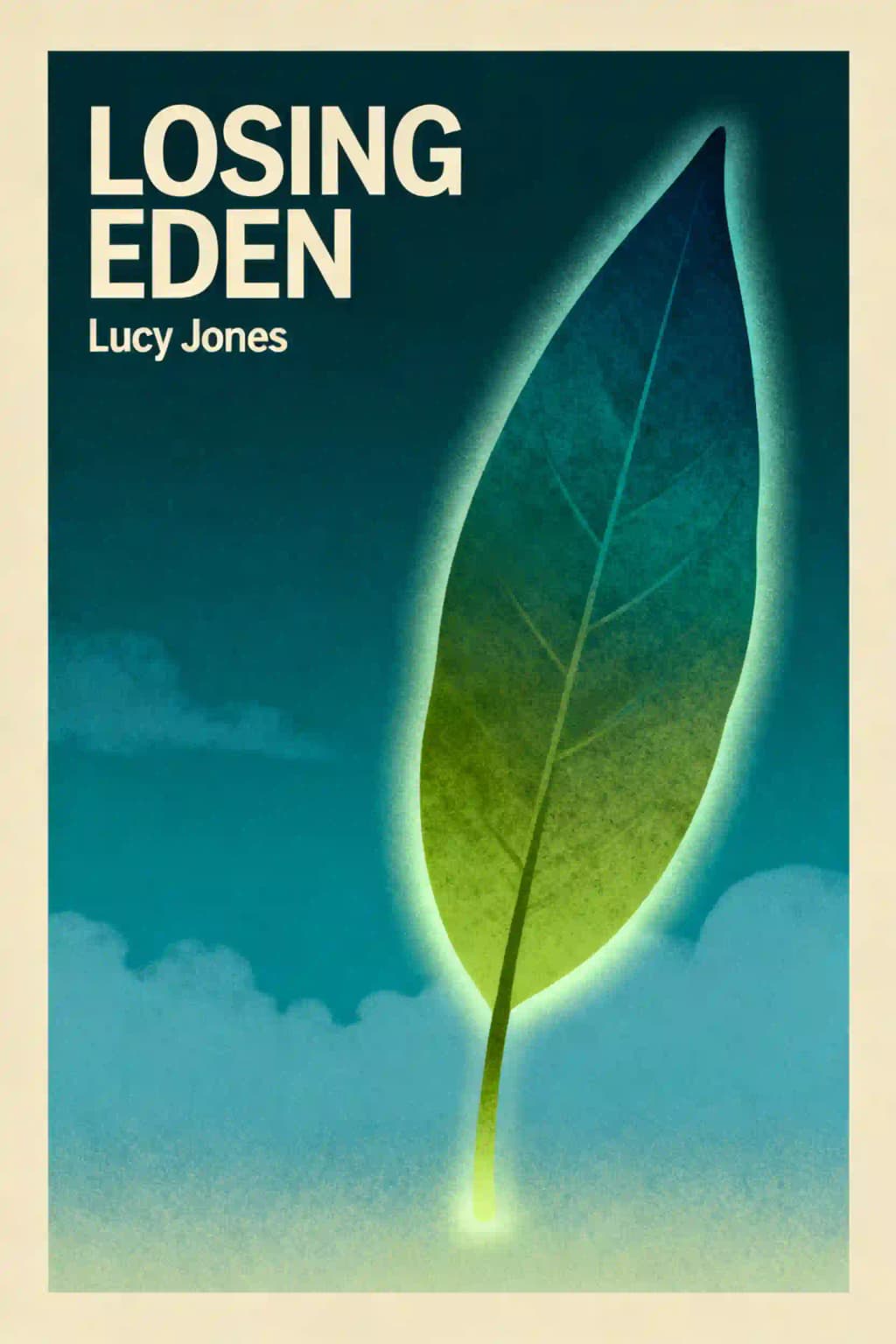
"Losing Eden" explores our essential mental connection to nature through science and personal recovery. Lucy Jones's acclaimed work reveals how hospital patients with natural views heal faster, while addressing the alarming inequality of green space access. What happens when our minds can no longer find the wild?
Lucy Jones is the acclaimed author of Losing Eden: Why Our Minds Need the Wild and a prominent environmental writer known for blending science, memoir, and ecological insight.
Born in Cambridge, England, and educated at University College London, her work has appeared in The Guardian, BBC Earth, and The Sunday Times, cementing her authority on nature-human connections.
Her debut book, Foxes Unearthed (winner of the Society of Authors’ Roger Deakin Award), explored humanity’s complex relationship with wildlife, while Losing Eden delves into the mental health impacts of ecological disconnection, drawing on neuroscience, psychology, and personal recovery narratives.
Jones’s writing is driven by her passion for bridging scientific research with accessible storytelling, underscored by her own transformative experiences in nature. Widely praised for its urgent yet hopeful tone, Losing Eden has become a seminal work in contemporary environmental literature, resonating with readers navigating climate anxiety and the quest for ecological belonging.
Losing Eden explores the profound link between human mental health and nature, arguing that our disconnection from the natural world exacerbates psychological distress. Lucy Jones blends scientific research, personal recovery narratives, and cultural history to reveal how environmental degradation and urbanization harm emotional well-being, while reconnecting with nature offers healing. The book also examines climate anxiety’s growing impact on mental health.
This book is ideal for nature enthusiasts, mental health advocates, and readers interested in environmental psychology or climate change’s societal impacts. It appeals to fans of authors like Robin Wall Kimmerer and Florence Williams, offering insights for educators, policymakers, and anyone seeking to understand humanity’s intrinsic need for wild spaces.
Yes—critics praise its urgent message, combining rigorous research with lyrical prose. Jones’s personal story of overcoming addiction through nature adds emotional depth, while her analysis of biophilia (humans’ innate love for nature) provides actionable solutions for urban green spaces. A Chicago Bird Alliance review calls it “vitally important” for modern readers.
Key concepts include:
Some find the opening chapter’s apocalyptic tone heavy-handed, though the narrative gains nuance later. Others note solutions like urban greening are briefly outlined but lack policy depth. However, Jones balances these gaps with compelling calls for individual and collective action.
As a science journalist and author of Foxes Unearthed, Jones merges investigative rigor with personal vulnerability. Her recovery from addiction through nature walks directly informs the book’s advocacy for ecotherapy, while her cultural reporting grounds historical examples like 18th-century travelers shunning landscapes.
Jones advocates urban rewilding, community gardens, and school programs reconnecting children with nature. She emphasizes equity, noting marginalized communities often lack green spaces. Policies prioritizing biodiversity in city planning and corporate sustainability are also endorsed.
Both books blend science and personal narrative to argue for nature’s spiritual value, but Jones focuses more on mental health data and Western urban contexts, while Robin Wall Kimmerer emphasizes Indigenous ecological wisdom. They complement each other for a holistic view.
With climate anxiety rising and global cities increasingly concrete-dominated, Jones’s research on nature’s psychological benefits remains critical. The book helps readers navigate eco-grief while offering hope through actionable steps to reintegrate nature into daily life.
Though Losing Eden doesn’t focus on matrescence (a term Jones explores in later books), it touches on motherhood’s relationship with nature—how pregnancy and parenting heighten awareness of environmental risks to future generations.
Jones links environmental collapse to a mental health crisis, arguing that witnessing ecological loss triggers trauma akin to personal grief. She advocates climate activism as therapeutic, helping individuals process anxiety through purposeful action.
通过作者的声音感受这本书
将知识转化为引人入胜、富含实例的见解
快速捕捉核心观点,高效学习
以有趣互动的方式享受这本书
Our skin is more ecological than we realize—"a pond surface or forest soil."
"Snakes mattered. The smell of water, the hum of a bee...mattered."
Even in individuals who do not express any appreciation...the lack of nature can have a negative effect.
Three-quarters of UK children now spend less time outdoors than prison inmates.
将《Losing Eden》的核心观点拆解为易于理解的要点,了解创新团队如何创造、协作和成长。
将《Losing Eden》提炼为快速记忆要点,突出坦诚、团队合作和创造力的关键原则。

通过生动的故事体验《Losing Eden》,将创新经验转化为令人难忘且可应用的精彩时刻。
随心提问,选择声音,共同创造真正与你产生共鸣的见解。

"Instead of endless scrolling, I just hit play on BeFreed. It saves me so much time."
"I never knew where to start with nonfiction—BeFreed’s book lists turned into podcasts gave me a clear path."
"Perfect balance between learning and entertainment. Finished ‘Thinking, Fast and Slow’ on my commute this week."
"Crazy how much I learned while walking the dog. BeFreed = small habits → big gains."
"Reading used to feel like a chore. Now it’s just part of my lifestyle."
"Feels effortless compared to reading. I’ve finished 6 books this month already."
"BeFreed turned my guilty doomscrolling into something that feels productive and inspiring."
"BeFreed turned my commute into learning time. 20-min podcasts are perfect for finishing books I never had time for."
"BeFreed replaced my podcast queue. Imagine Spotify for books — that’s it. 🙌"
"It is great for me to learn something from the book without reading it."
"The themed book list podcasts help me connect ideas across authors—like a guided audio journey."
"Makes me feel smarter every time before going to work"

免费获取《Losing Eden》摘要的 PDF 或 EPUB 版本。可打印或随时离线阅读。
What if the antidepressant we need most can't be bottled? While we're busy engineering happiness through apps and pills, mounting evidence suggests we've overlooked something fundamental: our disconnection from the natural world isn't just an environmental crisis-it's a mental health emergency. Consider this startling fact: three-quarters of UK children now spend less time outdoors than prison inmates. Meanwhile, depression rates have skyrocketed in lockstep with our retreat indoors. This isn't coincidence. When we sealed ourselves in climate-controlled boxes and paved over our playgrounds, we severed an ancient lifeline our bodies still desperately need. The science is clear and surprising. Patients recovering from surgery heal faster when they can see trees from their windows. Urban neighborhoods with more greenery report fewer antidepressant prescriptions. Forest walks boost immune function for up to a month afterward. Yet we continue building cities as if nature were optional-a luxury for weekend warriors rather than essential infrastructure for human wellbeing. The question isn't whether we need nature. It's whether we'll recognize this truth before the cost becomes irreversible.
