第 1 章
Awakening to a World of Sensation
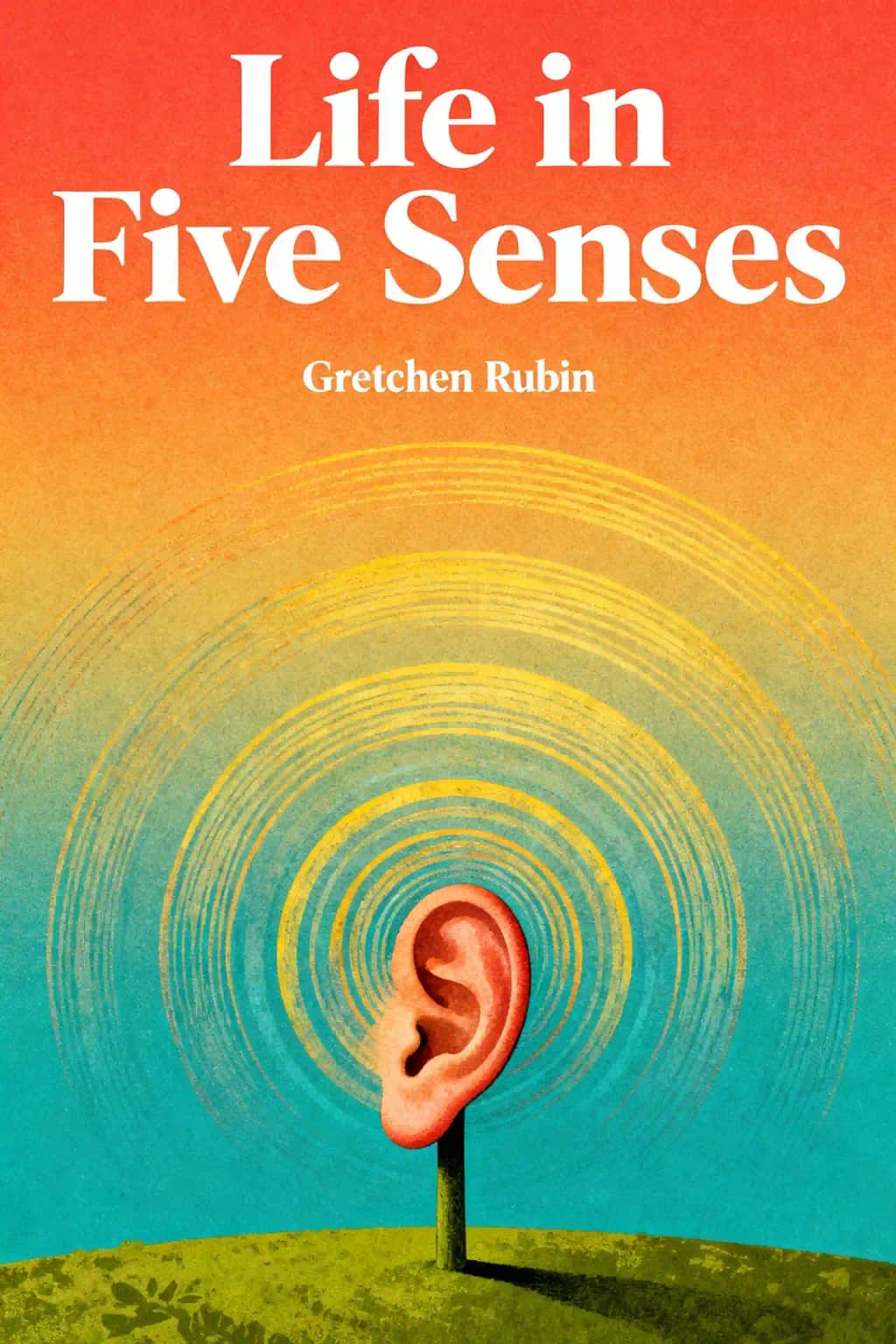
Have you ever had a moment when your entire perception of reality shifted? For Gretchen Rubin, it happened during a routine eye doctor visit when she learned her extreme nearsightedness put her at risk for detached retina. Walking home through New York City afterward, her senses suddenly awakened with extraordinary intensity-every sound, smell, and visual detail came into sharp focus. This sensory revelation became the catalyst for a year-long experiment that would transform her relationship with the world around her.
"Life in Five Senses" has captivated readers since its publication, becoming a New York Times bestseller and earning praise from figures like Brene Brown and Adam Grant. What makes this book particularly resonant in our digital age is how it addresses our growing disconnection from physical experience. As we increasingly live in our heads and on our screens, Rubin's exploration offers a roadmap back to the rich, textured experience of being fully human.
Her experiment-methodically exploring each sense while committing to visit the Metropolitan Museum of Art daily for a year-provides both scientific insight and practical wisdom for anyone seeking to live more fully in their body rather than merely using it as "transportation for the brain."
第 2 章
The Revelation: Discovering What Was Missing
That pivotal moment at the eye doctor's office revealed a profound truth: despite years studying happiness and self-knowledge, Rubin had been neglecting her sensory experience of life. Her structured, productive lifestyle had left her disconnected from the physical world and even from aspects of her relationships. She couldn't confidently say whether her husband regularly wore sweaters, despite seeing his clothes daily. She'd missed countless details about her daughters, their changing expressions, the sound of their laughter, and even basic facts about their daily routines. Even more concerning, she realized she couldn't articulate many of her own preferences - whether she enjoyed certain textures, what sounds soothed her, or which scents brought her joy.
This awakening showed her three essential truths: she wanted to appreciate life's moments more fully, escape her head into lived experience, and deepen her knowledge of the world, others, and herself. Her tendency toward rigidity, efficiency, and mental preoccupation had left her disconnected from the rich tapestry of sensory experience surrounding her. Simple pleasures like feeling morning sunlight, savoring a meal, or noticing the changing seasons had become background noise in her rush to accomplish tasks and meet deadlines.
To reconnect, she developed a methodical plan: study each sense's workings, devise playful exercises, involve family and friends, and visit the Metropolitan Museum of Art daily for a year. She identified her "foreground" senses (sight and smell) that she naturally appreciated and her "background" senses (hearing, taste, touch) that she'd neglected. Through careful observation, she noticed how sight dominated her experience - she was always looking but rarely truly seeing. Her sense of smell was surprisingly acute, yet she rarely used it intentionally to enhance her daily life. By immersing herself in strong sensations, from touching different textures to listening to varied sounds, she hoped to sharpen her perceptual abilities for life.
Our senses work together as a sensorium, creating a coherent whole from separate messages. When information is incomplete, our brains make educated guesses about what we perceive, filling in gaps based on past experiences and expectations. This explains why we can recognize a friend's voice on a poor phone connection or why food tastes different when we have a cold. Each person experiences sensations uniquely based on their body, history, and sensory processing differences - some are highly sensitive to certain stimuli while others barely notice them. By understanding this individual nature of perception, Rubin realized she could actively shape her sensory world rather than passively accepting whatever came her way.
This revelation came at a crucial time in her life. As we age, time seems to accelerate, and moments slip away unnoticed - weeks blend into months, and years pass in what feels like moments. By engaging her senses more fully - feeling the texture of her morning coffee cup, listening to the subtle changes in her children's voices, noting the play of light through windows - she hoped to slow this perception of time passing and make each moment count. This wasn't just about adding pleasure to her life; it was about living more completely and consciously in each moment.
第 3 章
The Visual World: Seeing Beyond Looking
Our brains constantly manipulate what we see. Through color and size constancy, we perceive objects consistently despite changing conditions. We believe we see everything clearly when actually we only see sharp details in a small window about the width of our thumb at arm's length. When sensory information conflicts, sight usually wins-which is why roses are now bred for appearance rather than fragrance.
"Inattentional blindness" causes us to miss obvious things when we're focused elsewhere-like the famous experiment where people counting basketball passes miss a person in a gorilla costume walking through the scene. Our sight is both powerful and fragile, with millions of Americans experiencing vision difficulties.
To reclaim the power of sight, Rubin began deliberately looking for overlooked details during walks with her dog Barnaby. She noticed building materials, dog behaviors, and hidden images in everyday logos like the arrow in FedEx. With her daughter Eleanor, she created forced perspective photographs in Central Park, forever changing how she saw that familiar landscape.
Our brains are particularly attuned to faces. As highly social creatures, our survival has always depended on cooperation, making faces especially captivating. "The goal of all art is the human face," said Cezanne, and our brains devote tremendous processing power to faces, which serve as both identifiers and information dashboards. This explains our attraction to social media platforms-they offer novel ways to satisfy our desire to see faces.
For her most ambitious sensory experiment, Rubin committed to visiting the Metropolitan Museum of Art every day for a year. Despite living within walking distance, she rarely visited this treasure trove housing eight soccer fields' worth of art spanning 5,000 years. She established rules: join as a member, visit daily when in New York, explore every gallery and space, and allow herself to wander aimlessly or with purpose.
These daily visits became a sanctuary for exploring all five senses. She delighted in the colors on display-Horace Pippin's glowing red rose or the rich yellow-orange of a Chinese porcelain vase. Color fascinates because it's simultaneously elusive and essential. It exists only when light hits an object and our eyes and brain process it, yet it helps us perceive forms, shapes, and depth.
Meeting artist Sarah Sze at the Met, Rubin gained insights into seeing more deeply. Sarah showed her techniques like using a hand mirror to see artwork reversed, squinting to reveal composition, or blocking parts to understand their relationship to the whole. Most profoundly, Sarah shared: "All art is actually about death, but not in a bad way. It's evidence of us being human on Earth; what it means to be alive."
第 4 章
The Sonic Landscape: Hearing the World's Music
Our hearing anchors us in the world, detecting what happens around us even in darkness. Sound profoundly affects our moods-pumping us up, calming us down-and human hearing demonstrates remarkable sensitivity across a vast range of frequencies and intensities. We're predisposed to interpret sudden loud sounds as warnings and long quiet sounds as calming.
Hearing also connects us to others-we can recognize hundreds of voices, detect emotions and health status from vocal cues, and even identify people by distinctive sounds they make (like opening a soda can). Laughter, a universal nonverbal expression, primarily functions to bind people together socially.
Music seemed the natural starting point for enhancing sound awareness. All human societies create music despite its non-essential role in survival, suggesting deeper evolutionary significance. Research confirms music's powerful effects on our bodies and minds-it can lower heart rate and blood pressure during medical procedures, help manage pain, keep surgeons focused, and boost exercise performance.
Rubin had never considered herself a music lover, but a friend's observation made her realize she was song-focused rather than musician-focused or genre-focused. She loved specific songs intensely, often listening to them repeatedly, without interest in exploring the artist's other work. Once she embraced this way of appreciating music, she created an "Audio Apothecary"-a playlist of songs that reliably boosted her mood, including Dolly Parton's "Mule Skinner Blues," "You're Dead" by Norma Tanega, and "Hey Ya!" by Outkast.
True listening is powerful. Studies show children improve problem-solving when mothers listen without offering advice, and adults generate better solutions when speaking to attentive listeners. Rubin created a "Manifesto for Listening" to improve her skills: show attention through body language and eye contact; don't rush to fill silence; ask clarifying questions; respect others' conversational choices; withhold judgment; stow my phone; listen for what's not being said; don't avoid difficult topics; let people talk themselves into solutions; and when in doubt, stop talking.
As she became more attentive to sound, Rubin also grew to appreciate beautiful silence-wood ash dropping in a fireplace, the noiseless movements of cats, the whisper of hair falling during a haircut. Rather than attending a silent retreat, she created her own by sending her family to visit her in-laws for a weekend while she stayed home. For three days, she didn't speak, listen to podcasts or music, or watch TV. The silence refreshed her in a way she'd never experienced before.
What she sought wasn't pure silence but human silence-freedom from the third of our waking hours typically spent speaking or listening to others. She discovered that her habit of rising at 4:30 or 5:00 a.m. to write wasn't just about her morning-person energy but also about securing hours of silence before her family and city awoke.
第 5 章
The Olfactory Dimension: Following the Scent
Our sense of smell can transport us instantly through time-as when Rubin entered an office building lobby and encountered the distinctive water-and-dirt scent of a fountain with plants that immediately took her back to her childhood library. That smell restored her memory of watching the water's slow progress while her mother and baby sister waited by the circulation desk, giving her back that beloved place where she knew every librarian and corner.
Unlike her initial lack of appreciation for hearing, Rubin had always been an enthusiast for smell. She loved how scents tied her to the present moment while simultaneously transporting her to the past. She could enjoy beautiful smells without spending money, time, or energy.
Though smells seem to come through our nostrils, specialized sensory receptor cells high inside the nose detect microscopic molecules and send electrical signals to the olfactory bulb in the brain. Surprisingly, we can also smell through our mouths via retronasal olfaction-as we exhale, food scents travel from the mouth up to the nose, combining with taste to create "flavor."
Unlike our innate reactions to tastes, our responses to smells aren't inborn but depend on what our mother ate before birth, our culture, personal history, health conditions, and changing fashions. Whether gasoline smells good or bad is subjective, and the smell of "fresh" varies widely. Even what stinks is subjective-when the Department of Defense tried to develop a stink bomb, researchers found people completely disagreed about what smelled bad.
To deepen her appreciation for smell, Rubin enrolled in perfumery courses at Pratt Institute. Under the guidance of Raymond Matts, who designed Clinique's Happy fragrance, she learned about perfume history, smell mechanics, fragrance language, and composition techniques. She discovered the structure of fragrances-the olfactory pyramid of top notes (like Citrus) that appear immediately, middle notes that emerge as top notes fade, and base notes that sustain the fragrance.
Though often embarrassing to discuss, our desire to smell other people creates profound attachment. When Rubin makes the bed each morning, she now pauses to breathe in her husband's scent from his pillow-a small ritual of love and connection. While scientists haven't definitively identified human pheromones, we're undeniably influenced by others' scents. One friend confessed to smelling her future husband while he slept early in their relationship: "I was scared I wasn't going to like his smell! I was so relieved when I did."
Andy Warhol brilliantly exploited the connection between scent and memory, wearing a specific perfume for exactly three months before permanently retiring it, creating bottled time capsules of memory. "Seeing, hearing, touching, tasting are just not as powerful as smelling if you want your whole being to go back," he explained.
第 6 章
The Gustatory Experience: Savoring Life's Flavors
Taste is an enormously popular sense that has shaped empires through the demand for flavorful ingredients. What, how, when and with whom we eat ties us to our identity, memories, and culture. Unlike her enthusiasm for other senses, Rubin had never been adventurous with taste, preferring predictability over surprise-eating the same foods prepared the same way almost daily.
Our experience of food involves all five senses. Appearance matters-we associate blue with salty, red with sweet, and green with sour, affecting our perception when eating from differently colored bowls. Sound influences taste too-potato chips seem fresher with louder crunches, and wine tastes better when we hear a cork pop. Smell builds anticipation and enhances flavor, while mouthfeel (soggy, crispy, creamy, silky) varies in importance across cultures.
Inspired by Proust's famous madeleine moment, Rubin created a tastes timeline of her life's significant flavors. From childhood Winstead's burgers (a cherished family tradition) to college sangria and tortilla chips at Viva Zapata, each taste connected her to specific memories. When she asked her daughters about their taste-memories, Eleanor recalled Froot Loop necklaces and golden raisins, while Eliza remembered warm milk with vanilla and cinnamon that her mother would make when she couldn't sleep.
To find more joy in taste, Rubin decided to appreciate two familiar yet magnificent flavors often taken for granted: ketchup and vanilla. Ketchup uniquely hits all five basic tastes-sweet, sour, bitter, salty, and umami. Despite being dismissed as unsophisticated, this complexity makes it both beloved on its own and a secret ingredient in countless dishes. Vanilla, ironically labeled "boring," is one of the world's most powerful flavors. It enhances sweetness despite not being sweet itself, balances flavors in countless foods, and uniquely continues tasting good even at high concentrations.
The taste party Rubin hosted was a hit. Rather than a typical dinner party, she invited two couples for an hour of taste sensations. She prepared small cups labeled A, B, or C with various food samples for comparison and discussion. They compared potato chips, raw nuts, milk chocolate varieties, and even ketchup. Throughout the tasting, patterns emerged in how people responded to flavors-some emphasized aftertaste, others texture or "refreshingness." Most striking were the memories evoked by these tastes, from childhood candies to family traditions. The experience created unusually warm and intimate conversation, making everyone feel closer.
第 7 章
The Tactile World: Reaching Out to Connect
Rubin's exploration of touch began with a moment of comfort-holding her husband Jamie after one of his terrible nightmares, silently running her hands across his warm back. This wordless exchange revealed how touch communicates when language falls short. Unlike other senses confined to specific organs, touch encompasses our entire skin-weighing eight to fifteen pounds and covering an area nearly the size of a twin mattress.
Touch is fundamental to human development-babies deprived of skin contact suffer developmental issues, as seen in Romanian orphanages. Our hands particularly connect us to the world; as George Orwell noted, without using them, we lose "a huge chunk of consciousness." Touch also creates powerful connections between people, which explains why Rubin treasures memories of her daughter's small hand in hers and why she spent countless hours holding her premature baby against her skin.
Touch serves a vital social function, particularly in building connection. Science confirms touch's importance: babies receiving skin-to-skin contact gain weight faster, sleep better, and develop properly. For adults too, human contact lowers stress and pain while boosting immunity and mood. Though not raised in a physically affectionate family, Rubin learned to embrace touch with Jamie, who values hand-holding and hugs. She began deliberately using touch during difficult conversations and created more moments of physical connection in her family, instituting daily hugs and occasional "family love sandwiches."
Physical objects help us grasp abstract concepts and emotions, making the intangible tangible. Religious artifacts, reliquaries, and cultural symbols embody transcendent values like salvation, justice, and good fortune. At the Metropolitan Museum, Rubin observed how sacred objects invite touch to transfer spiritual power through "contagious magic"-similar to how people touch statues like John Harvard's foot for luck. She created her family's own luck token-a blue lapis lazuli cube placed by their front door that they touch for good fortune before leaving home.
Touch helps us understand complex concepts through embodied cognition-the theory that bodily experiences shape how our minds think. Working with physical objects boosts memory and helps solve abstract problems. Rubin discovered this while creating her "indirect directions" collection to overcome creative roadblocks. Though initially a digital document, she transformed it into a physical Rolodex of creativity prompts that she called her "Muse Machine." The tactile experience of spinning the wheel and pulling cards at random gave her a sense of both agency and fate-directed inspiration that a digital file could never provide.
第 8 章
The Sensory Life: Finding Deeper Connection
After immersing herself in her five senses, Rubin reflected on how this awareness transformed her everyday experiences. During a dinner with friends, she noticed not just the pleasure of their company, but also the room's cozy atmosphere, the ambient conversation, her friends' jewelry, the fragrance of nearby flowers, the rich taste of salmon, and the soft velvet of her chair.
Her senses investigation taught her how to find delight-something that hadn't come naturally to her before. When feeling anxious or bored, she could turn to sensory pleasures: wearing bright colors, listening to favorite songs, tasting family recipes, or giving hugs. Even ordinary moments became elevated through focused attention.
The five senses investigation deepened her connections with others, as sensory experiences proved to be universally interesting conversation topics. More importantly, her senses helped her notice the details of her loved ones' presence-those beloved characteristics she might otherwise take for granted. Just as she used her senses for self-knowledge, she could use them to know others better. She created a "Five-Senses Portrait" of Jamie, listing specific sensory memories: seeing him fold newspapers or nap on the sofa; hearing his voice saying "Let's gaze lovingly" before checking on their sleeping daughters; smelling the whisky he enjoyed in evenings; tasting the Life Savers he often ate; feeling his hand reaching for mine while walking.
Rubin discovered that our senses offer unexpected pathways to energy and self-renewal. Rather than passively experiencing sensations, she could actively shape her environment-sniffing grapefruit for an immediate jolt of cheer, enjoying new cotton socks, or listening to favorite songs from her Audio Apothecary. Unlike potentially harmful quick fixes like binge-watching or overeating, sensory pleasures can be indulged without negative consequences.
Her five-senses investigation sparked creativity in unexpected ways. Daily Met visits became a form of adult "recess"-unstructured time that liberated her thoughts rather than directing them toward specific goals. These sensory breaks enhanced her productivity and creativity, confirming research that insights often emerge during mental wandering.
Each of our five senses has the power to conjure up lost time, linking us to our past, anchoring us in the present, and helping create memories for the future. Like Proust's famous tea-soaked madeleine, sensory experiences can unlock forgotten memories-hearing Jim Dale's voice reading Harry Potter books reminds Rubin of her daughters' childhoods; smelling hairspray evokes watching her parents prepare for parties.
第 9 章
The Transcendent Moment: Wider Than the Sky
Walking her dog Barnaby one overcast afternoon, Rubin hurried along their route to beat the rain. Pausing at a corner, she noticed an ordinary orange traffic cone that suddenly appeared transcendent in the yellow-green light-glowing against the gray-blue asphalt as if lit from within.
In that moment, the ordinary took the form of the sublime. The cone seemed the most real thing she'd ever seen, standing as if it had been there forever, both man-made and natural. Its luminous orange color transfixed her, lifting her from her worries into the timeless realm of pure sensation. Every sense heightened-she felt the icy breeze on her face, smelled her wool scarf and the damp pavement, heard murmurs from passing conversations.
With this sensory awakening came a sudden affection toward everyone around her, a tenderness expanding to encircle the world. She felt electrified by sensation until rain began to fall and the traffic cone faded back into an ordinary object.
This transcendent moment captures the essence of Rubin's sensory journey. By deliberately engaging with her senses, she discovered that the extraordinary lies hidden within the ordinary. The world is filled with wonder if we only pause to notice it. Our senses offer not just information about our surroundings, but pathways to deeper connection with ourselves, others, and the present moment.
The Metropolitan Museum became a metaphor for her entire undertaking-through her senses, she'd found her own visible storage, masterpieces, neglected stairwells, and fountains. "I am the laboratory, the notebook, and the museum," she realized. Her first Personal Commandment is "Be Gretchen," which requires genuine self-knowledge-accepting herself while also expecting more from herself.
In our increasingly digital world, where we're constantly pulled away from physical experience into abstract thought and virtual reality, Rubin's experiment offers a radical proposition: that our bodies are not merely transportation for our brains but the very foundation of our experience. By coming to our senses-truly inhabiting our physical selves-we can discover a richer, more vibrant way of being in the world.
The moment passes-but lives again now, and will forever, or at least as long as we live. Look, look, look! Stretch out your hand.