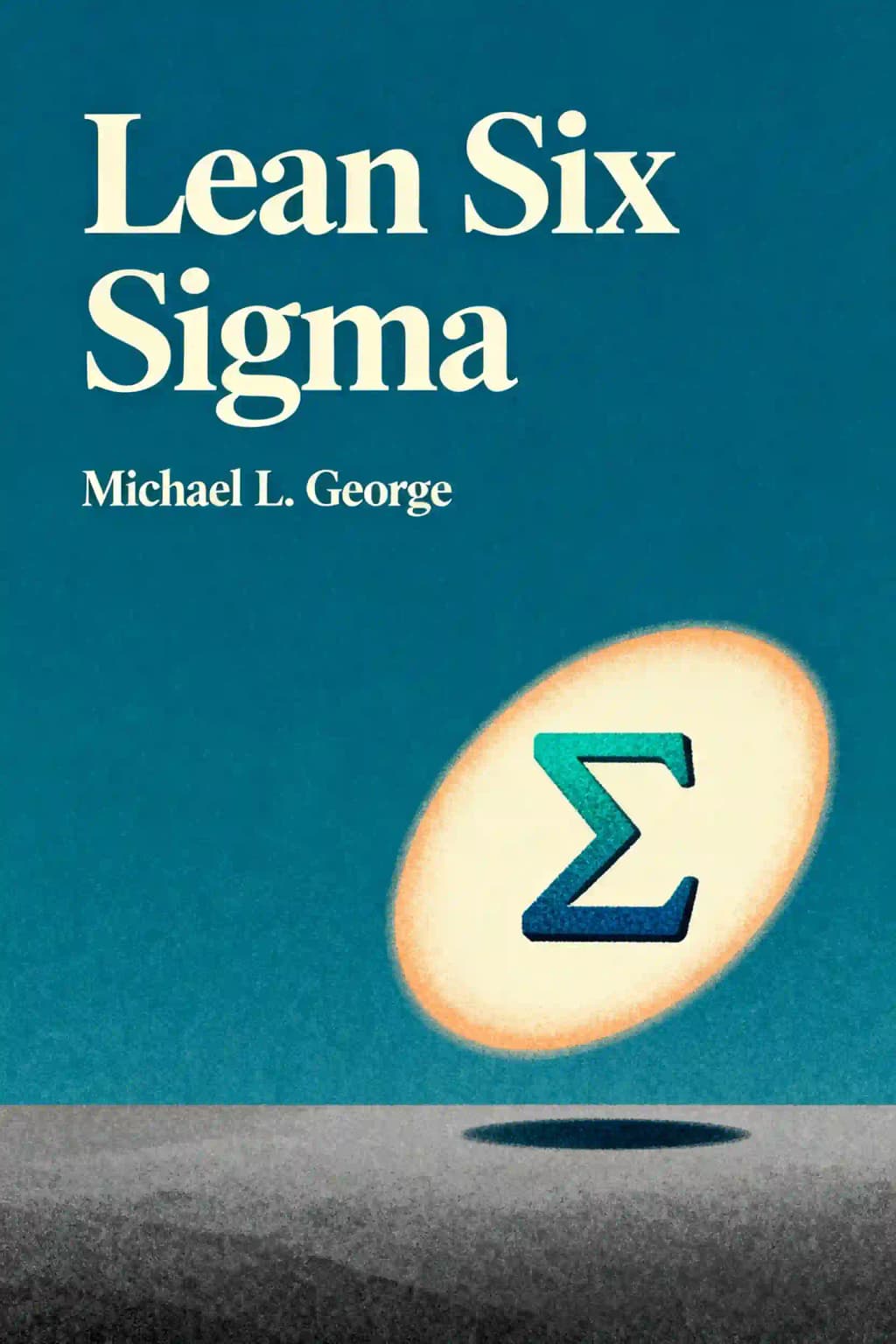
Discover the business revolution endorsed by Jack Welch that transformed GE and Caterpillar. "What is Lean Six Sigma?" demystifies the methodology that slashes waste while boosting quality - all explained through cartoons and plain English that make complex efficiency principles surprisingly accessible.
Michael L. George Sr., author of Lean Six Sigma and co-author of The Lean Six Sigma Pocket Toolbook, is a globally recognized authority in operational efficiency and quality management.
As founder of AI Technologies and former CEO of The George Group (acquired by Accenture), he has shaped corporate strategies for Fortune 500 companies through his integration of Lean methodologies with Six Sigma principles. His bestselling books, translated into multiple languages and selling nearly 500,000 copies worldwide, provide actionable frameworks for reducing cycle times, eliminating waste, and solving complex manufacturing challenges.
George’s pioneering work expands into artificial intelligence, detailed in his later publication Lean Six Sigma in the Age of Artificial Intelligence, which demonstrates how AI enhances data-driven decision-making. A frequent speaker at industry events like The ASSEMBLY Show, he combines 25+ years of consulting experience with evidence-based approaches to help organizations achieve sustainable competitive advantage.
His foundational texts remain required reading in business schools and corporate training programs globally.
Lean Six Sigma by Michael L. George explains how combining Lean (speed/efficiency) and Six Sigma (quality/defect reduction) methodologies drives business success. The book provides tools to eliminate workplace waste, improve processes, and enhance customer satisfaction through real-life examples and the "four keys": customer focus, process improvement, collaboration, and data-driven decisions.
This book is ideal for professionals in operations, manufacturing, or service industries seeking to reduce inefficiencies and improve quality. Managers, team leaders, and anyone involved in process optimization will gain actionable strategies for implementing Lean Six Sigma principles.
Yes—it’s a concise, practical guide praised for simplifying complex methodologies. Readers gain clear frameworks like DMAIC (Define, Measure, Analyze, Improve, Control) and real-world case studies from companies like GE and Xerox, making it valuable for both beginners and experienced practitioners.
The "four keys" are:
The methodology prioritizes understanding customer needs, defining quality standards, and reducing defects. For example, aligning delivery timelines with customer expectations minimizes delays—a concept championed by Jack Welch at GE.
Key tools include:
Unlike Benjamin Sweeney’s QuickStart Guide (focused on basics), George’s book emphasizes real-world corporate applications, blending Lean and Six Sigma holistically. It also avoids oversimplification, offering depth for sustained organizational change.
Some argue it can be overly technical for small teams or require significant cultural buy-in. However, George mitigates this with accessible language and case studies demonstrating scalable implementation.
As industries face AI-driven automation and supply chain complexities, Lean Six Sigma’s data-driven approach remains critical for reducing costs and adapting to rapid market changes. Companies like Amazon still use it to maintain competitive edges.
George, founder of a leading Lean Six Sigma consultancy, draws on decades of experience. His work with firms like Xerox provides credible, battle-tested insights, distinguishing it from theoretical guides.
Yes—George highlights applications in healthcare, finance, and IT. For example, hospitals use it to reduce patient wait times, while banks streamline loan approval processes.
“Speed and quality are not trade-offs—they’re mutual requirements.” This reflects the core idea that Lean (speed) and Six Sigma (quality) together drive sustainable success, a philosophy adopted by firms like Ford and Bank of America.
通过作者的声音感受这本书
将知识转化为引人入胜、富含实例的见解
快速捕捉核心观点,高效学习
以有趣互动的方式享受这本书
AI is "the biggest risk we face as a civilization."
Management engagement was measured through daily involvement.
Verify CEO competence using intelligence, energy, and integrity.
Setup time has been called "the heart of the Toyota Production System."
AI offers a revolutionary alternative through "Generic Setup Reduction."
将《Lean Six Sigma》的核心观点拆解为易于理解的要点,了解创新团队如何创造、协作和成长。
将《Lean Six Sigma》提炼为快速记忆要点,突出坦诚、团队合作和创造力的关键原则。

通过生动的故事体验《Lean Six Sigma》,将创新经验转化为令人难忘且可应用的精彩时刻。
随心提问,选择声音,共同创造真正与你产生共鸣的见解。

"Instead of endless scrolling, I just hit play on BeFreed. It saves me so much time."
"I never knew where to start with nonfiction—BeFreed’s book lists turned into podcasts gave me a clear path."
"Perfect balance between learning and entertainment. Finished ‘Thinking, Fast and Slow’ on my commute this week."
"Crazy how much I learned while walking the dog. BeFreed = small habits → big gains."
"Reading used to feel like a chore. Now it’s just part of my lifestyle."
"Feels effortless compared to reading. I’ve finished 6 books this month already."
"BeFreed turned my guilty doomscrolling into something that feels productive and inspiring."
"BeFreed turned my commute into learning time. 20-min podcasts are perfect for finishing books I never had time for."
"BeFreed replaced my podcast queue. Imagine Spotify for books — that’s it. 🙌"
"It is great for me to learn something from the book without reading it."
"The themed book list podcasts help me connect ideas across authors—like a guided audio journey."
"Makes me feel smarter every time before going to work"

免费获取《Lean Six Sigma》摘要的 PDF 或 EPUB 版本。可打印或随时离线阅读。
Imagine a struggling aerospace manufacturer with negative earnings suddenly achieving 20% profitability in just 18 months. What changed? Not massive layoffs or capital investments, but the strategic application of artificial intelligence to identify hidden waste. This transformation represents nothing less than manufacturing's Fourth Industrial Revolution - as significant as Henry Ford's assembly line or Toyota's production system. Even Warren Buffett and Elon Musk recognize AI's transformative power, with Musk calling it "the biggest risk we face as a civilization." The competitive landscape is shifting rapidly, with China racing ahead through its "Made in China 2025" strategy. The question isn't whether to implement AI, but how quickly you can do so before competitors gain an insurmountable advantage.