第 1 章
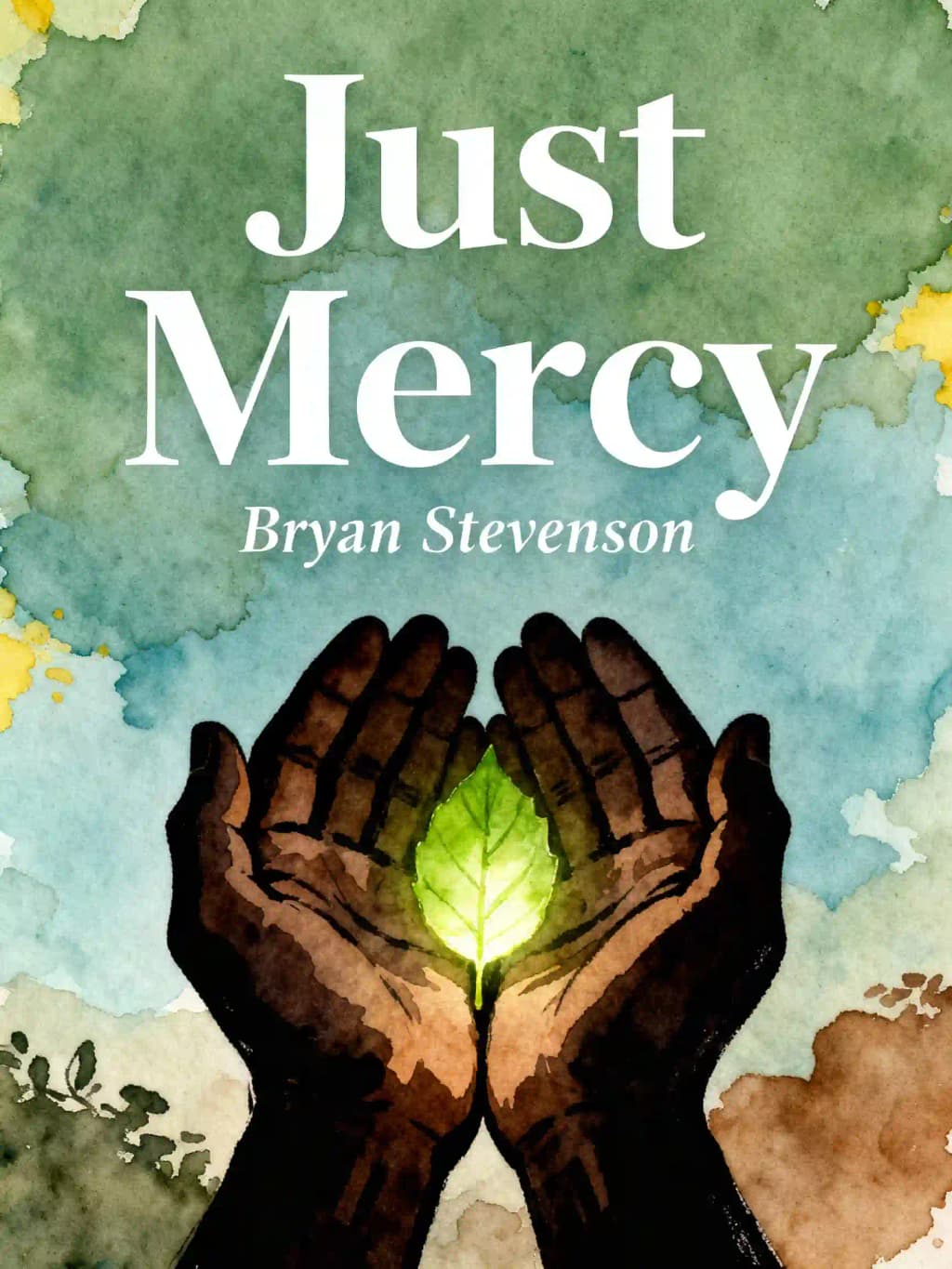
Justice That Stirs the Soul: A Journey Through "Just Mercy"
In Bryan Stevenson's powerful memoir "Just Mercy," we witness a remarkable journey through America's deeply flawed criminal justice system. This New York Times bestseller, which inspired the acclaimed 2019 film starring Michael B. Jordan and Jamie Foxx, has transformed our national conversation about criminal justice reform. Oprah Winfrey called it "essential reading," while Nobel Peace Prize Laureate Desmond Tutu described it as "a searing, moving and infuriating memoir." The book has become required reading in many law schools and universities nationwide, with over two million copies sold. What makes this work so compelling is not just its exposure of systemic injustice but the deeply human stories Stevenson shares from his decades as a public interest lawyer. Through these narratives, particularly the central case of Walter McMillian, Stevenson reveals how mercy might be our most transformative force - not just for those receiving it, but for those who extend it as well. Have you ever wondered what happens when justice fails those it's meant to protect? This is where Stevenson's journey begins.
第 2 章
When Proximity Transforms Understanding
Growing up in a racially segregated, impoverished community shaped my early understanding of justice and inequality. Confederate flags weren't just symbols - they were boundaries, warnings of where I wasn't welcome. My family's struggles against systemic barriers weren't abstract concepts but lived realities that planted the seeds for a lifelong mission toward equality.
Law school opened doors, but it was proximity to the condemned that truly transformed my perspective. Meeting Henry, a death row inmate, during my first prison visit as an inexperienced student lawyer created a profound shift in my understanding. Rather than finding despair, I encountered unexpected humanity. Henry's spiritual hymn "Higher Ground" resonated with a hope that seemed impossible in such circumstances, yet there it was - an impassioned voice brimming with desire and resilience.
This encounter dispelled my fears and deepened my comprehension of human potential and redemption. His unexpected kindness ignited a commitment to aid death row prisoners, one that thrived on newfound proximity to humanity's struggles. My legal journey shifted from theoretical to personal, propelled by an urgent quest to comprehend laws and practices that endorsed extreme punishment.
What I've learned through years of advocacy is that getting close - truly close - to the marginalized reveals truths obscured by distance and privilege. The staggering statistics of mass incarceration (one in three Black men between 18-30 under criminal justice control) become more than numbers when you sit across from those affected. Proximity refines compassion, expanding insight into how punishment without rehabilitation compounds societal ills and incarcerates hope alongside bodies.
The weight of understanding falls on our shared humanity within the walls of justice and incarceration. As my grandmother wisely advised, sometimes you need to get close to understand. This proximity doesn't just change how we see others - it transforms how we see ourselves, revealing our own brokenness and capacity for mercy.
第 3 章
The Mockingbird's Shadow: Walter McMillian's Story
Monroeville, Alabama - famous as the setting of "To Kill a Mockingbird" - became the stage for a real-life injustice that would haunt its streets far more profoundly than any fictional narrative. Walter McMillian, a Black man with no significant criminal history, found himself ensnared in a web of racial prejudice and judicial misconduct that would send him to death row for a crime he didn't commit.
When I first received the unexpected call from Judge Robert E. Lee Key (yes, that was really his name), his reluctance to discuss Walter's case revealed the deep-seated biases permeating the local judiciary. His oblique references to "mob" connections and outlandish criminal claims painted Walter as guilty before any fair trial could commence.
The investigation into Ronda Morrison's murder had faltered for months, with whispers growing into public outcry questioning local law enforcement's competency. Walter, already contending with personal turmoil from his relationship with Karen Kelly, a white woman, became the perfect scapegoat in a community where racial tensions simmered just beneath the surface. Sheriff Tate, under immense public pressure and with limited experience, seized on the tenuous connection between Walter and Ralph Myers, despite overwhelming evidence that the two had never even met.
What struck me most when reviewing the case was the absurdity of the state's evidence. Myers, a man with a complex past and disfigured appearance, first accused a sheriff in another murder case before shifting his allegations toward implicating Walter in Ronda's murder. The desperation of authorities to close the case led them to embrace this narrative despite its glaring inconsistencies.
Meeting Walter on death row, I was confronted with a man vehemently asserting his innocence amidst charges that seemed to materialize from thin air. His sincere plea for belief and representation against a backdrop of fast-paced judicial failures bore the seeds of what would become an arduous legal journey. "I'm innocent," he told me, his eyes holding mine with an intensity that couldn't be fabricated. "I wasn't anywhere near that store on the day that girl was killed."
The persistence of systemic racial biases came to the fore, highlighting the perilous consequences for Walter, a man whose greatest "crime" appeared to be his interracial relationship in a community still wrestling with its segregationist past. How could a justice system, designed to protect the innocent, so thoroughly fail someone with overwhelming evidence of his innocence? The answer lay in the uncomfortable truth that justice in America has never been colorblind.
第 4 章
Standing Against the Tide
The early days of my legal career thrust me into Georgia's harsh legal landscape, where I found myself living on Steve Bright's couch while diving headfirst into the complexities of criminal defense work. The modest apartment I eventually shared with Charles Bliss, another Harvard Law graduate, became our base of operations as we embarked on the ambitious plan to establish a project representing Alabama's death row inmates.
The constant journeys between Atlanta and Alabama became a physical manifestation of the commitment required to challenge entrenched injustice. Each visit to Southern prisons revealed conditions that shocked the conscience - solitary confinement cells barely larger than a bathroom, systematic abuse, and dehumanization that echoed the infamous Attica riots. These weren't just legal cases; they were human beings trapped in a system designed to break them.
Have you ever considered how fragile your freedom might be if you were born into different circumstances? This question haunted me as I took on cases like Lourida Ruffin's suspicious jail death and a teenager's shooting by police. The hours seemed endless, the work overwhelming, but the stakes too high to step back.
One night, returning to my apartment after a long day, I experienced firsthand the precariousness of being Black in America. Sitting in my car listening to music, I suddenly found myself surrounded by police officers, guns drawn, mistaking me for a suspect. The fear that coursed through me in that moment - that my life could end based on a misunderstanding - crystallized why this work mattered so deeply. This wasn't just about legal arguments; it was about survival for communities where such encounters were daily possibilities.
The incident reminded me that no Harvard degree or legal expertise could shield me from the same systemic biases that ensnared my clients. It underscored the broader societal challenges I was confronting - a justice system where the presumption of innocence often depended on the color of your skin and the contents of your wallet. This reality only strengthened my resolve to stand against the tide, to challenge a system that so often confused punishment with justice.
第 5 章
When Justice Fails: Trials and Tribulations
Walter McMillian's trial stands as a textbook example of how justice can be systematically denied. From the moment proceedings began, the deck was stacked against him in ways that exposed the raw nerves of racial prejudice still pulsing through the American legal system. Despite living in a county that was 40% Black, Walter faced an all-white jury after prosecutors used peremptory strikes to remove every qualified African American from the jury pool.
The venue change from Monroe County to predominantly white Baldwin County further stacked the odds against Walter. As his attorney objected to this blatantly discriminatory jury selection, the prosecution's case unfolded like a poorly written fiction - built entirely on coerced testimonies and implausible scenarios. Ralph Myers, the state's star witness, claimed Walter forced him to drive to the cleaners where Ronda Morrison was murdered, yet his testimony was riddled with inconsistencies and later revealed to be completely fabricated under pressure from law enforcement.
What struck me most powerfully was Walter's bewilderment as he listened to these false narratives being presented as fact. "I couldn't believe they were doing this," he later told me. "I had over a dozen witnesses who were with me at my home when they claimed I was committing this murder. How could they just ignore all those people?"
Indeed, the prosecution seemed determined to secure a conviction regardless of evidence. Multiple witnesses testified that Walter was at home hosting a fish fry miles away from the crime scene when the murder occurred. The alibi evidence was so solid that the prosecution's willful disregard for it bordered on the surreal. Yet the machinery of injustice ground forward, fueled by a community's need for closure and the convenience of a Black scapegoat.
After deliberations, the jury returned with a verdict of guilty but recommended a life sentence - seemingly acknowledging the weakness of the case. In an extraordinary move that would later become central to our appeals, the judge overrode this recommendation and sentenced Walter to death. The verdict and subsequent death sentence stirred a visceral rage within Walter, a man who had watched the system not merely fail him but actively work against him despite overwhelming evidence of his innocence.
As Walter was led away to death row - where, in another procedural anomaly, he had already been held for over a year before his trial even began - the true measure of injustice became clear. This wasn't a failure of evidence or legal technicalities; it was a failure of humanity, a willingness to sacrifice an innocent man's life rather than confront the uncomfortable possibility that justice might require looking beyond the easiest target.
第 6 章
The Old Rugged Cross: When Hope Seems Lost
February 1989 marked the beginning of a new chapter in the fight for justice with the opening of our nonprofit law center in Tuscaloosa. Dedicated to aiding death row inmates, our small team quickly faced mounting obstacles that would have deterred less committed advocates. We lost our first director, saw our university partner withdraw support, and struggled with financial strains amid an unsupportive state climate.
Despite these challenges, our commitment never wavered. We relocated to Montgomery and established the Equal Justice Initiative with minimal funding and a flood of urgent cases. The pressure intensified as Alabama's new death penalty statute triggered a surge of execution dates, creating an atmosphere of crisis for our newly formed legal team.
Have you ever felt the weight of another person's life in your hands? This became our daily reality as execution dates piled up, including for Walter McMillian and others desperately needing competent legal representation. The political climate worsened as the Supreme Court's shifting stance on the death penalty intensified the urgency to save lives in an increasingly unforgiving legal landscape.
Michael Lindsey's case brought the harsh realities of judicial override into sharp focus. Despite a jury's recommendation for life imprisonment, a judge imposed the death penalty - a practice unique to Alabama at the time. As election seasons approached, judges became more likely to override jury decisions in favor of death sentences, using tough-on-crime stances as campaign material. The statistics were damning: 89% of overrides resulted in imposing death when juries had recommended life, while only 11% went the other direction, revealing the political rather than judicial nature of these decisions.
Herbert Richardson's story particularly haunted me. A Vietnam veteran suffering from severe PTSD, Herbert's attempt to win back an ex-girlfriend with what he intended as a harmless smoke bomb led to unintentional tragedy. Despite his mental health issues and lack of intent to kill, he faced execution with inadequate legal representation that failed to present crucial evidence about his military service and trauma.
Herbert's final hours revealed the human cost of our broken system. As his execution approached, his dignity in the face of death contrasted sharply with the mechanical process designed to end his life. His request to sing "The Old Rugged Cross" echoed through the prison, a hymn of faith amid profound injustice. The state officials' discomfort was palpable as they proceeded with an execution that stripped Herbert of his humanity - the same humanity he had been denied throughout his legal proceedings.
Witnessing Herbert's execution strengthened my resolve to fight harder for those like Walter McMillian. If the system could so callously discard a traumatized veteran who never intended to kill, what hope did others have without dedicated advocacy? The old rugged cross became a symbol not just of faith, but of the heavy burden carried by those condemned by a system more focused on finality than justice.
第 7 章
Of the Coming of John: Community and Resistance
Monroeville's response to Walter McMillian's case revealed deep divisions along racial lines that echoed the very fictional narrative the town celebrated. While Harper Lee's "To Kill a Mockingbird" drew tourists, a real-life injustice unfolded in its streets with far less public outrage than its fictional counterpart.
Meeting Walter's family transformed the case from a legal challenge to a deeply personal mission. Huddled in their small trailer, I felt the warmth, love, and despair of relatives who knew with absolute certainty that their loved one was innocent. Walter's sister Armelia spoke with passionate conviction: "My brother was with us all day when they say this murder happened. We were all together right here, having a fish fry. How can they say he did this when all of us saw him right here?"
The family's frustration and trauma were palpable as they recounted their presence with Walter during the time of the alleged crime. His wife Minnie and daughter Jackie described the difficulties they'd faced since his wrongful conviction - the whispers, the lost income, the visiting days that never seemed enough. Yet despite these hardships, there was an unwavering belief in Walter's innocence and a determination to see justice done.
What struck me most powerfully was the sense of community that surrounded the McMillians. Neighbors, church members, and friends all confirmed Walter's alibi and expressed disbelief at his conviction. This wasn't just one man's fight for freedom; it was a community's struggle against a system that had failed them repeatedly.
As we strategized about next steps, I realized that the fight for Walter's freedom would require more than legal arguments. It would demand that we challenge deeply entrenched narratives about crime, race, and justice in a community still wrestling with its segregationist past. The coming battle would test not just our legal skills but our ability to shine light on truths many preferred to keep hidden.
The meeting with Walter's family became a visible testament to the strength that emerges from shared suffering, a plea for hope in the face of systemic oppression, and a reminder of the community solidarity needed to challenge injustice. Their trust in me - a young lawyer they had just met - was both humbling and motivating. I left their home with a renewed sense of purpose and the knowledge that this case was about far more than legal precedents; it was about restoring humanity to a system that had lost sight of its purpose.
第 8 章
Surely Doomed: Youth in the Justice System
Late one night, a desperate call came from Virginia - a grandmother pleading for help for her young grandson jailed for murder. This wasn't the first such call, nor would it be the last. Children caught in America's criminal justice system face a particularly cruel fate, often tried as adults and sentenced to die in prison despite their developmental immaturity.
Charlie's case exemplified this tragedy. A fourteen-year-old boy charged with murder, facing adult prosecution and the prospect of life imprisonment. What makes a child commit terrible acts? Often, it's a history of abuse, neglect, poverty, and trauma - factors our justice system frequently ignores in its rush to punish rather than rehabilitate.
After managing to transfer Charlie's case to juvenile court, I witnessed something remarkable: the power of compassion to transform lives. The Jenningses, an elderly couple still grieving their own grandson's death, took interest in Charlie. They began writing letters, then visiting, eventually forming a bond that gave Charlie something he'd never had - unconditional support. They remained steadfast in their belief that expecting better outcomes and hoping for one another was essential for change.
Have you ever considered how different your life might be if you'd been born into circumstances of constant trauma and neglect? This question haunts me when I work with young clients. Children like Ian Manuel, sentenced to life without parole at just thirteen for an armed robbery where the victim survived. Confined to solitary for eighteen years, Ian's mental health deteriorated severely. Yet in an extraordinary turn, Debbie Baigre - the woman he had shot - became his most passionate advocate after receiving his heartfelt apology letter.
Trina Garnett's story further illustrates this injustice. The youngest of twelve siblings growing up in dire poverty, she endured her father's terrifying violence and tragic accidents that left her mentally and physically scarred. Homeless at fourteen after her mother's death, a tragic accident involving a fire led to two deaths. Despite the absence of intent, Trina received life without parole. In prison, she suffered further trauma, including sexual assault that resulted in pregnancy.
These stories reveal a fundamental failure in how we treat our most vulnerable youth. The United States stands alone in sentencing children to die in prison, defying international norms and basic principles of child development. Our work at the Equal Justice Initiative has focused on challenging these practices, arguing that children have a unique capacity for change and rehabilitation - an argument that would eventually reach the Supreme Court.
The cases of Evan Miller and Ashley Jones further highlight this injustice. Both sentenced to life without parole as teens, they represent the tragic consequences when the justice system overwhelms youthful transgressions with adult punishments. Miller's involvement in a murder occurred during a chaotic night of substance abuse with an adult, while Jones's crime stemmed from deep-rooted familial abuse. Both cases underscore the survival struggles adolescents face when their developmental complexities are ignored in judicial processes.
第 9 章
Justice Denied: Fighting the System
Walter McMillian's appeal was devastatingly denied by the Alabama Court of Criminal Appeals, despite clear legal deficiencies in his case. Our appeal had highlighted glaring issues: the lack of corroboration for Myers's testimony, prosecutorial misconduct, racial discrimination in jury selection, and an improper venue change. Most egregiously, the judge had overridden the jury's life sentence recommendation without justification.
The denial left me with a profound sense of despair. How could a system designed to correct errors be so blind to such obvious injustice? Yet we couldn't surrender to hopelessness - Walter's life hung in the balance. We intensified our investigation, uncovering new evidence that strengthened our conviction in Walter's innocence.
A breakthrough came during an unexpected legal visit to St. Clair Prison, where Ralph Myers confessed to fabricating his entire trial testimony against Walter. Haunted by guilt and influenced by group therapy, Myers admitted to being coerced into lying by law enforcement. His recantation revealed a broader conspiracy of corruption - law enforcement officials had pressured him to falsely testify, sending an innocent man to death row.
Myers's dramatic confession ignited renewed hope but also raised caution about potential dangers. The web of deceit extended beyond one witness to suggest systemic corruption within local law enforcement. As we delved deeper, the true extent of the injustice became clearer - Walter had been framed by officials desperate for a conviction, regardless of truth.
The investigation led us to recordings that would prove pivotal - tapes of police threatening Myers and coaching his testimony. These recordings directly contradicted the prosecution's trial narrative and exposed the fabricated case against Walter. Armed with this evidence, we prepared for an evidentiary hearing that would determine whether Walter would receive a new trial.
In court, the atmosphere was tense as we presented our findings. The recordings of Myers being coerced played for the judge, revealing threats and pressure tactics used to manufacture testimony against Walter. Witnesses supported Myers's recantation, further undermining the State's case. Surprisingly, the prosecution offered no rebuttal to our evidence, perhaps recognizing the indefensible nature of their actions.
The hearing concluded with cautious optimism - the judge allowed additional time for written arguments, suggesting he was taking the evidence seriously. For the first time since beginning Walter's case, I felt genuine hope that the system might correct its grievous error. Yet I remained acutely aware of the systemic barriers we still faced - the reluctance of courts to acknowledge wrongful convictions, the political pressure to maintain the status quo, and the racial biases that had facilitated Walter's conviction in the first place.
This fight for justice extended beyond Walter to challenge the very foundations of a system that too often privileged finality over fairness, conviction rates over truth. Each denied appeal, each procedural hurdle reinforced my understanding that justice requires more than legal arguments - it demands persistent advocacy against entrenched power and prejudice.
第 10 章
Mitigation: Seeing the Whole Person
The evolution of standards for involuntary commitment reflects our society's struggling relationship with mental illness and criminal justice. Historical reforms aimed at protecting the mentally ill have given way to a system where prisons have become de facto mental health institutions - without the resources or mission to provide appropriate care.
George Daniel's case exemplifies this failure. Diagnosed by a fraudulent doctor with no actual medical credentials, George was sentenced to death despite glaring mental illness. Our intervention revealed the doctor's lack of qualifications, leading to George's conviction being overturned. Yet countless others remain imprisoned based on evaluations by this same imposter - a systemic failure in how we assess mental health in judicial processes.
Avery Jenkins's story further illustrates this injustice. A death row inmate with severe mental illness, Avery spent his childhood in foster care suffering abuse and neglect. His mental health issues were completely overlooked during his trial. When I attempted to represent him, I faced overt racism - being told by a clerk, "This isn't a law office for niggers." Despite this hostility, we persisted, uncovering evidence that Avery's severe mental impairments played a critical role in his crime.
Have you ever wondered how someone's life story might change your perception of their actions? This is the essence of mitigation - providing context that helps explain, though not excuse, criminal behavior. Too often, our justice system reduces people to their worst act, ignoring the circumstances that shaped them and their potential for rehabilitation.
Our work with mentally ill clients reveals a troubling pattern: those most vulnerable to abuse, neglect, and mental illness are often those most harshly punished by our justice system. Rather than addressing the root causes of their behavior, we impose extreme sentences that offer no path to healing or redemption.
This approach doesn't just fail the mentally ill; it fails society by ignoring the complexity of human behavior and the possibility of rehabilitation. True justice requires seeing the whole person - their trauma, their illness, their capacity for change - not just their crime. It demands that we ask not only what punishment fits the crime, but what intervention might prevent future harm and promote healing.
The cases of George Daniel and Avery Jenkins highlight the dire need for the justice system to address mental disabilities compassionately and equitably. When we fail to do so, we perpetuate cycles of suffering and injustice that diminish us all.
第 11 章
Breaking Through: Media and Public Opinion
The involvement of national media, particularly a detailed 60 Minutes piece, dramatically shifted the landscape of Walter McMillian's case. The CBS broadcast challenged the entrenched narrative that had dominated local perception, exposing the flimsy evidence and questionable tactics used to secure Walter's conviction.
Local media initially responded with backlash, attempting to discredit the coverage and defend the status quo. Yet the national spotlight created cracks in the facade - even some community and business leaders began questioning the handling of the case, recognizing potential implications for Monroeville's reputation. The town famous for "To Kill a Mockingbird" now faced scrutiny for potentially recreating the very injustice depicted in its celebrated novel.
The CBS coverage reignited discussions in the Black community, offering validation for what many had suspected all along - that Walter's conviction was rooted in racial prejudice rather than evidence. This external validation proved crucial, as local power structures had previously dismissed such concerns as baseless complaints.
What happens when a community must confront its own complicity in injustice? In Monroeville, this question created growing internal conflict as the prosecution's case became increasingly indefensible. Some investigators began considering exposing this miscarriage of justice, torn between professional loyalty and moral obligation.
The media attention also amplified our legal efforts, creating public pressure that complemented our courtroom advocacy. Walter's case was no longer just a local matter but part of a national conversation about racial bias in the criminal justice system. This broader context made it harder for officials to dismiss or delay addressing the evident problems with his conviction.
The power of storytelling - whether through journalism or legal advocacy - became increasingly clear. By humanizing Walter and exposing the flaws in his case, media coverage helped bridge the empathy gap that often allows injustice to persist. People who might have dismissed abstract concerns about wrongful convictions could now see a concrete example of the system's failure.
This experience taught me that justice sometimes requires not just legal arguments but public engagement - shining light on injustices that thrive in darkness and silence. The media's role in Walter's case demonstrated how external scrutiny can catalyze internal reform, creating space for truth in systems resistant to acknowledging their own failures.
第 12 章
The Long Road to Freedom
Walter's journey to freedom faced numerous obstacles even as evidence of his innocence mounted. Despite the recordings revealing police misconduct and Myers's recantation, the system remained reluctant to admit its error. This reluctance reflects a broader challenge in wrongful conviction cases - the institutional resistance to acknowledging mistakes that might undermine public confidence in the justice system.
After months of uncertainty following our evidentiary hearing, we finally received the news we had been fighting for - the Alabama Court of Criminal Appeals had reversed Walter's conviction. The court acknowledged what we had known all along: Walter McMillian had been wrongfully convicted based on perjured testimony and suppressed evidence. After six years on death row for a crime he didn't commit, Walter would finally be free.
The day of Walter's release was both joyous and sobering. As he walked out of prison into the arms of his family, the weight of the injustice he had endured was palpable. No legal victory could restore the years taken from him or heal the trauma of facing execution for another's crime. Walter's first words to me outside the prison - "Thank you for saving my life" - carried both gratitude and an implicit acknowledgment of the system's failure.
Walter's pursuit of justice after his release faced numerous legal barriers. Despite clear evidence of misconduct, those responsible denied accountability, and legal immunity protected them from consequences. The fight extended to the U.S. Supreme Court, where barriers to holding officials accountable persisted. Although Walter eventually reached a settlement, the compensation fell far short of what justice demanded.
After his release, Walter returned to Monroe County, finding solace in the simplicity of collecting junk cars - a business that allowed him to enjoy the outdoors without the physical strain of his previous logging work. Alongside this, he continued sharing his story at public events, demonstrating remarkable resilience and grace in the face of profound injustice.
What does justice mean when six years of a man's life have been wrongfully taken? This question haunted me as I witnessed Walter's post-exoneration struggles. True justice would require not just his freedom but accountability for those who wronged him, systemic reforms to prevent similar injustices, and support for his reintegration into society. On all these measures, our system fell short.
Yet Walter found purpose in lending his voice to reform efforts, helping others understand the human cost of a flawed justice system. His story became a powerful testament to both the system's failures and the possibility of correction when advocates refuse to accept injustice.
第 13 章
Broken: Finding Mercy in Our Shared Humanity
The relentless demands of defending vulnerable clients took a profound toll as we faced another execution case. Jimmy Dill's circumstances epitomized the broader issues plaguing our justice system: inadequate legal representation, disregard for mental disability, and procedural barriers that prioritized finality over fairness. Despite our efforts to save him, Dill was executed, leaving me questioning whether our work made any meaningful difference against such an unyielding system.
This experience brought me to a crucial realization: we are all broken in some way. The clients we represent, the advocates fighting for them, even the officials enforcing unjust laws - all carry forms of brokenness that shape their actions and perspectives. This shared brokenness doesn't excuse injustice but offers a framework for understanding and addressing it through mercy rather than punishment.
My own journey toward this understanding began in childhood, when I rejected an opportunity to show compassion to a boy mocked for his stutter. That moment of failed empathy haunted me, eventually connecting to my adult comprehension of mercy's transformative power. Our justice system, with its focus on punishment rather than rehabilitation, mirrors this failure to recognize how our shared vulnerability should inspire compassion rather than condemnation.
Have you ever considered how your own experiences of being broken might connect you to those society has deemed unworthy of mercy? This question lies at the heart of true justice - not a cold calculation of punishment but a recognition of our common humanity and capacity for redemption.
Walter McMillian's story exemplifies both the devastating consequences of a merciless system and the transformative potential of justice tempered with compassion. His wrongful conviction represented a failure not just of legal procedures but of human empathy - a willingness to sacrifice an innocent man rather than confront uncomfortable truths about racism and corruption.
Walter died on September 11, 2013, after struggling with dementia in his final years. His funeral served as both a somber reminder of the injustices he faced and a celebration of his resilience against deep-seated inequities. He had become a symbol of bravery and trust, teaching profound lessons about justice, mercy, and the flaws of our criminal justice system.
His life demonstrated that mercy should be given freely and hopefully, especially to those deemed undeserving. This lesson extends beyond individual cases to challenge our entire approach to justice - asking whether a system that privileges wealth over innocence, punishment over rehabilitation, and finality over truth truly serves society's needs.
The struggle for a more just and merciful legal system continues, inspired by Walter's example and countless others who have faced the worst of our justice system with dignity and hope. Their stories remind us that true justice requires not just legal reform but a fundamental shift in how we view those who have been branded as criminals - seeing their humanity, recognizing our shared brokenness, and extending the mercy that might transform both their lives and our society.