第 1 章
The Warrior Gospel: How Evangelicals Embraced Militant Masculinity
In January 2016, Donald Trump spoke at a small Christian college in Iowa, boasting about his wealth, warning about immigrants, and claiming Christianity was "under siege." Despite his crude language and questionable morals, white evangelicals embraced him enthusiastically-81% would eventually vote for him. This wasn't a bizarre aberration or a hypocritical compromise. It was the culmination of decades of evangelical culture-building that had gradually transformed Jesus from the gentle shepherd of Sunday School paintings into a warrior king more reminiscent of John Wayne than the Sermon on the Mount. Trump's appeal to evangelicals wasn't despite his aggressive masculinity and authoritarian tendencies-it was precisely because of them.
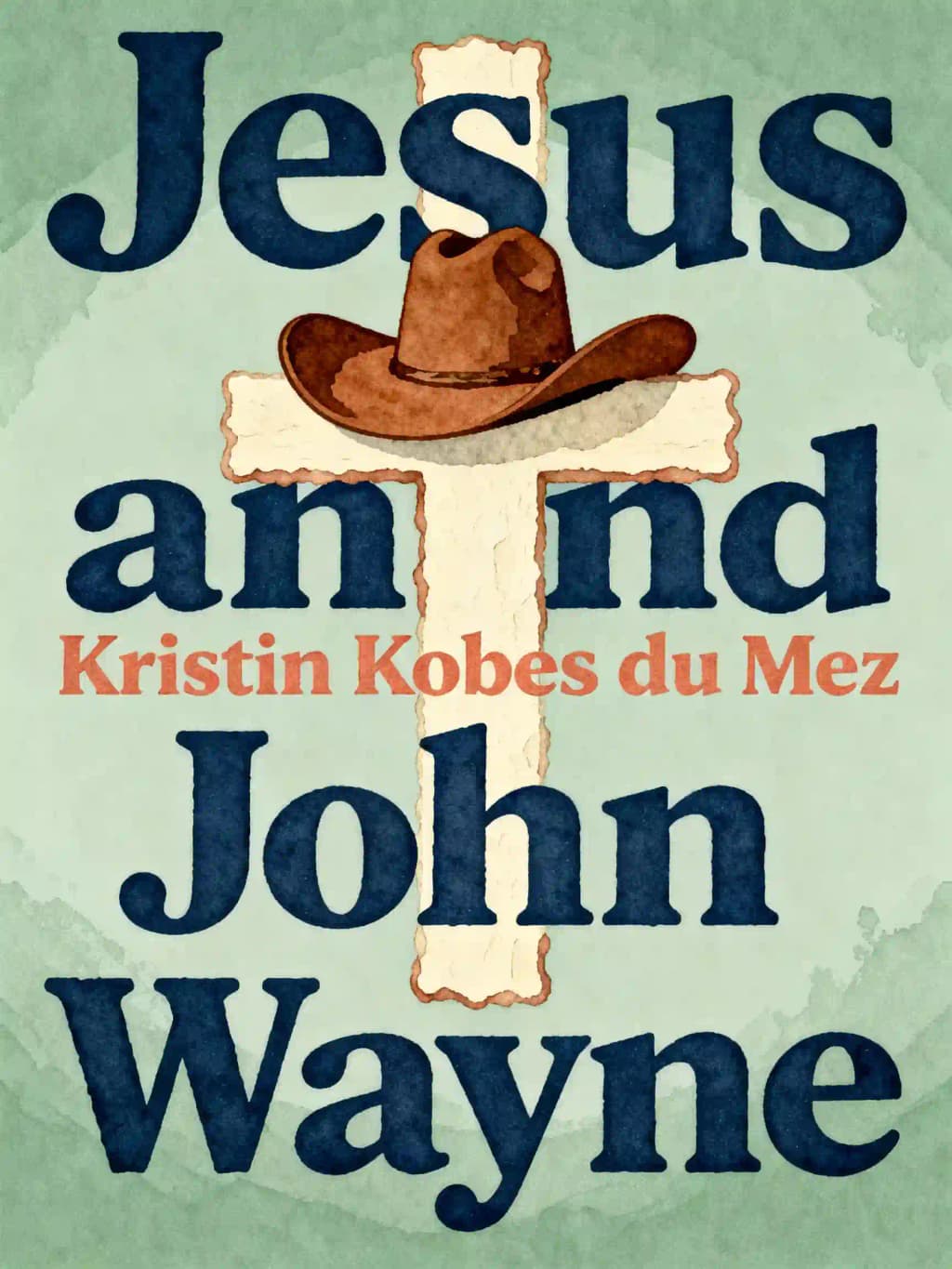
Kristin Kobes Du Mez's groundbreaking book reveals how evangelicals spent seventy-five years constructing a militant masculine ideal that would eventually lead them to embrace a president who embodied their values while flouting traditional Christian virtues. This transformation didn't happen overnight. It was carefully cultivated through books, music, films, and consumer products that celebrated a particular vision of Christian manhood-one defined by toughness, authority, and a willingness to use force in defense of faith, family, and nation.
第 2 章
From Roosevelt to Wayne: The Birth of Militant Christian Masculinity
By the early twentieth century, American Christianity had a masculinity problem. Many blamed the "feminization" of Victorian Christianity with its gentility and restraint. As the economy shifted from farming to corporate employment, men's physical strength became superfluous, questioning their very manhood. With immigrants arriving and "new women" entering colleges and professions, white Protestant men began asserting a rougher, tougher masculinity, believing the fate of white Christian "civilization" hung in the balance.
Theodore Roosevelt embodied this transformation. Once ridiculed as "Punkin-Lily" for his high voice and fancy clothing, he reinvented himself as the "Cowboy of the Dakotas." The frontier became the forge for a new masculinity where white men brought order through armed protection and righteous violence. When Roosevelt became president in 1901, this violent, fantasized masculinity entered national politics.
American Christians faced the challenge of reconciling aggressive new masculinity with traditional Christian virtue. Billy Sunday, a former baseball player, preached this "muscular Christianity" with unrivaled zeal. Rejecting "sissy, lily-livered piety," Sunday loaded his "Gospel gun" with whatever came handy. During World War I, his militancy intensified-he had no patience for pacifists or draft dodgers ("God-forsaken mutts"), declaring "all are patriots or traitors, to your country and the cause of Jesus Christ."
After the war's carnage, Roosevelt's model of masculinity seemed wanting. Liberal Protestant internationalists felt especially disillusioned, while fundamentalists embraced their status as an embattled remnant. In 1942, fundamentalist leaders formed the National Association of Evangelicals, strategically rebranding as "evangelicals" to distance themselves from more reactionary elements.
Billy Graham emerged as the handsome face of this new evangelicalism. Standing six-foot-two with "Nordic looks" and a "square jaw," Graham trained "like a prizefighter" and used athletic and military metaphors to prove Christianity wasn't "sissy" but for "real 'he men' with red blood." His Jesus was "a man, every inch a man" and "the most physically powerful man who had ever lived."
World War II rehabilitated militant masculinity, and evangelicals enthusiastically supported the war effort. While liberal Protestants expressed reservations about total war tactics, evangelical leader Harold John Ockenga defended the firebombing of German cities in the New York Times.
Despite his rough edges-three marriages, two divorces, high-profile affairs, chain-smoking and hard drinking-John Wayne captured the hearts of American evangelicals. This affinity wasn't based on theology but on a shared masculine ideal. Wayne became one of Hollywood's biggest stars by embodying the heroic cowboy-soldier archetype that captivated Cold War audiences. His breakout came in 1948 with "Red River" and "Fort Apache," just as Cold War tensions were rising. In 1949, Wayne starred as Sergeant Stryker in "Sands of Iwo Jima," combining the mythology of the American cowboy with the freedom-fighting soldier. Though Wayne never actually served in the military, his character symbolized American toughness, and phrases like "Saddle up!" and "Lock and load!" entered the lexicon of American conservatism.
第 3 章
Politics, Patriarchy, and Power
Billy Graham's political journey reflected the broader transformation of evangelical politics from the 1950s to the 1980s. Though a lifelong registered Democrat, Graham's relationship with the Democratic Party soured early. He actively courted Republicans, writing to Eisenhower urging him to run for president, convinced the war hero possessed the "honesty, integrity, and spiritual power" needed to lead the nation.
Eisenhower and Graham united in seeing Christianity as crucial to fighting the Cold War. By framing communism as "the greatest enemy we have ever known," Graham made himself useful to Eisenhower and subsequent presidents. By the 1950s, evangelicals had succeeded in establishing themselves in the mainstream with access to the highest levels of power.
The civil rights movement challenged white Americans by arguing that America had never truly been a country of liberty and justice for all. Evangelical responses varied-some supported civil rights while others, primarily fundamentalists and southerners, staunchly opposed it. In the post-Civil War South, the Lost Cause had blended with Christian theology, with fundamentalist pastors like W.A. Criswell denouncing integration as "a denial of all that we believe in."
The evangelicalism gaining prominence in Cold War America was inseparable from its southern roots. The heroic Christian man was invariably a white man, often defending against the threat of nonwhite men and foreigners. This connection between white masculine power, family values, and militant defense of Christian America was clearly displayed in southern California's evangelical political resurgence of the early 1960s.
By 1968, Nixon recognized conservative evangelicals as key to victory. Though not particularly religious, he understood that anticommunism abroad and "moral values" and "law and order" politics at home would appeal to this voting bloc. With Billy Graham's support-"There is no American that I admire more than Richard Nixon"-and his "Southern strategy" drawing former segregationists into the Republican Party, Nixon won with 69 percent of white evangelicals casting their votes for him.
The Vietnam War became a defining moment for evangelical identity. While the antiwar left, including many mainline clergy, condemned American atrocities and questioned the war's morality, conservative evangelicals doubled down on their support. They viewed the military with reverence and saw American soldiers as "champions for Christ" defending against "godless communism."
For evangelicals, Vietnam represented not just a military failure but a crisis of American masculinity. Jack Hyles, a WWII veteran who built First Baptist Church of Hammond into a fundamentalist megachurch, emerged as a leading voice addressing this crisis. Hyles advocated raising boys to be winners and fighters, encouraging violent defense of family honor, and enforcing strict gender roles. Boys needed guns and sports, while girls needed to learn submission.
第 4 章
The Total Woman and the Masculine Crisis
By 1970, Marabel Morgan's marriage was deteriorating until she devised a strategy that would become the foundation for her wildly successful "Total Woman" program. Her solution to marital problems wasn't addressing male chauvinism or inequality, but rather teaching women to stop resisting their designated roles. Morgan's practical advice centered on women becoming "the sunshine" in their homes through efficient homemaking, weight loss, and most importantly, stopping all nagging. Her solution for troubled marriages was straightforward: wives should treat husbands like kings, revere them, and cater to their every need.
Morgan's Total Woman program had a religious foundation based on biblical submission, but primarily drew from her own experience, especially regarding intimacy. She emphasized women maintaining their "curb appeal" and surprising husbands with various costumes and personas. Her homework assignments centered on sex, instructing wives to make themselves unconditionally available to husbands for seven consecutive nights.
Morgan's message resonated with women invested in defending traditional womanhood against feminism. While Betty Friedan's "The Feminine Mystique" prompted many housewives to reconsider their limited lives, the Total Woman curriculum offered a more attainable paradigm for change. Though demanding-requiring wives to overcome resentment to praise and sexually satisfy husbands-many found it easier than pursuing "liberation," especially those lacking employable skills or means to leave home.
Catholic Phyllis Schlafly became the political champion for evangelical women, creating new alliances among conservative women. Despite promoting "traditional" womanhood, her life was anything but traditional. Initially opposing the Equal Rights Amendment, she linked gender equality to communism and argued the ERA would make women vulnerable to sexual exploitation. Schlafly's book "The Power of the Positive Woman" revealed how conservative Christian anti-feminism connected to anticommunism, Christian nationalism, and militarism.
The 1970s saw the convergence of separatist and "respectable" evangelicals around patriarchal power, forming the basis of a common cultural and political identity. Two figures exemplified this alliance-Bill Gothard and James Dobson.
Bill Gothard, unfamiliar outside conservative evangelical circles, founded Campus Teams in 1961 to address "wayward youth" problems, later renamed the Institute in Basic Life Principles. His philosophy centered on divinely ordained authority, building on Christian Reconstructionist R.J. Rushdoony's teachings. Gothard advanced a military-like "chain of command" where fathers held ultimate family authority, wives owed total submission, and children absolute obedience. This hierarchy extended to church, government, and business, with those in authority serving as God's representatives deserving absolute obedience.
In 1970, child psychologist James Dobson published "Dare to Discipline," rejecting Dr. Spock's permissive parenting in favor of strict authority and corporal punishment. Raised in a Nazarene minister's family and once a rebellious youth himself, Dobson diagnosed America's problems as stemming from rejection of authority. His book sold over two million copies by offering definitive answers to parents bewildered by social upheaval. After resigning from the American Psychological Association when it declassified homosexuality as a disorder, Dobson founded Focus on the Family in 1977. His radio broadcasts reached hundreds of stations nationwide, while his video series "Where's Dad?" was viewed by an estimated 100 million people worldwide.
第 5 章
The Rise of the Religious Right
As evangelicals mobilized politically in the 1970s, they rallied around "family values"-not to protect families generally, but to reassert patriarchal authority. This politics centered on sex and power, with fathers disciplining children and husbands exercising authority over wives domestically, while promoting American militarism nationally. Phyllis Schlafly had helped construct this framework, but evangelicals like Tim LaHaye, Beverly LaHaye, and Jerry Falwell became the architects of the Religious Right, ensuring patriarchal authority would remain central to evangelical politics for decades.
Though later famous for his apocalyptic "Left Behind" novels featuring masculine heroes and Christ's violent triumph, Tim LaHaye first gained prominence through his 1968 marriage guide "How to Be Happy Though Married." This book promoted male headship while including detailed sexual information, selling over 300,000 copies by 1973. In 1976, Tim and Beverly LaHaye published "The Act of Marriage," a comprehensive Christian sex manual that balanced between sexual repression and revolution by confining sexuality within patriarchal marriage. The LaHayes taught that men's leadership abilities were directly linked to their sexual satisfaction, and wives had a duty to fulfill their husbands' desires despite modesty or inhibition.
Jerry Falwell amplified themes articulated by Schlafly, Dobson, and the LaHayes, representing a shift toward more brazen militancy and militarism. Raised in economically depressed Lynchburg, Virginia by a religious mother and alcoholic father, Falwell was both a standout athlete and class valedictorian before attending Baptist Bible college. He returned to found Thomas Road Baptist Church in 1956, attracting Appalachian transplants seeking community.
In 1979, Falwell launched the Moral Majority to mobilize the Religious Right, though he had been championing Christian nationalism throughout the 1970s with "I Love America" rallies and supporting Anita Bryant and Phyllis Schlafly in their "pro-family" campaigns. His 1980 book "Listen, America!" warned that America faced communist threats and moral decay through "welfarism," divorce, abortion, homosexuality, secular humanism, and laws undermining patriarchal authority. Falwell insisted that protecting the family required not just moral revival but military strength, arguing that Christianity sanctioned military aggression and that American security depended on "powerful, dynamic, and godly leadership."
Falwell's political activism marked a dramatic reversal from his 1960s stance when he preached against Christian political engagement, particularly criticizing ministers involved in the civil rights movement. As a segregationist, Falwell claimed civil rights agitation was inspired by communist sympathizers. He helped resist school integration and opened his own private Christian academy in 1967 when Virginia mandated public school desegregation.
第 6 章
Reagan and the Warrior Gospel
In 1980, conservative Christian leaders rallied behind Ronald Reagan as their champion against Carter, whom they viewed as weak and disappointing. Despite Reagan's spotty religious credentials and mixed record as California governor, evangelicals embraced him for his masculine strength, anti-communist stance, and ability to speak their language. The Religious Right helped secure Reagan's victory, cementing white evangelicals' loyalty to the Republican Party for generations to come.
Reagan perfectly embodied the masculine leadership evangelicals craved. Unlike the "wimpy" Carter with his cardigans and crisis of confidence, Reagan projected rugged cowboy strength reminiscent of John Wayne. The night before the 1980 election, Reagan invoked Wayne as "a symbol of our country itself," rejecting the notion that American heroism was dead. Reagan's tough stance on crime, authoritarian father image, and racially coded rhetoric like "states' rights" and "law and order" appealed to white conservatives disillusioned with social upheaval.
When Reagan won in a landslide, evangelicals were euphoric and quick to claim credit. Falwell called it "the greatest day for conservatism and morality in my adult life," while James Robison declared, "The people who put Jimmy in, put Jimmy out." Initially, Reagan's inauguration seemed promising, quoting the same biblical passage Falwell had used while campaigning. However, evangelicals soon grew disappointed when Reagan failed to deliver on domestic family values issues like abortion and school prayer. Yet Reagan kept evangelical support through his aggressive foreign policy, which aligned with their views of masculine power and anti-communism.
The Nicaraguan Contra War exemplified the alliance between Reagan and evangelical leaders. Though not primarily religious, the conflict was framed as such in America. Conservative Christian organizations mobilized on behalf of the Contras, portraying the Sandinistas as persecutors of Christians. The Reagan administration invited evangelical leaders to White House briefings and leveraged their media networks to drum up public support when Congress initially refused funding.
Oliver North, a decorated marine and evangelical convert, briefed figures like Falwell, Robertson, and LaHaye. Reagan recorded messages distributed through Christian television and radio networks, calling it "nothing less than a sin to see Central America fall to darkness." These efforts succeeded in securing $100 million for the Contras, even as the administration secretly arranged weapons sales to Iran with funds diverted to the Contras-a scheme that would later unravel into the Iran-Contra scandal.
第 7 章
Tender Warriors and Holy Balls
In summer 1997, around 700,000 Christian men gathered in Washington DC for Promise Keepers' "Stand in the Gap" rally. The movement had grown explosively from 4,200 men at its first rally six years earlier, founded by Bill McCartney after experiencing a personal crisis. By 1996, PK events attracted 1.2 million men nationwide.
The evangelical men's movement of the 1990s contained competing visions of masculinity. Some promoted "soft patriarchy" following Ed Cole's middle path between "macho" and "softer" manhood. Others, like Gary Oliver in "Real Men Have Feelings Too," rejected stark gender differences, arguing that traditional "masculine" traits were myths and that Jesus modeled gentleness and compassion. Both approaches coexisted within Promise Keepers through the concept of "servant leadership," which framed male authority as obligation and sacrifice.
Despite talk of sacrifice and tenderness, Promise Keepers' rhetoric often reinforced patriarchy. Tony Evans insisted men shouldn't ask for their leadership role back but "take it back" with "no compromise," claiming men must lead "for the survival of our culture." Critics viewed servant leadership as marketing "male supremacy with a beatific smile"-salvaging patriarchal order by exchanging intimacy for power, passing authority off as humility.
The 1990s saw the emergence of the "tender warrior" as the dominant blueprint for Christian manhood. Gordon Dalbey's 1988 "Healing the Masculine Soul" pioneered this genre, drawing on Robert Bly's Jungian ideas about masculine initiation and Leanne Payne's Christian psychology. Dalbey identified the Vietnam War as a pivotal source of masculine identity crisis-his generation had rejected the "macho" war hero image but found nothing to replace it. The result was confusion and emasculation. Dalbey argued that "manhood requires the warrior" and that women were "crying out" for men to recover their strength.
Alongside "biblical manhood" teachings, an elaborate "purity culture" took hold across evangelicalism in the 1990s. This movement emphasized female modesty and chastity while teaching that men possessed "nearly irrepressible, God-given sex drives." Women were responsible for avoiding tempting men while wives needed to meet husbands' "every sexual need." Standards of modesty varied across evangelical subcultures, from homeschool circles requiring below-knee dresses to more liberal definitions, but women were consistently judged for failing to uphold ideals.
John Eldredge's 2001 bestseller "Wild at Heart" launched a new era of evangelical militant masculinity that would sell over four million copies and frame evangelical masculinity discussions for years to come. Eldredge rejected office work and "climate-controlled shopping malls" as harmful to masculinity, instead promoting a "frontier" spirituality centered on a warrior God who made men in his dangerous, aggressive image. According to Eldredge, every man needed "a battle to fight, an adventure to live, and a beauty to rescue," while society and churches had spent decades trying to make men "sensitive, safe, manageable and feminine."
The 9/11 attacks transformed evangelical masculinity, giving renewed urgency to calls for "manly heroes." As Phyllis Schlafly noted, when firefighters charged into burning towers, the death toll was "men 343, women 0," proving America needed masculine men, not "affirmative-action women." The War on Terror, framed by an evangelical president, connected foreign threats to domestic concerns about raising strong boys.
After 9/11, evangelical masculinity took an even more extreme militant turn. GodMen revivals featured evangelist Brad Stine encouraging men to "kick ass" and "grab your sword," while combating "the wuss-ification of America." These gatherings celebrated testosterone with karate fights, car chases, and "Jackass-style stunts," while rejecting the "Bearded Lady" Jesus who "turns the other cheek." Participants sang anthems like "Grow a Pair," which lamented the feminization of men by "the culture crowd" and urged them to "cowboy up" and "grab a sword."
Christian mixed martial arts emerged as a ministry to men, with groups like Xtreme Ministries combining church with MMA training "Where Feet, Fist and Faith Collide." By 2010, an estimated 700 predominantly white evangelical churches had adopted MMA for outreach. James Dobson's son Ryan promoted this movement, arguing that "the man should be the overall leader" but we'd "raised a generation of little boys."
第 8 章
From Obama to Trump: The Culmination of Militant Christianity
In the post-9/11 era, evangelicals replaced communism with Islam as the primary threat to Christian America. Despite President Bush's attempts to distinguish Islamic extremism from the religion as a whole, many evangelical leaders embraced inflammatory anti-Muslim rhetoric. Franklin Graham called Islam "evil and wicked," Pat Robertson claimed Muslims were "worse than Nazis," and James Dobson framed Islamic fundamentalism as a threat to American families.
Lt. Gen. William "Jerry" Boykin exemplified how evangelicals used military positions to advance religious agendas they saw as fused with America's military mission. With an extensive career spanning Vietnam, Delta Force, and eventually becoming under secretary of defense for intelligence under President Bush, Boykin played a crucial role in the War on Terror. As a devout evangelical who frequently spoke at conservative Christian events in uniform, Boykin depicted the War on Terror as "an enduring battle against Satan" and claimed God had placed Bush in power.
For many white evangelicals, Barack Obama presented a troubling alternative to their vision of leadership. As an African American with the middle name Hussein, Obama challenged values many white evangelicals held dear. Though he spoke eloquently about his Christian faith, many evangelicals dismissed this. Their objections revealed how evangelical faith remained intertwined with whiteness-despite theological similarities with black Protestants, the prophetic theology of the black Protestant tradition clashed with white evangelicals' Christian nationalism.
During Obama's presidency, evangelical opposition intensified around "religious freedom" issues, particularly regarding gender and sexuality. Dobson desperately called for men to defend their families from transgender bathroom policies, asking "Where is today's manhood? God help us!" while General Boykin threatened violence against transgender individuals using women's restrooms.
For evangelicals who had come to despise President Obama, the prospect of Hillary Clinton's candidacy seemed even worse. Clinton was a devout Methodist who spoke easily about her faith, but evangelicals saw her as the wrong kind of Christian. Despite her biblical knowledge and comfort among black Protestants, white evangelicals opposed her feminist career woman image, global human rights advocacy, and pro-choice stance.
Evangelical infatuation with Trump wasn't immediate. Initially, leaders preferred traditional candidates like Mike Huckabee, Ben Carson, Marco Rubio, and Ted Cruz-each appealing to different evangelical constituencies. But despite Russell Moore dividing evangelicals into "Jerry Falwell," "Billy Graham," and "Jimmy Swaggart" wings, Trump's support steadily grew. After decades of being told Christianity was under siege from communism, feminism, and Islamic terrorism, evangelicals were primed for Trump's aggressive masculinity.
Jerry Falwell Jr. and Robert Jeffress emerged as Trump's earliest high-profile evangelical supporters. Falwell invited Trump to Liberty University, drawing parallels to his father's support of Reagan over Carter: "When he walked into the voting booth, he wasn't electing a Sunday school teacher." Jeffress, pastor of First Baptist Dallas, offered the opening prayer at Trump's Dordt College address and famously quipped that he wanted "the meanest, toughest, son-of-a-you-know-what" as president.
When the Access Hollywood tape emerged four weeks before the election, revealing Trump bragging about sexual assault, some evangelicals briefly wavered. Most evangelical leaders, however, quickly found ways to dismiss concerns. Ralph Reed called it "a 10-year-old tape" that ranked "pretty low" on faith voters' priorities. Franklin Graham acknowledged Trump's "crude comments" but considered Clinton's "godless progressive agenda" worse.
第 9 章
The Dark Side of Evangelical Masculinity
Three months into Trump's presidency, three-quarters of white evangelicals approved of his performance-nearly twice his approval rating among the general public, with support strongest among regular churchgoers. This shouldn't have been surprising. Since the 1960s-70s, evangelicals had championed discipline and authority within a rigid patriarchal chain of command, believing God equipped men to exercise authority in homes and society. They had elevated men exhibiting the same rugged, ruthless leadership Trump displayed, often turning blind eyes to abuses of power to maintain patriarchal authority.
Mark Driscoll, perhaps the clearest embodiment of militant evangelical masculinity in the early 2000s, saw his empire begin unraveling in 2013. After building Mars Hill Church and inspiring a generation of conservative pastors with his aggressive masculinity, trouble began with plagiarism accusations, followed by revelations his church spent $210,000 to buy his book "Real Marriage" a spot on the New York Times Best Sellers list. Only when Driscoll's invincibility cracked did twenty-one former Mars Hill pastors come forward accusing him of abusive leadership, arrogance, domination, quick temper, and verbal violence.
The response to Driscoll's downfall revealed how evangelical men protect their own. Doug Wilson defended his friend, claiming Driscoll was simply victimized for being "a tough guy" with "out-there masculinity"-essentially "the revenge of the beta males." John Piper, while acknowledging some reservations about Driscoll's leadership style, called his fall "a defeat for the gospel" and "a colossal Satanic victory."
What puzzled observers wasn't evangelicals' embrace of authoritarian leaders, but their willingness to support men who mocked their professed "family values." The Access Hollywood tape and allegations from sixteen women did little to shake evangelical support for Trump. This pattern continued with Roy Moore's Senate run in 2017, when allegations surfaced about his pursuit of teenage girls, including a fourteen-year-old. Despite this, 80 percent of white evangelicals still voted for him. When news broke about Trump's affair with Stormy Daniels, Tony Perkins of the Family Research Council explained evangelicals "gave him a mulligan" because they appreciated someone "willing to punch the bully."
This pattern of dismissing sexual misconduct reflects deeper evangelical beliefs about sex and power. The evangelical cult of masculinity links patriarchal power to masculine aggression and sexual desire, positioning men as God-ordained initiators and leaders. Women are expected to be submissive, modest, and pure. Men claim to be protectors, but protection is contingent on women's purity and submission. This creates environments ripe for abuse, where victims are often blamed for "seducing" their abusers or failing to exhibit proper femininity.
In 2018, the #MeToo movement reached American evangelicalism when Jules Woodson confronted Andy Savage about sexually assaulting her when she was seventeen. After his sanitized confession at his Memphis megachurch earned him a standing ovation, public backlash forced his resignation. Weeks later, Willow Creek's Bill Hybels faced accusations from seven women of sexual misconduct spanning decades. Soon after, SBC patriarch Paige Patterson faced allegations of advising abuse victims to stay with abusers and discouraging a student from reporting rape.
第 10 章
A Faith Transformed
By 2008, the Gaither Vocal Band's song "Jesus and John Wayne" reflected how thoroughly Jesus had been transformed into a "badass" warrior figure-an Ultimate Fighter, a knight, a William Wallace, a General Patton, the kind of man you'd find at an NRA convention. This militant Christ, fashioned over half a century, had reshaped both Christian manhood and Christianity itself. Militant masculinity became central to evangelical identity, weaving together family matters, domestic politics, and foreign policy.
Guns exemplify how evangelical masculinity shapes political views. From childhood toys to adult initiation gifts, firearms have long been celebrated as tools for cultivating "God-given masculinity." A 2017 survey showed 41 percent of white evangelicals own guns-higher than any other faith group and well above the 30 percent national average.
White evangelicals view immigration more negatively than any other religious group. By 2019, nearly two-thirds supported Trump's border wall, and most didn't believe America had responsibility to accept refugees. Despite biblical commands to welcome strangers, only 12 percent of evangelicals cited the Bible as their primary influence on immigration views. Instead, evangelicals perceive America as vulnerable, with borders representing lines of defense rather than places of hospitality.
Despite claims that the Bible drives their politics, evangelicalism functions more as a cultural movement than a theological community. Some complementarian theologians like Wayne Grudem and Bruce Ware even advanced controversial Trinity theology making Jesus "eternally subordinate" to God the Father to justify women's subordination to men-breaking with two millennia of Christian orthodoxy.
The evangelical cult of masculinity is primarily a white creation. Most books on evangelical masculinity are written by white men for white men, with separate markets for Black Christian manhood literature. Non-white men's aggression is typically viewed as threatening rather than celebrated. Nevertheless, American evangelicals export this ideology globally, supporting figures like Brazil's Jair Bolsonaro and even Vladimir Putin, whom Franklin Graham praised as a defender of "traditional Christianity" while criticizing President Obama.
Many evangelicals have begun rejecting aspects of militant masculinity. Some men with physical disabilities found no place in sports-obsessed, adventure-seeking evangelical culture. Others reconsidered their views after witnessing healthy Christian marriages that rejected complementarianism. Purity culture survivors like Sarah Bessey and Linda Kay Klein exposed its damages, while Josh Harris eventually disavowed his own influential book. For some, encountering sexual abuse in churches prompted departure, while others like publisher Don Jacobson rejected the Christian nationalism underpinning evangelical militarism.
Although evangelical militant masculinity has deep roots, it was never inevitable-alternative models emphasizing gentleness, peace, and divestment of power have existed. Understanding how this ideology developed is crucial both for comprehending American evangelicalism today and for those seeking to dismantle it. What was once constructed can also be deconstructed.