第 1 章
The Visionary Behind Amazon's Empire
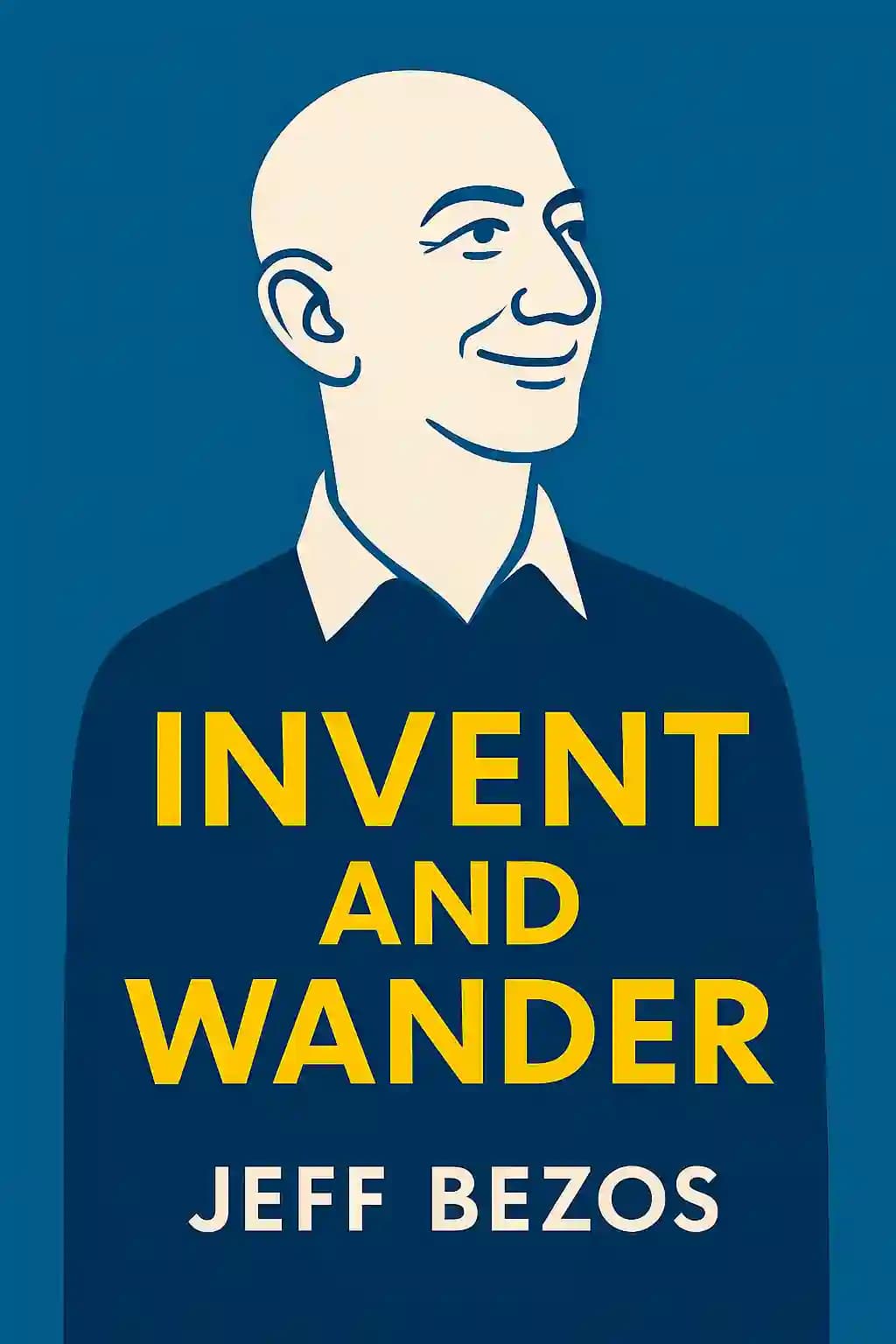
Jeff Bezos isn't just another tech CEO-he's a modern Leonardo da Vinci. At least that's how Walter Isaacson describes him in the introduction to "Invent and Wander," positioning Bezos among history's greatest innovators. What makes this comparison so apt? Like da Vinci, Bezos possesses an insatiable curiosity, connects seemingly unrelated disciplines, maintains childlike wonder, and thinks differently than everyone else. This rare combination has enabled him to transform not just retail, but cloud computing, device manufacturing, entertainment, and even space exploration. While many know Amazon began as an online bookstore in Bezos's garage, fewer realize how deeply his childhood experiences-fixing machinery on his grandfather's Texas ranch and devouring science fiction novels-shaped his innovative mindset. His early fascination with the Apollo 11 moon landing would later manifest as Blue Origin, his aerospace company pursuing humanity's future among the stars. Even as Amazon has grown into a trillion-dollar company with over 600,000 employees, Bezos has maintained the "Day 1" philosophy that has guided the company since its inception: it's still just the beginning.
第 2 章
Customer Obsession as North Star
Customer obsession isn't just a catchphrase at Amazon-it's the fundamental principle that drives every decision, from major strategic initiatives to minute product details. From the company's earliest days, Bezos recognized that focusing relentlessly on customer experience would create a virtuous cycle: better experiences lead to more customers, which enables greater scale, which allows for lower costs and prices, which attracts even more customers. This philosophy manifests in concrete ways throughout Amazon's history, influencing everything from website design to warehouse operations.
When Amazon launched its third-party seller platform, they made the counterintuitive decision to display competitor products alongside Amazon's own offerings on the same product detail pages. Many internal retail teams resisted this move, arguing it would cannibalize their sales and dilute Amazon's brand. But Bezos insisted this was best for customers, who wanted comprehensive selection and transparent comparison. The result? Third-party sales grew from 5% of units to over 58% by 2018, with millions of small businesses joining the platform. This decision transformed Amazon from a retailer into a marketplace, dramatically expanding selection while keeping prices competitive through increased competition.
Similarly, Amazon allows negative product reviews despite constant vendor complaints and pressure to remove unfavorable feedback. While this might hurt short-term sales, it builds long-term trust and helps customers make informed decisions. Their "Instant Order Update" feature reminds customers if they've previously purchased an item they're about to order again-potentially reducing sales but serving customers better. The company even developed sophisticated algorithms to detect fake reviews and maintain review integrity, investing millions in this effort despite no immediate financial return.
Perhaps most dramatically, Amazon Prime exemplifies this philosophy. When first proposed, financial projections were "horrifying," as heavy users would naturally join first. "What happens when you offer a free all-you-can-eat buffet?" Bezos asked. "The heavy eaters show up first." The initial investment required billions in shipping costs and infrastructure. Yet Bezos recognized Prime would transform customer expectations and create unprecedented loyalty, making it a "one-way door" decision worth taking despite the risks. Prime has since evolved from simple two-day shipping to include streaming video, music, gaming, and other benefits, all designed to enhance customer value.
This customer-first approach extends to how Amazon measures success internally. Their annual goal-setting process focuses overwhelmingly on customer experience metrics rather than financial outcomes. In 2010, of 452 detailed company goals, 360 directly impacted customer experience, while financial terms like "revenue" appeared only eight times, and "profit" or "margin" not once. The company tracks hundreds of customer-centric metrics daily, from website load times to delivery accuracy, considering them leading indicators of business health.
The result of this obsession? Amazon achieved an unprecedented 88 score in the American Customer Satisfaction Index-the highest ever recorded in any service industry-while simultaneously building one of the world's most valuable companies. This success has validated Bezos's belief that long-term shareholder value naturally follows from an unwavering focus on customer satisfaction. The company's Day 1 philosophy ensures this customer obsession remains central even as Amazon has grown into a global technology and retail giant.
第 3 章
Long-Term Thinking: The Secret Weapon
"It's All About the Long Term" wasn't just the title of Bezos's first shareholder letter-it's the philosophical cornerstone of Amazon's approach to business. While most companies optimize for quarterly results, Bezos has consistently prioritized decisions that might hurt short-term profits but create enduring value over years or decades.
This perspective manifests in Amazon's approach to stock price fluctuations. During the dot-com crash, Amazon's stock plummeted from $106 to $6 per share. Yet Bezos remained unfazed, focusing instead on improving internal business metrics like customer count, per-unit profit, and inventory turns-all of which were trending positively despite Wall Street's panic. He frequently quotes Benjamin Graham: "In the short term, the market is a voting machine; in the long term, it's a weighing machine."
This long-term orientation shapes Amazon's investment philosophy. When considering major initiatives like Prime, AWS, or international expansion, Amazon evaluates decisions based on potential future cash flows over many years rather than immediate profitability. This approach enables bold bets that competitors often can't justify to shareholders demanding quarterly results.
The clearest example might be Amazon Web Services. When launched, AWS represented a significant departure from Amazon's retail business. It required substantial upfront investment in data centers and technical infrastructure with uncertain returns. Yet Bezos recognized cloud computing's transformative potential and gave the team runway to build something revolutionary. Today, AWS generates over $40 billion in annual revenue with higher margins than Amazon's retail business.
Bezos compares long-term thinking to home ownership versus renting: "Owners think differently than tenants." True owners make investments that might not pay off for years-like planting saplings that future generations will enjoy as shade trees. This mindset extends to Amazon's approach to failure, which Bezos sees as an essential component of innovation. "If you're going to take bold bets, they're going to be experiments," he explains. "And if they're experiments, you don't know ahead of time if they're going to work."
Perhaps most remarkably, Amazon's 10,000-year clock project-a massive mechanical timepiece being built inside a Texas mountain-symbolizes this commitment to thinking across centuries rather than quarters. It's a physical reminder that the truly important work transcends our lifetimes.
第 4 章
The Art of Invention and Experimentation
At Amazon's core lies a culture of relentless invention driven by experimentation. Bezos distinguishes between two types of decisions: Type 1 (irreversible, one-way doors) and Type 2 (reversible, two-way doors). This framework enables Amazon to move quickly on most decisions while carefully deliberating on those few that truly can't be undone.
Amazon's experimental approach is systematic and data-driven. Their internal "Weblab" platform ran 1,976 tests in 2013 alone-nearly quadruple the 546 tests run just two years earlier. These experiments range from minor UI tweaks to entirely new product categories, all evaluated based on customer impact rather than internal politics.
This culture embraces failure as a necessary component of innovation. The Fire Phone flopped spectacularly, but the technology and learnings directly accelerated Echo and Alexa development. Amazon Auctions and zShops both failed before the company created the successful Marketplace platform. As Bezos explains, "If you're going to take bold bets, they're going to be experiments. And if they're experiments, you don't know ahead of time if they're going to work. Experiments are by their very nature prone to failure."
The scale of Amazon's experimentation has grown with the company. Bezos notes that "if the size of your failures isn't growing, you're not going to be inventing at a size that can actually move the needle." While smaller companies might experiment with thousands of dollars, Amazon now needs billion-dollar experiments to meaningfully impact its trajectory.
This experimental approach extends to Amazon's organizational structure. The company pioneered a service-oriented architecture where teams operate as independent units with clear APIs between them. This allows maximum autonomy and innovation velocity while maintaining system cohesion. Similarly, Amazon's famous "two-pizza teams" (small enough to be fed with two pizzas) ensure groups remain nimble despite the company's massive scale.
Perhaps most importantly, Amazon's platforms enable experimentation beyond its own walls. AWS democratized access to enterprise-grade computing resources, allowing startups to experiment without massive capital investment. Kindle Direct Publishing eliminated gatekeepers in publishing, enabling authors to test unconventional formats and genres. Fulfillment by Amazon lets small businesses experiment with new products without building logistics infrastructure. In each case, Amazon creates self-service platforms that empower thousands of others to invent and experiment alongside them.
第 5 章
The Flywheel Effect: Creating Virtuous Cycles
One of Bezos's most powerful strategic insights is the concept of the flywheel-a self-reinforcing cycle where improvements in one area drive improvements in others, creating momentum that becomes increasingly difficult for competitors to match. Amazon's primary flywheel starts with customer experience: better selection, lower prices, and faster delivery attract more customers, which brings more sellers to the platform, which further improves selection and enables economies of scale, which allows lower prices and faster delivery, completing the cycle.
This flywheel concept explains many of Amazon's seemingly disparate business decisions. Prime membership creates a powerful incentive for customers to shop more frequently on Amazon, increasing volume and improving unit economics. Fulfillment by Amazon (FBA) enables third-party sellers to offer Prime-eligible shipping, simultaneously improving the customer experience and strengthening the Prime value proposition. Amazon Web Services initially helped Amazon's internal teams build better customer experiences but eventually became a massive business that generates capital for further customer-focused investments.
The genius of Amazon's approach is how these initiatives interlock and reinforce each other. As Bezos explains: "When we win a Golden Globe, it helps us sell more shoes." He means that award-winning Prime Video content attracts Prime members, who then purchase across Amazon's entire ecosystem. Similarly, Echo devices drive Alexa adoption, which facilitates voice shopping, which increases Prime engagement.
This flywheel thinking extends to Amazon's approach to pricing. Rather than maximizing margin percentages, Amazon focuses on maximizing absolute dollar free cash flow over time by passing productivity gains to customers through lower prices. This grows volume, improves fixed cost leverage, and accelerates the flywheel.
The most powerful example may be how Amazon connected its Marketplace and Prime programs through FBA. Third-party sellers gain access to Prime customers and Amazon's world-class logistics, while Amazon expands Prime selection without inventory risk. This created what Bezos calls a "triple win"-better for sellers, better for customers, and better for Amazon. By 2018, third-party sellers accounted for 58% of Amazon's physical merchandise sales, growing at 52% annually compared to Amazon's own first-party 25% growth.
What makes Amazon's flywheels particularly formidable is their compounding nature over time. Each cycle builds momentum for the next, creating what Warren Buffett would call a "moat" that becomes increasingly difficult for competitors to cross. As Bezos notes, "The Amazon flywheel is spinning with enough energy that it's now meaningfully moving the needle on our approach to social invention."
第 6 章
Building a Culture of High Standards
For Bezos, high standards aren't just a leadership principle-they're the foundation of Amazon's success. He explores four key questions about high standards: Are they intrinsic or teachable? Are they universal or domain-specific? What's required to achieve them? And what benefits do they bring?
First, Bezos firmly believes high standards are teachable rather than intrinsic. People primarily learn them through exposure-they're contagious. "If you're on a team where everyone has high standards, you're likely to catch them," he explains. This insight shapes Amazon's hiring approach, where maintaining high standards is considered the single most important element of their success.
Second, high standards are domain-specific, not universal. Having high standards in one area doesn't automatically transfer to others. When founding Amazon, Bezos had high standards for innovation and customer care but lacked them for operational processes. This understanding keeps you humble-you can consider yourself a high-standards person yet have entire domains where your standards are undeveloped.
Third, achieving high standards requires two elements: recognizing what excellence looks like in that specific domain, and understanding the realistic scope of effort required to achieve it. Bezos illustrates this with two examples: learning a handstand and writing six-page narrative memos at Amazon.
For handstands, his friend's coach revealed a crucial insight: while most people expect to learn a handstand in two weeks, it actually takes six months of daily practice. This unrealistic belief about scope-often hidden and undiscussed-kills high standards. Similarly, Amazon's six-page memos require a week or more of writing, rewriting, and editing-not something thrown together the night before.
Interestingly, individual skill isn't always necessary for high standards in a team context. Like a football coach who doesn't need to throw well, leaders must recognize excellence and teach realistic expectations about effort required. In Amazon's memo culture, someone on the team needs writing skill, but it doesn't have to be you.
The benefits of high standards are manifold: better products and services for customers, easier recruitment and retention of talent, and protection of the "invisible" work that happens when nobody's watching. Perhaps most importantly, high standards are fun-once experienced, there's no going back.
This culture manifests in Amazon's approach to new initiatives. Before launching, teams must write a press release and FAQ document as if the product already exists, forcing clarity about customer benefits and implementation challenges. This "working backwards" process ensures high standards from conception through execution.
第 7 章
The Power of Platform Thinking
Amazon's most enduring contribution to business may be its platform-based approach to growth. Rather than building isolated products or services, Bezos consistently creates platforms that empower others to build alongside Amazon, creating value far beyond what Amazon could create alone.
This platform thinking began with Amazon Marketplace, which evolved through multiple iterations before finding the right model. The breakthrough came when Amazon allowed third-party sellers to compete directly against Amazon's own retail managers on the same product detail pages. This counterintuitive move created a "single store, multiple sellers" model that dramatically expanded selection while letting Amazon focus on categories where it added unique value. By 2018, third-party sellers accounted for 58% of Amazon's physical merchandise sales.
Amazon Web Services represents an even more profound application of platform thinking. What began as an effort to organize Amazon's internal technology infrastructure evolved into a comprehensive cloud computing platform that powers much of the modern internet. AWS democratized access to world-class computing resources, enabling startups to compete with established enterprises without massive capital investment. As Bezos explains, "We completely reinvented the way that companies buy computation."
Kindle Direct Publishing similarly transformed publishing by eliminating gatekeepers who might reject "improbable" ideas. When anyone can publish without permission, innovation flourishes. KDP reached astonishing scale with thousands of authors each selling more than a thousand copies monthly, earning 70% royalties instead of traditional publishing's 17.5%.
Fulfillment by Amazon (FBA) extended this platform approach to logistics, allowing small businesses to leverage Amazon's sophisticated fulfillment network. Sellers store products in Amazon's warehouses, and Amazon handles picking, packing, shipping, and customer service. This gives them access to Prime customers and world-class logistics without building infrastructure themselves.
What makes these platforms particularly powerful is their self-service nature. Rather than requiring Amazon's permission or involvement, entrepreneurs can experiment independently, creating what Bezos calls a "permissionless innovation" environment. This dramatically increases the pace and diversity of innovation while allowing Amazon to capture value from successful experiments.
The platforms also create powerful network effects and flywheels. More AWS customers improve economies of scale, enabling lower prices that attract more customers. More FBA sellers improve Prime selection, attracting more Prime members, which attracts more sellers. These self-reinforcing cycles create competitive advantages that strengthen over time.
Perhaps most importantly, platforms align Amazon's interests with its partners' success. As Bezos notes, "When our partners succeed, we succeed." This creates sustainable ecosystems where all participants benefit from continued innovation and growth.
第 8 章
Beyond Business: Creating Lasting Impact
While Amazon dominates Bezos's professional life, his vision extends far beyond e-commerce or even business itself. Through initiatives like Blue Origin, the Washington Post, the Climate Pledge, and the Bezos Day One Fund, he's applying the same principles that built Amazon to tackle humanity's greatest challenges.
Blue Origin, Bezos's aerospace company, represents his most ambitious long-term project. Founded in 2000 with the mission of making space travel accessible and affordable, Blue Origin aims to help humanity expand beyond Earth's limited resources. Bezos envisions not just planetary colonization but massive rotating space colonies housing millions of people, as theorized by physicist Gerard O'Neill. "Earth is the best planet," Bezos explains. "We need to protect it, and the way we're going to do that is by going out into space."
This vision requires two prerequisites: dramatically reducing launch costs through reusable vehicles and utilizing space resources rather than lifting everything from Earth. Blue Origin's New Shepard (suborbital) and New Glenn (orbital) rockets are designed for frequent reuse with minimal refurbishment between flights, while the Blue Moon lunar lander can deliver tons of cargo to the moon's surface to begin building infrastructure.
Bezos's acquisition of the Washington Post in 2013 represented another long-term bet-this time on democracy itself. Though he had no newspaper experience, Bezos recognized the Post's crucial role as "the newspaper in the capital city of the most important country in the world." His strategy transformed the struggling paper by shifting from making "a lot of money per reader with few readers" to "making tiny amounts with many readers" by leveraging the internet's global reach. Under his ownership, the Post returned to profitability while expanding its newsroom.
The Climate Pledge, launched in 2019, commits signatories to meet the Paris Agreement goals ten years early, achieving net-zero carbon by 2040. Amazon is investing in 100,000 electric delivery vans, pursuing 100% renewable energy by 2025, and contributing $100 million to reforestation efforts. By getting numerous companies to commit, Bezos aims to send market signals driving innovation in decarbonization technologies.
The Bezos Day One Fund, established with a $2 billion commitment, focuses on two areas: funding nonprofits that help homeless families and creating new, nonprofit preschools in low-income communities. The preschools will offer Montessori-inspired education with full scholarships, reflecting Bezos's belief that early intervention creates compounding benefits throughout life.
Across these diverse initiatives, common threads emerge: long-term thinking measured in decades or centuries rather than quarters, a willingness to tackle seemingly impossible challenges, and a belief that innovation can address humanity's greatest problems. As Bezos puts it, "Big things start small," but with persistence and the right approach, they can grow to change the world.
第 9 章
The Bezos Philosophy: Principles for Life and Work
Throughout his writings and speeches, Bezos articulates a consistent philosophy that guides both his business decisions and personal life. These principles offer insights applicable far beyond Amazon or e-commerce.
First is his "regret minimization framework" for making difficult decisions. When contemplating leaving his stable finance job to start Amazon, Bezos asked himself what he would regret at age 80. "I knew that when I was 80, I was not going to regret having tried this. I was not going to regret trying to participate in this thing called the internet that I thought was going to be a really big deal. I knew that if I failed, I wouldn't regret that, but I knew the one thing I might regret is not ever having tried."
Second is distinguishing between "one-way doors" and "two-way doors" in decision-making. One-way doors-irreversible decisions-require careful deliberation and consensus. But most decisions are two-way doors that can be reversed if they don't work out. The disaster in large organizations is using the heavyweight process intended for irreversible decisions on all decisions, creating paralysis. "If you're good at course correcting, being wrong may be less costly than you think, whereas being slow is going to be expensive for sure."
Third is the concept of "disagree and commit" to maintain decision velocity. When passionate people disagree about important issues, traditional consensus-building can lead to watered-down compromises or decision paralysis. Instead, Bezos advocates having the debate, then having leaders explicitly commit to supporting a direction even if they disagree. "Look, I know we disagree on this, but will you gamble with me on it? Disagree and commit?" This approach preserves intellectual honesty while enabling rapid action.
Fourth is his distinction between experimental and operational failure. When developing new products or services, failure is not just acceptable but necessary for innovation. However, failing at established operations represents poor execution. "We need to be good at failing," Bezos explains, but only in service of invention, not through operational sloppiness.
Fifth is his preference for "work-life harmony" over "work-life balance." Balance implies a strict trade-off, but Bezos sees them as mutually reinforcing: "If I'm happy at home, I come into the office with tremendous energy. And if I'm happy at work, I come home with tremendous energy." The key question isn't about hours worked but whether your work generates or drains energy.
Finally, Bezos emphasizes the importance of maintaining "Day 1" thinking-approaching each day with the energy, urgency, and experimentation of a startup, regardless of company size or success. "Day 2 is stasis, followed by irrelevance, followed by excruciating, painful decline, followed by death. And that is why it is always Day 1." The primary defense against Day 2 is true customer obsession-recognizing that customers are "always beautifully, wonderfully dissatisfied" and constantly innovating on their behalf.
These principles have guided Amazon's growth from garage startup to global giant while maintaining its innovative edge. They offer a framework not just for business success but for approaching life's challenges with clarity, purpose, and a long-term perspective.