第 1 章
The Emperor's Mind: Ancient Wisdom for Modern Resilience
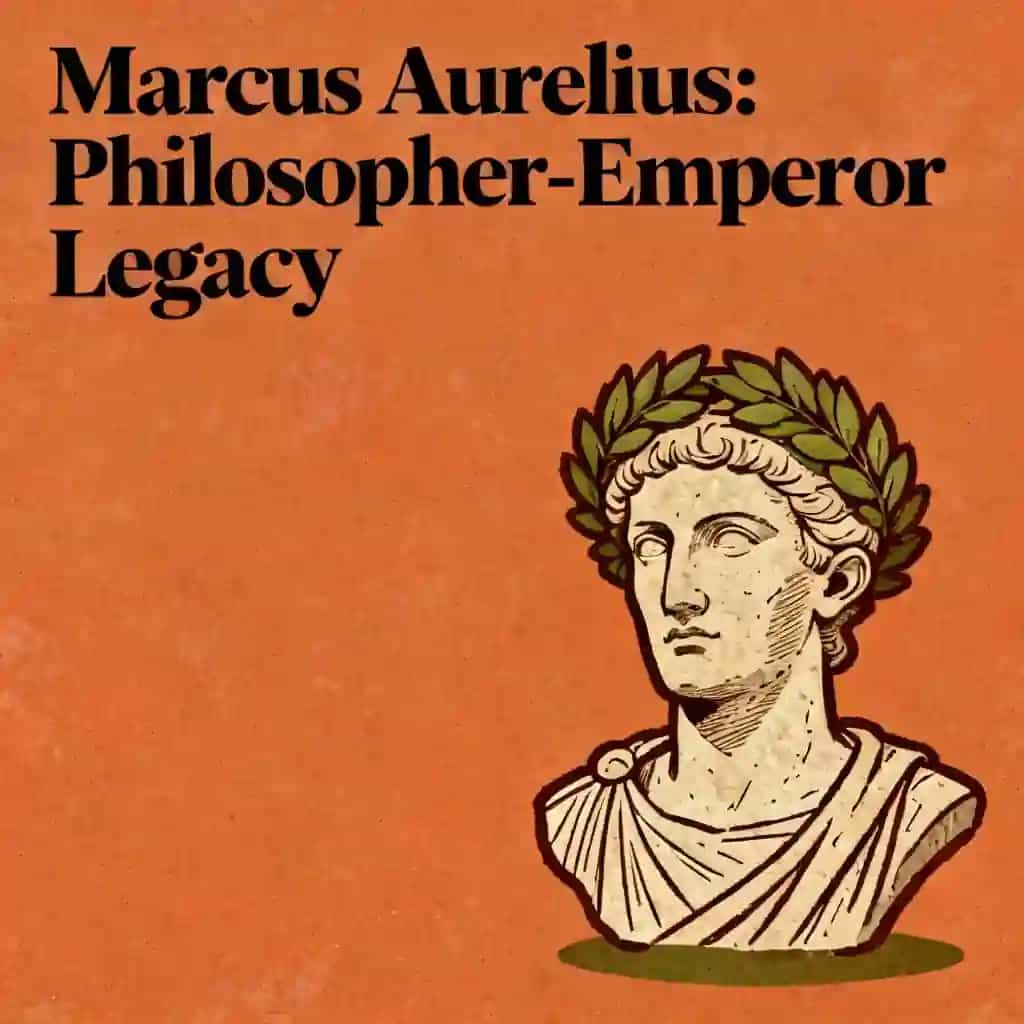
Marcus Aurelius's "Meditations" has experienced an extraordinary renaissance in recent years, becoming a favorite of tech CEOs, professional athletes, and military leaders alike. When Twitter founder Jack Dorsey was asked about his most influential book, he didn't hesitate to name this 1,800-year-old philosophical diary. What makes this ancient Roman emperor's private notes so compelling to today's high-performers? Donald Robertson's "How to Think Like a Roman Emperor" reveals the answer by weaving together Marcus's biography with practical Stoic techniques that remain remarkably effective in our modern world. As Robertson demonstrates, Marcus wasn't born a sage-he deliberately crafted himself into one through daily philosophical practice. His journey from an anxious, complaint-prone young man to history's model of the philosopher-king offers us a roadmap for our own transformation. What if the wisdom that guided Rome's greatest emperor could help you master your own mind?
第 2 章
The Philosophical Emperor: Marcus Aurelius and the Stoic Tradition
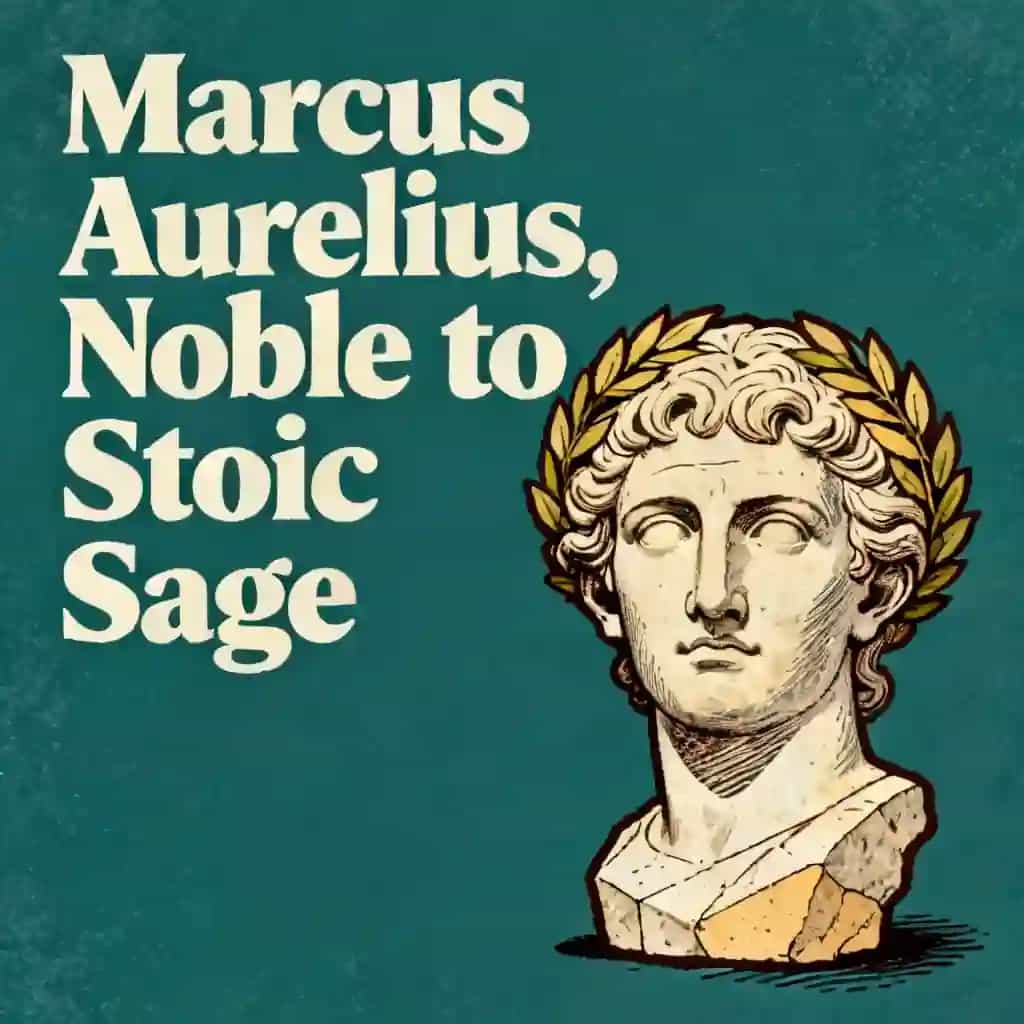
When Marcus Aurelius lay dying of plague in a military camp at Vindobona (modern Vienna) in 180 AD, he faced his end with remarkable equanimity. This wasn't his natural disposition-it was the culmination of decades of rigorous Stoic practice. As a young man, Marcus had wept violently when beloved tutors died and was deeply affected by the loss of several of his children. Yet through philosophical training, he transformed himself into someone who could accept death as natural and inevitable.
Marcus was the last famous Stoic of antiquity, inheriting a philosophical tradition that began five centuries earlier with Zeno of Citium, a wealthy merchant who lost everything in a shipwreck. Devastated and seeking meaning, Zeno encountered the teachings of Socrates through books, which transformed his outlook. After studying with various philosophers, he synthesized elements from different schools to create Stoicism, which emphasized virtue as life's true goal while acknowledging external advantages have some lesser value.
This philosophy spread from Athens to Rome, influencing figures like Scipio Africanus, Cato, Seneca, and Epictetus before reaching Marcus, who viewed himself as a Stoic first and emperor second. Throughout his writings, Marcus repeatedly references the purple dye that began Zeno's journey-reminding himself that his imperial robes were merely "sheep's wool dyed in fermented shellfish mucus."
The Stoics defined life's goal as "living in agreement with Nature," meaning living wisely and virtuously. As rational beings, our "ruling faculty" allows us to evaluate our thoughts, feelings, and urges. When we reason well about life, we exhibit wisdom-the fulfillment of our natural human potential. The Stoics divided virtue into wisdom, justice, courage, and moderation, with the latter three representing wisdom applied to different aspects of life.
Contrary to popular belief, Stoics weren't unemotional but distinguished between good passions (joy, healthy aversion to vice, desire to help others), bad emotions to be transformed, and indifferent automatic reactions. True Stoicism isn't about having a "stiff upper lip" but about using reason to transform unhealthy emotions into healthy ones-a practice Marcus would perfect throughout his life.
第 3 章
From Truthful Child to Philosophical Adult
Born in 121 AD, Marcus Aurelius lost his father at age three and was raised by his mother Domitia Lucilla and paternal grandfather. Despite his youth, Marcus caught Emperor Hadrian's attention, who nicknamed him "Verissimus" (most truthful), recognizing the boy's honest nature that contrasted with the sophisticated intellectual culture of Hadrian's court.
While the Second Sophistic movement celebrated formal rhetoric and Greek oratory, with teachers more concerned with verbal eloquence than actual wisdom, Marcus's natural affinity for truth set him apart. Hadrian himself, though talented, often ridiculed teachers and philosophers to appear more intelligent, even exiling renowned intellectuals for disagreeing with him. Yet somehow, Hadrian came to admire young Marcus's integrity.
Marcus's natural inclination toward Stoic values was likely influenced by his mother, who lived simply despite her wealth. From her, Marcus learned generosity-later giving away his father's inheritance to his sister and donating numerous other inheritances to relatives of the deceased. His mother's love of Greek culture may have introduced him to intellectuals who became his teachers.
Remarkably, Marcus began studying philosophy at an unusually young age, first as a practical way of life before formal theory. His earliest philosophical influence came surprisingly from his painting master Diognetus, who steered him away from trivial amusements and introduced him to "Greek training" in endurance-sleeping on a mat with animal pelts and embracing physical hardship.
Unlike today's theoretical academic philosophy, ancient philosophy was primarily a way of life with visible external markers. Stoics traditionally wore a simple gray woolen cloak and grew beards. Marcus adopted this philosophical appearance in his youth, drawn to its simplicity and honesty rather than the sophistication popular at Hadrian's court. By fifteen, he was attending lectures by Stoic teachers including Apollonius of Chalcedon, and was deeply influenced by the teachings of Epictetus.
When Hadrian's first chosen successor died, he adopted Antoninus with the condition that Antoninus would adopt Marcus, placing him in direct line to the throne. Marcus admired Antoninus as his ideal role model: unpretentious, calm, rational, and willing to dress as an ordinary citizen while welcoming plain speaking. Under both Antoninus and later Marcus, Rome's culture shifted from favoring Sophists toward philosophers, particularly Stoics.
第 4 章
The Art of Stoic Mentorship
The most influential relationship in Marcus's philosophical development was with his Stoic mentor Junius Rusticus-ironically, the man who most frequently provoked his anger also taught him to control it. Their relationship was exceptional: Marcus broke court protocol by always kissing Rusticus first when they met, treating him like a brother rather than a subordinate.
The pivotal moment in their relationship came when Rusticus gave Marcus notes from Epictetus's lectures. What made Rusticus so valuable to Marcus? As his mentor, Rusticus constantly pointed out flaws in Marcus's character, challenging his pretentiousness and encouraging him to dress like a normal citizen. He taught Marcus to read philosophy carefully rather than superficially, and ultimately persuaded him to abandon rhetoric in favor of Stoicism as a way of life.
This form of Stoic mentorship required both parties to fulfill specific roles. Galen's treatise explains that most people either believe themselves faultless or minimize their flaws. The solution is finding a suitable mentor-someone older, wiser, and renowned for honesty who has mastered the same passions we struggle with. The Stoics valued plain speaking but emphasized appropriate communication. Sextus of Chaeronea demonstrated how to be both plainspoken while remaining patient with the unlearned.
For such mentorship to work, students must be scrupulously honest. Marcus imagined a wise teacher instructing someone to think nothing they'd be unwilling to say aloud. He aspired to transparency, wanting his soul to be "more visible than the body that surrounds it." This practice of imagining being observed helps develop self-awareness, functioning as a mindfulness technique.
When Rusticus died around 170 AD, Marcus may have started writing The Meditations to mentor himself. His notes contain dialogues that might be remembered conversations with his tutors or imagined exchanges with an inner mentor. As Galen suggested, imitating role models is appropriate in youth, but with experience we develop self-awareness and learn to spot our own errors.
Even without a personal mentor like Rusticus, we can benefit from the concept of mentorship through writing and imagination. The Stoic learning cycle provides a framework for daily practice through morning meditation, mindful awareness during the day, and evening reflection. This simple cycle of preparation, practice, and review can significantly improve character and emotional resilience, especially when combined with study of Stoic texts.
第 5 章
The Choice Between Virtue and Vice
Marcus Aurelius found himself despairing not over plagues or barbarian threats, but over his brother Lucius Verus's extravagant lifestyle. Though they ruled as co-emperors, their characters diverged dramatically-Marcus increasingly turned to philosophy while Lucius pursued hedonistic pleasures, hosting parties that cost the equivalent of a legion's annual pay.
This contrast between the brothers mirrors the ancient allegory "The Choice of Hercules," a tale central to Stoicism. In this story, young Hercules encounters two goddesses at a fork in the road: Kakia (Vice), who falsely claims to be Eudaimonia (Happiness), offers an easy path of luxury without effort; while Arete (Virtue) presents a difficult road requiring wisdom, justice, courage and self-discipline. Hercules chooses Virtue's heroic path, facing the Twelve Labors with courage that eventually earned him divine status.
Marcus also drew on Aesop's "Town Mouse and Country Mouse" allegory. While Lucius (like the town mouse) indulged in riotous living surrounded by danger, Marcus found joy in simpler pleasures. Despite the serious tone of The Meditations, Marcus wasn't gloomy; his letters reveal a good-humored, affectionate man who enjoyed painting, boxing, wrestling, hunting, and ball games.
The Stoics distinguished between fleeting pleasure (hedone) from external things like food or sex, and the profound inner joy (chara) that comes from living virtuously. This Stoic joy knows no excess and comes from three sources: contemplating virtue in yourself, contemplating virtue in others, and welcoming your fate with gratitude. The paradox is that self-discipline itself becomes more fulfilling than the fleeting pleasures it overcomes.
To overcome unhealthy desires, the Stoics developed practices similar to modern cognitive-behavioral therapy. Their framework combines ancient wisdom with modern psychology through seven steps: (1) evaluate the consequences of habits; (2) spot early warning signs of problematic desires; (3) gain cognitive distance by separating impressions from external reality; (4) substitute alternative behaviors; (5) plan activities aligned with core values; (6) contemplate admirable qualities in others; and (7) practice gratitude for what you already have.
The first step involves thoroughly analyzing the long-term consequences of different behaviors. Epictetus instructed students to envision vividly how actions would affect them over time, and Marcus practiced this by questioning whether he'd regret choices later. Writing down short and long-term consequences helps clarify thinking and boost motivation for change.
Once you've identified which habits to change, practice self-monitoring to catch desires early-a form of Stoic mindfulness. Keep daily written records of triggering situations, noting early warning signs and facilitating thoughts like "Just this once won't hurt!" Self-awareness disrupts automatic behaviors; what feels natural when done unconsciously becomes awkward when analyzed.
第 6 章
Mastering Pain and Discomfort
Despite his physical frailty and chronic health problems, Marcus Aurelius became renowned for exceptional resilience and endurance. At nearly fifty, he left Rome to command legions on the frigid northern frontier during the Marcomannic Wars, enduring harsh conditions and plague outbreaks for over a decade. Though initially struggling with the climate, he typically dismissed hardships by quoting Euripides: "Such things accursed war brings in its train."
His ability to endure physical suffering wasn't natural but resulted from decades of rigorous Stoic training. Early letters between Marcus and his teacher Fronto reveal a stark contrast to The Meditations-they frequently contained casual complaints about various health ailments, with no evidence of the Stoic coping techniques that would later define his approach to pain and illness.
By his forties, Marcus suffered from chronic chest pains, stomach ulcers, and other ailments that allowed him only small amounts of food taken late at night. While he took theriac (a concoction containing opium) prescribed by Galen, he used it judiciously and still needed psychological techniques to manage his pain.
The Stoics employed multiple arguments to persuade followers that pain is neither good nor bad but indifferent. Pain can even be beneficial when used to build endurance, as athletes demonstrate by embracing discomfort during training. What truly matters is our response to pain, not the sensation itself.
Marcus outlined several specific strategies for bearing pain with indifference. The most powerful is cognitive distancing-recognizing that "it's not events that upset us but our judgments about events." By suspending value judgments about pain, suffering diminishes significantly. Rather than merging with painful sensations, Marcus advises drawing boundaries around the mind, viewing bodily sensations as if from a distance-"over there."
He doesn't advocate suppressing sensations, which are natural, but rather not assigning judgments to them as good or bad. As he writes: "Do away with the judgment, and the notion 'I have been harmed' is done away with; do away with that notion, and the harm itself is gone."
Marcus also learned to describe bodily sensations as natural processes using objective, neutral language-similar to how a physician might document symptoms. Both Epictetus and Marcus describe painful sensations merely as "rough" movements occurring in the flesh. This approach allows us to "see things as they truly are" with greater objectivity and detachment.
By focusing attention on the present moment rather than worrying about the future or ruminating about the past, Marcus found that difficulties become easier to conquer. He advocated asking of each present difficulty: "What is there in this that is unbearable or beyond endurance?" This divide-and-conquer strategy involves tackling overwhelming experiences one step at a time.
Rather than struggling against pain, the Stoics advocate radical acceptance. Like a dog tethered to a cart who can either be dragged roughly or run smoothly alongside, we can choose how we respond to inevitable discomfort. This paradoxical approach-calmly "grasping the nettle" of pain rather than fleeing from it-often diminishes suffering. Modern psychology confirms that "experiential avoidance" typically backfires, while acceptance allows natural habituation to occur.
第 7 章
Building the Inner Citadel Against Fear
Marcus faced the horrors of war with Stoic composure, turning apparent catastrophes into opportunities. During the First Marcomannic War, Roman legionaries cleverly countered Sarmatian horsemen by adapting their tactics on the frozen Danube, transforming an ambush into victory. Despite his lack of military experience, Marcus embraced his role commanding 140,000 troops and stationed himself at the front lines, witnessing severed limbs and battlefield carnage firsthand.
Initially seen as an "old woman of a philosopher" by critics like Avidius Cassius, seven years of war transformed him into a hardened veteran revered by his troops, who attributed miraculous battlefield events to his presence. Through Stoic practice, Marcus overcame his natural tendency to worry and developed remarkable composure in the face of danger.
Epictetus taught his students to view Stoic philosophy as the caduceus of Hermes-a magic wand transforming misfortune into good. Marcus embraced this approach, using emotional battle drills to mentally rehearse worst-case scenarios and practice responding with wisdom. This training helped him turn obstacles into opportunities, like the Romans did when transforming Sarmatian ambushes into traps that changed the war's direction.
The Stoic reserve clause (hupexhairesis) involves acting with the understanding that outcomes aren't entirely under our control. Marcus used this technique extensively, pursuing virtuous action while remaining indifferent to results. His internal goal was living with wisdom and justice, while his external aim was the common welfare of mankind. Like an archer focused on proper technique rather than hitting the target, Marcus would approach challenges thinking "I will protect Rome, Fate permitting."
The Stoic practice of praemeditatio malorum (premeditation of adversity) involves deliberately visualizing potential misfortunes as if they were already happening. Marcus incorporated this into his morning routine, preparing himself to encounter difficult people and situations throughout his day. This technique specifically targets fear and anxiety by addressing future-focused emotions, building emotional resilience through mental rehearsal.
The Stoics understood what modern psychology confirms: anxiety naturally diminishes during prolonged exposure to feared situations. This principle, foundational to modern phobia treatment, works through emotional habituation. The Stoic premeditation of adversity functions as a form of imaginal exposure therapy, remarkably similar to techniques developed thousands of years later.
Though Marcus rarely mentions anxiety directly, he speaks often of the peace Stoicism offers. Despite occasionally longing for retreat to his Italian villas, he recognizes that depending on physical escape creates its own problems. True resilience comes from regaining composure wherever one finds oneself-the "inner citadel" to which one can retreat even on frigid battlefields. Marcus reminds himself to "live as though on a mountaintop" regardless of circumstances, for our judgments remain free even when our environment is hostile.
第 8 章
Conquering Anger Through Stoic Wisdom
The rebellion of Avidius Cassius in 175 AD tested Marcus Aurelius's Stoic principles against the brutal reality of imperial politics. After learning of Cassius's rebellion, Marcus prepared his son Commodus for succession and addressed his legions with remarkable equanimity. Rather than expressing rage at the betrayal, Marcus spoke of clemency and forgiveness, stating he would have even relinquished power peacefully if convinced it served the common good.
Most astonishingly, Marcus declared his intention to forgive the rebels completely, viewing the crisis not as misfortune but as an opportunity to demonstrate "there is a right way to deal even with civil war." This philosophical response left even his battle-hardened troops stunned by their emperor's magnanimity.
Marcus wasn't naturally placid but worked diligently to master his temper. The first line of The Meditations praises his grandfather's calm demeanor, and Marcus thanks the gods for helping him control his anger around friends and family. For Stoics, full-blown anger is an irrational passion to be eliminated, though initial irritation ("proto-passions") is accepted as inevitable.
Marcus particularly admired his adoptive father Antoninus for his gentleness, patience with critics, and willingness to hear opposing views without taking offense. The Stoic therapy for anger involves: self-monitoring to catch early warning signs; cognitive distancing to recognize judgments cause anger, not events themselves; postponement of response until calm returns; modeling virtue by imagining how wise people would respond; and functional analysis to compare consequences of anger versus reason.
Marcus developed ten specific cognitive strategies-"ten gifts from Apollo"-to reframe situations that might provoke anger. First, he reminded himself that humans are inherently social beings designed to live cooperatively. Each morning, he prepared himself to encounter difficult people by recalling "we have come into being for co-operation" and that feeling resentment contradicts our rational nature.
Second, Marcus advised viewing people who anger us in a more complete way, not just focusing on irritating aspects. He suggested imagining them in their daily lives-eating, sleeping, having sex, relieving themselves-to see them as fully human. By broadening our perspective to include their entire character, recognizing nobody is perfect, our anger naturally dilutes.
Third, Marcus embraced the Socratic principle that no one does evil knowingly or willingly. When someone's actions upset us, he suggests viewing them through a simple lens: either they're doing what's right (in which case we should accept it) or they're doing wrong because they don't know better (deserving our pity). Everyone believes their actions are justified in some way-nobody wants to be vicious.
Fourth, remembering human imperfection helps moderate anger. Marcus reminds himself that he too does many wrong things-when offended by others' faults, we should pause and reflect on our own similar mistakes. He makes the honest observation that often we refrain from wrongdoing merely from fear of consequences or concern for reputation, not virtue.
Fifth, we can't read minds, so we shouldn't jump to conclusions about others' intentions. Marcus, experienced in judging character from his court duties, reminds himself to learn many things about a person before forming firm opinions-and even then, conclusions remain probabilistic.
Sixth, Marcus advises contemplating the transience of events and people. Both you and the person angering you will eventually die and be forgotten, making present irritations seem trivial. This perspective doesn't promote inaction-Marcus rapidly mobilized against Cassius's rebellion-but prevents emotions from clouding judgment.
第 9 章
Facing Death with Philosophical Calm
As Marcus lies dying in Vindobona in March 180 AD, he whispers to his guard, "Go to the rising sun, for I am already setting." Ravaged by pestilence and weakened by fasting, he drifts between consciousness and oblivion. In his final meditations, he reflects on the impermanence of all things, comparing life to the flowing Danube that sweeps everything away.
He recalls his lost children-only five of thirteen survive-and how Stoicism taught him to both love them and accept when "Nature reclaimed them." Marcus contemplates how death equalizes all people, from emperors to beggars, and how entire dynasties and cities eventually vanish. He faces death without fear, having practiced for this moment his entire life through philosophy.
In his final moments, Marcus experiences the philosophical "view from above" exercise. His consciousness seems to float upward, observing humanity from a cosmic perspective where human affairs appear insignificant-like ants scurrying about. He witnesses the vast universe, with civilizations rising and falling in endless cycles, and even his position as emperor becoming minuscule within the cosmic tapestry.
This perspective liberates his mind from earthly attachments, allowing him to see the universe as a single living being with a unified consciousness. He contemplates the stars as pure beings of light, contrasting their simplicity with human complexity. The mind of the Sage, he reflects, is like a star-radiating pure wisdom without becoming entangled in external things.
As death approaches, Marcus embraces it calmly, armed with philosophical precepts that remind him dissolution is natural and therefore cannot be evil. His soul transforms, cleansed and liberated to follow its true nature as he lets go of life without regret.
Through Donald Robertson's masterful retelling of Marcus's life and philosophy, we discover that Stoicism wasn't just an ancient school of thought but a comprehensive psychological system with remarkable parallels to modern cognitive-behavioral therapy. The techniques Marcus developed to manage pain, overcome anger, conquer fear, and face death with equanimity remain powerful tools for anyone seeking to cultivate resilience in today's challenging world.
What makes Marcus's story so compelling is that he wasn't born a Stoic sage-he deliberately crafted himself into one through daily practice. His journey from an anxious, complaint-prone young man to history's model of the philosopher-king offers us a roadmap for our own transformation. By thinking like a Roman emperor, we too can build our inner citadel against life's inevitable hardships and discover the profound freedom that comes from mastering our own minds.