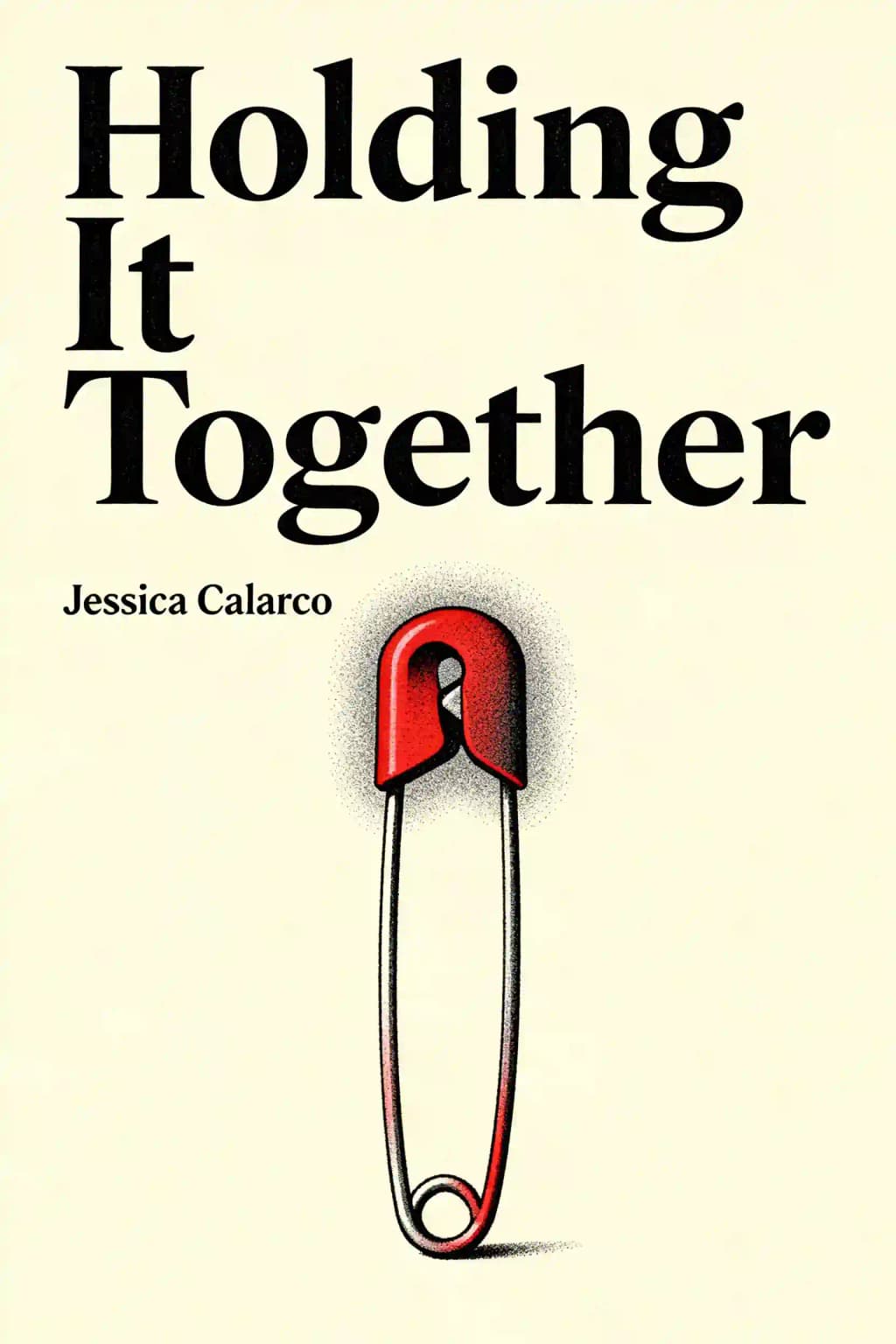
In "Holding It Together," Jessica Calarco reveals how women became America's invisible safety net through five years of groundbreaking research. What happens when 4,000 parents expose the true cost of a broken system? The pandemic merely unveiled what women always knew - they're holding society together.
Jessica McCrory Calarco, award-winning sociologist and University of Wisconsin–Madison professor, confronts America’s gender inequities in Holding It Together: How Women Became America’s Social Safety Net. A leading expert on educational and familial disparities, Calarco combines ethnographic research with policy analysis to reveal how women shoulder societal burdens through unpaid care work and systemic gaps.
Her previous works – including Negotiating Opportunities (winner of the Pierre Bourdieu Award) and Qualitative Literacy – establish her as a vital voice in sociological methodology and hidden power dynamics.
Calarco’s insights reach broad audiences through her Hidden Curriculum newsletter and frequent contributions to The New York Times, The Atlantic, and CNN. A sought-after commentator featured on NPR and academic panels, she bridges academic rigor with public discourse.
Holding It Together has been acclaimed as a "tour de force" (The New Republic) for its unflinching examination of how policy failures transformed women into America’s default safety net, cementing Calarco’s status as an essential analyst of structural inequality.
Holding It Together by Jessica Calarco exposes how systemic underinvestment in social safety nets forces American women to bear disproportionate caregiving and financial burdens. Through interviews with 400+ women and surveys of 4,000 parents, Calarco reveals how policies normalize reliance on women’s unpaid labor—from childcare to elder care—while masking the societal costs of this unsustainable model.
This book is essential for policymakers, gender studies scholars, and anyone seeking to understand systemic inequality. It also resonates with working parents, caregivers, and advocates for social reform, offering data-driven insights into how policy failures perpetuate gender inequities.
Calarco combines qualitative interviews (400+ hours with diverse women) and quantitative surveys (4,000+ parents) to document caregiving burdens. Her mixed-methods approach bridges personal narratives with broader societal patterns, highlighting how race, class, and policy shape women’s experiences.
Calarco traces decades of policy decisions—from Reagan-era welfare cuts to stagnant minimum wages—that shifted caregiving costs to families. Unlike peer nations with robust safety nets, the U.S. relies on women’s sacrifices, exacerbating burnout and economic precarity.
A widowed mother working three jobs, a teen caring for opioid-affected relatives, and a professional couple outsourcing childcare dilemmas illustrate the universality of women’s burdens. These stories humanize statistical trends, showing how race and class amplify struggles.
As a sociology professor and award-winning researcher, Calarco leverages her expertise in inequality studies to dissect systemic failures. Her prior work on educational privilege and ethnographic methods grounds the book’s rigorous, accessible analysis.
The book challenges the neoliberal narrative that families should “pull themselves up by their bootstraps,” arguing this mindset ignores structural barriers. Calarco critiques means-tested programs that stigmatize recipients instead of providing universal support.
While similar to Anne-Marie Slaughter’s Unfinished Business or Arlie Hochschild’s The Second Shift, Calarco’s focus on policy dismantling distinguishes her work. She emphasizes collective action over individual solutions, rejecting “lean in” feminism.
With caregiving demands rising due to aging populations and automation-driven job losses, Calarco’s warning grows urgent. The book provides a framework for reimagining social contracts amid ongoing debates about AI’s impact on care economies.
Calarco urges voters to support candidates backing childcare subsidies and labor reforms. She also advises workplace campaigns for flexible schedules and shared caregiving duties, stressing that systemic change requires collective pressure.
通过作者的声音感受这本书
将知识转化为引人入胜、富含实例的见解
快速捕捉核心观点,高效学习
以有趣互动的方式享受这本书
We do have a safety net-it's women.
We train girls to be "mothers-in-waiting".
The motherhood trap...making it harder for women to control both if and when they have children.
Society places blame on mothers when anything goes wrong with their children.
将《Holding It Together》的核心观点拆解为易于理解的要点,了解创新团队如何创造、协作和成长。
将《Holding It Together》提炼为快速记忆要点,突出坦诚、团队合作和创造力的关键原则。

通过生动的故事体验《Holding It Together》,将创新经验转化为令人难忘且可应用的精彩时刻。
随心提问,选择声音,共同创造真正与你产生共鸣的见解。

"Instead of endless scrolling, I just hit play on BeFreed. It saves me so much time."
"I never knew where to start with nonfiction—BeFreed’s book lists turned into podcasts gave me a clear path."
"Perfect balance between learning and entertainment. Finished ‘Thinking, Fast and Slow’ on my commute this week."
"Crazy how much I learned while walking the dog. BeFreed = small habits → big gains."
"Reading used to feel like a chore. Now it’s just part of my lifestyle."
"Feels effortless compared to reading. I’ve finished 6 books this month already."
"BeFreed turned my guilty doomscrolling into something that feels productive and inspiring."
"BeFreed turned my commute into learning time. 20-min podcasts are perfect for finishing books I never had time for."
"BeFreed replaced my podcast queue. Imagine Spotify for books — that’s it. 🙌"
"It is great for me to learn something from the book without reading it."
"The themed book list podcasts help me connect ideas across authors—like a guided audio journey."
"Makes me feel smarter every time before going to work"

免费获取《Holding It Together》摘要的 PDF 或 EPUB 版本。可打印或随时离线阅读。
What if I told you that America's richest secret isn't hidden in Wall Street vaults or Silicon Valley boardrooms, but in the unpaid labor happening in millions of homes right now? While other wealthy nations built childcare centers and universal healthcare after World War II, America made a different choice: it dismantled its wartime childcare system and sent women home. The result? A country that doesn't lack a safety net-it just expects women to be that net. They shoulder nearly two hours more unpaid work daily than men, earn substantially less, and when they buckle under the weight, society whispers that they're simply not trying hard enough. This isn't about individual failure. It's about a system designed to extract everything from women while convincing them the exhaustion is their own fault.