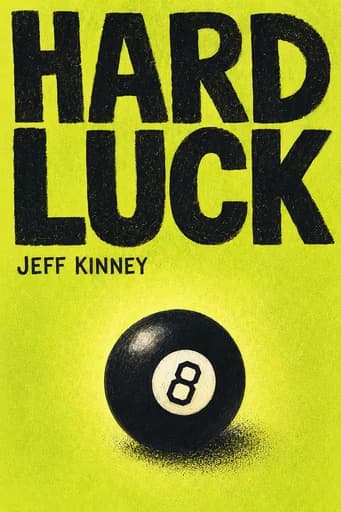
《倒霉书呆子》概述
当格雷·赫夫利(Greg Heffley)最好的朋友抛弃他时,他在这本荣获尼克频道儿童选择奖(Nickelodeon's Kids' Choice Award)的畅销冠军作品中,将自己的命运交给了掷骰子。金尼(Kinney)的《小屁孩日记》第八册再次证明了为什么《时代周刊》(Time)将其评为全球最具影响力的人物之一。
下载《倒霉书呆子》摘要
免费获取《倒霉书呆子》摘要的 PDF 或 EPUB 版本。可打印或随时离线阅读。
当格雷·赫夫利(Greg Heffley)最好的朋友抛弃他时,他在这本荣获尼克频道儿童选择奖(Nickelodeon's Kids' Choice Award)的畅销冠军作品中,将自己的命运交给了掷骰子。金尼(Kinney)的《小屁孩日记》第八册再次证明了为什么《时代周刊》(Time)将其评为全球最具影响力的人物之一。
免费获取《倒霉书呆子》摘要的 PDF 或 EPUB 版本。可打印或随时离线阅读。
由哥伦比亚大学校友在旧金山创建
"Instead of endless scrolling, I just hit play on BeFreed. It saves me so much time."


"I never knew where to start with nonfiction—BeFreed’s book lists turned into podcasts gave me a clear path."


"Perfect balance between learning and entertainment. Finished ‘Thinking, Fast and Slow’ on my commute this week."
"Crazy how much I learned while walking the dog. BeFreed = small habits → big gains."
"Reading used to feel like a chore. Now it’s just part of my lifestyle."

"Feels effortless compared to reading. I’ve finished 6 books this month already."
"BeFreed turned my guilty doomscrolling into something that feels productive and inspiring."

"BeFreed turned my commute into learning time. 20-min podcasts are perfect for finishing books I never had time for."
"BeFreed replaced my podcast queue. Imagine Spotify for books — that’s it. 🙌"

"It is great for me to learn something from the book without reading it."
"The themed book list podcasts help me connect ideas across authors—like a guided audio journey."
"Makes me feel smarter every time before going to work"
由哥伦比亚大学校友在旧金山创建
"Instead of endless scrolling, I just hit play on BeFreed. It saves me so much time."
"I never knew where to start with nonfiction—BeFreed’s book lists turned into podcasts gave me a clear path."
"Perfect balance between learning and entertainment. Finished ‘Thinking, Fast and Slow’ on my commute this week."
"Crazy how much I learned while walking the dog. BeFreed = small habits → big gains."
"Reading used to feel like a chore. Now it’s just part of my lifestyle."
"Feels effortless compared to reading. I’ve finished 6 books this month already."
"BeFreed turned my guilty doomscrolling into something that feels productive and inspiring."
"BeFreed turned my commute into learning time. 20-min podcasts are perfect for finishing books I never had time for."
"BeFreed replaced my podcast queue. Imagine Spotify for books — that’s it. 🙌"
"It is great for me to learn something from the book without reading it."
"The themed book list podcasts help me connect ideas across authors—like a guided audio journey."
"Makes me feel smarter every time before going to work"
"Instead of endless scrolling, I just hit play on BeFreed. It saves me so much time."
"I never knew where to start with nonfiction—BeFreed’s book lists turned into podcasts gave me a clear path."
"Perfect balance between learning and entertainment. Finished ‘Thinking, Fast and Slow’ on my commute this week."
"Crazy how much I learned while walking the dog. BeFreed = small habits → big gains."
"Reading used to feel like a chore. Now it’s just part of my lifestyle."
"Feels effortless compared to reading. I’ve finished 6 books this month already."
"BeFreed turned my guilty doomscrolling into something that feels productive and inspiring."
"BeFreed turned my commute into learning time. 20-min podcasts are perfect for finishing books I never had time for."
"BeFreed replaced my podcast queue. Imagine Spotify for books — that’s it. 🙌"
"It is great for me to learn something from the book without reading it."
"The themed book list podcasts help me connect ideas across authors—like a guided audio journey."
"Makes me feel smarter every time before going to work"
"Instead of endless scrolling, I just hit play on BeFreed. It saves me so much time."
"I never knew where to start with nonfiction—BeFreed’s book lists turned into podcasts gave me a clear path."
"Perfect balance between learning and entertainment. Finished ‘Thinking, Fast and Slow’ on my commute this week."
"Crazy how much I learned while walking the dog. BeFreed = small habits → big gains."
"Reading used to feel like a chore. Now it’s just part of my lifestyle."
"Feels effortless compared to reading. I’ve finished 6 books this month already."
"BeFreed turned my guilty doomscrolling into something that feels productive and inspiring."
"BeFreed turned my commute into learning time. 20-min podcasts are perfect for finishing books I never had time for."
"BeFreed replaced my podcast queue. Imagine Spotify for books — that’s it. 🙌"
"It is great for me to learn something from the book without reading it."
"The themed book list podcasts help me connect ideas across authors—like a guided audio journey."
"Makes me feel smarter every time before going to work"




来自《倒霉书呆子》的相同理念。选择适合你的声音、深度和节奏,随时切换。
Middle school is a battlefield where friendships are tested, alliances shift, and social hierarchies determine your daily survival. No one captures this chaotic reality quite like Jeff Kinney's "Diary of a Wimpy Kid" series, with "Hard Luck" standing as perhaps the most relatable volume for anyone who's ever felt abandoned by a best friend. Since its 2013 release, the book has sold over 3 million copies in its first week alone, breaking records in children's publishing and cementing Kinney's status as a literary phenomenon. Even celebrities like Will Smith have admitted to reading the series with their children, appreciating how it tackles complex social dynamics through humor. What makes this particular installment so powerful is its exploration of a universal childhood trauma: the moment your best friend finds someone they like more than you.
Greg Heffley's world collapses when his best friend Rowley Jefferson gets a girlfriend named Abigail. Where once stood an unbreakable duo of boys who did whatever they wanted together now stands an awkward third wheel watching his friend transform before his eyes. Rowley's appearance changes dramatically - new brand-name clothes replace his familiar comfort wear, his signature bowl cut becomes a carefully styled sweep, and his childlike enthusiasm gives way to affected maturity. Suddenly he's "too mature" for their traditional snowball fights, comic book trading sessions, and their long-standing tradition of creating "Zoo-Wee Mama" comics together. The betrayal cuts particularly deep when Greg realizes all their carefully crafted daily routines are disrupted. Gone are the days when Rowley would eagerly transcribe Greg's English assignments into cursive for the mere price of three peanut butter crackers. Their morning ritual of walking to school together - with Rowley serving as Greg's advance scout for dog poop, puddles, and other sidewalk hazards - abruptly ends. Even their lunchtime trading system, where Greg would swap his mom's "healthy" snacks for Rowley's superior packed treats, becomes a thing of the past. Most devastating of all, Greg loses his reliable partner for carrying his impossibly heavy textbooks between classes. The shift happens so suddenly that Greg barely has time to process the seismic change in their friendship dynamic. One day they're planning their weekend video game marathon; the next, Rowley is completely absorbed in his relationship with Abigail - coordinating matching outfits, spending lunch periods sharing earbuds while listening to music, and making elaborate plans for group dates that never include Greg. It's not just the activities they no longer share - it's the fundamental betrayal of their unspoken agreement that they would always be each other's primary social support through the turbulent waters of middle school. Greg's mother attempts to console him with the age-old wisdom that "friends come and go but family is forever" - advice that terrifies rather than comforts Greg, who isn't convinced his family was meant to live together permanently, especially given his ongoing feuds with his older brother Rodrick and the chaos caused by his younger brother Manny. The thought of being stuck indefinitely with his family as his only social outlet sends him into a spiral of middle school existential dread. What makes this situation so painfully authentic is how it captures that first taste of abandonment nearly everyone experiences in early adolescence. The social currency of having a best friend suddenly becomes devalued when that friend finds something - or someone - more appealing. Greg's confusion, hurt, and resentment mirror what countless readers have experienced themselves, from the initial shock of being replaced to the uncomfortable realization that friendship hierarchies can shift without warning. His attempts to maintain normalcy by third-wheeling on Rowley and Abigail's "dates" only heighten the awkwardness, creating that powerful connection between character and audience that has made Kinney's series so enduringly popular across generations of middle school readers who know exactly how it feels to be left behind.
轻松跟读,《倒霉书呆子》中的每个词都会随音频实时高亮。
Without Rowley as his social safety net, Greg must face school's treacherous landscape alone - a situation that exposes both the practical and emotional challenges of sudden social isolation. His first challenge is purely logistical: the daunting task of transporting his heavy textbooks without Rowley's reliable assistance. After several failed attempts, including an ill-fated experiment with a milk crate, Greg discovers his father's forgotten roller bag in the basement. While this innovative solution solves the weight problem, it creates an entirely new set of social complications, including mockery from upperclassmen and the constant struggle to navigate crowded hallways. The daily walk to school transforms into an elaborate obstacle course of social and physical hazards. Greg must carefully time his departure to avoid Mr. Sandoval, who still harbors resentment over the previous year's driveway marker prank - a joke that seemed harmless when shared with Rowley but now looms as a source of anxiety. The mysterious Mingo kids, who live in the dilapidated house near the woods, present another challenge. These unsupervised siblings have claimed the shortcut path as their territory, forcing Greg to take increasingly circuitous routes. Perhaps most threatening is Rebel the Rottweiler, whose yard Greg must pass. Without Rowley to serve as lookout or potential sacrifice, Greg develops an elaborate system of checking for the dog using reflections in car windows and timing his sprints between safe zones. The cafeteria emerges as a complex social battlefield with its own unwritten rules and power dynamics. Greg's school suffers from chronic overcrowding, creating a bizarre yearly ritual where students who fail to secure seats on the first day become permanent members of the "standing section." This scarcity has spawned an underground economy - Brady Connor's successful sale of his prime spot to Glenn Harris for five dollars and an ice-cream sandwich inspires similar transactions throughout the year. When Abigail and Rowley abandoned their coveted window-side table spots following their breakup, the aggressive Dremmell twins immediately claimed the territory, effectively banishing Greg from his former social haven. Though Greg technically sits with other boys at lunch - including Dennis Tracton, who only talks about his rock collection, and Christopher Brownfield, who spends lunch solving Rubik's cubes - he doesn't consider any of them actual friends. The recess landscape has become a carefully mapped territory of social clusters: the trading card enthusiasts who gather by the bike racks, the library readers who never venture outdoors, kids who've adapted to the ball ban by playing elaborate games with their shoes, Eric Glick's suspicious homework-trading ring operating behind the dumpsters, and various girl groups with their constantly shifting alliances. Greg's desperate attempt to utilize the school counselor's new "Find a Friend" station backfires spectacularly when he's paired with Mr. Nern, the elderly crossing guard who spends forty-five minutes explaining the history of traffic signals. What's particularly striking about Greg's situation is how it illuminates the stark difference between mere physical proximity to others and genuine friendship. He's perpetually surrounded by people yet experiences a profound sense of isolation - a universal feeling that resonates with readers who've experienced the peculiar loneliness of being alone in a crowd. His predicament forces both Greg and the reader to examine what authentic friendship means beyond simple convenience and habit, while questioning whether these superficial lunch table acquaintances could ever truly replace the deep, if sometimes frustrating, connection he shared with Rowley.
With extra time after school now that he's not hanging out with Rowley, Greg begins considering potential new friends in his neighborhood. The options are limited and unappealing: the underwear-wrestling Lasky boys, helmet-wearing Mitchell Flammer, vandal Aric Holbert, and the bizarre Fregley. In a moment of desperation, Greg decides Fregley might be moldable into an ideal friend with all of Rowley's positive qualities. He also calculates that having Fregley as a funny sidekick could boost his own popularity with girls, who "NEVER go for the funny sidekick." This experiment goes predictably wrong. At lunch, Greg invites Fregley to sit with him and attempts to teach him basic social norms like the Five-Second Rule, but Fregley immediately grabs food from Greg's hand. When Greg has Fregley walk home with him as a "scout," the Mingo kids chase them, and Fregley's solution is to throw Greg's books away hoping the bullies would "stop and READ them." The final straw comes when Greg tries to showcase Fregley's comedic potential to some girls, but Fregley puts gum in his belly button and starts chewing it, drawing a crowd of disgusted onlookers. Greg ends up eating lunch alone in the hallway, bitterly reflecting that "no matter how nice you are to some people, they'll turn their back on you the second they get the chance." When human friendship proves disappointing, Greg turns to an unexpected source of guidance: a forgotten Magic 8 Ball he discovers under Rodrick's bed. He begins using it for daily decisions - from whether to shower (yes) to whether he needs to finish his Science Fair project outline (no). Greg compares this to how Albert Einstein wore the same clothes daily to save mental energy for important matters. The Magic 8 Ball becomes his surrogate friend, offering the decisive guidance he once got from Rowley, though with obvious limitations - it can't help with math homework or specific answers, and sometimes provides unhelpful responses in critical moments, like when a Mingo kid chases him with a stick and the ball can't decide if he should run or fight. This progression from Rowley to Fregley to an inanimate object perfectly captures the desperation of social isolation and the lengths we'll go to fill that void. Greg's willingness to accept increasingly inadequate substitutes for genuine friendship reveals just how essential that connection is to his sense of security and identity.
With his friendship circle collapsed, Greg finds himself spending more time with family - a prospect he finds deeply unappealing. His little brother Manny has a better social life than he does, having befriended a neighborhood kid named Mikey who has a permanent grape juice stain around his mouth making him look like he has a goatee. Even more surprising to Greg, his Grandpa has started dating a widow named Darlene from Leisure Towers, where Dad says women outnumber men ten to one. Greg's extended family is a colorful cast of characters dominated by his mother's four very different sisters. Aunt Cakey is unmarried, childless, and clearly dislikes children - when she once babysat Greg, she nervously watched him, putting fragile items out of reach before forcing him to take a nap. Aunt Gretchen is her opposite - she has wild twin boys, Malvin and Malcolm, who were once kept on child leashes and bring chaos wherever they go. Aunt Veronica hasn't attended family gatherings in person for five years, appearing only by video conference. Aunt Audra believes in crystal balls and horoscopes, consulting her psychic for every decision. Family gatherings are complex social ecosystems with their own hierarchies and traditions. At Easter brunch, Greg faces three unappealing social options: watching golf with the men, talking with women in the kitchen, or hanging with kids in the basement. He opts to hide in the bathroom until mealtime. The family now splits between adults in the dining room and kids in the kitchen, with confusing adult/child designations - Uncle Cecil, Aunt Marci's adopted toddler, sits with adults while teenage Rodrick remains at the kids' table. What makes these family dynamics so relatable is how they capture the strange liminal space of early adolescence - too old for childish things but not yet welcomed into adult conversations. Greg's observations about family traditions, like how he used to profit from selling drawings to relatives when younger but now watches his brother Manny effortlessly sell scribbles to the same people, highlight the shifting expectations and treatment that come with growing up. These family scenes provide a perfect counterpoint to Greg's school struggles, showing that social navigation is complicated in every context, not just with peers.
In a pivotal moment of the story, Greg discovers his mother's hidden cache of parenting books while hiding in her closet. Browsing through them, he uncovers her "reverse psychology" technique - getting kids to do things by telling them to do the opposite. He realizes this explains why his parents wouldn't let him wash dishes as a child, making him eager to help when they finally "allowed" him on his eighth birthday. Greg finds books addressing every parenting situation, including one that explained Mom's comforting "Inchworm Heaven" story she told when his pet inchworm Squirm was accidentally stepped on by baby Manny. Another book reveals the truth about his beloved stuffed animal Tickles that disappeared during a beach vacation. After posting lost signs and cutting the vacation short, Greg miraculously found Tickles on his dresser the next morning - Mom had claimed Tickles "found his way home because he loved Greg so much," but the parenting book exposed this as just another strategy. Behind Mom's books, Greg discovers five identical stuffed monkeys exactly like Tickles, realizing Mom bought replacements after he lost the original. This discovery represents a significant coming-of-age moment for Greg - the realization that adults aren't always straightforward and that much of what he took as reality was carefully constructed by his parents. It's a universal experience of growing up: that moment when you realize your parents have been strategically managing your behavior and emotions rather than simply reacting to situations. Greg's response is both clever and typical of his character - he immediately tries to use these techniques against his parents, telling them he doesn't want a phone because it would be too much responsibility. The trick works brilliantly until he accidentally drops Mom's old phone in the toilet while Aunt Veronica unexpectedly video calls. What makes this subplot so effective is how it parallels Greg's main social dilemma. Just as he's discovering that friendship has unwritten rules and hidden agendas (like Abigail dating Rowley to make her ex jealous), he's also learning that family relationships involve similar complexities and manipulations. Both revelations contribute to his growing understanding that social relationships of all kinds require navigation of unstated expectations and strategic thinking.
轻松跟读,《倒霉书呆子》中的每个词都会随音频实时高亮。
Seeking both a way to avoid the Mingo kids after school and a new social identity, Greg joins the Yearbook Club after consulting his Magic 8 Ball. The editor, Betsy Buckles, explains they need photos for the "Candids" page and will pay $5 for each published photo. Greg sees this as a perfect opportunity to both avoid bullies and make money while giving himself a purpose and identity at school. His first day as yearbook photographer proves challenging as he struggles to capture interesting moments while attending classes. He hopes to catch someone doing something embarrassing, like Jamar Law with his head stuck in a chair (as featured in last year's yearbook), but everyone's unusually well-behaved. Greg even tries nudging Jamar toward repeating the chair incident, showing his willingness to manufacture content rather than simply document reality. When submitting his photos, Greg includes captions and digitally edits some pictures - fixing blinked eyes and adding humor, like altering Mr. Blakely's photo. Realizing his newfound power, Greg takes revenge on Leon Feast by shrinking his head 75% in a photo, hoping it passes the editors' review. This small taste of control is intoxicating for Greg, who has felt powerless in so many other areas of his life. The yearbook role gives Greg something that friendship with Rowley once provided: a sense of purpose and identity. It offers him a way to participate in school life without requiring the social skills he struggles with, and it positions him as an observer rather than a participant in the social dynamics that have caused him pain. The camera becomes both a shield and a weapon - protecting him from direct social engagement while giving him a measure of control over how others are portrayed. However, this newfound purpose collapses when Greg must photograph the "Cutest Couple" - Rowley and Abigail - a painful task that forces him to document the very relationship that destroyed his friendship. Unable to face this emotional challenge, Greg resigns as photographer, once again left without a social anchor or purpose.
While dealing with his social crisis, Greg faces an academic emergency when his grades begin slipping. Vice Principal Roy reveals Greg's declining performance and warns that without improvement, he'll face summer school - a nightmarish prospect with no air conditioning and the janitor as English teacher. The threat terrifies Greg into wanting to become a straight-A student. Greg reflects on how his grades deteriorated from A's and B's in the first quarter (when Mom rewarded him with a hot-fudge sundae) to his current predicament. Determined to avoid summer school, he begins catching up on assignments with Mom's help, using her set of used textbooks. In music class, where he's failing due to non-participation (like most boys), Greg overcompensates by standing and belting out a song when Mrs. Norton merely calls attendance, mortifying himself in the process. The Science Fair project becomes the ultimate academic challenge, with Greg initially considering buying an old project from Eric Glick's shady operation run by eighth-grader Dennis Denard. Having second thoughts about cheating, Greg escapes the storage room and decides against associating with their operation - a choice validated when teachers later raid the storage room, giving the caught students detention for the year and likely summer school. Greg completes his Science Fair project late at night, feeling proud despite knowing it won't "win the Nobel Prize." His panic returns when Mom points out the report must be typed, and Greg's too exhausted to continue. He plans to wake early to type it but oversleeps. To his amazement, he finds his project fully typed - Mom had stayed up all night doing it, and is now sound asleep. This academic subplot serves multiple purposes in the narrative. It adds pressure to Greg's already difficult situation, creating a sense of urgency and raising the stakes of his social struggles. It also showcases the contrast between Greg's approach to problems (looking for shortcuts and external solutions) and the more responsible approach his mother tries to instill. Finally, it provides an opportunity for Greg to experience consequences for his choices and to learn that integrity sometimes matters more than immediate results - a lesson that will serve him well when he later faces the moral dilemma of what to do with Meemaw's diamond ring.
The story reaches its climax when Greg learns that Rowley and Abigail have broken up just one week after being voted Cutest Couple. Rumors reveal that Abigail only dated Rowley to make her ex-boyfriend Michael Sampson jealous - a strategy that worked, as they're now back together. Rowley discovered this harshly when Michael confronted him directly. After submitting his Science Fair project, Greg notices Rowley wandering around recess with a dazed expression, occasionally near the Find a Friend station. When Mr. Nern approaches Rowley first, Greg feels guilty seeing them playing checkers together - the same fate he earlier considered worse than solitude. In a moment of clarity, Greg searches for his discarded Magic 8 Ball in Gramma's yard, hoping for one last answer about Rowley. While searching, he discovers something green and shiny - a plastic egg containing Meemaw's lost diamond ring. Though tempted by thoughts of selling it for a jet pack, Greg remembers Mom's warning about family conflict and hides the ring "between Tickles four and five" for future emergencies, showing remarkable maturity and foresight. Greg ultimately decides that while the Magic 8 Ball might help with small decisions, the big ones are his responsibility. He approaches Rowley at lunch and invites him to sit together, immediately restoring their friendship. Though Mom always says "friends come and go and family is forever," Greg notes that family won't protect you from bullies like Meckley Mingo - a practical observation that shows his growing understanding of different relationship types and their purposes. He acknowledges that he and Rowley will likely fight again someday, creating more drama, but for now they're good - at least until the yearbook comes out with their "Cutest Couple" photo, a problem they'll deal with later. This final reflection shows Greg's growing maturity - he no longer expects perfect, unchanging friendship but accepts that relationships have ups and downs that must be navigated together. The resolution brings the story full circle, with Greg choosing to rebuild his friendship with Rowley despite the hurt and abandonment he felt. In doing so, he demonstrates that he values the relationship more than his pride or grievances - perhaps the most mature decision we've seen from him throughout the series. By hiding Meemaw's ring rather than using it for personal gain, he similarly shows growth in his family relationships, prioritizing harmony over immediate gratification. "Hard Luck" ultimately delivers a powerful message about the resilience of childhood friendships and the importance of forgiveness. It acknowledges the pain of betrayal but suggests that genuine connections can survive even significant breaches of trust. Through Greg's journey from abandonment to reconciliation, readers of all ages are reminded that sometimes the hardest luck can lead to the most valuable lessons about what truly matters in relationships.
深受 100 万+ 学习者喜爱
“坚持使用 23 天了,我每天都会打开它。它现在已经成为我的日常习惯。”
jayallen


The Science of Unbreakable Discipline
Traditional grit often fails because it ignores how the brain actually functions. This plan is designed for high-performers and chronic procrastinators who want to leverage neuroscience and environmental design to achieve long-term goals without the constant struggle of mental fatigue.
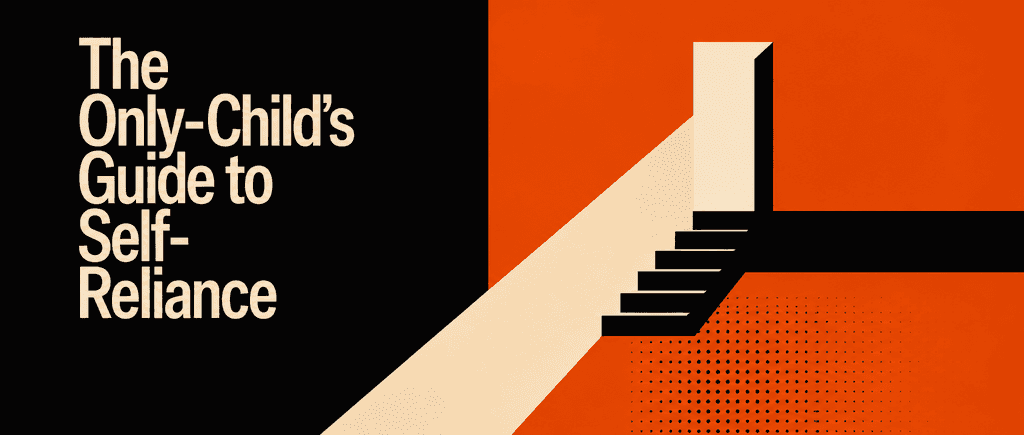
The Only-Child's Guide to Self-Reliance
This guide is essential for individuals who grew up as only children and find themselves struggling with social integration or decision paralysis. It provides a roadmap for transforming solo-oriented habits into collaborative strengths and self-assured leadership.

Jocko willink
This learning plan distills the battle-tested leadership philosophy of Jocko Willink, a retired Navy SEAL commander who has transformed how thousands approach personal accountability and team leadership. It's ideal for aspiring leaders, business professionals, entrepreneurs, and anyone seeking to develop elite-level discipline, decision-making skills, and the ability to lead teams through high-pressure situations with clarity and confidence.

The Science of Self-Sabotage
This plan is essential for high-achievers and chronic caretakers who feel stuck in repetitive patterns of failure or burnout. It offers a deep dive into the neurobiology of behavior, making it ideal for anyone looking to reclaim control over their choices and mental well-being.

Self-help books for motivation and success
This plan is essential for individuals feeling stuck or overwhelmed by their ambitions, offering a roadmap to bridge the gap between dreaming and doing. It is ideal for aspiring leaders and high achievers who want to master the psychology of success and build sustainable systems for growth.

Navigate favoritism and criticism at 14
This learning plan is designed for 14-year-olds facing the social complexities of adolescence and unfair treatment. It provides essential emotional intelligence tools for teens and parents seeking to build long-term resilience and assertive communication skills.

The Weight of the Web
This learning plan is essential for individuals navigating high-pressure environments who want to lead with empathy rather than force. It is designed for those seeking to transform personal adversity into a source of enduring strength and moral clarity.

Unshakable: The Mistake-Proof Mindset
This plan is essential for athletes who struggle with performance anxiety or the tendency to dwell on errors. It provides the mental tools needed to transition from self-doubt to instinctive, high-stakes execution.