第 1 章
When Darkness Becomes Your Addiction
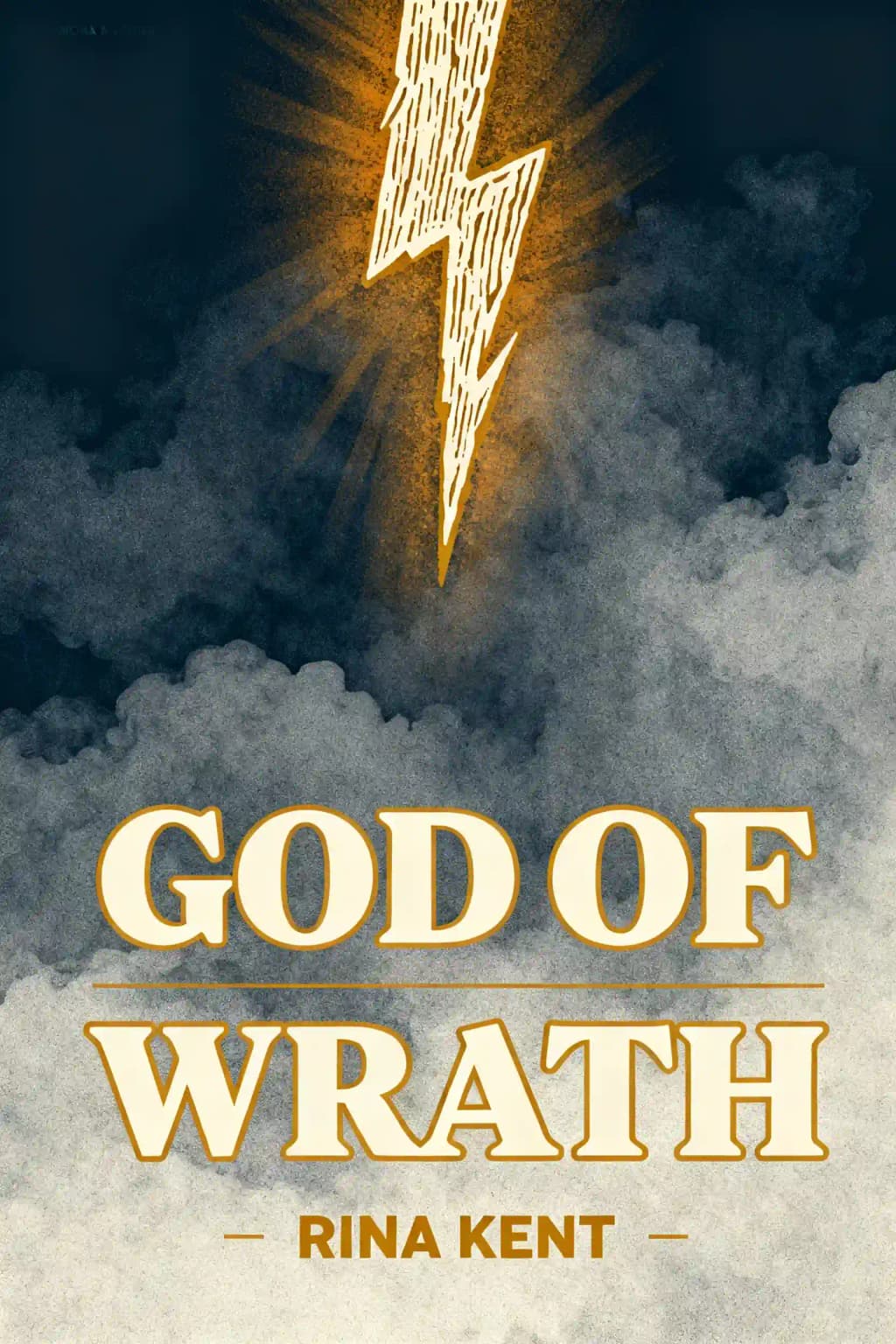
Have you ever wondered what it would feel like to be utterly consumed by someone dangerous? To be the sole focus of a man who knows no boundaries, no limits-a man who would burn the world to ash just to keep you safe? God of Wrath, the third installment in Rina Kent's wildly popular Legacy of Gods series, explores this very question. This dark romance has taken BookTok by storm, with readers confessing their guilty pleasure in rooting for anti-heroes who blur the lines between protection and possession. Even celebrities like Megan Fox have publicly praised Kent's ability to craft villains readers can't help but fall for. The book's exploration of primal desires and forbidden attraction speaks to something deeply human that we rarely acknowledge: sometimes the monster is exactly what we need.
第 2 章
A Dance of Predator and Prey
The story begins with Cecily Knight, a silver-haired student from Royal Elite University, as she daringly infiltrates the notorious Heathens' initiation ceremony at rival King's University. Disguised meticulously with a brown wig and wearing one of the numbered masks required for the ceremony, she relies on what she calls her "superpower" of invisibility - her carefully honed ability to blend into backgrounds and remain unnoticed. This skill, developed over years of observing rather than participating, serves her well as she attempts to gather intelligence on the Heathens, a secretive club with documented connections to the Russian mafia. The stakes are high; discovery could mean more than mere embarrassment - it could be dangerous.
The initiation itself is structured as a brutal predator-prey game, taking place in the dense woods surrounding the King's University campus. Participants must navigate through the darkness to reach the property edge without being caught by masked Heathens members who stalk the grounds. The rules are simple but the execution is terrifying - if caught, elimination comes with undefined but clearly threatening consequences. The atmosphere is thick with tension, punctuated by distant screams and the sound of running feet through the underbrush.
When Orange Mask - later revealed to be Jeremy Volkov, the Heathens' most feared member - detects her carefully chosen hiding place, their first encounter becomes a pivotal moment that sets the tone for their entire relationship. His approach is calculated, methodical, like a wolf that's caught an interesting scent. He eliminates her from the game with practiced efficiency, pressing a golf club against her throat with cold precision that speaks of experience with real violence. Yet Cecily experiences an unexpected and disturbing thrill beneath her very real fear - a physiological response that both confuses and shames her.
In a moment of desperate improvisation that surprises even herself, she attempts to distract him with an shocking proposition, revealing her virginity as if offering a bargain. Though he dismisses her offer with cruel amusement, this first meeting ignites something primal between them - a dangerous attraction that leaves Cecily questioning her own desires and judgment. His rejection comes with a promise of future encounters that sounds more like a threat than a comfort.
This scene masterfully establishes the central dynamic that will define their relationship: the hunter and the hunted, the predator and the prey, locked in an intimate dance of power and vulnerability. The forest setting becomes a powerful metaphor for their developing relationship - dark and primal, filled with hidden dangers and unexpected paths, where nothing is quite what it seems. Cecily's conflicted response to Jeremy's dominance foreshadows her internal struggle throughout the novel - how can she trust her own judgment when her body and mind seem at war? Her simultaneous terror and attraction to this dangerous man sets up the central conflict that will drive the narrative: the battle between instinct and reason, between desire and self-preservation.
第 3 章
The Collision of Two Worlds
Cecily and Jeremy come from fundamentally different worlds, their contrasts as stark as day and night. She's deeply empathetic and caring, spending her weekends at the local animal shelter nursing injured strays back to health and organizing adoption events. Her small apartment is filled with rescue plants and second-hand furniture, each piece telling a story of compassion. He's the heir to the notorious Petrov crime empire, raised in an environment where mercy is seen as weakness and violence is a daily currency. His world is one of marble halls and blood money, where every decision is calculated for maximum advantage.
When Jeremy discovers Cecily's profile on Primal - an underground kink app catering to predator/prey fantasies - he immediately recognizes an opportunity. Rather than letting her connect with her intended match, he intercepts the request and methodically plans their encounter in the dense forest surrounding the Heathens' sprawling mansion. Their first meeting is brutal and electric - he pursues her through the moonlit woods, his footsteps deliberately heavy behind her as she runs. The chase ends with him pinning her against rough bark, one hand in her hair, the other claiming her body with practiced precision until she breaks apart against her will. The fantasy shatters like glass when Cecily realizes her captor isn't Landon, her longtime crush from the coffee shop, but Jeremy Petrov - the man whose reputation for violence makes even hardened criminals nervous. He grabs her throat, demanding answers about her presence at the initiation ceremony, promising consequences that make her blood run cold.
Their relationship evolves into an intricate dance of dominance and defiance. Jeremy infiltrates every aspect of her life - appearing unannounced in her bedroom at midnight, leaving expensive gifts she can't refuse, demanding she meet him at his isolated cottage in the woods every Thursday at precisely 7 PM. His obsession manifests in both cruel and tender ways - he tracks her movements possessively while also memorizing her favorite foods, discussing the subtle themes in her beloved manga collection, and fulfilling her darkest fantasies with an intensity that leaves her breathless and confused.
What makes this dynamic so compelling is its exploration of the gray areas between consent and coercion, desire and fear. Cecily finds herself trapped in a psychological maze - repulsed by Jeremy's methods yet undeniably drawn to the raw authenticity of his attention. She recognizes the toxic nature of their arrangement, how it contradicts her values and everything she believes about healthy relationships. Yet she can't deny the electric connection they share, how he sees through her carefully constructed walls to the darker desires she's always denied. This complex interplay between conscious choice and primal attraction forms the psychological foundation of their story, challenging readers to question their own understanding of desire and its many contradictions.
第 4 章
The Psychology of Forbidden Desire
One of the most fascinating aspects of God of Wrath is its unflinching exploration of taboo desires. Cecily harbors fantasies of "being ambushed in a dark place and taken against her will"-fantasies that both shame and excite her. Through her character, Kent examines the psychology behind such desires without judgment.
When Jeremy forces Cecily to play Russian roulette, she's terrified yet exhilarated by the danger. Their sexual encounters are violent, primal, and often initiated through force-yet Cecily never uses her safe word. This complex dynamic raises questions about the nature of consent and the distinction between fantasy and reality.
The novel suggests that these dark desires don't make Cecily broken or abnormal-they're part of her sexuality, aspects she's struggled to accept about herself. Jeremy, despite his many flaws, provides a space where she can explore these desires without judgment. He understands her needs on an instinctual level, giving her what she craves even when she can't articulate it herself.
This psychological depth elevates the story beyond a simple dark romance. It becomes an exploration of self-acceptance-of embracing the parts of ourselves society tells us to suppress. Cecily's journey involves not just falling for Jeremy but coming to terms with her own desires, recognizing that they don't make her any less worthy of love and respect.
The novel doesn't shy away from showing how this process is messy and contradictory. Cecily often dissociates during moments of extreme stress-a coping mechanism from past trauma-and Jeremy learns to recognize and respond to these episodes with unexpected tenderness. These moments of vulnerability create a bridge between their worlds, suggesting that perhaps they understand each other on a level no one else could.
第 5 章
The Beast Behind the Mask
Jeremy Volkov is a fascinating study in contradictions. Described as having a "warlord build" with artistic skull tattoos stretching across his chest and arms, he physically embodies the danger he represents. Cecily labels him as either a sociopath or psychopath-he lacks empathy and humanity, feels no remorse, and believes his actions are always justified.
Yet as the story progresses, we glimpse the man behind the monster. Through Jeremy's perspective chapters, we learn about his troubled childhood with a mother who suffered from mental health episodes where she would become a "ghost" and not recognize her family. We see his fierce protectiveness toward his sister Annika, though it often manifests as controlling behavior. We witness his struggle with trust and vulnerability, his fear that Cecily could never truly choose him over Landon.
What makes Jeremy compelling is not that he changes fundamentally-he remains violent, possessive, and dangerous throughout-but that we come to understand the logic behind his actions. When he discovers that men who once hurt Cecily are attending her university, he arranges for their suspension and subsequent "accident." When he learns about her abusive ex-boyfriend, he meticulously plans to make the man's existence "a slow, endless hell." His violence, while never justified, becomes contextualized as his warped expression of care.
The novel doesn't ask us to forgive Jeremy's actions but to understand them. He's a product of his upbringing in a violent world where power and control mean survival. His obsession with Cecily becomes his one connection to something pure and genuine in a life otherwise defined by darkness. As he admits to himself: "Cecily has become part of who I am."
第 6 章
Trauma and Healing in Unexpected Places
Beneath the surface of this dark romance lies a nuanced exploration of trauma and healing. Both protagonists carry deep wounds that have shaped their worldviews and behaviors. Cecily experiences sleep paralysis and dissociative episodes triggered by certain situations-particularly witnessing sexual acts. These symptoms point to past trauma that is gradually revealed throughout the story.
Jeremy's trauma manifests differently-in his inability to trust, his need for absolute control, and his expectation of betrayal. His childhood experiences with his mother's mental illness left him with deep-seated fears of abandonment and a belief that people are fundamentally unreliable.
What's remarkable is how these two damaged people become instruments of healing for each other. Cecily helps Jeremy understand his mother's struggles in a new light, explaining that his mother fought her demons because she loved her family. This perspective transforms Jeremy's relationship with his past, allowing him to reconnect with his mother after years of resentment.
Similarly, Jeremy provides a space where Cecily can confront her own trauma. When she's sexually assaulted by a classmate named Zayn, Jeremy not only rescues her but eliminates the threat permanently-slicing Zayn's throat in an act of brutal protection. While this violence is extreme, it represents a definitive end to Cecily's fear, allowing her to begin healing.
Their relationship, for all its toxicity and danger, becomes a crucible for transformation. They see each other's darkness and accept it completely-a radical form of unconditional acceptance that allows both to integrate the fragmented parts of themselves. This doesn't excuse the problematic aspects of their dynamic, but it adds complexity to what might otherwise be a simple tale of obsession.
第 7 章
The Family We Choose
Family - both blood and chosen - forms a significant theme that weaves through every layer of the novel. Cecily's relationship with her parents, particularly her mother Kimberly, provides a crucial counterpoint to the darkness of her connection with Jeremy. Her parents share a deep, loving bond that began in their teenage years and has weathered decades of challenges - "childhood friends turned lovers with an unbreakable bond." This foundation serves as Cecily's North Star, the standard against which she measures all romantic relationships, including her tumultuous connection with Jeremy.
The dynamics shift dramatically when Jeremy follows Cecily to London to meet her family. Through her father Xander's perspective, we witness a more vulnerable side of Jeremy. Initially, Xander's protective instincts flare up, seeing only the calculating businessman who has entangled himself with his daughter. However, as days pass, he observes subtle changes in Cecily - how she carries herself with more confidence, speaks more freely, and seems more anchored in her own identity. This gradual recognition that Jeremy has helped Cecily overcome her recent career setbacks and anxiety leads to a pivotal moment of acceptance, though Xander's protective wariness never fully disappears.
The chosen family Cecily builds proves equally vital to her journey. Her inner circle - Ava, with her sharp wit and unflinching honesty; Glyndon, whose quiet strength provides constant support; and Annika, whose friendship transcends her connection to Jeremy - creates a protective framework around her. Their weekly brunches, late-night emergency calls, and unwavering presence during both celebrations and crises demonstrate the power of chosen connections. When Annika is suddenly relocated to New York by her controlling father, the friend group faces its greatest test. Their shared determination to maintain connection across distance and their collective effort to help Annika eventually return to London strengthens their bonds in unexpected ways.
Jeremy's family dynamics cast long shadows over his character development. His relationship with his father Adrian reveals generations of emotional repression and ruthless business practices masked as "practical necessity." Yet his fierce protectiveness toward Annika shows glimpses of his capacity for deep love, even if he struggles to express it conventionally. A pivotal scene occurs when Adrian visits Jeremy after his breakup with Cecily. Their conversation in Jeremy's stark office reveals the generational pattern of emotional unavailability: Adrian admits that his own inability to trust nearly destroyed his marriage to Jeremy's mother, warning his son that their shared tendency to view vulnerability as weakness might cost Jeremy the only person who has truly seen and accepted him fully.
This multi-layered exploration of family ties enriches the central romance, demonstrating how our capacity for love and trust is shaped by both the relationships we inherit and those we choose to build. Through both blood families and chosen ones, the novel illustrates how healing often requires both holding onto supportive connections and learning to forge new ones that challenge our inherited patterns.
第 8 章
The Power of Acceptance
At its core, God of Wrath explores the profound journey of acceptance - both of others and ourselves - through the complex relationship between its protagonists. Cecily's path to self-discovery involves confronting and ultimately embracing her own desires, even when they challenge societal norms and her own preconceptions about herself. She grapples with intense shame over her response to Jeremy's roughness and dominance, questioning not just her desires but her fundamental identity. Her internal struggle reflects deeper questions about sexuality, power dynamics, and the intersection between pleasure and pain that many women face but rarely discuss openly.
Jeremy's journey toward acceptance proves equally challenging but focuses on emotional vulnerability rather than desire. Having survived betrayal and abandonment throughout his life, he's built impenetrable walls around himself, trusting only his fellow Heathens. His relationship with Cecily forces him to confront these defenses, especially when she chooses him over Landon despite their complicated history. The discovery that Cecily provided information leading to the Heathens' mansion fire becomes a pivotal moment - his worst fears materialized in devastating fashion. His violent reaction, nearly killing her before banishing her, reveals the depth of his trauma and trust issues.
Their path to reconciliation demonstrates the complexities of forgiveness and growth. Cecily's forgiveness comes with clear boundaries - she refuses to accept uncontrolled violence or emotional manipulation, demanding respect alongside passion. Jeremy's acceptance of these terms shows significant character development as he learns to channel his intensity without letting it control him. Their relationship transforms from an obsessive, potentially destructive force into something more nuanced and sustainable - maintaining its primal energy while incorporating mutual understanding and respect.
The author masterfully illustrates this evolution through small but significant moments: Jeremy learning to read Cecily's non-verbal cues, Cecily becoming comfortable expressing her needs without shame, and both of them developing their own unique language of love and trust. Their dynamic remains intense and primal, but now includes moments of tenderness and vulnerability that deepen their connection.
The epilogue perfectly captures this transformed relationship. Their campus chase games maintain the thrilling predator-prey dynamic they both crave, but now end with gentle aftercare and emotional intimacy. Jeremy demonstrates his growth by seamlessly transitioning between dominant protector and tender partner, while Cecily embraces both her strength and vulnerability. This careful balance between darkness and light, between primal desire and deep affection, becomes the foundation of their enduring relationship - proving that acceptance of our whole selves, including our darker aspects, can lead to profound connection and love.
第 9 章
The Seductive Appeal of Darkness
Why do stories like God of Wrath resonate so deeply with readers? The novel's popularity speaks to the seductive appeal of darkness-our fascination with characters who operate outside societal norms and moral boundaries. Jeremy Volkov represents a fantasy of absolute devotion and protection, a man who would "slaughter the world to pieces just to protect me from it."
This fantasy taps into primal desires for safety and belonging that exist alongside our more civilized impulses. In a world of uncertainty and constant compromise, there's something compelling about a character who knows exactly what he wants and will stop at nothing to get it. Jeremy's single-minded focus on Cecily offers an escape from the ambiguity and half-measures of everyday relationships.
Yet the novel doesn't present this dynamic uncritically. Through Cecily's perspective, we see the real cost of loving someone like Jeremy-the fear, the loss of autonomy, the constant negotiation of boundaries. Her struggle to maintain her identity while being the object of such overwhelming attention forms the emotional core of the story.
The novel suggests that the appeal of darkness lies not in the darkness itself but in the contrast it provides-how it makes moments of tenderness and vulnerability shine more brightly. When Jeremy gently dries Cecily's hair after a shower or carries her to bed when she's exhausted, these simple acts of care take on profound significance against the backdrop of his usual violence and control.
In this way, God of Wrath offers readers a safe space to explore the appeal of dangerous relationships while acknowledging their complexity and cost. It doesn't glorify toxicity but examines it with nuance, showing how even the most problematic connections can contain elements of genuine understanding and acceptance.
第 10 章
When Monsters Become Saviors
As our journey through God of Wrath concludes, we're left with a provocative question: Can a monster become a savior? Can someone defined by darkness bring light into another person's life? This paradox lies at the heart of the novel's most compelling themes, challenging our preconceptions about redemption, healing, and the nature of love itself.
The novel suggests that the answer isn't simple or straightforward. Jeremy remains fundamentally who he is - violent, possessive, dangerous to those who threaten what's his. He doesn't undergo a conventional redemption arc or transform into a gentle hero by the story's end. His capacity for brutality remains intact, as evidenced in the climactic confrontation with Cecily's stalker. Yet for Cecily specifically, he becomes exactly what she needs - someone who sees her darkest desires without judgment, who offers protection without demanding she diminish herself, who gives her space to explore aspects of her sexuality she's always kept hidden. Their dynamic demonstrates how protection and possession can intertwine in complex ways.
Their relationship defies easy categorization as either healthy or toxic, containing elements of both and existing in a gray area that challenges our binary thinking about love and attraction. The novel shows this through their evolving dynamic - moments of tender vulnerability juxtaposed against scenes of intense possession and control. What makes their connection work is mutual acceptance - they see each other completely, darkness and all, and choose each other anyway. This is particularly evident in scenes where Cecily confronts her own capacity for darkness, with Jeremy serving as both catalyst and witness to her transformation.
Perhaps that's the most radical form of love - not the sanitized version presented in conventional romances, but the messy, complicated acceptance of another person's whole self, including the parts society tells us to reject or hide. The author illustrates this through parallel storylines showing how both characters have previously tried and failed to fit into more conventional relationships. In finding someone who embraces her darkness instead of asking her to suppress it, Cecily finds a freedom she never thought possible. Their relationship challenges traditional romance tropes by suggesting that sometimes the most healing connections aren't the ones that make us "better" people, but the ones that allow us to be authentically ourselves.
God of Wrath ultimately leaves us with this thought: Sometimes the most unexpected people can help us heal our deepest wounds. Sometimes the monster under the bed is exactly what we need to face the monsters within ourselves. And sometimes, in the darkest places, we find the most brilliant light. This is demonstrated not just through Jeremy and Cecily's relationship, but through the broader cast of characters who must each confront their own darkness to find their way to healing. The novel suggests that true salvation often comes not from becoming something different, but from finding acceptance for who we already are - even, or especially, the parts of ourselves we've been taught to fear.