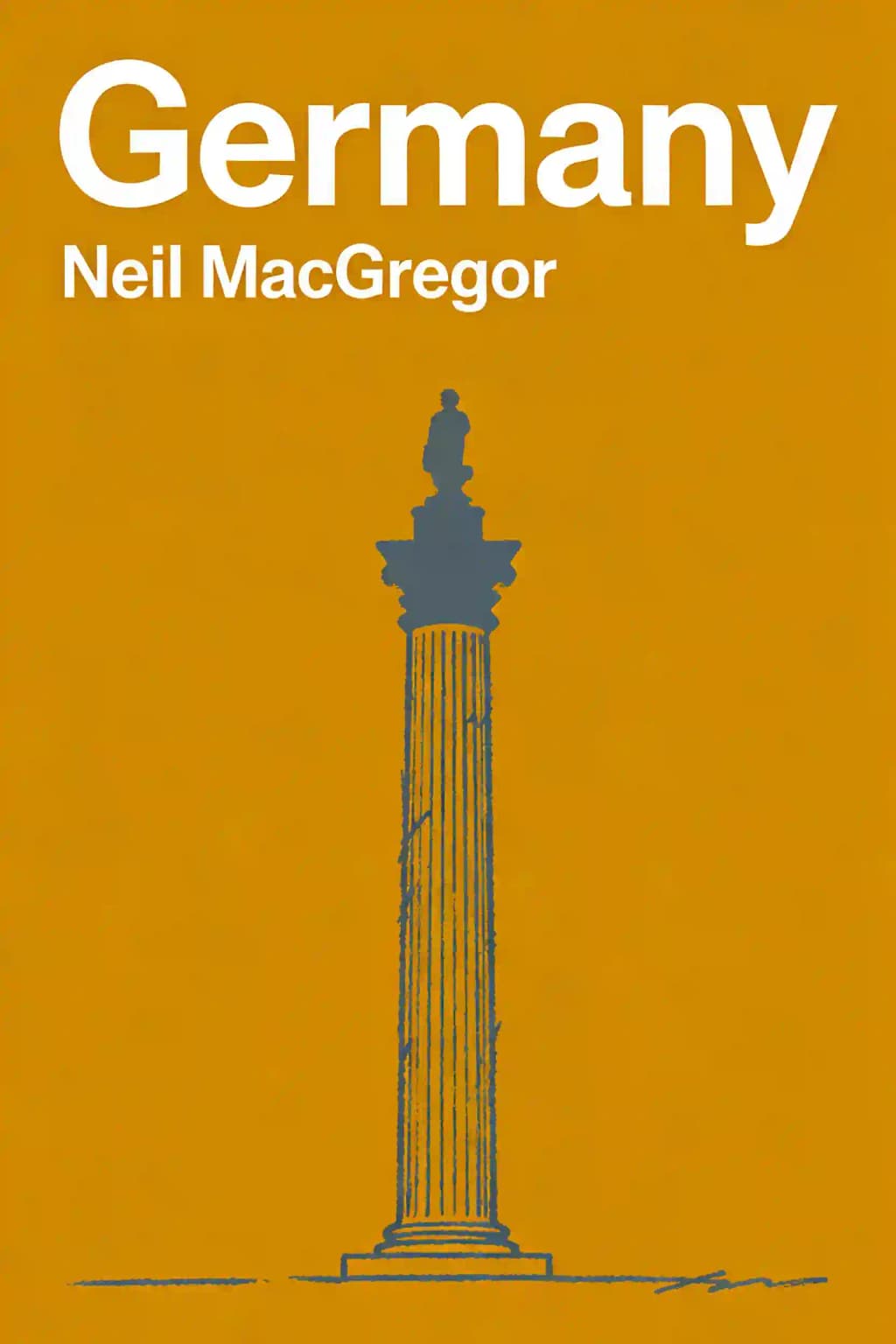
Discover Germany's soul through artifacts, not chronology. Neil MacGregor's acclaimed cultural exploration - praised by The Guardian as "immensely intelligent" - reveals why German memorials honor shame rather than victory, offering a fragmented yet fascinating journey through Europe's most complex nation.
通过作者的声音感受这本书
将知识转化为引人入胜、富含实例的见解
快速捕捉核心观点,高效学习
以有趣互动的方式享受这本书
When Angela Merkel stood before cheering crowds at the Brandenburg Gate during the 2014 World Cup celebrations, she embodied a remarkable transformation. The nation once considered Europe's greatest threat had become its stabilizing anchor. Unlike countries that build triumphant historical narratives, Germany has embraced what historians call Vergangenheitsbewaltigung - the ongoing process of coming to terms with the past. This approach is visible everywhere in German public spaces. Consider Munich's Siegestor (Victory Gate). Its north side glorifies Bavarian military valor with classical reliefs of charging cavalry, but its bomb-damaged south side, deliberately left unrestored after World War II, bears the sobering inscription: "Dedicated to victory, destroyed by war, urging peace." What other nation would maintain such architectural honesty? Four profound traumas have shaped German consciousness: the devastating Thirty Years' War that killed nearly a third of the population; Napoleon's humiliating occupation; the Third Reich's unprecedented crimes; and Germany's post-war division. Rather than minimizing these painful chapters, Germany has built monuments to remember them - from the Memorial to the Murdered Jews of Europe near the Brandenburg Gate to countless Stolpersteine (stumbling stones) embedded in sidewalks commemorating victims of Nazi persecution. The Brandenburg Gate itself tells this story of transformation. Originally built in the 1780s as a neo-classical monument to peace, it was later modified with military symbols after Napoleon's defeat. During the Cold War, it became the ultimate boundary between East and West Berlin. Today, it serves as Germany's communal gathering place - a physical reminder of the nation's commitment to remember rather than erase difficult chapters of its past.
将《Germany》的核心观点拆解为易于理解的要点,了解创新团队如何创造、协作和成长。
将《Germany》提炼为快速记忆要点,突出坦诚、团队合作和创造力的关键原则。

通过生动的故事体验《Germany》,将创新经验转化为令人难忘且可应用的精彩时刻。
随心提问,选择声音,共同创造真正与你产生共鸣的见解。

"Instead of endless scrolling, I just hit play on BeFreed. It saves me so much time."
"I never knew where to start with nonfiction—BeFreed’s book lists turned into podcasts gave me a clear path."
"Perfect balance between learning and entertainment. Finished ‘Thinking, Fast and Slow’ on my commute this week."
"Crazy how much I learned while walking the dog. BeFreed = small habits → big gains."
"Reading used to feel like a chore. Now it’s just part of my lifestyle."
"Feels effortless compared to reading. I’ve finished 6 books this month already."
"BeFreed turned my guilty doomscrolling into something that feels productive and inspiring."
"BeFreed turned my commute into learning time. 20-min podcasts are perfect for finishing books I never had time for."
"BeFreed replaced my podcast queue. Imagine Spotify for books — that’s it. 🙌"
"It is great for me to learn something from the book without reading it."
"The themed book list podcasts help me connect ideas across authors—like a guided audio journey."
"Makes me feel smarter every time before going to work"

免费获取《Germany》摘要的 PDF 或 EPUB 版本。可打印或随时离线阅读。