第 1 章
Rewiring Your Brain: The Revolutionary Approach to Language Learning
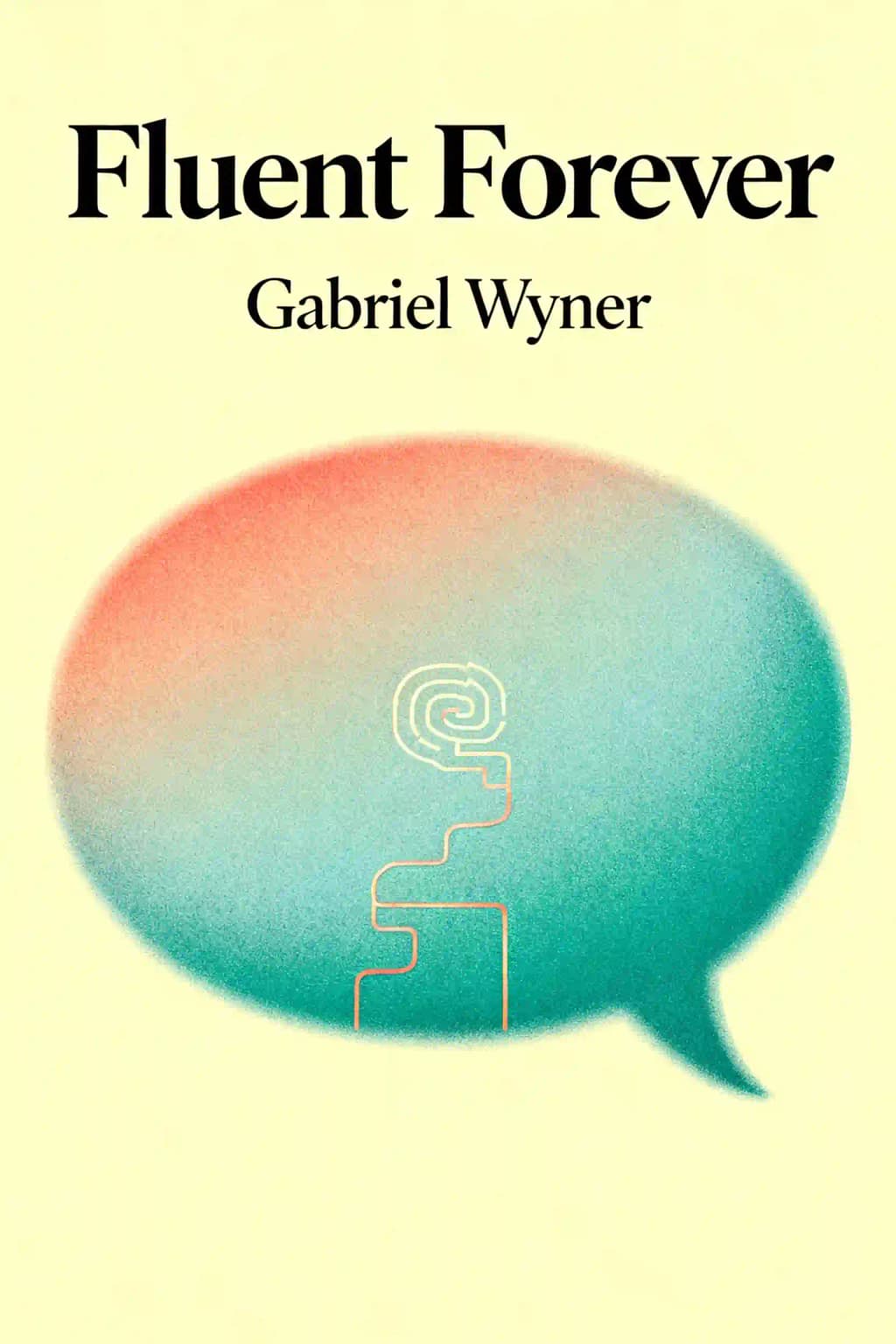
Gabriel Wyner's "Fluent Forever" has transformed the language learning landscape since its 2014 publication. The book has sold over 500,000 copies worldwide and consistently ranks among Amazon's top language learning resources. Celebrities like Mark Zuckerberg have praised its methods, with Zuckerberg famously using Wyner's techniques to learn Mandarin. The book emerged from Wyner's remarkable journey from opera singer to polyglot, where he developed a system that helped him achieve fluency in multiple languages in record time. What makes this approach revolutionary is how it leverages cognitive science to work with your brain's natural learning mechanisms rather than fighting against them. In a world where traditional language learning methods leave 95% of students frustrated and unsuccessful, Wyner's techniques offer a refreshing alternative that actually delivers on the promise of fluency.
第 2 章
The Language Learning Revolution: Turning Failure into Fluency
Language learning is often approached all wrong. Traditional methods focus on endless grammar drills and vocabulary lists that don't stick in memory, while classroom instruction emphasizes theoretical knowledge over practical communication skills. The problem isn't that languages are inherently difficult-any child can learn their native tongue-but that our learning methods are inefficient and counterintuitive. As an opera singer needing to master multiple languages quickly, Gabriel Wyner discovered this firsthand through both successes and failures, ultimately developing insights that would transform his approach to language acquisition.
His early language attempts reflected the common frustrations many learners face: seven years of Hebrew school left him with little beyond alphabet recognition and basic prayers, while five years of high school Russian yielded only a handful of phrases like "hello" and "thank you." These experiences exemplified the traditional classroom approach's limitations - focusing on rules and vocabulary without creating genuine communication ability. The turning point came in 2004 when he attended a German immersion program in Vermont, arriving without knowing a single word beyond "Hallo." Within five weeks, he experienced a transformation that not only gave him functional German skills but convinced him to pursue opera professionally, as he realized the possibility of rapid language acquisition.
The real breakthrough happened later at Middlebury College when Wyner accidentally placed into an intermediate French class despite being a beginner. Faced with learning a year's worth of French in just three months, he discovered three fundamental principles that revolutionized his approach: learn pronunciation first (applying techniques from his music training, including detailed attention to sound patterns and muscle memory), avoid translation (the Middlebury philosophy of thinking directly in the target language), and use spaced repetition systems-computerized flashcards that optimize memorization timing based on cognitive science research about how memory works.
By creating flashcards without English translations, mastering pronunciation rules through phonetic training, and connecting words directly to images and concepts rather than translations, he learned 3,000 French words in just an hour a day during his subway commutes. His method involved creating memorable associations and using mnemonic techniques to cement vocabulary in long-term memory. When his Middlebury interview arrived, he could actually think in French and was placed in the advanced class, where he read ten books, wrote seventy pages of essays, and expanded his vocabulary to 4,500 words. By summer's end, he was fluent enough to discuss complex topics and understand native speakers with ease.
This success led him to develop a systematic approach that works for anyone willing to use it-a method that transforms consistent daily practice into continuous improvement. The key insight is that language learning isn't about intelligence or natural talent but about finding the right path that works with your brain's natural learning mechanisms rather than against them. This approach emphasizes immediate immersion in proper pronunciation, creates strong neural connections through direct association rather than translation, and uses scientifically-proven memory techniques to ensure long-term retention. The method demonstrates that with the right tools and approach, anyone can achieve fluency in a foreign language efficiently and effectively.
第 3 章
Memory Magic: The Science of Never Forgetting
The biggest obstacle to language learning isn't complexity-it's forgetting. Our brains naturally discard information they don't consider important, which is why we forget vocabulary lists almost immediately after memorizing them. Hermann Ebbinghaus's famous "forgetting curve" shows we typically lose 70% of what we learn within 24 hours.
Traditional approaches try to combat this through brute-force repetition and cramming, but these methods are both inefficient and ineffective. Instead, Wyner introduces five principles that work with your brain's natural mechanisms rather than against them:
First, make memories more memorable by engaging multiple levels of processing. Our brains form memories through neural connections following Hebb's Law: "neurons that fire together wire together." Rich, multi-sensory experiences create robust memory networks. When learning the French word "chien" (dog), don't just memorize a translation-connect it to images of dogs, the sound of barking, personal memories of dogs you've known, and perhaps even the smell of wet fur. Research shows that processing information at deeper levels-structure (spelling), sound (pronunciation), concept (meaning), and personal connection-creates increasingly stronger memories. College students remembered six times more words processed at deeper levels than shallow ones.
Second, maximize laziness by studying efficiently. Rather than drilling a word fifty times, study until you can recall it once without looking, then stop. This approach works better because cramming only helps short-term recall but fails for long-term retention.
Third, don't review-recall. Testing yourself is 35% more effective than re-reading material. When you practice recalling information rather than passively reviewing it, you trigger a chemical dance between the hippocampus (which creates memory maps) and the amygdala (which determines what's worth remembering). Each successful recall releases dopamine, strengthening neural connections. The blank page creates what Wyner calls a "drug-fueled memory party" that boring word lists can't match.
Fourth, embrace the struggle. The most effective recall happens when words are just at the tip of your tongue. Surprisingly, you're most likely to remember words that required effort to recall, as your brain treats these challenging searches as important. Words that danced on the tip of your tongue before recall are twice as likely to be remembered later. The sweet spot is testing yourself right before forgetting-this makes remembering stimulating rather than tedious.
Fifth, rewrite the past. Every time we remember something, we don't just access memories-we rewrite them, adding new connections from our present state. This rewriting process is the engine behind long-term memorization. When we forget a memory, immediate feedback rescues us by either creating a new memory or reactivating our original one.
These principles come together in spaced repetition systems (SRS), which schedule reviews at increasing intervals: first after a few days, then a week, then a month, and so on. This approach keeps memories challenging enough to drive facts into long-term storage while focusing on your weakest memories. With just 30 minutes daily, you can learn 3,600 flash cards in four months with 90-95% accuracy-a level of efficiency impossible with traditional methods.
第 4 章
The Sound Foundation: Why Pronunciation Comes First
Most language courses begin with grammar and vocabulary, leaving pronunciation as an afterthought. This is exactly backward. When you're unsure about how your language sounds, you're essentially learning two separate languages-one written and one spoken-that can't communicate with each other. This disconnect creates a fundamental barrier to fluency that becomes harder to correct over time.
This creates what Wyner calls "broken words"-words you think are pronounced one way but are actually pronounced differently. Even advanced learners fall into this trap, like the French student who referred to the philosopher "Dess-CART-eez" instead of "Dekart" (Descartes) during a discussion, revealing how these pronunciation disconnects can persist for years. Similar examples abound: English speakers saying "HAB-las" instead of "ah-BLAS" in Spanish, or mangling "Leicester" as "Lie-ces-ter" instead of "Lester" in British English.
The solution is to start with sounds, not words or grammar. Our brains naturally filter out unfamiliar sounds-Japanese adults literally cannot hear the difference between "rock" and "lock" because this distinction doesn't exist in their language. Similarly, English speakers struggle with the Spanish rolled 'r' or the French nasal vowels. Babies initially can hear all 800 phonemes (distinct sounds) in the world's languages but learn to categorize sounds based on their environment, eventually losing the ability to distinguish sounds that aren't important in their native language by around age one.
Remarkably, we can rewire our adult brains to hear these distinctions again through minimal pair testing-comparing words that differ by just one sound with immediate feedback. For instance, practicing Japanese "" (tsu) versus "" (su), or Spanish "pero" versus "perro". Research shows this approach reconfigures our auditory cortex in just a few short sessions, typically 15-20 minutes daily for 1-2 weeks. This ear training provides two superpowers: recognizing sound patterns and noticing exceptions, making vocabulary easier to memorize and dramatically improving listening comprehension from the start.
Beyond hearing sounds, we must learn to produce them accurately. An accurate accent is the ultimate gesture of empathy-it shows you've bent not just your mind but your body to match someone's culture. Even mastering a single phrase with perfect pronunciation creates a powerful connection. Actors and singers perfect accents by understanding mouth mechanics-knowing exactly what their tongues, lips, and vocal cords are doing. For difficult words, Wyner recommends back-chaining: starting with the end of the word and adding one letter at a time working backward. For example, to learn "entrepreneur," start with "neur," then "preneur," "trepreneur," and finally the complete word.
Learning a language's sound system isn't tedious work but can be deeply satisfying and even fun. Resources like Forvo.com offer free recordings of millions of words by native speakers, while the International Phonetic Alphabet provides a universal system for representing sounds across all languages. Modern tools like pronunciation apps with voice recognition technology can provide instant feedback on your pronunciation accuracy. Language exchange partners can also help identify subtle pronunciation errors that textbooks might miss. By investing time upfront in pronunciation-typically 2-3 weeks of focused practice-you'll avoid the frustration of broken words and develop the confidence to actually speak your new language in real-world situations.
第 5 章
Beyond Translation: Building Your First Vocabulary
Words are far more complex than simple labels for objects. Each word contains a symphony of connected neural patterns-grammar, sounds, spellings, meanings, and associated words that automatically fit together. This symphony enables fluent speech without conscious translation. When we translate a word like "dog" to Russian "sobaka," we strip away this rich network of associations, losing cultural context and grammatical instincts.
To truly learn vocabulary, we need to hear this "music" in our words and remember it. This requires overcoming our mental filters by creating memorable, interesting experiences with each word. Two games help accomplish this: The Spot the Differences Game uses Google Images searches in your target language to discover how words are actually used; and The Memory Game creates personal connections to new words by linking them to your own experiences.
Not all words deserve equal attention when learning a language. English contains at least 250,000 words, but knowing just the top 100 most frequent words would allow you to recognize half of everything you read. With 1,000 words, you'll recognize 75% of what you read; with 2,000 words, 80%. The most practical approach is to start with common, easily visualized words like "dog" and "mother" rather than rare words like "niece" or "apricot."
Grammar doesn't always make sense because it's a mirror to ourselves and a living history of our desire to categorize the world. Languages from Germanic, Romantic, Slavic, Semitic, and Indian families require learning arbitrary grammatical genders immediately, as you need to know a word's gender before you can use it in sentences. While grammar books often say you "just have to memorize it," there are easier ways through mnemonic imagery.
For example, to memorize grammatical gender in German (where turnips are feminine, cheese is masculine, and maidens are neuter), create vivid mental images: imagine feminine nouns catching fire (flaming cats and burning noses), masculine nouns exploding (trees and dogs bursting into splinters), and neuter items shattering like glass (horses and hearts breaking into shards). The more vivid, sexual, or funny your images, the more memorable they become.
When creating flash cards, incorporate these mnemonic images for challenging words. After learning a few hundred words, gender will cease being a problem. This method can be adapted for other grammatical irregularities like verb conjugations, prepositions, and irregular plurals.
By learning your first 625 words through images rather than translations, you're building a foundation that goes beyond mere vocabulary-you're learning to connect sounds and spellings to meaningful concepts. Instead of translating gato into cat, you're associating the word with images, feelings, and sounds of cats from your memories. You're beginning to think in your new language.
第 6 章
Grammar Without Pain: Sentences as Building Blocks
You're about to reawaken the instincts that taught you grammar as a child. While you can communicate basic ideas without grammar ("You hamburger give! I hamburger eat!"), mastering sentence structure allows you to tell complex stories.
There are two types of grammar we encounter: the spoken grammar acquired naturally as children and the written grammar learned in school. The latter often frustrates us with academic rules like avoiding prepositions at sentence ends-rules that are relatively recent imports from Latin, popularized by London publishers through style manuals. Written language is essentially our first foreign language-a dialect of our native tongue that we learn with varying degrees of success.
Children learn language not from just any input, but specifically from "comprehensible input"-language they can understand. A toddler grasps "Do you want a cookie?" when you wave a cookie because physical objects and interactions serve as universal translators. Most linguists believe children possess a pattern-crunching machine in their brains that processes sentences and automatically produces perfect grammar by age six-a machine that never stops working, even in adulthood.
Despite appearances, adults retain their language-learning machines. When learning a second language, adults follow the same predictable developmental stages as children. In English, learners begin with simple sentences, then progress to -ing forms, irregular past tense, regular past tense, and finally present tense verbs in third person. This progression remains consistent regardless of teaching method or native language. Adults can't skip these stages even with explicit grammar instruction. The difference is input quantity-children receive tens of thousands of hours of language exposure compared to adults' few hundred hours. Surprisingly, when exposure time is equalized, adults actually learn languages faster than children.
Grammar's infinite complexity stems from just three simple operations: adding words, changing word forms, and rearranging word order. Every language uses these operations to transform words into stories. To learn grammar, simply find examples from your grammar book and identify any new words, word forms, or surprising word orders. Create flashcards for abstract vocabulary like "by" using example sentences that show their usage context rather than abstract definitions.
When confronting overwhelming grammar structures like declension charts, the key is finding patterns rather than memorizing each form individually. By creating your own simple stories from grammar examples, you generate comprehensible input that feeds your language machine. Even when making mistakes (which will be corrected later), these personalized stories help you internalize complex patterns.
After learning grammatical patterns through flash cards and mnemonics, the final tool is output-specifically writing in your target language. Writing about your interests immediately reveals precisely which vocabulary and grammatical structures you're missing. It's the ultimate personalized language class, training you to actively use the patterns you've memorized. You'll need corrections from native speakers, which you can get through exchange communities like Lang-8.com or through affordable tutors on sites like italki.com. Every correction should become a flash card, ensuring you never forget it again.
第 7 章
The Final Frontier: Reading, Listening, and Speaking
Once you've mastered sounds, words, and basic grammar, your language unfolds before you with multiple paths to explore. This is where your language truly becomes your own-follow your interests whether they lead to French magazines, Russian TV shows, Chinese vocabulary, or conversations with new Italian friends.
The vocabulary you need depends entirely on your goals. Start with the top thousand words in your language to understand roughly 85% of spoken and 75% of written content. Beyond this foundation, you can either learn thousands more words for general fluency (5,500 words for 90% comprehension, 12,500 for 95%) or specialize based on your needs.
Reading is how we build massive vocabularies in our native languages (15,000-35,000 word families by age twenty), and the same principle applies to foreign languages. Our brains naturally learn words from context alone-we automatically learn an unknown word about 10% of the time we encounter it. Each novel-length book automatically increases vocabulary by 300-500 words while reinforcing grammar patterns.
For your first book, choose something familiar and pair it with an audiobook to maintain momentum and prevent getting bogged down by unknown words. This combination provides comprehensible input, teaches vocabulary, improves pronunciation, enhances listening comprehension, and develops the crucial skill of understanding despite vocabulary gaps. Choose whatever you find most enjoyable-Harry Potter translations, romance novels, or detective stories-as the key is reading as much as possible, as quickly as possible.
Learning to listen can be tricky. Real-world speech comes fast, and even familiar vocabulary can sound foreign in someone else's mouth. To understand real-world speech, watch movies and television without subtitles. These visual stories provide facial expressions and context that help you understand what you're hearing. Avoid subtitles completely-English subtitles turn foreign audio into background noise, while target language subtitles still prevent ear training. Choose TV series over films (you only need to figure out the plot once), avoid comedies (missing punchlines is frustrating), and read episode summaries on Wikipedia in your target language beforehand.
Speaking fluently in a foreign language is remarkably similar to the party game Taboo. When you don't know a specific word, you must find creative ways to express your thoughts using the vocabulary you do have. The key to developing fluency isn't knowing every word, but being able to communicate without stopping when you encounter gaps. This skill develops through a simple rule: no English allowed. When speaking with others, stay exclusively in your target language. When you inevitably reach for a missing word, seize that moment as an opportunity to improvise and develop fluency.
Finding speaking partners has never been easier. Verbling.com pairs you with native speakers for speed-dating style exchanges-five minutes in each language. Language exchange websites like LiveMocha.com function like dating sites for language learners, allowing you to find partners for regular Skype sessions. For more structured practice, italki.com connects you with professional teachers who will speak exclusively in your target language for reasonable rates.
While you can learn languages at home, travel offers irreplaceable exposure to a language's soul-its people, food and culture. Language holidays immerse you in authentic experiences that textbooks can't capture. Immersion programs like those at Middlebury College create language-learning boot camps where English is contractually forbidden. For seven to eight weeks, you live completely in your target language-studying, eating, and eventually dreaming in it.
第 8 章
The Transformative Power of Language Learning
Learning a language offers profound rewards that far exceed the initial investment of time and resources. From an economic perspective, it unlocks numerous career opportunities, with interpreter and translator jobs projected to grow 42% between 2010-2020. Bilingual employees typically earn 5-20% higher salaries even in positions where language skills aren't directly utilized. Industries like international business, diplomacy, tourism, and technology particularly value multilingual talent, with companies like Google and Amazon offering language-specific positions that command premium compensation.
Beyond career advantages, language learning physically restructures your brain architecture. Neuroimaging studies reveal that bilingual brains demonstrate increased density in areas responsible for language processing, memory, and attention. These changes manifest as enhanced cognitive abilities - improved memory retention, superior multitasking capabilities, sharper focus, heightened creativity, and more sophisticated problem-solving skills. This "bilingual effect" isn't a reflection of innate intelligence but rather a developed adaptation, similar to how physical exercise builds muscle.
The cognitive benefits emerge precisely because language learning creates productive difficulty. Your brain must constantly manage and suppress interference between multiple language systems, a process called code-switching. This mental juggling strengthens neural pathways and builds cognitive reserve, much like weight training develops physical strength. Research shows this cognitive enhancement delays the onset of dementia and Alzheimer's by approximately five years, with some studies suggesting even greater protective effects in those who use multiple languages regularly.
Perhaps most significant is how language learning enriches your cultural and emotional landscape. Each new language provides unique frameworks for understanding reality - the Japanese concept of "ikigai" or the German "wanderlust" represent ideas that don't precisely translate but open new ways of seeing the world. Language learners often report developing distinct personalities in different languages, with varying levels of expressiveness, humor, and emotional depth. These aren't just different vocabularies but entirely new paradigms of experience, complete with distinct emotional resonances and cultural insights.
The journey of language acquisition transforms both cognition and identity. Through systematic approach outlined in this book - mastering pronunciation through phonetic awareness, building vocabulary through direct concept-to-image connections rather than translations, acquiring grammar through comprehensible input, and developing integrated skills across reading, listening, and speaking - learners can achieve what many consider impossible: thinking, dreaming, and truly living in another language.
This transformation extends beyond mere communication into genuine connection. In an era of increasing global division, the ability to authentically understand and engage with other cultures through their languages becomes not just valuable but vital. Language learning builds bridges across cultural divides, fostering empathy and understanding that transcend political and social barriers. It's both a practical skill and a pathway to greater human understanding, making it perhaps the most revolutionary capability one can develop in our interconnected world.