第 1 章
The Quest for Meaning in an Imperfect World
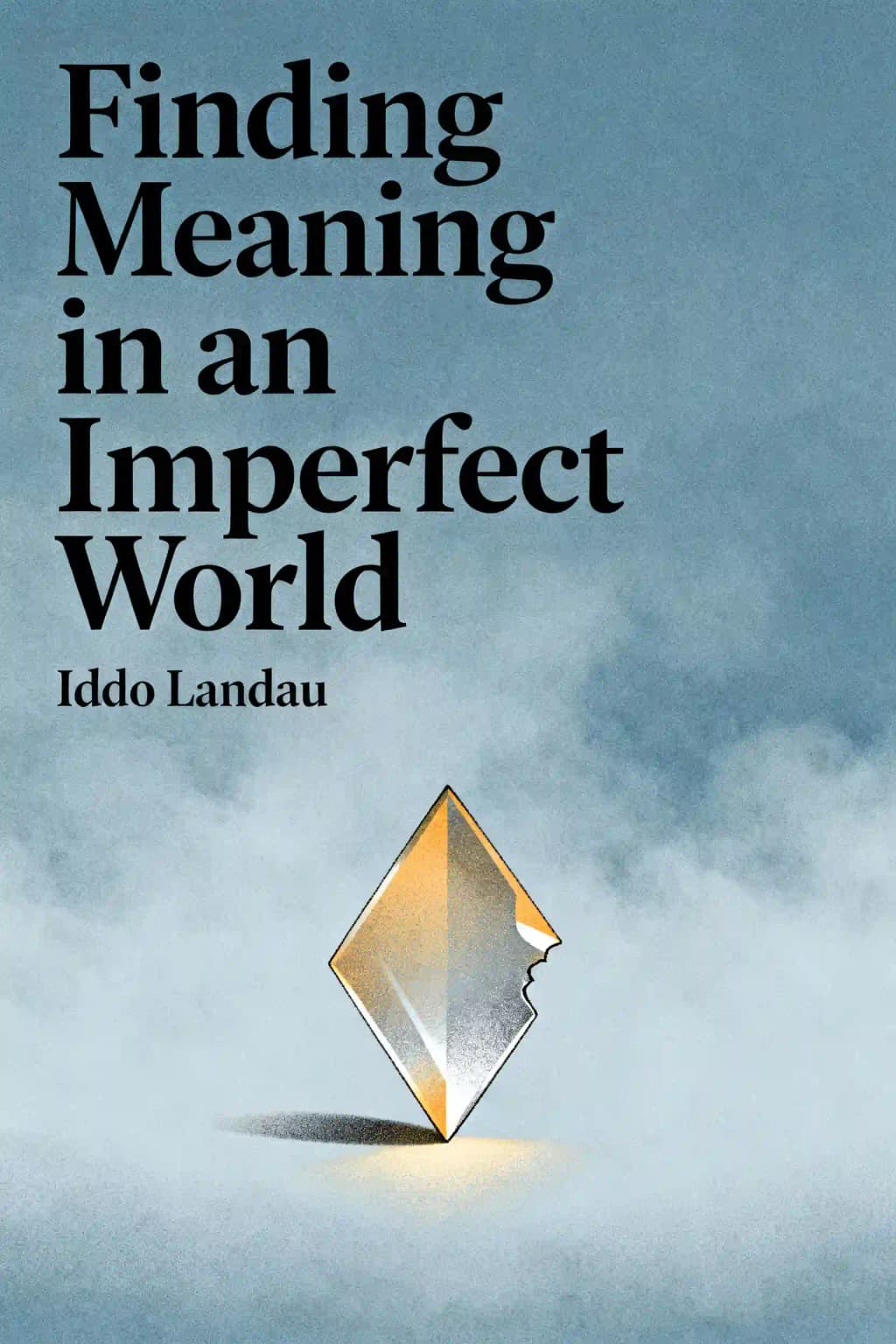
In a world obsessed with perfection, Iddo Landau's "Finding Meaning in an Imperfect World" arrives as a refreshing counterpoint to our collective anxiety about life's purpose. This philosophical work has quietly become a touchstone for those grappling with existential questions, earning praise from figures like Alain de Botton, who called it "one of the most important philosophical works of our time." What makes this book particularly striking is how it challenges our fundamental assumptions about what makes life worthwhile.
Imagine discovering that the bank account you thought was empty actually contains substantial funds. According to Landau, many of us are in precisely this position regarding life's meaning-we possess abundant sources of meaning but fail to recognize them because we're blinded by perfectionist expectations. The book's genius lies in its ability to dismantle these expectations without dismissing our genuine yearning for significance. As the pandemic forced millions to reconsider their life priorities, Landau's work has found new relevance, offering a philosophical framework that embraces life's imperfections rather than demanding their elimination.
第 2 章
Meaning as Value: A Fresh Perspective
When we talk about the "meaning of life," what exactly are we discussing? Landau clarifies that he's concerned with individual human lives rather than human existence in general or biological life. The term "meaning" has two primary senses-one relating to interpretation and understanding, the other to importance, worth, and value. Landau argues that discussions about life's meaning primarily concern the second sense: worth or value.
People who feel their lives lack meaning are essentially saying their lives lack sufficient worth. Those searching for meaning are seeking what would add more value to their lives. Even when lack of meaning relates to understanding or interpretation, it ultimately connects to value-either because understanding itself is valued, or because some understanding is necessary for attributing value.
This relationship between meaning and value yields several crucial implications. First, we cannot expect the same precision in discussions about life's meaning as we find in mathematics or physics. Second, people can be mistaken about the meaning of their lives, just as they can be wrong in evaluating specific aspects of their lives. We can't simply rely on immediate feelings-we must learn, think, evaluate arguments, and uncover implicit presuppositions.
Third, meaning in life isn't fixed but can be increased or decreased through our actions. Fourth, to make an insufficiently meaningful life more meaningful, we should identify what we find valuable and enhance it in our lives. Finally, meaning exists on a continuum-almost all lives have some degree of meaning, with few if any being absolutely meaningful or meaningless.
We can find meaning in different things at different times without invalidating earlier sources of meaning. We can also find meaning in multiple sources simultaneously. The degree of meaning naturally fluctuates, and meaning doesn't solve all life's problems. Uniqueness isn't necessary for meaning, and understanding meaning as related to worth takes it off its pedestal-it's a normal value, albeit an important one.
第 3 章
The Tyranny of Perfectionism
Of all the presuppositions that lead people to believe their lives are meaningless, perfectionism is likely the most common and damaging. This view holds that meaningful lives must include perfection, excellence, or rare and difficult achievements that transcend the mundane.
Many philosophers endorse this view, from Nietzsche's concept of the Overman to Camus's suggestion that life is absurd without perfect knowledge. Ordinary people who feel their lives are meaningless often hold this view too, believing they fall short because they aren't absolutely authentic, truthful, or comparable to historical figures like Churchill or Einstein.
Perfectionists draw the line between meaningfulness and meaninglessness extremely close to absolute meaning, rejecting anything less as worthless. They're like students who consider a 98% grade a failure, believing if one isn't Einstein they're a fool, or if they can't write like Shakespeare, they shouldn't write at all. Perfectionists become blind to the beauty and value that exists in imperfection, finding satisfaction in nothing.
Several considerations count against perfectionist views. First, most people reject perfectionism in other spheres of life-we don't consider cities worthless if they aren't the most beautiful, or ourselves ignorant if we don't know everything. Second, many perfectionists apply double standards, judging their own lives more harshly than others'.
Perfectionist demands are implausibly high. Plato criticizes those with exaggerated expectations of friends, noting how they become misanthropes when disappointed. Similarly, people direct these impossible standards inward, hating themselves for failing to meet them. We don't criticize dogs for not driving cars, yet many criticize themselves for not being godlike or exceptional geniuses.
Paradoxically, perfectionist attitudes often stem from conceited or narcissistic impulses. Rejecting oneself for not being Einstein can arise from great conceit-adopting impossible standards while implicitly viewing others as inferior for accepting "lesser" standards. What appears as self-loathing often masks a narcissistic urge to adore oneself as superior.
Perfectionism often blinds people to noncompetitive value. While competitive value depends on rareness and difficulty (like gold), noncompetitive value can exist in common, easily attainable experiences. The most valuable aspects of life-appreciating music and beauty, enjoying oneself, maintaining good relationships-are often quite accessible.
第 4 章
Embracing the Ordinary: Nonperfectionist Wisdom
The nonperfectionist position on meaning-that meaningful lives can exist in the nonperfect sphere-isn't new. It parallels critiques of perfectionism in other fields, like Ben Ze'ev and Goussinsky's critique of perfectionist romantic ideology that demands impossible ideals of perfect love, causing people to miss the value in normal relationships with ups and downs.
Nonperfectionism resembles fallibilism in epistemology, which rejects the quest for absolute certainty in knowledge. Just as fallibilists argue that views sufficiently tested should be considered knowledge despite not being absolutely certain, nonperfectionists maintain that lives with a fair degree of meaning should be considered meaningful despite not being perfect.
Nonperfectionism isn't symmetrically opposite to perfectionism-it's inclusive rather than exclusive. While perfectionism considers only perfect lives meaningful, nonperfectionism accepts both perfect and some nonperfect lives as meaningful. Voltaire's saying "the best is the enemy of the good" captures how setting one's mind on achieving only the best can lead to despair when that best proves unattainable.
Nonperfectionism has deep cultural and religious roots. Many religious practices encourage appreciation of ordinary blessings-Christians thanking God for daily meals and health, Jews expressing gratitude for simply waking up alive. The concept of supererogation in Catholicism distinguishes between required duties and optional higher standards, affirming that ordinary religious lives are sufficient for salvation.
Literature frequently embodies nonperfectionist wisdom. Poetry often detrivializes the ordinary by paying close attention to common experiences, revealing their hidden beauty and meaning. In Bergman's The Seventh Seal, the knight Block finds solace in the simple family life of Jof and Mia with their fresh milk and wild strawberries. This nonperfectionist streak recognizes that a decent person who enjoys ordinary pleasures "has already made it"-such a life has passed the threshold of meaningfulness.
第 5 章
Mortality and Meaning: Beyond the Fear of Death
Why should our eventual annihilation render life meaningless? Some argue that annihilation nullifies everything, making all our achievements ultimately worthless. Like Sisyphus pushing a rock uphill only to watch it roll down again, our efforts seem pointless when they eventually vanish.
Death also appears to equalize lives of high and low value, suggesting what we do doesn't matter since we all end up the same. Tolstoy illustrates this with his parable of a traveler hanging from a twig in a well, threatened by a dragon below while mice gnaw at the branch-death is inevitable despite the few drops of honey (life's pleasures) we might taste.
One might argue that we don't completely disappear after death-people remember us, our creations remain, and our genes continue in our offspring. However, these claims are problematic. Though we sincerely vow to remember deceased loved ones, memories fade with time. Eventually, astrophysical events will destroy everything, including institutions and genetic legacies. Everything that makes us who we are will vanish.
When presented with a thought experiment about taking a pill for immortality-even under ideal conditions of perpetual health, agreeable society, and protection from calamities-most people decline. Many don't want to die, but they also don't want to live forever, creating a paradox where we neither want to die nor want to live eternally.
Death and annihilation do diminish life's meaning, but they don't render it completely meaningless. Two important points counter the complete meaninglessness argument. First, even temporal experiences have eternal factual status-it will always be true that you had that blissful moment with family or felt exhilaration reading poetry, even when no one remembers it.
Second, even if achievements are transient, this doesn't make them worthless. A finite but meaningful life might include being decent to others, creating loving relationships, raising good children, appreciating beauty, or helping people. These experiences have great value despite being temporal rather than eternal.
The arguments claiming death renders life meaningless fail upon closer examination. While floor sweeping might seem pointless if immediately undone, we don't consider it meaningless when floors stay clean for days before needing re-sweeping. Similarly, many transient activities have worth despite not being eternal.
第 6 章
Finding Meaning in a Vast Universe
Some philosophers argue that when viewed against the cosmic backdrop, human life appears meaningless and insignificant. Simon Blackburn suggests avoiding this cosmic perspective, while Thomas Nagel believes we must uncomfortably live with both cosmic and human perspectives, knowing we don't matter in the grand scheme.
The cosmic meaninglessness argument assumes life must affect the entire universe to be meaningful-a perfectionist standard without justification. We should distinguish between perspectives (how widely we view a life) and standards for meaningfulness (what criteria we use). One can adopt a cosmic perspective while maintaining reasonable standards for meaning that don't require cosmic impact.
Some people have no desire to affect the whole cosmos, finding most of it-as dead matter-irrelevant to life's meaning. If Earth suddenly became a million times larger relative to the universe, or if nine-tenths of the cosmos vanished, most people wouldn't feel their lives had become more meaningful. The cosmic perspective doesn't diminish the meaning we find in our immediate sphere of influence.
第 7 章
Navigating Determinism and Chance
The challenge of determinism suggests our apparent free will is illusory-we're forced by unrecognized causes to will whatever we do. This view builds on our shared presupposition that everything has causes determining its precise state. This deterministic view threatens meaning by undermining our pride in free choice and blurring the distinction between humans and machines.
Several approaches can counter the argument that determinism makes life meaningless. Metaphysical libertarianism defends that our will is at least somewhat free. Alternatively, compatibilism grants that causes determine the will but argues we can still be considered free and responsible if we realize our own wills without external compulsion. Even if hard determinism is true, life can still be meaningful-while determinism eliminates some aspects of value, it doesn't eliminate all value.
Arguments for life's meaninglessness can also stem from the opposite view-that much in life is contingent or arbitrary rather than necessary. If determinism is false, chance significantly shapes our existence. However, this contingency doesn't undermine meaning-it only makes meaning contingent. Though our species exists through arbitrary mutations and chance events, a blind, mechanical process needn't produce a meaningless product.
Chance can undermine our plans and efforts in ways beyond our control. Despite precautions, illness, accidents, economic crises, or wars can upset everything we've worked for. However, chance isn't always negative-we also value spontaneity, surprises, and unplanned opportunities. Even highly arbitrary situations can contain meaning-like a terminal patient finding worth in the possibility of receiving experimental medicine.
第 8 章
Beyond Skepticism and Relativism
We can never know with absolute certainty what is of value, as our past judgments have sometimes proven wrong. This might suggest we live in complete evaluative chaos, unable to determine if anything is truly meaningful. However, this insistence on absolute certainty is perfectionist.
Relativism presents another challenge to meaning. Cultural relativism holds that judgments are true only relative to culture-specific standards, never objectively true. Individual relativism goes further, judging truth by personal standards rather than cultural ones. Applied to meaning, relativism suggests life can't be "meaningful, period" but only meaningful according to specific cultural or individual standards.
Those who believe life can be meaningful have two responses to relativism: rejecting relativism outright or arguing that even if relativism is true, it doesn't render life meaningless. Relativists can still reject certain views from their own perspective-one can find feeding the hungry meaningful while considering newspaper-ball-lining meaningless according to one's standards.
The claim that relativism excludes rationality is false. Being perspectival doesn't prevent using rational procedures within that perspective. Relativism allows for rational thinking, just not from an objective standpoint. Relativists can also reject the notion that only objective, transcendent value is "real." Value dependent on cultural or individual standards can be quite real and sufficient.
The relativism-objectivism debate has surprisingly little practical impact on meaning in life. Whether Amy values making money while Jane values feeding the hungry, both can be either objectivists or relativists. As objectivists, each believes her standards are objectively correct. As relativists, each still values some things over others according to her own standards.
第 9 章
Purpose Without Perfection
Many associate life's meaning with its goal, purpose, or end, applying the teleological paradigm commonly used to ascribe value to things. People often feel their lives lack meaning if they can't identify what they're living for.
One solution is to find meaningful ends that give value to one's life-advancing science, serving God, ending poverty. But Kurt Baier points out that a meaningful life needn't be a means to anything. Value theory distinguishes between instrumental value and intrinsic value. Some things are valuable not as instruments but as ends in themselves.
People often ask why they exist or what they were created for, but these questions may be fundamentally flawed. They presuppose we're here for a reason, which may not be true. We can have meaningful lives without there being a special reason for our existence. Our lives can include sufficient value regardless of why we came into the world.
Some consider life meaningless because they believe our only purpose is producing the next generation, creating an endless chain where each life is merely a means to another. But most people don't see biological persistence as the sole value in life. We want the species to continue because future generations can experience love, aesthetic enjoyment, and intellectual fulfillment.
第 10 章
The Paradox of Achievement
While pursuing goals gives our lives meaning, achieving those goals sometimes leaves us feeling empty. The closer we get to our goals, the more meaningful life feels, yet upon attaining them, we often experience insignificance and emptiness.
This argument for meaninglessness wrongly generalizes from some cases to all. Many achievements continue to seem valuable long after they're attained. Successfully raising children, having meaningful personal encounters, or experiencing moments of grace can shine worth onto the rest of our lives.
The paradox doesn't affect goals without terminus (like being a good spouse or teacher) or regulative ends we know we can never fully achieve (becoming more moral, deepening understanding). Additionally, some activities have worth in themselves rather than in external ends, and meaningful experiences that happen spontaneously bypass the paradox entirely.
The paradox isn't an inherent, unchangeable part of life but a variable influenced by controllable factors, particularly education. Workaholism increases the tendency to undervalue achievements-people habituated to constant work feel anxious when not working and can't enjoy attained goals.
Being aware of these patterns allows us to counter them in our own lives and through education of the next generation. The paradox isn't a necessary element of human existence, as shown by its non-universality. People without strong work ethics often don't suffer from it at all.
Even for "challengers" who are wired to constantly seek new goals, this doesn't mean their achievements lack value or their lives lack meaning. People who find meaning in achievement should continue setting worthy goals while recognizing that post-achievement restlessness doesn't invalidate those goals' value.
第 11 章
Meaning Amidst Suffering and Evil
Some people feel life is meaningless because of the abundance of pain and evil in the world. Schopenhauer famously argued that suffering predominates in life, claiming pleasure always requires first experiencing the unpleasantness of wanting something you don't have. However, not all pleasures presuppose prior suffering-many pleasures just appear unexpectedly or involve anticipation that is itself pleasurable.
Schopenhauer also argues we're more sensitive to unpleasant experiences than pleasant ones-we feel pain but not the absence of pain, remember bad events vividly while good memories fade quickly. But this ignores that many people actually beautify and romanticize their past, reframing difficult experiences positively.
Importantly, painful lives aren't always meaningless. While suffering often undermines meaningful activities and breeds negative qualities, suffering and meaninglessness remain distinct. Viktor Frankl's work shows how people maintained meaning despite concentration camp horrors. A sexual assault victim who dedicates her life to changing societal attitudes may have a painful but meaningful life.
Regarding human evil, many despair when discovering flaws in people they admire. Historical figures like Martin Luther King Jr. (adulterer), Gandhi (bad husband), Mother Teresa (supported dictators), and Krishnamurti (had an affair) all had significant moral failings. However, this conclusion stems from perfectionism that only values flawless "greats." A nonperfectionist approach finds meaning in ordinary lives and recognizes that even flawed individuals can achieve greatness in many spheres.
Some argue people are fundamentally evil based on psychological egoism-the theory that all human actions, even seemingly altruistic ones, ultimately stem from self-interest. However, even if an egoistic element exists in our actions, it doesn't mean it's the only or ultimate motivation. Other worthy drives can coexist with it.
第 12 章
Recognizing the Meaning We Already Have
Many people lead insufficiently meaningful lives because they hold wrong suppositions about meaningful lives, endorse perfectionism, or accept arguments suggesting life can never be meaningful. Others simply don't know what would make their lives meaningful, continuing to pursue whatever they've been pursuing even if it lacks sufficient worth.
Several questions can help identify what makes life meaningful: What would make your life more valuable? What elements do you already find meaningful? What should be removed to make life more meaningful? What characteristics in others lead you to consider them as having meaningful lives? What has worked for others and various traditions? What would you be happy or sorry to have done on your deathbed, and what would you do if you had only limited time left to live?
When identifying meaningfulness in our lives, we must acknowledge reality. We need to consider our temperament, natural gifts, abilities, environment, resources, and circumstances. We should opt for the most meaningful life possible for us, not the most meaningful life in absolute terms.
Because our time and capacities are limited, we cannot engage with everything we find meaningful. We must choose from among many potentially meaningful pursuits. What becomes meaningful to us is only a subset of what could be meaningful.
While different people find different pursuits meaningful, two categories often impart worth to many lives: helping others and avoiding suffering while increasing pleasure in one's own life. Many people don't work hard enough to prevent suffering or enjoy pleasures-from bodily pleasures like food and sleep to aesthetic enjoyments like films and music.
Most people need to periodically reassess what maintains or increases meaning in their lives. This is necessary because: the issues are complex and require introspection; our initial choices may prove unsatisfactory; we ourselves change over time; we come to understand ourselves better; and our circumstances change.
第 13 章
Seeing the Value That Surrounds Us
Some people who have overcome perfectionism, combated arguments against meaningful life, identified what's meaningful, and changed their lives accordingly still find their lives insufficiently meaningful because they don't feel the value in their lives. They accept things are valuable only theoretically, leaving them feeling empty.
Why do we fail to recognize value? Some people intellectually reject perfectionism but emotionally continue endorsing it without realizing it. Other factors diminish our sensitivity to value: powerful experiences like intense love, success, anger, sadness, or pain can make us inattentive to other valuable aspects of life. Some develop emotional numbness as protection against disappointment, while others become so habitually rational and detached they struggle to value things personally.
Value often reappears when endangered, changed, or destroyed. We notice health more when awaiting lab results or experiencing physical changes. This explains part of the meaning people find in philanthropic work-helping those in need highlights the value of what we already have.
We can recognize value not only in the present but also in the past. Our life's meaningfulness includes what happened before-good deeds continue to affect our lives positively even when they're in the past. Even when something meaningful is destroyed, we can remember it, be affected by it, and remain grateful for its value.
Improving our capacity to recognize allows us to become sensitive to the great value in common things. Many of us are like someone with forgotten bank accounts who believes they're poor-blind to the worth of being alive, touching leaves, walking, or sleeping without pain. By sensitizing ourselves to beauty and worth in everyday objects-the curves of a kettle, folds in a bedspread, quivering leaves-we can transform our perception.
Most people think of increasing meaning through achievement-forming relationships, creating art, or learning skills. But we can also increase meaning by recognizing the value already present in our lives. Like enhancing beauty in a home, we can either buy new things or learn to appreciate what we already have.
第 14 章
Beyond Perfectionism: A Path Forward
The most important practical guideline from this book is "Avoid perfectionism." Its corollaries include: "If it's impossible to achieve something, don't try to achieve it," "Don't blame yourself for not achieving the impossible," and "Don't ignore the good just because not everything is good."
The second guideline is "Don't discriminate against yourself"-many who see their lives as meaningless treat themselves worse than they'd treat others. This leads to the Reversed Golden Rule: "Treat yourself as you treat others" or "Don't treat yourself as you wouldn't treat others."
The third guideline is "This is not a dress rehearsal"-from a secular perspective, life isn't preparation for something else, so we shouldn't defer living meaningfully. Fourth is "Don't be cruel to yourself"-cruelty is odious toward anyone, including ourselves. Fifth is simply "Work"-few people can have meaningful lives without working.
Understanding this book intellectually isn't enough to increase meaning in life-practical work is essential. Countering entrenched assumptions about meaning, perfectionist inclinations, and negative emotional habits requires effort beyond scholarly comprehension.
Not everyone must work equally hard for a meaningful life-some fortunate few find it effortlessly-but most need conscious effort, especially in the beginning stages. Maintaining meaning should include letting things be, following intuitions, and making sensitive adjustments.
When people who've succeeded in making their lives meaningful revert to feeling life is meaningless, this doesn't prove perfectionism is correct or that our previous work was futile. Views and intuitions we've held for years are difficult to erase completely, and occasional relapses into former thought patterns are normal.
In the end, Landau offers a profoundly liberating message: meaning isn't some exotic, unattainable state reserved for the extraordinary few. It's available to all of us in the ordinary fabric of our lives-in our relationships, our small kindnesses, our appreciation of beauty, and our modest achievements. By abandoning perfectionism and recognizing the value that already surrounds us, we can find meaning even in an imperfect world.