第 1 章
From Plantation to Podium: The Extraordinary Journey of Viola Davis
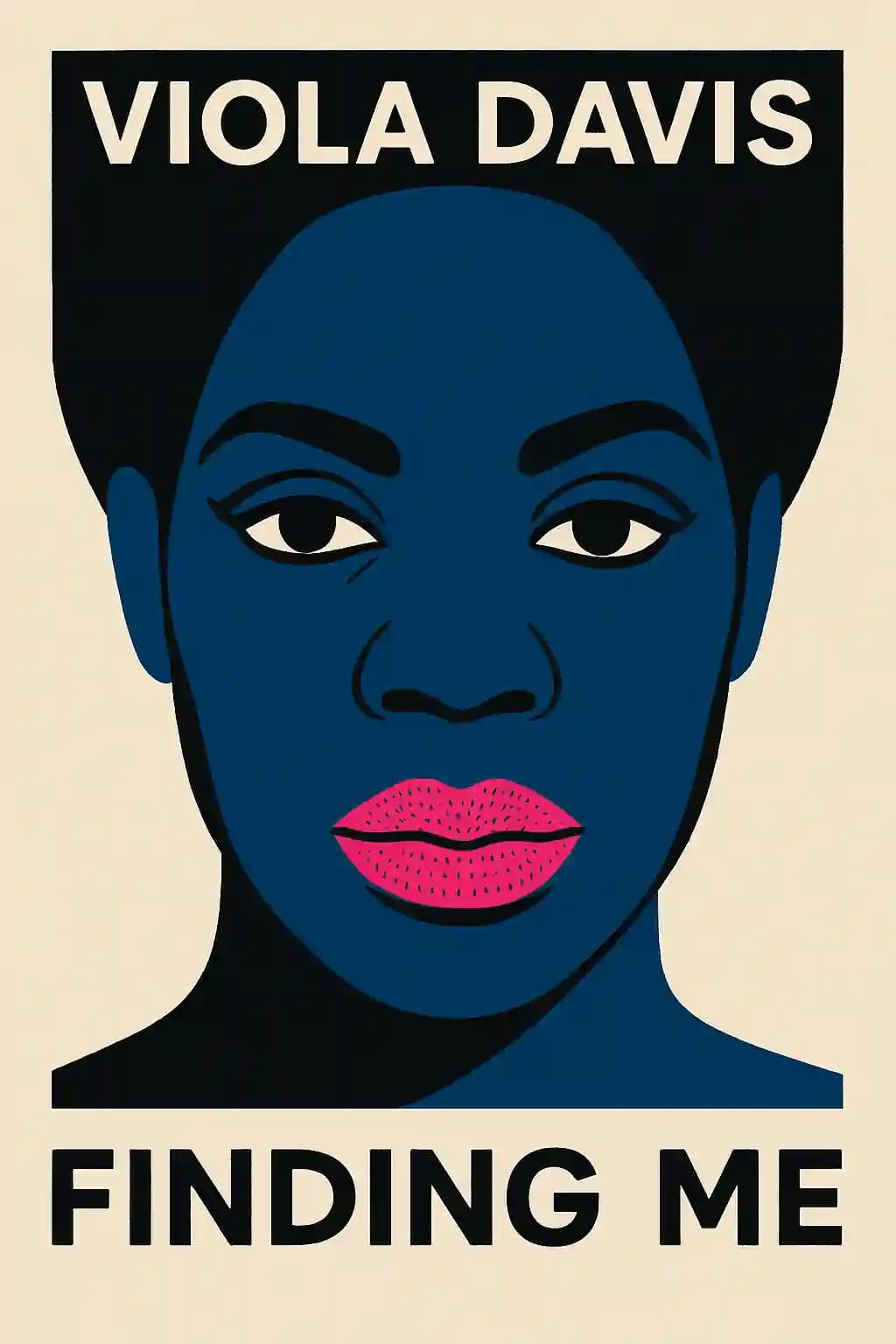
Imagine being eight years old, running barefoot through snow because your shoes have holes, while bullies chase you hurling rocks and racial slurs. This was Viola Davis's childhood reality-a far cry from the poised, powerful woman who would one day captivate audiences worldwide and become the first African American to achieve the "Triple Crown of Acting" (Emmy, Tony, and Oscar). Finding Me isn't just a celebrity memoir; it's a raw, unflinching examination of how trauma shapes us and how we can reclaim our narratives. Since its 2022 release, the book has become Oprah's Book Club selection, a #1 New York Times bestseller, and Michelle Obama's personal recommendation. Beyond accolades, it offers something more profound: permission for all of us to embrace our authentic selves, regardless of where we started. As Davis herself might ask: What if the very things you're running from are actually the keys to your liberation?
第 2 章
The Battlefield of Childhood
Born on August 11, 1965, on Singleton Plantation in St. Matthews, South Carolina, Viola Davis entered the world surrounded by family celebration despite crushing poverty. Her grandmother delivered her when the midwife was late, and her mother Mae Alice-whom Davis always called "MaMama"-declared the sardine, onion, tomato, and mustard sandwich she ate afterward "the best sandwich I ever ate." This surprising moment of joy would prove rare in a childhood defined by struggle.
When Davis was just two months old, her family moved to Central Falls, Rhode Island-a tiny, densely populated town that would later earn the nickname "cocaine capital" after a massive drug sting. The family's first apartment at 128 Washington Street became code for "Hell" among Davis and her sisters. They were beyond poor-they were "po," living in condemned buildings with unreliable utilities, rat infestations, and the constant shame of poverty.
The rats were a particularly terrifying presence. Davis developed the ability to float out of her body during traumatic moments-watching herself from the ceiling as her sister Anita wielded a red plastic bat to defend the family, once knocking a rat's tail off and another time flattening one like a pancake when it threatened their sleeping mother. These rodents, which terrify Davis to this day, would jump on their beds at night as the sisters huddled together for protection.
Violence permeated every aspect of their lives. Davis's father Dan, though a talented musician and storyteller, was haunted by demons that manifested in alcoholism and rage. Payday meant terror as he would drink and become violent toward their mother. When Davis was fourteen, she finally stood up to him during a particularly brutal assault, screaming at him to stop as her hand shook uncontrollably. That moment marked a turning point-she realized her life would be a fight, but she had the strength within her to face it.
The environment outside their home offered little respite. One summer at 128, the children encountered a Vietnam veteran experiencing severe PTSD who killed their stray cat, drank its blood, and then hunted Davis's sister Anita through the city for hours. Even the strongest among them carried deep wounds from such traumas.
Despite these horrors, the Davis children found ways to create moments of normalcy and even joy. They transformed their reality through imagination-Davis and her sister Deloris becoming "Jaja" and "Jagi," rich Beverly Hills matrons with diamonds and Chihuahuas. They started a pretend band called the Hot Shots, trying to be the Jackson 5 despite having no instruments. These flights of fancy provided temporary escape from the screams and violence that formed the soundtrack of their lives.
第 3 章
The Invisible Child
School represented both salvation and another battlefield for young Viola. While she and her sisters excelled academically, poverty's effects followed them relentlessly. Davis was perpetually exhausted, falling asleep by 8:30 AM after nights disrupted by her parents' violent fights. She wet the bed until age fourteen and often went to school smelling of urine. With no hot water, they washed clothes by hand and wore them still damp.
The shame of poverty was crushing. When her beloved teacher recoiled from her, whispering that she needed soap and water, Davis was devastated. Despite following every instruction from the school nurse-washing her underwear and clothes, scrubbing herself thoroughly-no one acknowledged her efforts to return to school clean. The invisibility of being both Black and poor was a double burden she carried daily.
Hunger was another constant companion. School lunch represented their only reliable meal. When food stamps ran out, they resorted to mooching off friends and dumpster diving. Davis shoplifted food until age nine when she was caught and shamed into stopping. At school, classmates refused to drink from the water fountain after her, calling her "dirty" and using racial slurs.
Sexual abuse was pervasive but unnamed in their childhood-abusers were simply called "dirty old men." The lack of supervision made the children vulnerable to predators. At a birthday party, a drunk man exposed himself to Davis and touched her while other children watched, leaving her feeling ashamed of her own violation. Years later, Davis would confront her aging mother about how she and her sisters were sexually abused, including by her brother. The revelation was met with heavy silence-the silence of shock, hurt, guilt, and her mother's recognition of her own abuse.
Despite these overwhelming challenges, one transformative moment occurred when Davis was eight years old. Watching Cicely Tyson in "The Autobiography of Miss Jane Pittman" on their barely functioning television, she experienced an epiphany. Seeing a beautiful, dark-skinned woman with high cheekbones, full lips, and a clean short Afro transform from 18 to 110 years old seemed supernatural. "It was like a hand reached for mine, showing me a way out," Davis recalls. In that moment, she found her calling-she wanted her life to mean something.
Shortly after, Davis and her sisters entered a skit contest at Jenks Park. With a $2.50 wardrobe budget and intense rehearsals, they prepared "The Life Saver Show" based on Monty Hall's "Let's Make a Deal." Despite being underdogs against the favored white kids from a dance school, they won first place. The victory gave them temporary asylum from their fears-they just wanted to be SOMEBODY.
第 4 章
The Escape Through Art
The discovery of acting became Davis's lifeline-a perfect alchemy for healing, acceptance, and worthiness. At fourteen, she met Ron Stetson, her acting coach in the federally funded Upward Bound program, which allowed her to live on a college campus for six weeks each summer. Ron transformed her life with two profound gifts: testing her commitment by warning about rejection and hardship (Davis was the only one who kept her hand raised), and telling her she was beautiful-challenging her belief that no one thought dark-skinned girls were pretty.
Upward Bound provided a melting pot of races united by poverty and the desire to be first-generation college students. Drama class offered perfect emotional release-every receptor in Davis's body felt alive and free. Acting allowed her to be 100% herself without hiding anything. The troubled students were always placed in drama because everyone could share their trauma with empathy and support.
This passion carried her through high school and to Rhode Island College on a full scholarship through the Preparatory Enrollment Program. Though initially planning to become a teacher, she couldn't deny her artistic dreams. Throughout college, she struggled with not fitting in-too "Black" for white students but lacking the "Black Card" for acceptance among Black students from Providence.
Food insecurity continued to haunt her on weekends when the cafeteria closed. She juggled four jobs her senior year-library, college front desk, Brooks Drugs in Central Falls, and another campus position-taking multiple buses in freezing weather just to afford weekend meals. Despite these hardships, she found her purpose in theater, performing in productions like Hot L Baltimore and Romeo and Juliet, creating a seventeen-character one-woman show, and being nominated for an Irene Ryan Award.
After graduating in 1988, Davis thrived at Circle in the Square Theatre's summer program in New York. Living in Gramercy Park with two college friends, she embraced the city's vibrant energy while working side jobs passing out flyers in Times Square. Under Alan Langdon's exceptional teaching, she experienced transformative acting training alongside future stars like Philip Seymour Hoffman and Felicity Huffman.
Her audition for Juilliard revealed both her naivety and extraordinary talent. She traveled to NYC by train, planning to return the same day for her evening performance at Trinity Repertory Company. Having no idea Juilliard auditions typically took place over three days, she allocated just forty-five minutes for the actual audition. Despite this unorthodox approach, she boldly told the shocked faculty she needed an immediate decision. They fast-tracked her, gathering all department teachers to watch her perform again, and accepted her on the spot, recognizing her "emotional wealth" as an actor.
第 5 章
The Crucible of Training
At "the Jailyard," as students called Juilliard, Davis faced new challenges. The training was deliberately difficult-focusing not on strengths but on weaknesses, forcing students to play roles completely contrary to their natural type. Classes ran from early morning until late evening, covering speech, voice, Alexander technique, movement, and scene study.
The Juilliard approach was overwhelmingly Eurocentric-white guest actors, white playwrights, white projects, all geared toward molding students into "perfect white actors." As a dark-skinned Black woman with a deep voice, Davis struggled with this approach, knowing that in the real world, she would be cast based on who she actually was. Among 856 total students across drama, music and dance, only thirty were Black. They formed the Black Caucus and created an annual Martin Luther King celebration despite being warned against performing anything other than European classics.
A transformative experience came in Davis's second year when she won a scholarship to join Chuck Davis's summer program in The Gambia, West Africa. The experience changed her completely. They stayed at the Bungalow Beach Hotel in sweltering humidity, starting each day at 5 a.m. with beach gatherings before visiting tribal compounds. The Mandinka tribe welcomed them with incredible hospitality.
Africa awakened her senses-the vibrant colors, handmade fabrics, complex drumming, and community rituals like baby-naming ceremonies where women turned calabashes into drums. This was true artistry born from ritual and necessity, unlike Juilliard's disconnected academic approach. When Davis performed Topsy from "The Colored Museum" for the locals, they roared with appreciation despite not understanding English. She realized she'd been trying to erase her Blackness at Juilliard, but Africa taught her that creating requires using your authentic self.
Two weeks before graduation, Davis discovered she was pregnant by her boyfriend of seven years. This revelation terrified her beyond measure-it felt like all her irresponsible decisions had culminated in this moment. She visited a clinic near Juilliard and had an abortion, an experience that left her with excruciating pain and profound depression. Her boyfriend, who thought what she did was wrong, briefly came to New York but then left. The blood clots were constant reminders that she had terminated a life-which she had traded for her own.
第 6 章
The Struggle for Survival
After Juilliard, Davis faced the harsh reality of being a poor adult with a prestigious education but no steady work. At twenty-eight, she struggled to balance survival and artistic fulfillment, living on $1.20 quarts of rice and $3 chicken wings when she could afford them, sleeping on a futon in a shared room. Her first job was understudying Danitra Vance, the first Black woman on Saturday Night Live, who was performing while undergoing chemotherapy for breast cancer. Davis made $250 a week and never went on stage during the entire run.
Auditions slowly trickled in-mostly for drug-addicted mothers. The financial reality of acting proved far from glamorous. Theater work depended entirely on ticket sales-when they stopped, actors collected unemployment. From weekly pay, agents took 10%, taxes took their share, and theater housing and travel were basic economy at best. Even earning a million dollars in film meant deducting taxes, 10% for agents, potentially another 10% for managers, 2-5% for lawyers, and thousands monthly for publicists.
Breaking into TV and film seemed impossible until an audition for Steven Soderbergh's Out of Sight. Exhausted by endless rejections, Davis flatly delivered lines for a character named Moselle, Don Cheadle's girlfriend. Three weeks later, shockingly, she got the part. Soderbergh later told her it was "the combination of your stillness and that big hair." This led to booking The Pentagon Wars for HBO, shooting simultaneously in LA. Once she booked one screen role, it created a domino effect-suddenly the same people who wouldn't cast her before were asking, "Where have you been?"
Her health suffered during this period. Severe fibroids made her look six months pregnant, and her anemia was so bad she'd fall asleep standing in the subway. When she finally had nine enormous fibroids removed, her mother refused to leave her hospital room when doctors wanted to examine her alone, remembering when doctors had wanted to "experiment" on Davis when she was just two years old.
第 7 章
The Answer to a Prayer
During a production of A Raisin in the Sun, Davis's castmate Joseph Edward asked why someone as smart and nice as she didn't have anyone in her life. His question pierced her soul. When he suggested she pray specifically for what she wanted, she was skeptical but followed his advice. That night, she knelt beside her bed and detailed her desires: a big Black man who was an ex-athlete (preferably football), southern and country, who already had children so there'd be no pressure about having kids, who trusted in God and was emotionally available.
Three weeks after moving to LA for a role in City of Angels, she met Julius Tennon on set. After noticing she was alone in LA, he offered to show her around and gave her his card. When she finally called him six weeks later, everything changed. Julius was everything she'd prayed for: an ex-football player from Texas with a country manner who had two children and invited her to church. Unlike previous men she'd dated, he genuinely listened and immediately welcomed her into his life.
For their first date, Julius accompanied Davis to a City of Angels photo op and then to meet Phylicia Rashad. After their evening, he simply shook her hand and called her beautiful. What followed revealed his character-he called twenty minutes later from the grocery store to say he'd had a nice time, called again when he got home, and even called at 4 a.m. after an earthquake to check if she was okay.
With Julius, Davis's life improved in every way. He became her helpmate, answering all her questions about navigating life. They clicked immediately, spending every day together. Julius suggested she move in with him to split the rent, reducing her expenses significantly. This arrangement catapulted her into adulthood. Coming from childhood trauma, she needed radical transformation-she'd been taught to run and hide, not to love and be still. With Julius, she created a new family intentionally, starting from a blank slate.
Even after twenty-one years together, Julius remains her fierce protector. Though their past traumas occasionally resurface in anxiety-filled dreams, they recognize their origins without letting them control them. They married in their condo in 2003, followed by a larger celebration in Rhode Island for Davis's family.
第 8 章
The Breakthrough
After years of steady work in theater and smaller film roles, Davis's Hollywood breakthrough came with the movie Doubt in 2008. At forty-two, this role opposite Meryl Streep, Philip Seymour Hoffman, and Amy Adams marked her transition to a new level of recognition. Working with Streep terrified her initially-she downed an entire can of homeopathic stress relief tablets before their first rehearsal and froze completely when Streep introduced herself.
The rehearsal process proved extraordinary-completely void of ego, with everyone focused solely on the work. Despite being the least known actor in the group, Davis was treated as an equal, given space and respect for her process. Between filming scenes, Streep would invite her to sit together, and though Davis was initially too nervous for small talk, they eventually shared meaningful conversations about life, family, and their craft.
Davis struggled to understand her character Mrs. Miller-a mother who would allow her possibly gay son to be with priests who might be molesting him. She created a hundred-page biography for the character, but only truly understood her when a college professor told her, "She doesn't have a choice, Viola. She's doing the only thing she knows to do." This insight unlocked the entire character for her.
When Doubt was released, the accolades propelled Davis to another level entirely. Her first Oscar nomination in 2009 felt like becoming "the chosen one." This recognition washed away years of struggle as a journeyman actor taking buses for hours to perform in church basements for $300 a week. The nomination validated her journey, though people tend to forget the struggle once success arrives.
Two years after her Oscar nomination, Davis and Julius adopted their daughter Genesis. When she first met five-month-old Genesis in foster care, her smile seemed to invite Davis to be her mother. During visits, she always fell asleep in Davis's arms. Finally bringing her home in 2011 and watching her run fearlessly around their house was everything.
第 9 章
Finding Her Voice
Despite critical acclaim for The Help, Davis had misgivings about playing a character who was unexplored. She wanted to hear how Aibileen truly felt about working for racist white women and risking her life to tell her story. After her Oscar nomination for this role, she still wasn't offered leading roles-just small parts in films. The stress was so intense she developed shingles twice. Her career mirrored her childhood-her Blackness remained an issue both on screen and off.
In 2011, Davis and Julius formed JuVee Productions to develop film, television, and digital media. Despite TIME magazine naming her one of the 100 Most Influential People and Glamour selecting her as Film Actress of the Year in 2012, leading roles still eluded her-except from Shondaland. At 47, she won an Emmy for Outstanding Lead Actress for How to Get Away with Murder, becoming the first African American actress to receive this award.
Playing Annalise Keating forced Davis to confront her own vulnerability and make peace with who she was-a dark-skinned woman close to fifty in a leading television role. Rather than apologizing for who she was or trying to alter her appearance to meet others' standards, she chose to stay true to herself. She made Annalise authentic, embracing her looks and voice despite hearing doubts about whether viewers would believe someone who looked like her in that role.
After her transformation through playing Annalise, filming Fences with Denzel Washington as director proved perfect timing. August Wilson's material exhumed ordinary people like her father-a man with limited education who groomed horses. Unlike most roles for Black actresses that are limited to brief, sassy appearances, Rose was fully realized, with her pathology and womanhood thoroughly explored. Winning the Oscar for this role represented achieving a goal she'd worked toward-a perfect moment where she finally felt deserving of joy.
第 10 章
The Reconciliation
Throughout her journey to success, Davis's relationship with her past evolved. Her father, once the source of terror in their home, transformed in his later years into a loving patriarch for his grandchildren. When Davis's siblings couldn't care for their children due to addiction or financial problems, her parents took in at least five permanently, with three more coming in and out. The fighting disappeared as he devoted himself to supporting his wife, massaging her legs when she had hip pain, cooking for her, accompanying her everywhere.
Despite this transformation, family responsibilities continued to weigh on Davis. She sent hundreds of dollars home weekly for food and necessities, even when she couldn't afford it. She learned that money doesn't solve underlying issues-it often removes accountability. Yet she wanted to ease her mother's internal storm of guilt and anger.
When her father died of pancreatic cancer, Davis held his hand and told him it was okay to go, promising to take care of her mother and the family. Despite their complicated history, losing him took a piece of her heart that would never return. The funeral was both devastating and beautiful, with a police escort usually reserved for dignitaries-testament to how much her father meant to the community.
Davis has reconciled with her eight-year-old self, the girl who ran through the snow with holes in her shoes while bullies chased her. That little girl now reminds her, "Don't worry! I'm here to beat anybody's ass who messes with our joy! Viola, I got this."
When asked how she clawed her way out of poverty, Davis recalls that pivotal moment from when she was nine years old, begging God to take her away. Years later, she realized God did take her-just on His terms. He kept her in that place so that when she gained strength and forgiveness, she could remember what trauma feels like, what hunger feels like, what poverty feels like. Every painful memory, every mentor, friend, and foe served as a chisel shaping her.
Her past became warrior fuel rather than a source of shame, giving her hyperfocus to see people-how they walk, talk, laugh, grieve, and their silences. She's an artist because there's no separation between her and every human being who has passed through the world. The journey from Singleton Plantation to the Oscar podium wasn't just about accolades-it was about finding herself, embracing her story, and using it to create art that speaks truth to the human condition.