第 1 章
Breaking the Money Taboo: A Guide to Financial Empowerment
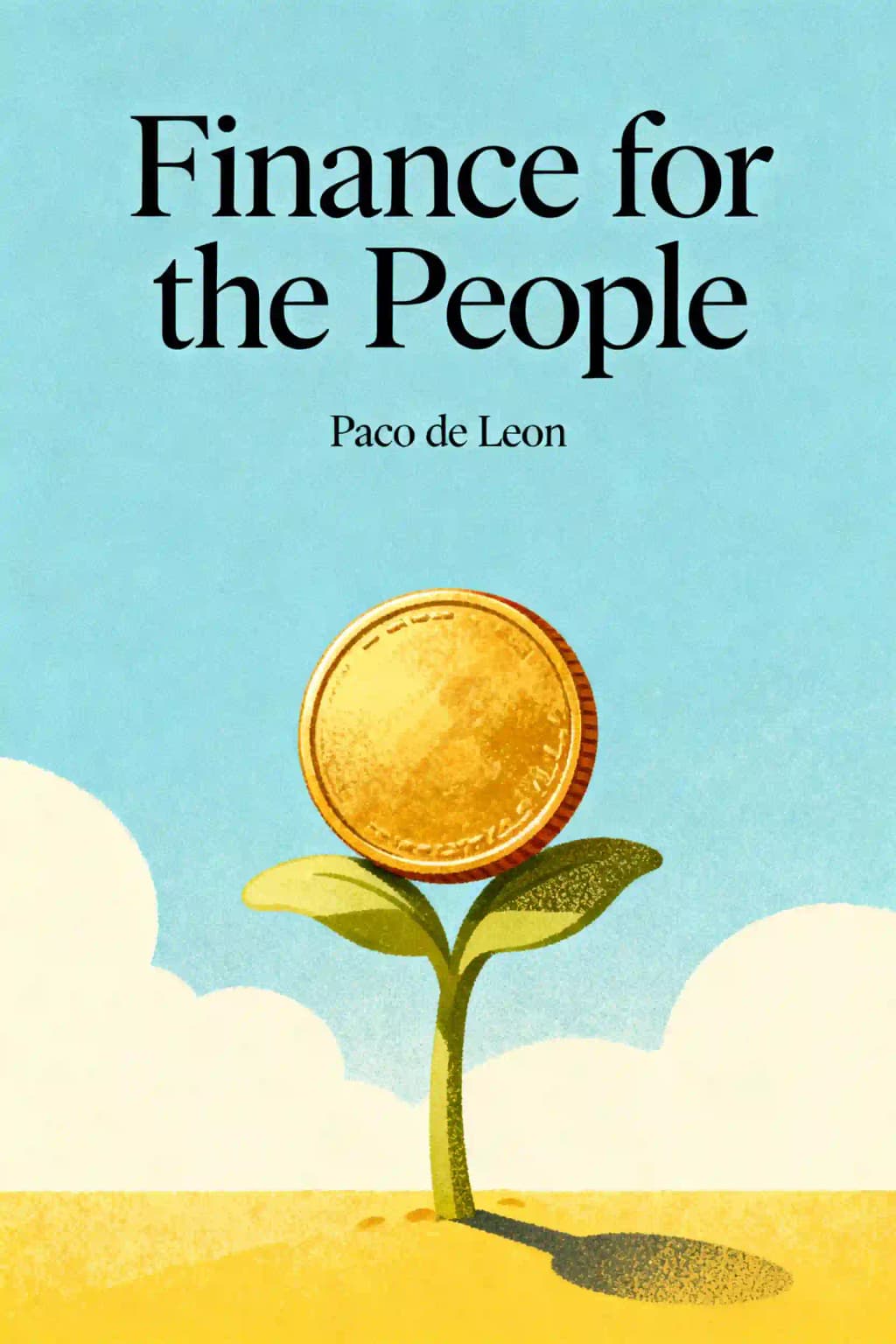
Money isn't just currency-it's power. When you have money, you have options; when you struggle financially, that terrifying feeling of powerlessness can overwhelm you. This is the core insight behind Paco de Leon's "Finance for the People," a book that has become a quiet revolution in personal finance literature. Unlike traditional financial advice that focuses solely on technical knowledge, de Leon approaches money as a deeply psychological and emotional subject. The book has garnered praise from financial experts and everyday readers alike, with The New York Times calling it "the rare personal finance book that respects the reader's intelligence." What makes it particularly compelling is how it acknowledges systemic inequalities while still empowering individuals to take control of their financial lives. Whether you're drowning in student debt or building wealth, de Leon's approach offers something revolutionary: the permission to be weird about money while learning to manage it effectively.
第 2 章
The Psychology Behind Our Money Hangups
We're all weird about money in our unique ways. This universal weirdness follows a perfect recipe: negative emotions plus information gaps about finance and our own minds, multiplied by inequality, equals personal financial drama. Our thoughts about money, beliefs, values and self-identity are shaped by and shape our external and internal environments, past behaviors, and perceived skills.
Consider the woman with inherited wealth who opposed economic inequality. This internal conflict caused her to rapidly spend her monthly trust distributions, ironically leaving her living paycheck-to-paycheck despite her privilege. Her behavior reflected psychological self-sabotage as her brain tried to reconcile conflicting identities-a problem no budgeting app could solve without first examining her complex relationship with money.
Another woman grew up wealthy and was used to having everything handled for her. She struggled with basic financial tasks like paying bills and opening mail, resulting in needless late fees despite her wealth. Money doesn't make you immune to being weird about it-it might even make you weirder if you lack practical financial skills or were taught it's taboo to discuss money.
People who grew up in poverty often face both external obstacles and internal conflicts. When someone strongly identifies as traumatized but wants financial stability, the behaviors needed for stability may conflict with their identity as a victim. This creates an internal battle that often manifests as self-sabotage.
Our money weirdness stems from the stories we've internalized from parents, friends, media, and society. These narratives shape our beliefs and mindset about money, often unconsciously. For example, a boy witnessing his father's frustration at being outearned by his mother might conclude that talking about money causes conflict and is therefore unsafe.
Society's aggressive silence around money compounds our weirdness. Many workplaces forbid salary discussions, and families rarely model healthy money conversations. When we suppress these discussions, they often emerge later as emotional outbursts. It's remarkable that in an age where dating apps openly facilitate sex and political disclosure, money talk remains taboo.
Experiences plant themselves like seeds in your subconscious, growing into beliefs that shape your mindset and actions-from the jobs you apply for to how you spend your paycheck. If you never examine how these beliefs were programmed, you're letting other people's rules dictate your financial life.
第 3 章
Rewiring Your Brain for Financial Success
Our brains operate with both old and new processes simultaneously. Two ancient processes make us feel perpetually lacking: first, our brain's natural tendency to scan for danger-an evolutionary trait that helped our ancestors survive by detecting scarcity of resources. When our minds are occupied with scarcity, we're focused on what we lack and filled with stress and anxiety, making good decisions difficult.
The second process is our preoccupation with comparing ourselves to others-once crucial for survival but now often harmful. These instincts are exploited by consumer culture, especially through social media, which creates feelings of inadequacy and then offers purchasing solutions in the same feed.
Credit cards make us spend more liberally because there's no immediate pain associated with using them. Your checking account balance doesn't drop when you swipe, and your wallet stays full. Credit numbs the spending pain. Our brains struggle to value future consequences against present pleasures. Tomorrow's payment pain can't compete with today's purchase pleasure.
We can defend against these vulnerabilities by addressing our feelings of scarcity and implementing systems to avoid falling victim to predatory marketing. The antidote to scarcity is gratitude-practicing appreciation measurably improves well-being by rewiring the prefrontal cortex, releasing dopamine and serotonin, and strengthening neural pathways linked to happiness and resilience.
When we feel gratitude, our brain stem releases dopamine, fostering positive emotions and prosocial behavior. Reflecting on things we're grateful for releases serotonin, enhancing mood, motivation and willpower. The more we activate these neural pathways, the easier they become to access.
Try this grateful flow exercise: Close your eyes and take deep breaths, perhaps with a hand on your heart. Think of something you're grateful for that you'd normally take for granted, focusing on the physical sensations of gratitude in your body. Repeat with two more items, pushing yourself to find new things each time. Consider starting your weekly finance time with this practice to improve your relationship with money by feeling better in general.
第 4 章
The Spending Plan Revolution
Creating a spending plan helps answer: how much money do you need? Unlike traditional budgeting, which starts with income and divides it accordingly (invoking scarcity), a spending plan reverse-engineers desired outcomes. Instead of letting income dictate spending, you determine what income would match your needs and wants.
This approach recognizes that your earnings aren't something you must passively accept. By calculating what you need, you can determine compensation that would make you not resent your job-showing what you need to earn to feel respected. A spending plan also prompts deeper reflection on current spending habits, questioning how expenses relate to your values.
Creating a spending plan requires classifying expenses into three broad groups: Bills & Life (essentials), Fun & BS (nonessentials), and Future & Goals (savings and investments). This framework makes it easier to understand how much money you need for essentials, life-enriching non-essentials, and future needs.
The Future & Goals category isn't just one savings account but encompasses various savings targets-retirement, emergency fund, major purchases, etc. Having separate savings accounts for different goals helps you easily track progress toward each one without mental calculations.
A spending plan works better than traditional budgeting because it creates a repeatable process with rules that eliminate unnecessary decision-making. By separating money into designated accounts, especially giving yourself permission to spend freely from your Fun & BS account, you shift from asking "Can I afford this?" to "How do I want to spend this?" This approach reduces friction in partnerships by allowing individual autonomy over personal spending while maintaining joint financial responsibility.
The separate spending system requires two checking accounts: one for Bills & Life expenses (essentials) and another for Fun & BS expenses (non-essentials). Fund each account appropriately and strictly use each account only for its designated purpose. This system eliminates constant tracking-you simply need to check account balances regularly. Look at your Fun & BS balance before spending and review your Bills & Life account during weekly finance time-the bare minimum for financial management.
第 5 章
Goal Setting vs. Systems Thinking
I once told a friend my goal was "to have no goals." Not because I lacked ambition, but because I'd discovered that achieving goals requires a paradoxical approach. Instead of focusing on outcomes with distinct finish lines, I now use goals to inform the processes I commit to. Rather than aiming to save $10,000, I commit to saving 20% of every inflow indefinitely-and typically exceed my original target.
Goals are crude instruments that don't account for life's dynamic nature and circumstances beyond our control. They're aspirational and sexy, worthy of social media attention, but being too outcome-focused is limiting and rigid. When you inevitably don't reach a goal, you've "failed"-a design flaw in the goal-setting system. I've been paralyzed by goals, staying in miserable jobs or unable to take action for my business because I feared heading in the wrong direction.
Financial goals are like hammers-useful tools, but not the only ones you need. They help reveal what you truly desire or fear, potentially uncovering alternative paths to fulfillment. The irony is that reaching goals requires letting go of attachment to them and falling in love with the process-the only part we can control. I've failed at many financial goals, from business income targets to savings plans. Success finally came when I implemented systems and processes: using the "Profit First" accounting method increased my revenue by 136%, and simply saving a portion of everything I earned helped me save more than ever before.
Instead of fixating on singular goals, I use them to identify the behaviors that precede achievement, then focus on turning those behaviors into processes. This approach yields more satisfaction regardless of outcome. With fewer rules about the end result, there are more ways to win, allowing me to find peace in the present while navigating circumstances beyond my control.
Systems make not reaching goals feel less like personal failure. When a system doesn't produce expected results-like saving 25% of income but still feeling far from an adequate emergency fund-don't automatically feel defeated. Instead, examine what's happening: Should you increase your savings percentage? Earn more? Both? If earning more would have the greatest impact, what systematic approach could address that?
Consistency, though underrated, is incredibly powerful. We see its effects everywhere: waves consistently eroding cliffs, dental health maintained through regular brushing rather than intense pre-appointment sessions, marketing messages that influence us through repetition. Financial consistency-whether consistently underearning (leading to debt) or consistently investing (building wealth)-shapes our outcomes. Consistency creates momentum with compounding results over time. It can compensate for lack of skill and, crucially, shapes how you identify yourself. You're more likely to see yourself as a saver if you consistently save small amounts than if you save a large amount just once.
第 6 章
The Art of Earning Money
As a junior financial planner earning just $36,000 while advising clients who made ten times that amount, I faced a financial awakening. Despite my frugality-biking to work, growing food, and using homemade products-I couldn't save meaningfully because saving is ultimately a function of earning. The stark reality hit when I discovered my boss earned in two months what took me a year. This revelation shifted my perspective: my obstacle wasn't overspending but underearning.
The personal finance equation is frustratingly simple (income = spending + saving), but most advice focuses only on cutting expenses. While spending is immediately controllable, this approach has fatal flaws-there's always an expense floor, and thinking only about cutting costs locks you into a scarcity mindset. Making money fundamentally requires understanding how your work creates value for others and effectively communicating that value.
Making money fundamentally involves understanding how your work is valued by those who benefit from it-whether employers, colleagues, or customers. Value creation can be both measurable (implementing efficiency-boosting software) and non-measurable (improving morale or raising standards). The challenge arises when your perception of your value differs from your employer's assessment. Resolving this misalignment requires deep reflection: identifying your valuable skills, understanding who seeks your help and why, determining if people will pay for your abilities, and finding environments where your value assessment aligns with others'. Some workplaces, by design, limit value-adding opportunities, while others view workers as investments in a mutually beneficial relationship.
Viewing business through the lens of processes revolutionizes how we understand earning money. Every company essentially sells a process-Coca-Cola has repeatable processes for creating, bottling, distributing, and marketing soda. When we purchase products, we're buying the end result of these processes. Similarly, ride-sharing services sell a technological process that makes transportation seamless. Whether you're buying ceramics, therapy sessions, or branding services, you're buying the end result of processes. Recognizing this creates distance between ourselves and our work, helping us navigate the complex relationship between identity and employment. Our work often enforces our identity, communicates status, and provides a sense of security, even though true security is an illusion.
Our beliefs about earning money create rules for how we think the world works, potentially limiting our opportunities. Common limiting beliefs include: "If I enjoy something, I shouldn't be paid for it," which prevents seeing opportunities where work comes with ease; "Only people who went to good schools get paid well," which stops us from challenging ourselves; "The best way to make money is to be practical," creating false security in potentially dying industries; and "Making money is hard," which blinds us to easier earning opportunities. Confronting these beliefs can be uncomfortable but necessary for growth.
第 7 章
Building Your Financial Safety Net
An emergency fund won't prevent disasters, but it will keep bad situations from becoming financial catastrophes. It provides peace of mind during stressful times and insulates you from financial shocks-unexpected, sometimes expensive events like recessions, job loss, illness, or accidents. These shocks aren't a matter of if, but when and how severe. They come in all shapes, forms, and severities, from global economic downturns to personal medical emergencies. Your financial life is like a sandcastle-you can control what you build, but not the inevitable tide. An emergency fund is your protective trench against these waves, which is why it should be your first savings priority.
The famous Stanford marshmallow experiment showed children who could resist eating a marshmallow to get two later generally had better life outcomes. But follow-up studies revealed a crucial insight: children from reliable environments (where adults kept promises) waited longer than those from unreliable ones. This explains why saving is harder for some-if you grew up with financial instability or broken promises, immediate consumption seems more rational. For millennials facing economic realities vastly different from what they were promised, spending now makes sense when the future feels uncertain. Inequality further complicates this, as those in poverty must focus on immediate needs rather than hypothetical future emergencies.
Our modern world bombards us with instant rewards-one-click ordering, overnight shipping, and endless streaming content. Technology has outpaced our brains' ability to resist immediate gratification. We've gone from occasional billboard exposure to carrying personal advertising machines in our pockets and beds. The attention economy employs psychologists and neurologists to design systems that manipulate our behavior toward consumption. These companies know us better than we know ourselves, and they have no interest in whether we save money. Resisting requires conscious, active effort.
Saving for emergencies is uniquely challenging because we're trying to prepare for an abstract, imaginary future event. Without personal experience of financial emergencies, the concept remains theoretical and difficult to prioritize. The COVID-19 pandemic has made this abstract concept concrete for many people worldwide.
Though we're born into circumstances we didn't choose, finding personal power means taking control where possible. This includes practicing delayed gratification, accepting life's unfairness as an opportunity for resilience, using technology to help rather than hinder you, and creating a savings plan despite challenges.
Pre-COVID, experts recommended saving three to nine months of essential expenses; now many suggest a full year's worth. This guideline assumes you'll cut non-essential spending during emergencies, though you can include those costs if it helps you sleep better. The right amount depends on your personal risk tolerance. For someone earning $50,000 after taxes with $2,000 monthly essential expenses, this means saving between $6,000 and $24,000. This target may seem impossible for those with chronic illness, debt, or family obligations, but the focus should be on consistent small efforts rather than the intimidating total.
第 8 章
Making Better Financial Decisions
In 2010, I had the virtuous idea to become a district attorney after being laid off and inspired by a DA who helped me reclaim power as a sexual assault victim. While preparing law school applications, I created a spreadsheet to calculate my borrowing needs and realized monthly payments would consume 34% of my take-home pay as a public servant. This led to deeper questions: What if I didn't like the job after ten years? Would my career options be limited to practicing law? How would this debt impact a future marriage between two women of color with "combined lack of privilege"? I realized going to law school would be a risky financial decision.
We can never know with absolute confidence the consequences of our decisions compared to alternatives. Learning to make better financial decisions is a skill that can alter your life's course. When approaching decisions, ensure your nervous system is regulated so you're making choices from cognition, not from fight-or-flight responses. Understanding the "window of tolerance" concept by Daniel J. Siegel helps us recognize when we're in an optimal state for decision-making versus when trauma pushes us into hyperarousal (panic, anxiety) or hypoarousal (numbness, disconnection). To regulate your nervous system before financial decisions, try breathwork, exercise, music, connecting with loved ones, or creating your own "chill menu." After regulating, use second-order thinking to explore consequences beyond immediate outcomes, asking "And then what could happen?" to understand the true cost of your decisions.
Before making financial decisions, ensure your nervous system is regulated so you're making choices from cognition rather than from fight-or-flight responses. Daniel J. Siegel's "window of tolerance" concept describes our optimal arousal zone where we can handle emotions and make clearheaded decisions. When pushed outside this window by trauma or stress, our prefrontal cortex shuts down, leading to either hyperarousal (fight-or-flight with anxiety, racing thoughts) or hypoarousal (shutdown with numbness, disconnection). This explains why someone might take out payday loans at criminal interest rates-they're not deciding, they're surviving. Past traumas can manifest in financial behaviors: authority trauma might make working with financial professionals difficult, abandonment trauma might prevent discussing debt with partners, and childhood conflict might lead to using shopping as self-soothing.
Second-order thinking examines the domino effect beyond a decision's immediate consequences. In my law school decision, the first-order consequence was monthly debt payments, while second-order consequences involved relationship impacts and career flexibility. Third-order consequences might include how feeling trapped would affect my mental health. By asking "And then what could happen?" you uncover connections between seemingly unrelated outcomes. This systematic thinking helps you tolerate less-than-ideal immediate consequences for extraordinary long-term benefits. Since our decisions are among the few things within our control, our approach to decision-making profoundly shapes our lives.
第 9 章
Navigating the World of Debt
The idea that debt repayment is a moral obligation has persisted throughout history across religions and cultures. However, paying debt is more practical than moral-like washing dishes to avoid pests rather than from moral duty. Bad credit scores and late fees are the consequences of non-payment. This debt-morality connection has ancient roots, from sacrifices to gods to Christianity's concept of human indebtedness to God after Eden. The Catholic Church's selling of indulgences in the 16th century and John Calvin's justification of interest charges further entrenched this relationship. The author shares a personal experience working briefly at a predatory finance company where colleagues sold harmful financial products to vulnerable people, arguing that responsibility for debt should be shared with those who intentionally sell terrible loans, not placed solely on borrowers.
Living with trauma resembles walking with a rock in your shoe-you can remove it through therapy and mindfulness, or compensate by changing your gait, which creates new problems. Unaddressed trauma can manifest in financial behavior, particularly debt patterns. Someone who suffered abuse might feel worthless and use expensive purchases on credit cards to prove their value. Those in constant stress might overspend to avoid negative feelings or buy things to create a sense of safety. If you've experienced cycles of debt, trauma could be the root cause, and healing may be the first step toward breaking these patterns.
For those whose debt stems from choices rather than circumstances, escaping debt requires adopting new ideas, attitudes, and behaviors. This might mean replacing old beliefs or adding new ones. Someone who views themselves solely as a victim might need to also accept responsibility, thereby reclaiming some power. Behavioral changes could include asking for raises or negotiating pay. Attitudes toward consumption might shift from constantly consuming to creating-art, music, meals, or "peaceful, easy feelings vibrating into the universe." Your approach might evolve from "I'll figure this debt out" to "Maybe I should consult professionals about this debt."
While we don't deserve misfortune, difficult experiences can transform us, teach lessons, or create meaning. The author suggests finding the "gift" in debt situations-a perspective shift that acknowledges multiple viewpoints exist. Some find their debt was part of their journey, helped when money wasn't available, taught necessary lessons, forced them to address deeper issues, or became something they overcame. Finding this gift may require time and distance. Meanwhile, practicing gratitude can reduce stress about your circumstances without denying systemic economic injustices. Gratitude helps manage adversity, build better money relationships, conserve energy for productive solutions, and value what you have rather than what you lack-"like a light switch" illuminating what was always present.
第 10 章
The Investment Mindset
Investing is your weapon against inflation's erosion of wealth. Saving $10,000 in a high-yield account at 2% annually yields about $18,114 after thirty years. Investing that same amount at 5% grows to $43,219. Under your mattress? Still $10,000, but worth significantly less after inflation. Despite feeling like an outsider in the investment world as the only woman on my financial planning team (even being excluded from "guys' night out" events), I learned that not belonging has advantages-it fosters an open mind and makes being uncomfortable comfortable. Don't let an industry of old white men in ill-fitting suits make you feel unwelcome. Today, you can invest from home in your underwear while streaming Gilmore Girls.
People often confuse causation with correlation, thinking only wealthy people can invest when in fact most people become wealthy by investing. The big secret? You don't need lots of money to start-even small amounts invested consistently will grow over time.
You don't need thousands to start investing-just $25 to $50 monthly is enough. Begin where you are, keep showing up, and after a year, the free money your investments generate will create a sense of accomplishment that motivates you to continue and shift priorities.
Ironically, not investing guarantees you'll lose money due to inflation. Just ask older generations how much milk or bread used to cost to see how inflation devalues cash over time. If you truly don't want to lose money, you must invest it.
"Now is not a good time to invest" is the ultimate cop-out that will hold you back from everything in life. There's never a perfect time for anything-changing jobs, getting married, moving, or starting a business. Don't wait for the "right time" to invest; in the long run, you'll only wish you'd started sooner to build financial security and wealth.
Even if you think you have time, you'll wish you'd started earlier. Small investments early on often outperform larger investments made later because compound interest needs time to work its magic. The math speaks for itself: Bethany investing $5,500 annually from ages 25-35 will have $416,370 at 65, while Charlie investing the same amount from ages 35-45 will only have $232,499.
Yes, historically wealth was built through violence, colonization, and oppression. Wall Street itself was once a site where humans were bought and sold into slavery. While socially responsible investing options exist, the investment mechanism remains inherently exploitative. However, being human means making compromises. Not investing would harm average people who need compound interest to keep up with inflation. Fighting inequality and contributing to retirement need not be mutually exclusive. Until systemic change occurs, we must accept reality while working toward justice.
第 11 章
Building Lasting Wealth
The pursuit of wealth in modern life traces back to colonization, slavery, and Wall Street's origins-explaining why the greedy wealthy person trope persists. But wealth isn't about caviar and first-class flights; it's what you own, not what you spend. Wealth functions as a megaphone for our values and ideas, giving us power to impact communities even at modest levels. I truly understood wealth when my boss explained life insurance calculations: a million dollars invested could generate $50,000 annual income (5% return), preserving the principal indefinitely. This revealed wealth's true nature-when you're financially independent, your security doesn't depend on a paycheck. Your income comes from your wealth rather than your wealth being built by income. Many confuse high income with wealth, but they're distinct-professional athletes earning millions can go broke within years of retirement if they spend everything. Building wealth requires a perspective shift, providing freedom, security, and financial resilience against economic shocks.
To build wealth effectively, consider multiple approaches. Beyond stock market investing through retirement and brokerage accounts, real estate offers another traditional path-whether through investment properties that generate rental income or your primary residence. While real estate requires more capital and energy than stock investments, it has historically helped people across socioeconomic levels build wealth. However, returns vary by location and timing, and becoming a landlord means taking on significant responsibility. A balanced approach to wealth-building often works best: some quietly save and invest for decades, others start businesses or create valuable assets, and many diversify across multiple wealth-building strategies. Whatever approach you choose, educate yourself thoroughly about your investments and diversify to manage risk.
Calculating your net worth is straightforward: add up all your cash and assets, then subtract your total debts. Assets include cash in checking and savings accounts, investments like 401(k)s, real estate, valuable possessions (furniture, jewelry, art), and business stakes. Liabilities include mortgages, student loans, credit card balances, car loans, and any financed purchases. Your net worth provides crucial perspective on your financial position, showing how stable and resilient your finances are. Those with positive net worth have breathing room and options, while in the long term, net worth determines your ability to retire or achieve financial independence.
Your target net worth depends on your goals, but traditional retirement planning suggests multiples of your pretax income based on age. The older you get, the higher this multiple becomes-both because you're closer to retirement and because your wealth should be compounding exponentially. The range provides options from a traditional retirement after 40-50 years of working to building "Fuck-You Money"-a substantial pile of assets that gives you the freedom to walk away from work on your own terms. This chart isn't meant to cause stress if you're behind, but rather to help you understand what it takes to achieve financial independence.
Goals provide direction, but the habits within your control are what lead to success. While external factors will challenge your plans, focusing on consistent behaviors like investing a percentage of all income will compound your progress over time. Don't underestimate your personal power-as you maintain focus on what you can control, your areas of agency expand. Building wealth requires the patient consistency of waves eroding a cliff-nothing glamorous, just persistent saving, investing and creating valuable assets. By the time you reach this level of financial development, you've already established systems and overcome obstacles that naturally position you for wealth-building.
第 12 章
Protecting What You've Built
As you progress financially, you'll develop worries you never had before. When you're young, quitting a part-time job or taking physical risks seems inconsequential. But as you build wealth and reduce debt, you become acutely aware that falling from higher up means a bigger tumble. Insurance is one of the most misunderstood products we buy-unlike most purchases where you expect to use what you've paid for, insurance is about protection against loss, not gain. We buy it hoping we'll never need it, which reveals our denial about potential misfortune. Confronting the need for insurance means acknowledging our vulnerability and lack of control-an uncomfortable but necessary step in taking responsibility for what we've built.
There are four approaches to managing risk in life. First, you can avoid risk entirely by not engaging in dangerous activities, like alligator wrestling. Second, you can accept risks with low probability and minimal consequences, like going barefoot at home despite the possibility of stubbing your toe. Third, you can mitigate risk through preventive measures, like microchipping your dog to increase chances of recovery if lost. Fourth, you can transfer risk through insurance, which makes sense for situations with potentially severe but unlikely losses-like renters insurance protecting against theft or damage to all your possessions.
Insurance might feel like a waste when you never use it, but you're actually pooling money with others to create protection when someone needs it. It's paying now to limit potential misery later. Insurance limits your financial exposure: health insurance caps your annual medical costs, disability insurance protects your income if you can't work, life insurance supports your dependents, and property insurance limits losses to your possessions. In all cases, the downside risk far outweighs the cost of premiums.
Life insurance requires confronting mortality, but it's crucial for protecting those who depend on your financial support. It replaces your economic contribution when you die, ensuring loved ones aren't left struggling financially in your absence.
You need life insurance if others depend on your financial support-spouses, children, aging parents-especially if you have debts they'd inherit. Even non-income-earning caretakers should consider coverage for childcare expenses. Those without dependents might only need minimal coverage for funeral costs. Life insurance provides peace of mind that your family will be cared for after you're gone.
第 13 章
Financial Awesomeness as a Revolutionary Act
Reaching the top of the Pyramid of Financial Awesomeness is an achievement worth celebrating, though in many ways your journey has just begun. Your relationship with money evolves dynamically like any other relationship in your life. This work isn't just about amassing wealth but exercising power in a world that denies it to many. Minding your relationship with money is a radical, revolutionary act that allows you to amplify the values you want to see in the world. Revolution requires recognizing and embracing your personal power.
Even during tough economic times, you can find ways to expand and appreciate abundance. This isn't about denying reality but recognizing that multiple perspectives exist in any circumstance. Seeing situations from various angles reveals options and eliminates powerlessness. You have many tools-many of them free-to calm your nervous system and navigate financial decisions.
By reading this book and completing the exercises, you've invested in yourself-something worth continuing. Progress requires time and space to breathe and expand. Growth isn't about eliminating suffering but learning to dance with it, asking what you're unwilling to feel and trusting yourself to feel it anyway. That's where solutions to big problems are found-in the suffering.
Your relationship with money demonstrates how powerful stories can be. The stories we tell ourselves create rules that impact our behavior across all areas of life. By unearthing hidden rules and changing them, you've proven you can do this with other life stories. What you believe about your worth doesn't just affect financial decisions-it creates rules everywhere. The tools in this book can improve not just your relationship with money but all relationships, especially with yourself.