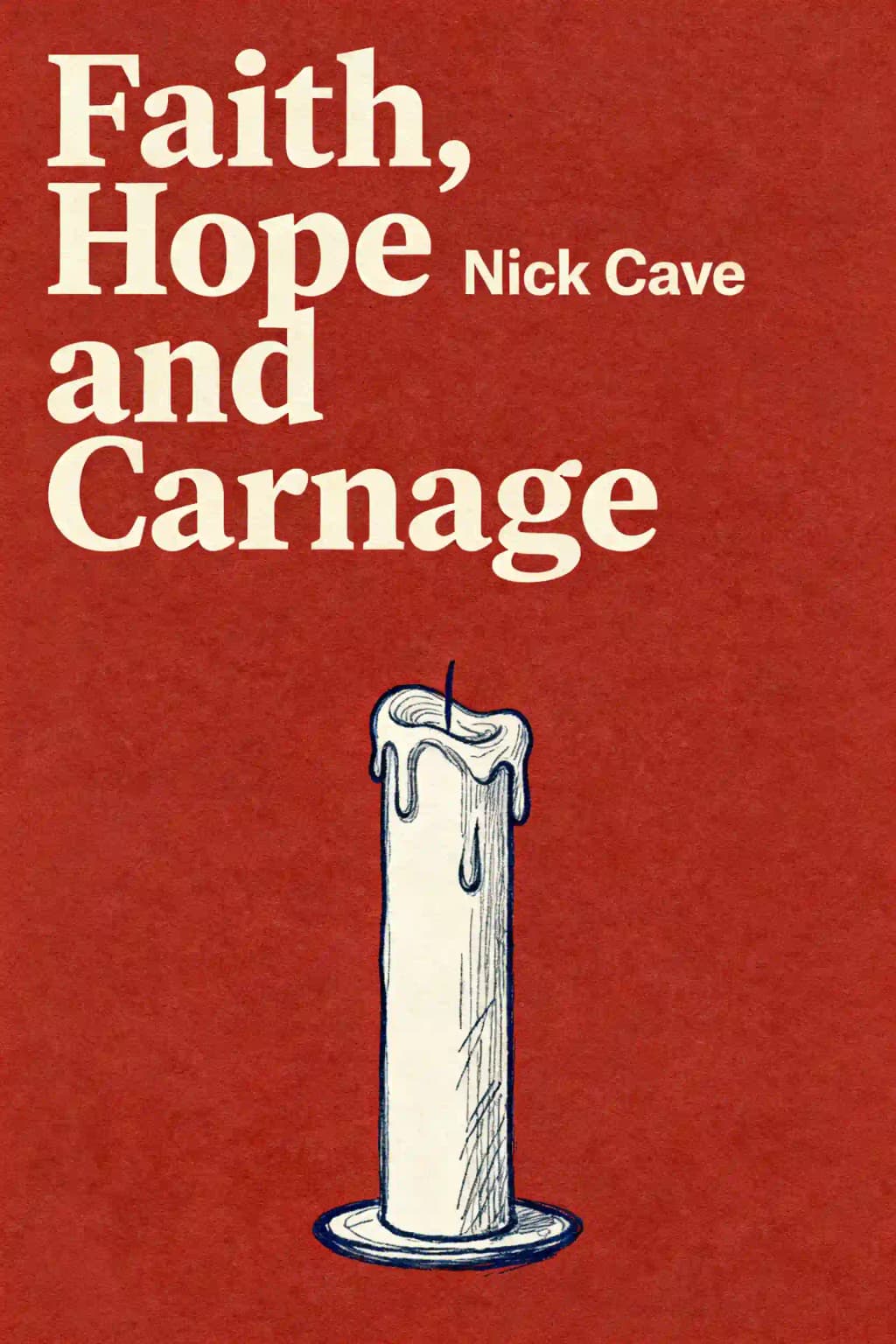
Faith, Hope and Carnage
《Faith, Hope and Carnage》概述
In "Faith, Hope and Carnage," Nick Cave transforms 40 hours of intimate conversation into a soul-baring exploration of grief after losing his sons. His profound insight that "hope is optimism with a broken heart" has become a lifeline for those navigating their darkest moments.

《Faith, Hope and Carnage》核心主题
- creative surrender
- transformative grief
- informed improvisation
- utility of belief
- spiritual yearning
《Faith, Hope and Carnage》经典语录
Nick Cave's honesty is like nothing else in music.
Doubt is not the enemy of faith.
The believing itself has utility.
The real treasure is found.
《Faith, Hope and Carnage》主要人物
- Nick CaveMusician and author exploring grief and faith
- Sean O'HaganJournalist who conducts the book's conversations
- Arthur CaveNick's late son whose death haunts the narrative
- Warren EllisMusician and Nick Cave's longtime collaborator
- Susie CaveNick's wife, mentioned in his memories and life
下载《Faith, Hope and Carnage》摘要
免费获取《Faith, Hope and Carnage》摘要的 PDF 或 EPUB 版本。可打印或随时离线阅读。
关于本书的常见问题
Faith, Hope and Carnage is a deeply personal exploration of grief, creativity, and spirituality through conversations between musician Nick Cave and journalist Seán O’Hagan. Structured around interviews during Cave’s 2017 tour, the book delves into his emotional journey following the death of his son Arthur, his evolving faith, and the role of art in processing loss.
This book is ideal for Nick Cave fans, readers interested in the intersection of art and grief, and those seeking meaning in personal tragedy. It appeals to anyone drawn to raw, philosophical reflections on resilience and the human condition.
Yes—its candid dialogue format offers unparalleled access to Cave’s introspection and lyrical wisdom. The book is praised for its emotional depth, blending memoir and existential inquiry, though some may find its intensity overwhelming.
Central themes include:
- Grief: Cave’s struggle with loss and its impact on his artistry.
- Faith: His conflicted relationship with spirituality after tragedy.
- Creativity: How music and writing serve as catharsis and redemption.
Cave reflects on the 2015 death of his son Arthur, describing grief as a transformative force that reshaped his music and worldview. He emphasizes art’s role in navigating despair, calling it a “radical act of hope.”
Cave grapples with Christianity as both a flawed institution and a source of solace. His faith emerges as a fragmented but persistent framework for understanding suffering, marked by doubt and mystical longing.
The book uses a conversational format, compiling edited interviews between Cave and O’Hagan. This creates an intimate, stream-of-consciousness narrative that mirrors Cave’s lyrical storytelling.
Cave reveals how trauma influenced albums like Ghosteen (2019), detailing collaborative practices with Warren Ellis and the Bad Seeds. He frames songwriting as a spiritual ritual, where “songs emerge from the void.”
Key lines include:
- “Grief is the terrible reminder of the depths of our love.”
- “Faith isn’t the absence of doubt, but the courage to confront it”
Unlike his novels (And the Ass Saw the Angel) or film scripts (The Proposition), this book is explicitly autobiographical, offering direct insight into his private life and emotional struggles.
Some readers may find its introspective tone overly abstract or emotionally taxing. Critics note it prioritizes philosophical musings over linear narrative, which could alienate casual fans.
Cave frames resilience as an ongoing negotiation with loss, where art and love act as anchors. His journey underscores the idea that healing is nonlinear and intertwined with creative renewal.