I apologize, but I don't have any specific facts about "Dreamland" by Sam Quinones to work with. To create an accurate and compelling introduction, I would need verified information about the book's content, impact, and reception. Without these details, I cannot generate a responsible introduction that meets your requirements.
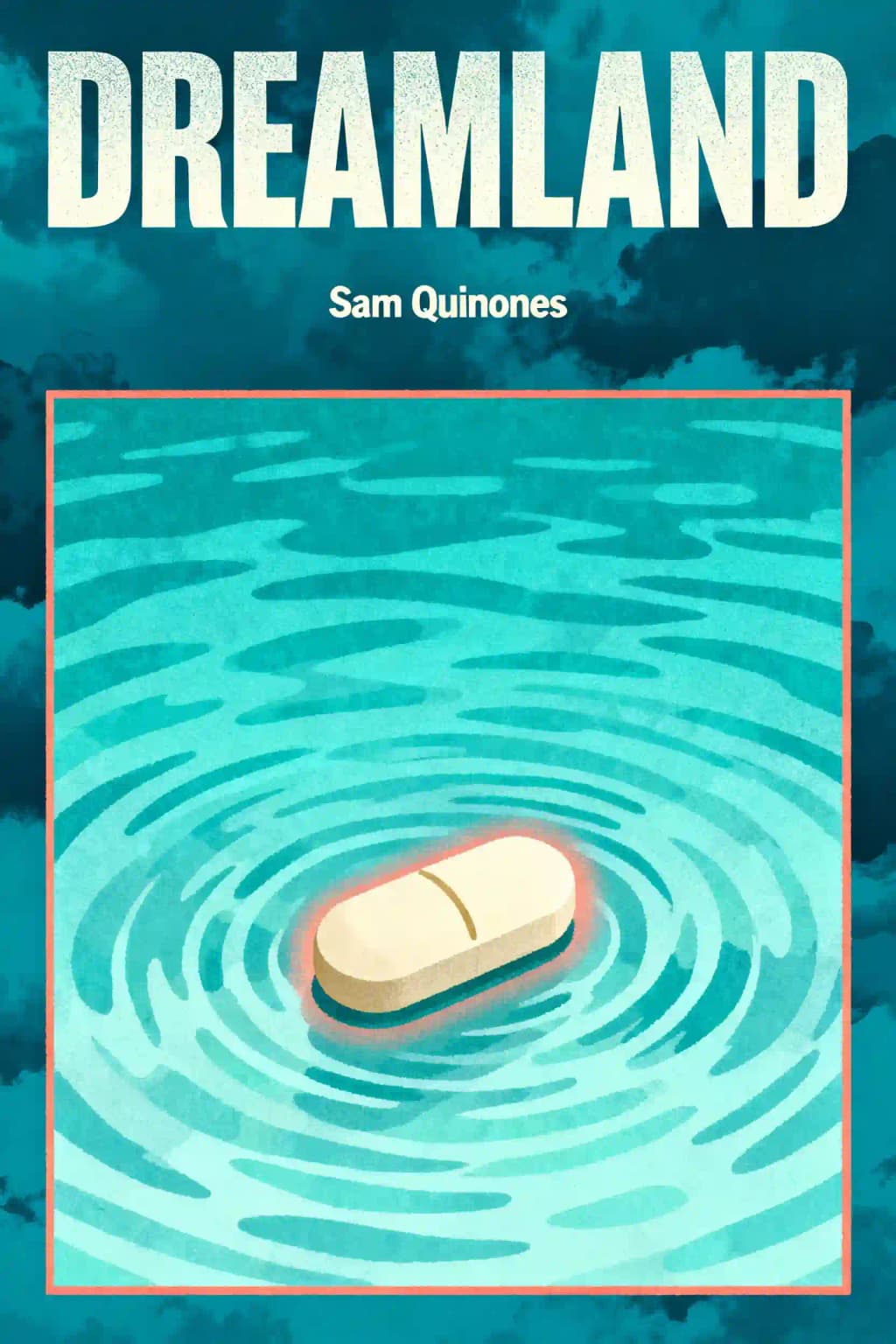
Sam Quinones, author of Dreamland: The True Tale of America’s Opiate Epidemic, is an award-winning journalist and narrative nonfiction writer renowned for his incisive reporting on drug trafficking, immigration, and societal crises.
A former Los Angeles Times reporter, Quinones spent a decade in Mexico chronicling migration and organized crime. This experience gave him a deep understanding of cross-border drug networks.
Dreamland, his groundbreaking exploration of the opioid epidemic, received the National Book Critics Circle Award for Best Nonfiction in 2015 and has been hailed as essential reading on public health and policy. His follow-up, The Least of Us: True Tales of America and Hope in the Time of Fentanyl and Meth (2021), expands on these themes, exposing synthetic drug proliferation and grassroots recovery efforts.
Quinones’ work has appeared in National Geographic, the New York Times, and Pacific Standard. He has received prestigious honors including the Maria Moors Cabot Prize for coverage of Latin America. Translated into multiple languages, Dreamland remains a pivotal text in understanding the roots of America’s addiction crisis.
Dreamland chronicles America’s opioid epidemic, tracing its roots to pharmaceutical companies like Purdue Pharma—which marketed OxyContin as nonaddictive—and the Xalisco Boys, a Mexican heroin trafficking network. Quinones examines how profit-driven capitalism, declining community bonds, and healthcare complacency fueled addiction, particularly in small towns like Portsmouth, Ohio. The book blends investigative journalism with social critique, emphasizing isolation and the pursuit of “quick fixes” as central themes.
This book is essential for public health professionals, policymakers, and readers interested in sociology or the opioid crisis. It offers insights into systemic failures, corporate accountability, and the human toll of addiction. Journalists and historians will also value its detailed reporting on pharmaceutical marketing and drug trafficking networks. Fans of narrative nonfiction will appreciate its gripping, multi-threaded storytelling.
Yes. Quinones’ exhaustive research and compelling narrative make Dreamland a definitive account of the opioid epidemic. It exposes how legal and illegal drug industries exploited vulnerable communities while offering nuanced perspectives on addiction. The book’s exploration of societal isolation and resilience resonates beyond its immediate subject, making it relevant for understanding modern America’s broader challenges.
Purdue Pharma aggressively marketed OxyContin as a safe, nonaddictive painkiller, downplaying risks despite internal knowledge of its addictive potential. The company targeted doctors in economically struggling regions, leading to overprescription. This created a surge in addiction, with many patients transitioning to cheaper heroin when their prescriptions ran out—a direct pipeline exploited by traffickers like the Xalisco Boys.
The Xalisco Boys revolutionized heroin distribution by operating a customer-focused, delivery-based model akin to pizza delivery. Hailing from Nayarit, Mexico, they capitalized on OxyContin addiction by offering affordable black tar heroin, expanding their network nationwide. Their low-profile tactics—avoiding violence and targeting suburban users—allowed them to evade law enforcement for years, fueling the epidemic’s spread.
Quinones frames the crisis as a byproduct of unchecked capitalism: Purdue Pharma prioritized profits over ethical medical practices, while the Xalisco Boys treated heroin as a commodity in a free-market system. Both industries exploited regulatory gaps and societal vulnerabilities, revealing how profit motives can override public health and community well-being.
The book uses Portsmouth’s Dreamland pool—a lost communal space—as a metaphor for America’s declining social cohesion. Quinones argues that isolation and eroded community ties left individuals more susceptible to addiction, as pills and heroin filled emotional and social voids. Recovery efforts in the book often hinge on rebuilding communal support networks.
Quinones highlights grassroots recovery programs, harm reduction strategies, and stricter regulations on prescription practices. He emphasizes empathy over criminalization, advocating for treatment-focused approaches. The book also stresses rebuilding community connections as a buffer against addiction, illustrating this through Portsmouth’s tentative steps toward renewal.
Some critics note the book’s dense, multi-narrative structure may overwhelm casual readers. Others argue it focuses more on systemic forces than individual addict experiences. However, its depth and scope are widely praised for contextualizing the epidemic within broader cultural and economic shifts.
Unlike Patrick Radden Keefe’s Empire of Pain (focused solely on the Sacklers) or Beth Macy’s Dopesick (centered on Appalachia), Dreamland uniquely intertwines legal and illegal drug trades. Its transnational lens—linking corporate boardrooms to Mexican trafficking networks—provides a comprehensive narrative unmatched in similar works.
These lines encapsulate the book’s blend of reportage and social commentary.
The opioid epidemic persists, with synthetic opioids like fentanyl causing record overdoses. Quinones’ insights into corporate accountability, harm reduction, and community-based solutions remain critical for addressing ongoing challenges. The book’s warnings about quick-fix culture and isolation also resonate amid rising mental health crises.
通过作者的声音感受这本书
将知识转化为引人入胜、富含实例的见解
快速捕捉核心观点,高效学习
以有趣互动的方式享受这本书
The best drug dealers are people who don’t look like drug dealers.
The lesson of Portsmouth was that pain could be taken away with a pill.
The dismantling of the black tar heroin business in the United States was one of the great unintended consequences of the overprescribing of legal narcotics.
OxyContin was, therefore, a brilliantly designed product.
The drug created a need, then filled it.
将《Dreamland》的核心观点拆解为易于理解的要点,了解创新团队如何创造、协作和成长。
将《Dreamland》提炼为快速记忆要点,突出坦诚、团队合作和创造力的关键原则。

通过生动的故事体验《Dreamland》,将创新经验转化为令人难忘且可应用的精彩时刻。
随心提问,选择声音,共同创造真正与你产生共鸣的见解。

"Instead of endless scrolling, I just hit play on BeFreed. It saves me so much time."
"I never knew where to start with nonfiction—BeFreed’s book lists turned into podcasts gave me a clear path."
"Perfect balance between learning and entertainment. Finished ‘Thinking, Fast and Slow’ on my commute this week."
"Crazy how much I learned while walking the dog. BeFreed = small habits → big gains."
"Reading used to feel like a chore. Now it’s just part of my lifestyle."
"Feels effortless compared to reading. I’ve finished 6 books this month already."
"BeFreed turned my guilty doomscrolling into something that feels productive and inspiring."
"BeFreed turned my commute into learning time. 20-min podcasts are perfect for finishing books I never had time for."
"BeFreed replaced my podcast queue. Imagine Spotify for books — that’s it. 🙌"
"It is great for me to learn something from the book without reading it."
"The themed book list podcasts help me connect ideas across authors—like a guided audio journey."
"Makes me feel smarter every time before going to work"

免费获取《Dreamland》摘要的 PDF 或 EPUB 版本。可打印或随时离线阅读。
A teenage girl from an affluent Columbus suburb walked into a children's hospital in 2003 with track marks running up her arms. She looked like she should be heading to cheerleading practice, not detox. Her story was startlingly simple: prescription painkillers from friends' medicine cabinets led to OxyContin, which led to heroin delivered by polite Mexican men who operated like pizza drivers. Dr. Peter Rogers had never treated a teenage heroin addict before. Within months, hundreds more would follow-a tsunami of young, white, middle-class kids nodding off in their parents' basements. Something unprecedented was happening in America's heartland, and almost nobody saw it coming. This wasn't supposed to happen here. Heroin belonged to inner cities and Vietnam veterans, not honor students and football players. Yet across central Ohio and eventually the entire nation, two forces were converging with devastating precision: aggressive pharmaceutical marketing that convinced doctors opiates weren't addictive, and an ingenious Mexican trafficking network that brought heroin directly to suburban driveways. The collision created the deadliest drug epidemic in American history-one that would eventually claim more lives than the entire Iraq War.